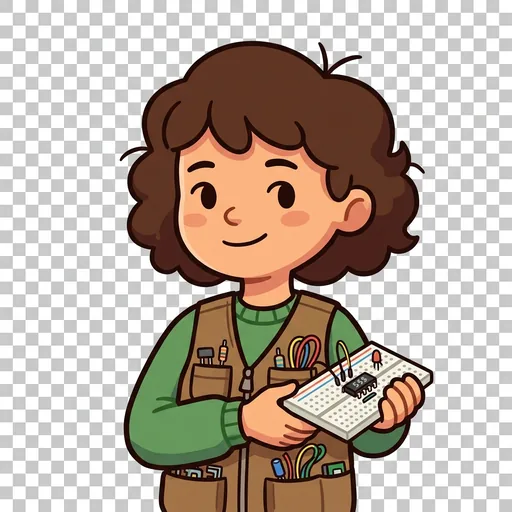
Fixby
SUFFIXES — a chunk added to the END of a word that changes its job or tense (-ed = past, -ing = happening now, -tion = makes it a thing, -ly, -ful, -ness). Plus the spelling-change rules at the seam: drop the silent e (hope + ing = hoping), double the last consonant (run + ing = running), y becomes i (happy + ness = happiness).
Loading audio…
Press play to listen along. The line being read lights up as you go.
Show full transcript
Loading transcript…
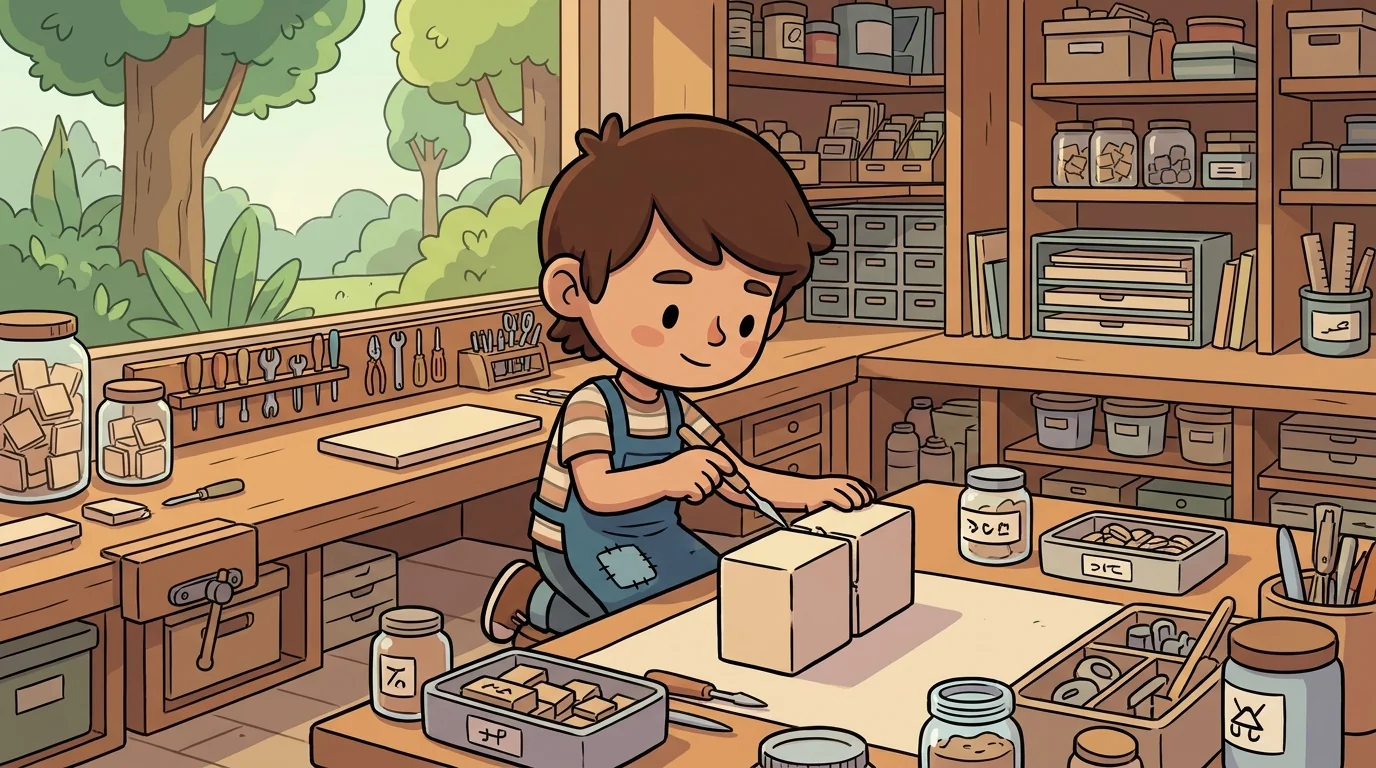
Fixby has the tidiest bench in the whole Forge. Every tool is in its place. He works at the ends of words, and he does two jobs at once, both of them careful.
The first job is adding the end-chunk. -ed puts a word in the past — jump becomes jumped. -ing makes it happening right now — jump becomes jumping. -tion turns an action into a thing — act becomes action. These are chunks, like Prefa's, and once you know them you read them in one bite instead of one letter at a time.
The second job is the fussy one, the one nobody else wants: he fixes the seam where the chunk joins on. Because you can't just slam -ing onto hope and get hopeing — that's clumsy, that's wrong. Fixby drops the silent e first: hoping. You can't just add -ing to run and get runing — he doubles the n: running. He notices the exact small thing that has to change so the join comes out smooth.
"Everybody else builds the big obvious parts," Fixby says quietly, straightening a tool. "I fix the little seam nobody looks at. That's where words go wrong, right there at the join. So that's where I live."
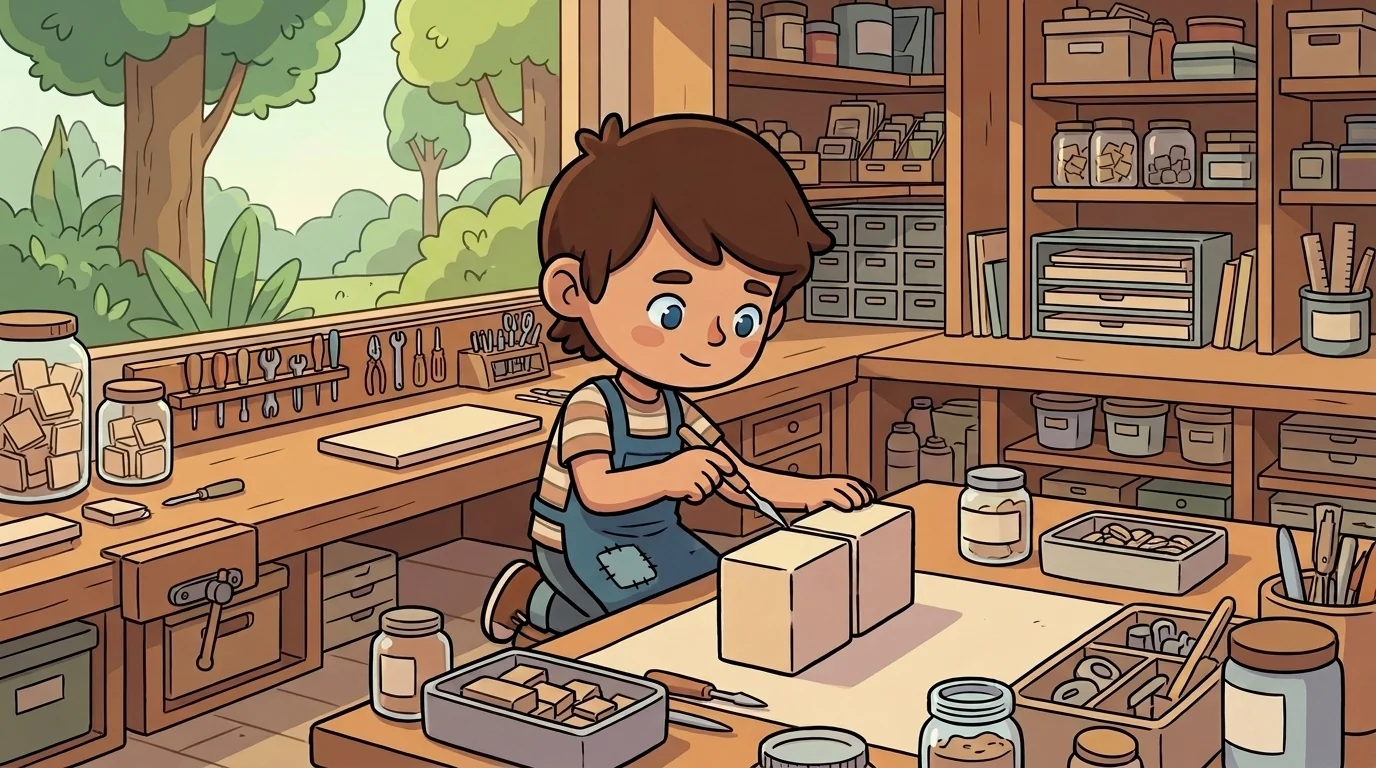
Fixby was a careful kid, and for a long time people made him feel bad about it.
He was slow. Not slow-thinking — slow-doing, because he checked things. He'd reread his own sentence to make sure it was right. He'd notice that the classroom clock was two minutes off. He'd catch the small mistake everyone else skated past. And instead of thank you, he mostly got hurry up, Fixby and stop being so fussy and does it really matter? He started to believe that his carefulness was a defect — that the world liked fast-and-sloppy better than slow-and-right, and he was built wrong for it.
Reading and writing were where it stung most, because these tiny end-rules are exactly the kind of small careful thing he noticed — and got mocked for noticing. He'd see a classmate write runing and want to fix it, and get told he was being annoying. Meanwhile he himself would freeze on reading -tion because nobody had told him it's a chunk that says /shun/, and he'd feel slow and fussy and stuck, the worst three at once.
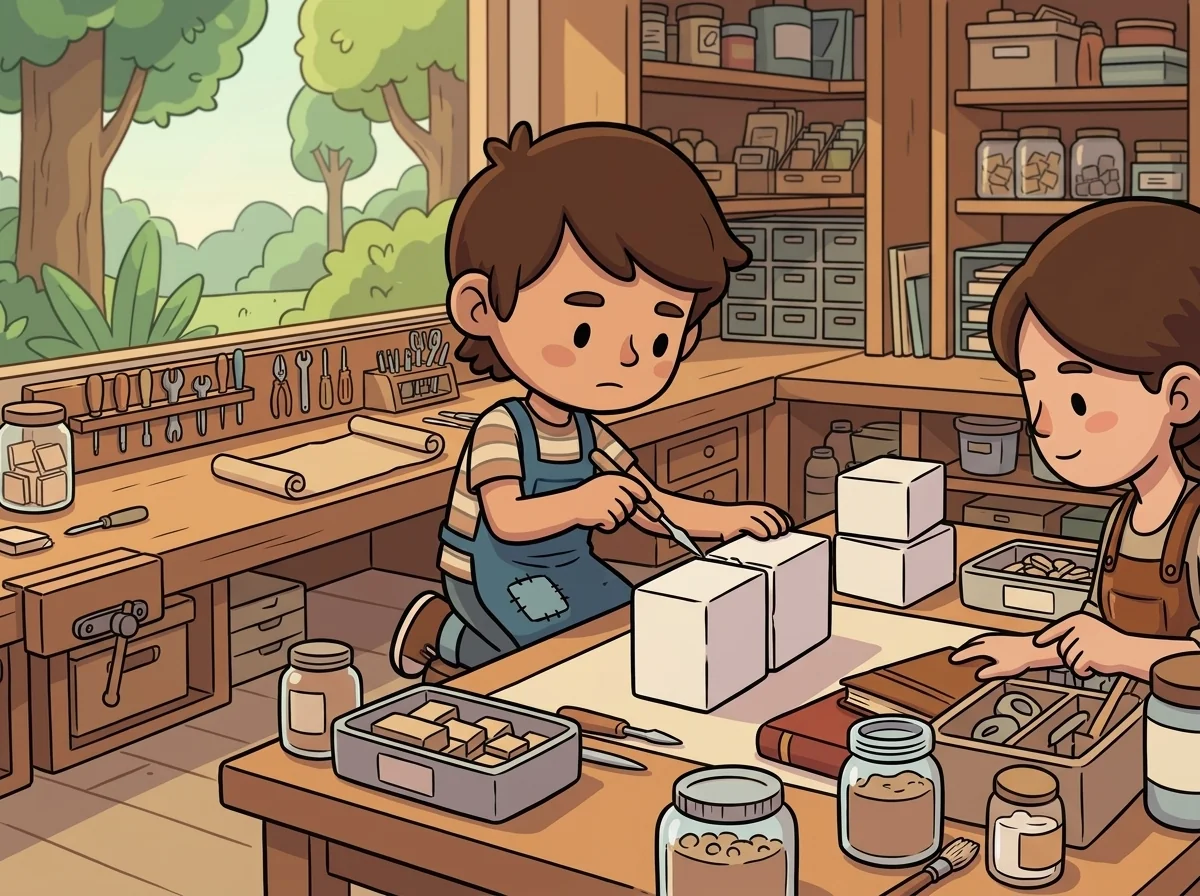
The teacher who turned it around for him was a bookbinder — a person whose whole craft is careful joins. She showed Fixby a book falling apart at the spine, then one bound tight and true. "Same pages," she said. "The difference is the join. Most people never look at it. The person who does look — who cares about the exact little seam — that person's work lasts." She handed him hope and -ing and asked him to join them. He wanted to write hopeing. She smiled. "Look closer. What's in the way?" The silent e. He dropped it. hoping. Smooth.
For the first time, being the careful one wasn't a problem to apologize for. It was the whole skill.
So when a girl named Rosa came to the Forge — quick, frustrated, waving off details — Fixby recognized the opposite of himself, and knew he could help.
Rosa read fast and hated the end-chunks. She read action as /ak-ton/, then /ak-shun/... "why is it SHUN, that's not how those letters work!" She wrote stoping for stopping and makeing for making and got marked wrong constantly and had decided the rules were stupid and unfair.
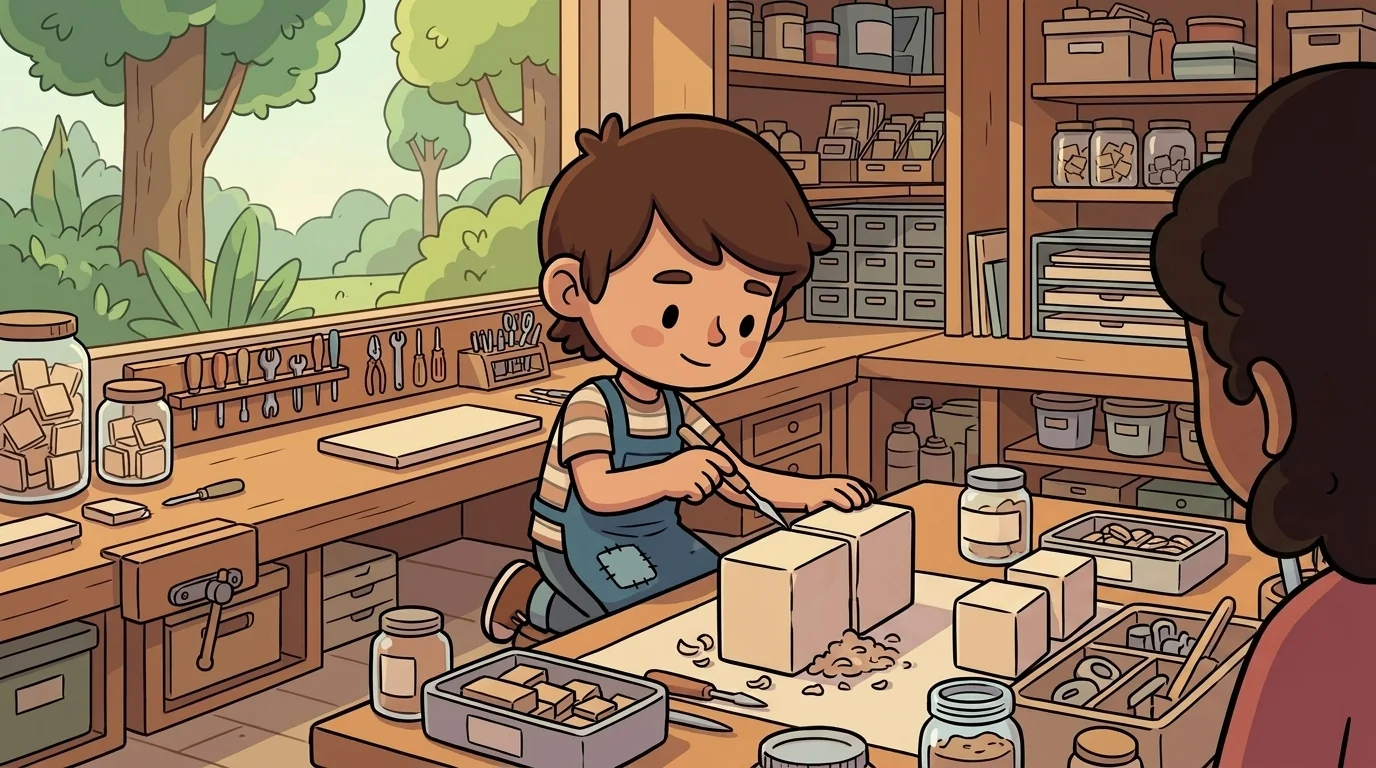
"They're not stupid," Fixby said, gently. "They're just small, and nobody slowed down to show you. Watch — one at a time." He wrote -tion on its own. "This whole chunk says /shun/. Always. It's a package. action, motion, nation — /shun/, /shun/, /shun/. You don't sound out the letters. You recognize the package."
"/shun/," said Rosa. "Action. Huh."
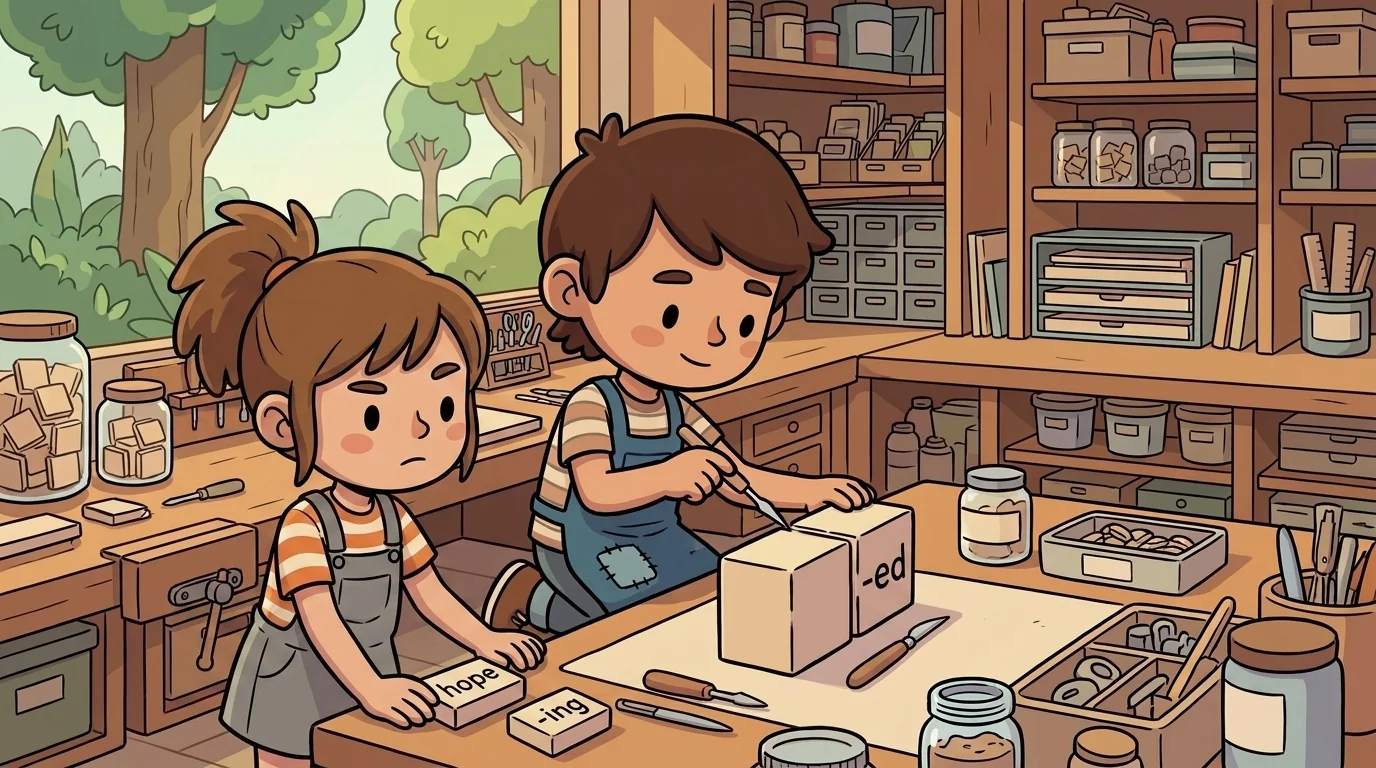
"Now the seams." He wrote make + ing. "You wanted makeing, right? Reasonable. But the silent e is in the way of the join, so we drop it first. making." He wrote stop + ing. "One little vowel, one consonant on the end — we double the consonant so the vowel stays short. stopping. Two p's." He looked at her. "These aren't random. Each one's a small fix so the join comes out right. It's careful work. It's good work."
Rosa read and built a dozen of them — hoping, running, jumped, nation, happiness — slowing down just enough to check each seam. They came out right. Every one.
"I always thought I was bad at this because I go too fast to notice the little stuff," Rosa admitted. "Everyone always says just be more careful and it makes me want to scream."
"I'll tell you a secret," Fixby said. "Careful gets a bad name. People say it like it means slow, or fussy, or scared. It doesn't. Careful means you see the small things — and the small things are where everything either holds together or falls apart. I got called fussy my whole childhood for noticing exactly the stuff this job needs. Turns out I wasn't built wrong. I was built for the careful work nobody else wanted to do."
And that's what Fixby gives away, to two very different kinds of kids at once: to the fast ones like Rosa, permission to slow down for the small stuff without shame; and to the careful ones like he was, the news they've been waiting years to hear — that noticing the small things is not a flaw to fix. It's a strength the world runs on, even when the world forgets to say thanks. The careful kid isn't broken. They're just standing at the seam, where the careful work happens, exactly where they belong.
Rosa didn't become slow. She just started checking her seams, which she said felt less like being fussy and more like being a person whose stuff holds together. Fixby thought that was a perfect way to put it.
The DecodeForge ensemble
Fixby is part of DecodeForge's distributed-narrative cast. Each character embodies a different curricular primitive; together they teach the full subject.
-

Segwyn
Segment & blend (mentor) — the master decoder who slides a word apart into its sounds and back together, and coaches the rest
-
Chip
Syllable division — chips a big word into syllable chunks you can actually say
-

Digby
Digraphs — fuses two letters into ONE sound (the 'one-breath' trick)
-
Blenda
Consonant blends — smashes a cluster together so each sound still shows
-
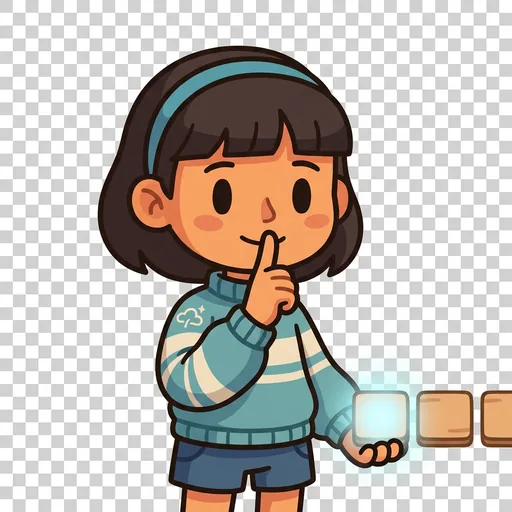
Silent Ellie
Silent / magic-e — stands silent at a word's end and makes the vowel say its name
-
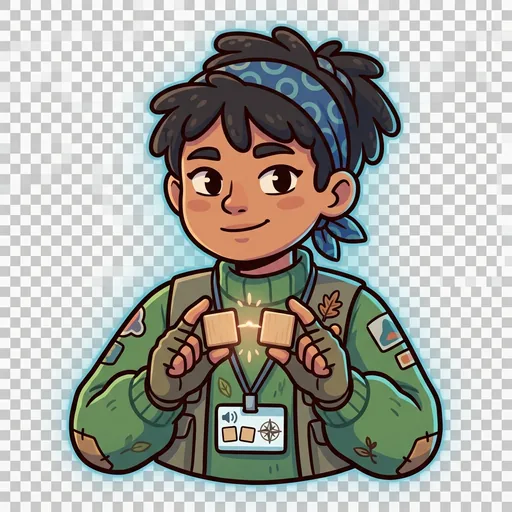
Sylva
Vowel teams — pairs two vowels so the first does the talking
-

Prefa
Prefixes — clips a meaning-unit onto the FRONT of a word
-

Rootley
Roots / bases — holds the meaning core everything attaches to
-

Fluenna
Fluency — reads the same passage until it flows, keeping the beat (repeated reading)
-

Mapper
Phoneme-grapheme mapping — maps each sound to its spelling tile on the board