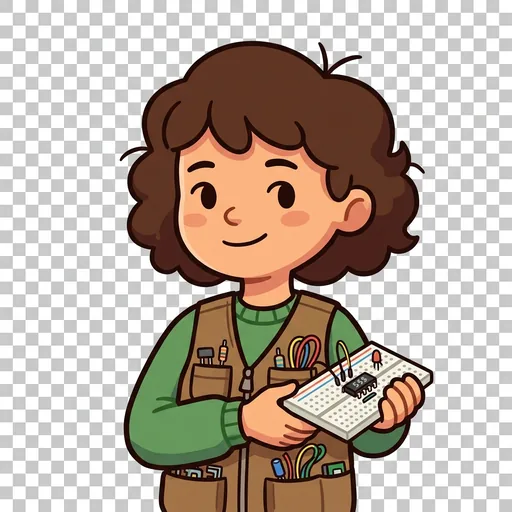
Chip
SYLLABLE DIVISION — a long word is a string of beats (syllables). Chop it at the seams between beats and each chunk is short enough to read. hip·po·pot·a·mus is scary; "hip" is not.
Loading audio…
Press play to listen along. The line being read lights up as you go.
Show full transcript
Loading transcript…
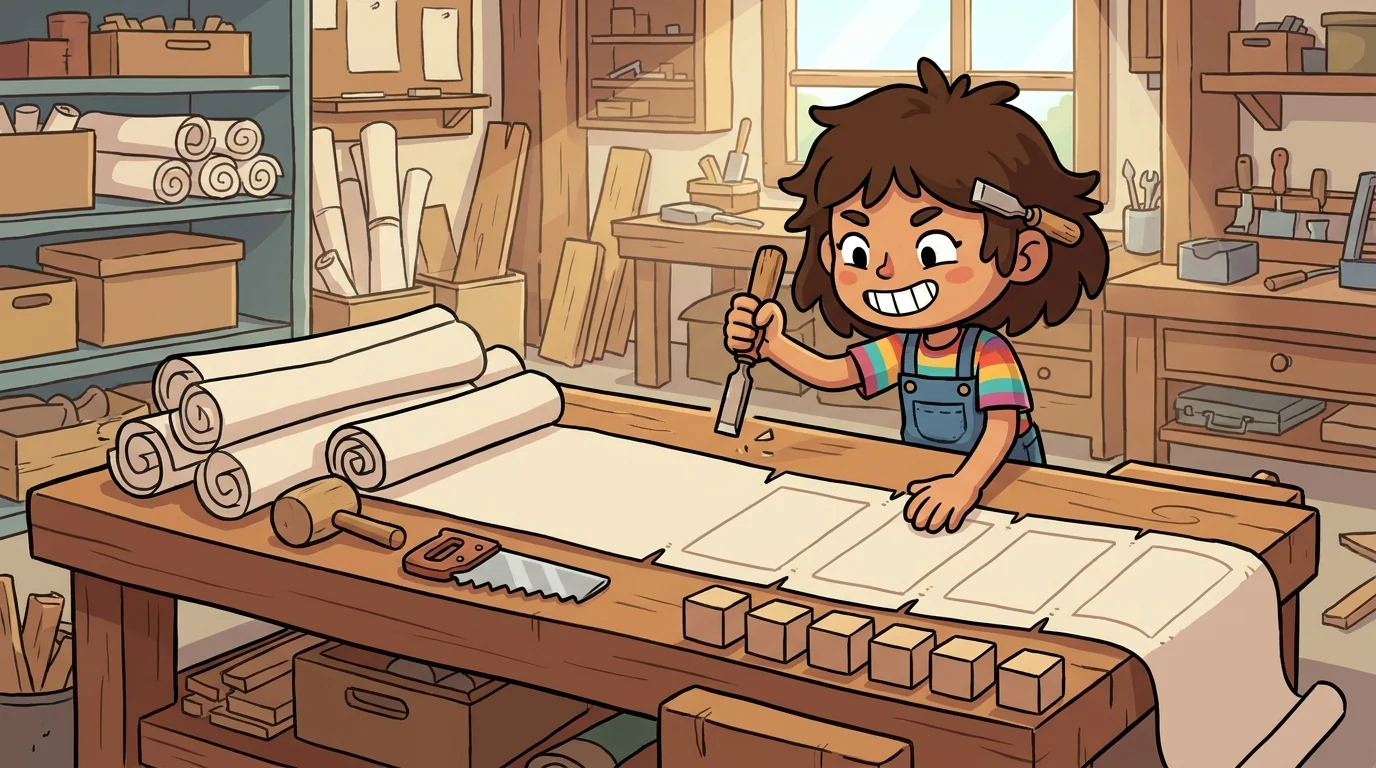
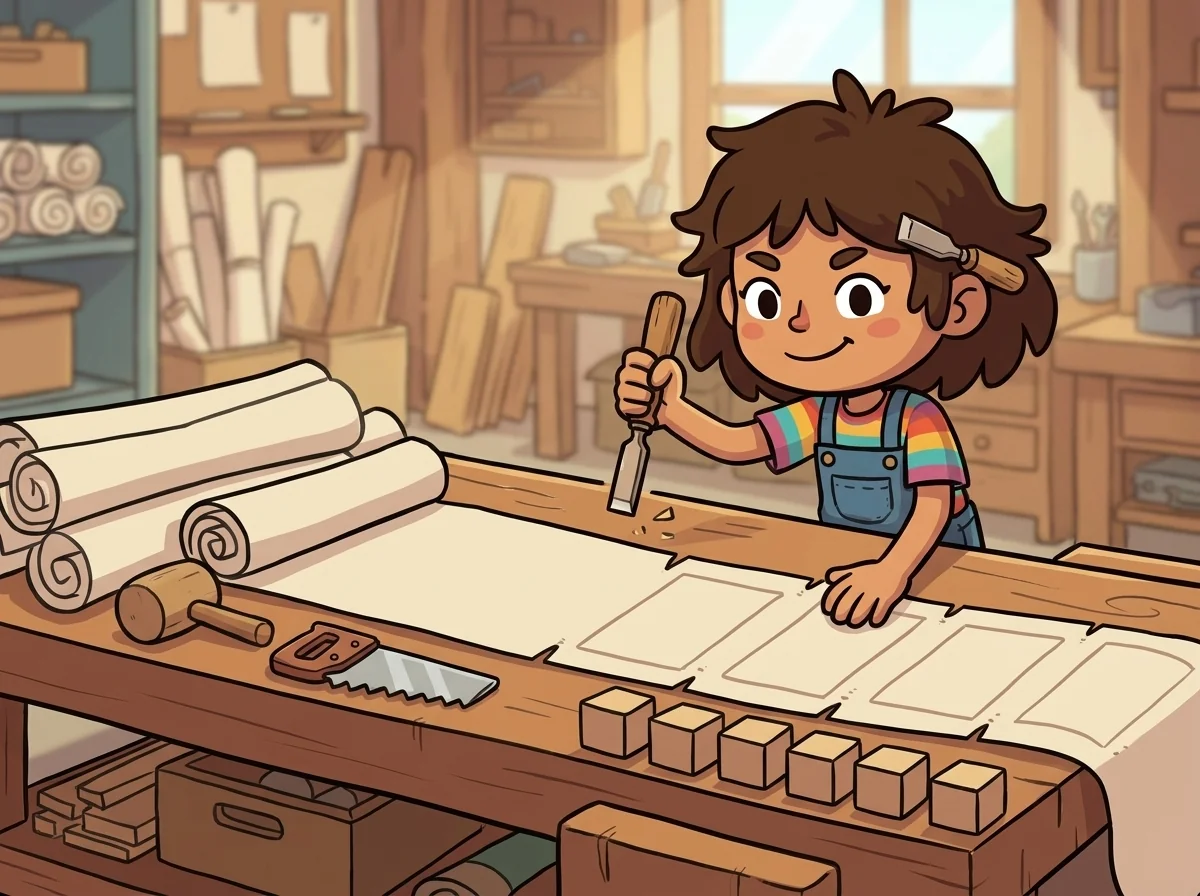
Chip is the loudest decoder at the Forge, and she carries a little wooden chisel behind her ear like a pencil. When somebody brings her a long word — one of the really long ones, the kind that stretches almost off the edge of the page — she doesn't sigh. She grins. Long words are her favorite.
She sets the word on her bench, tips her head, and listens for the beats. Every word has them, like a drum. She taps them out with her chisel — tap, tap, tap — and everywhere the beat lands, she makes a little chop. Then, where there was one impossible word, there's a row of tiny words, each one short enough that anybody could read it.
"You never read the monster," she likes to say. "You only ever read the little pieces. The monster reads itself."
Chip did not always love long words. When she was a kid, she was terrified of them.
She could read short words fine — cat, run, jump, best. But the second a word got long, her brain would just... slam shut. She'd see something like basketball and her eyes would go blurry and she'd feel this hot rush of nope, too much, can't. She'd freeze. And freezing in front of a word, while the clock ticks and the room waits, is one of the worst feelings there is. She started skipping long words entirely, just mumbling past them, hoping nobody would notice she was leaving holes in every sentence.
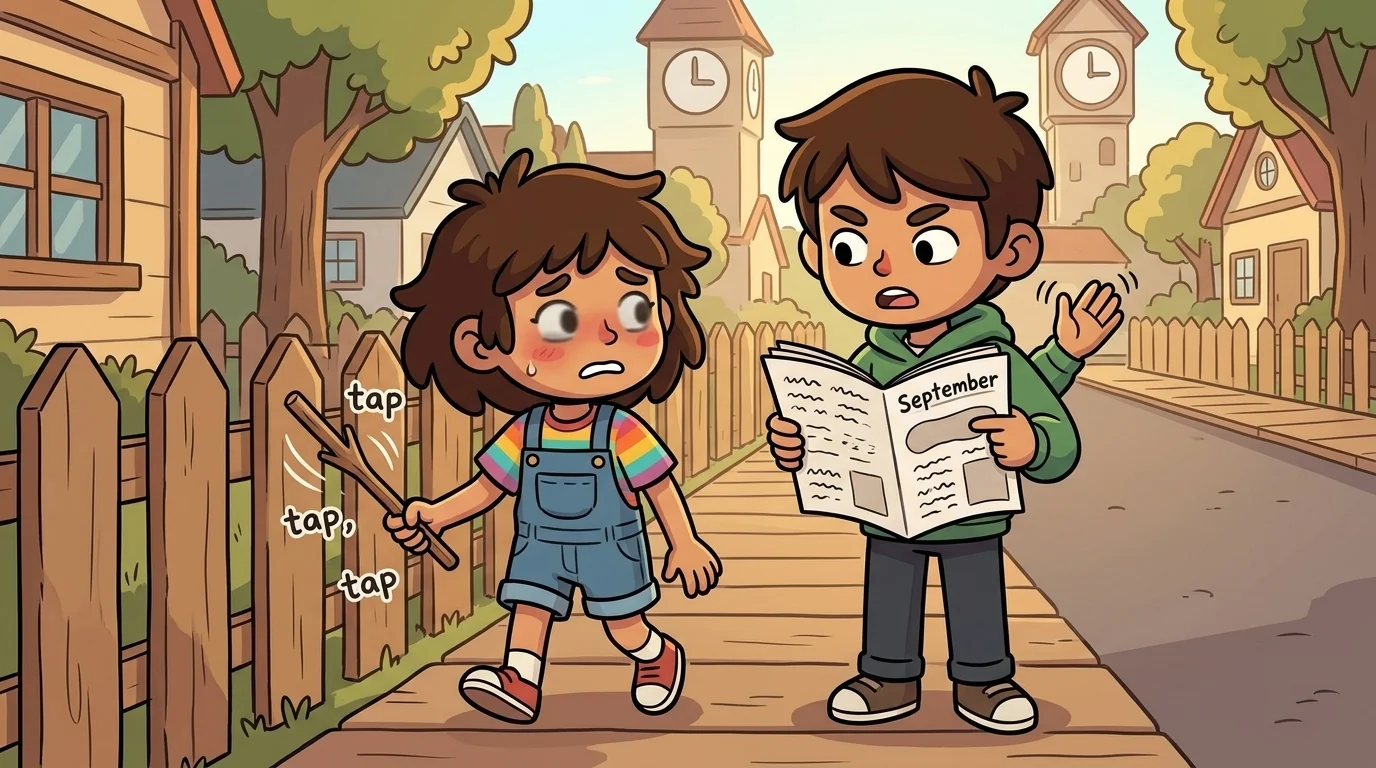
The day it changed, she was walking home tapping a stick along a fence — tap tap tap tap — and her older brother was quizzing her from a magazine, being annoying. "Read this," he said, and pointed at September. Chip froze, same as always.
Her brother, who was not a patient person, huffed and said, "It's just three claps. Watch." And he clapped it. "Sep — tem — ber." Three claps. Three little words.
Chip stopped walking. Three claps? Was that... allowed? Could you just — cut a word up like that?
She spent the whole rest of that walk chopping words with her stick. Bas — ket — ball. Three. Won — der — ful. Three. Long words weren't long anymore. They were just several short words holding hands. She'd been trying to swallow each one whole, and no wonder she choked — you don't eat a sandwich by unhinging your jaw. You take bites.
That's why, years later, she was the first person the Forge sent for when eleven-year-old Nadia came in about ready to cry.
Nadia had a science report due. One word in it had beaten her so badly she'd stopped doing the whole report and just sat in her room feeling like the dumbest kid alive. She slid the paper across Chip's bench and pointed at the word without looking at it, like pointing at a spider.
It was hippopotamus.
"I can't read it," Nadia said flatly. "It's too long. I've tried like ten times."
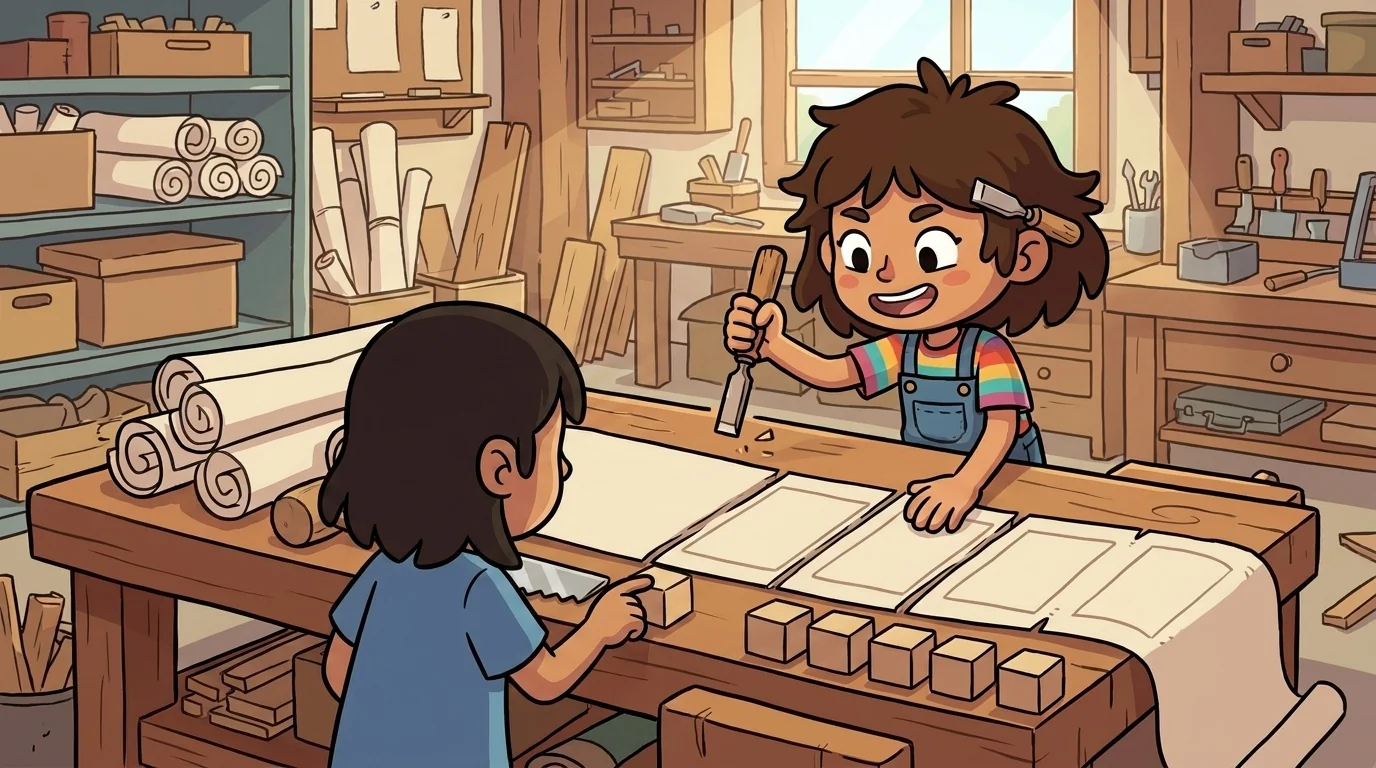
"Oh, that's not a word," Chip said cheerfully. "That's five words in a trench coat pretending to be one. Watch."
She put her chisel down at the first seam. Chop. "Hip." She moved it over. Chop. "po." Chop. "pot." Chop. "a." Chop. "mus."
She'd cut the monster into five little chunks, and she wrote each one in its own box: hip po pot a mus.
"Read me box one," Chip said. "Just box one. Ignore the rest — pretend they don't exist."
Nadia's shoulders were still up around her ears, but she looked at just the first box. Just three letters. "Hip," she said.
"Box two."
"Po."
She got "pot" easy. She tripped on "a" and read it "ay," and Chip just said, "little one, this one — /uh/," and Nadia said "uh" and moved on. No sighing. No big deal. A wrong chunk is a chunk you just fix and keep going.
"Now," said Chip, "run your finger across all five and let them bump into each other."
"Hip — po — pot — a — mus." A pause. Then Nadia's own voice, faster, connecting them: "Hippopotamus."
The monster was dead. And Nadia had never once read a hard word. She'd read five easy ones in a row.
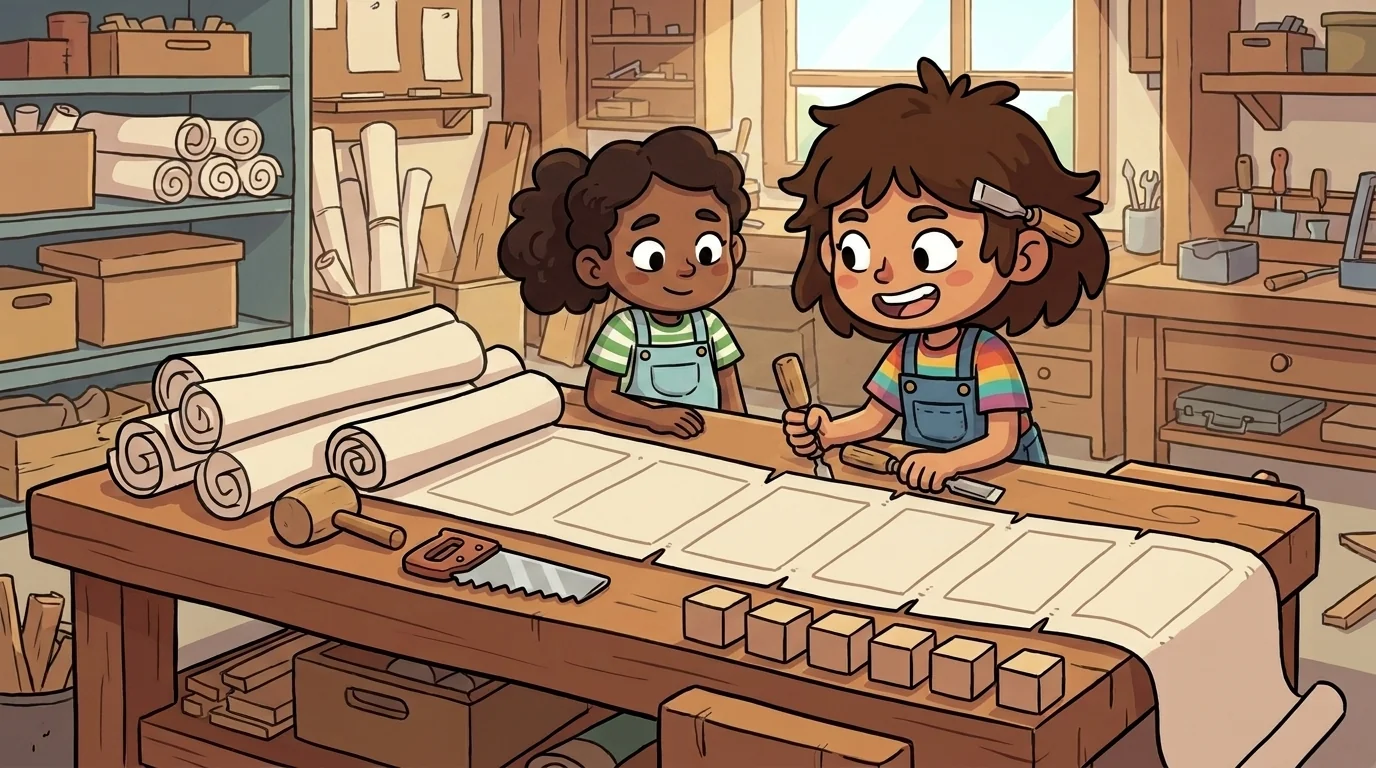
Nadia looked at the five little boxes, then at the giant word, then back at the boxes, like she was catching the whole thing in a lie.
"That's it?" she said. "That's the whole trick? You just... cut it up?"
"That's the whole trick," said Chip. "You already knew how to read every single one of those chunks. You knew hip. You knew pot. You've known those since you were little. The only thing that ever stopped you was that somebody stacked them up tall and you believed the stack."
And Chip watched Nadia's shoulders come down off her ears, watched her whole body kind of unclench — because it turned out she hadn't been the dumbest kid alive after all. She'd just been trying to lift the whole stack at once, when the only rule was one chunk at a time.
That's the feeling Chip loves even more than killing monster words. It's the feeling of a kid finding out that the wall they'd been slamming into wasn't a wall. It was a stack of small steps, and they'd known how to take every single step the whole time. Nobody ever has to lift the whole thing. You just take the next chunk. Then the next one. The monster reads itself.
Nadia finished her science report. She told Chip later that the hippo word was now her favorite word in the world — she grinned every single time she said it — and Chip thought that was extremely fair.
The DecodeForge ensemble
Chip is part of DecodeForge's distributed-narrative cast. Each character embodies a different curricular primitive; together they teach the full subject.
-
Segwyn
Segment & blend (mentor) — the master decoder who slides a word apart into its sounds and back together, and coaches the rest
-
Digby
Digraphs — fuses two letters into ONE sound (the 'one-breath' trick)
-
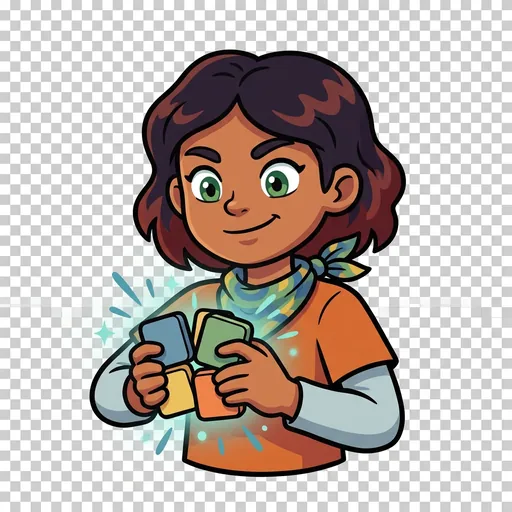
Blenda
Consonant blends — smashes a cluster together so each sound still shows
-
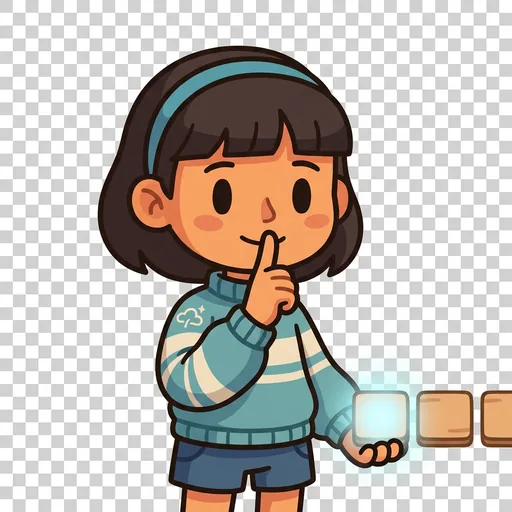
Silent Ellie
Silent / magic-e — stands silent at a word's end and makes the vowel say its name
-
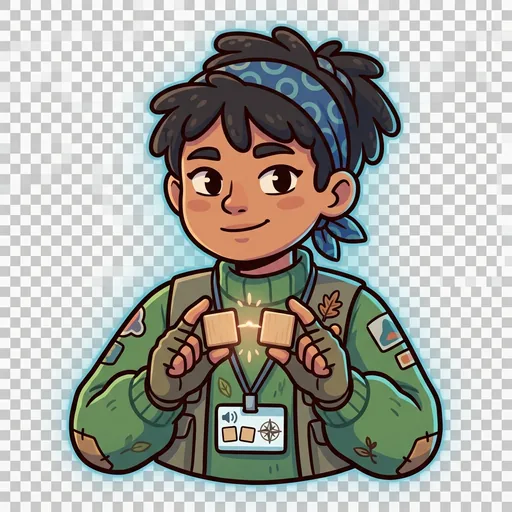
Sylva
Vowel teams — pairs two vowels so the first does the talking
-
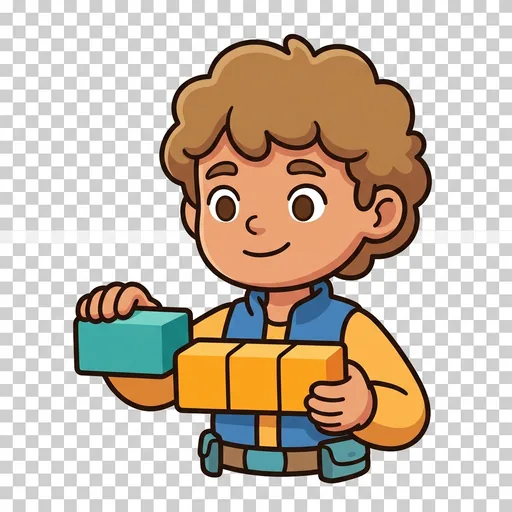
Prefa
Prefixes — clips a meaning-unit onto the FRONT of a word
-
Rootley
Roots / bases — holds the meaning core everything attaches to
-
Fixby
Suffixes — tacks a meaning-unit onto the END and guards the spelling-change rule
-
Fluenna
Fluency — reads the same passage until it flows, keeping the beat (repeated reading)
-
Mapper
Phoneme-grapheme mapping — maps each sound to its spelling tile on the board