
Digby
DIGRAPHS — two letters that team up to make ONE new sound, not two. s and h don't say /s/ /h/; together they say /sh/. Same with ch, th, wh, ck, ph, ng. A digraph FUSES; a blend keeps its sounds separate.
Loading audio…
Press play to listen along. The line being read lights up as you go.
Show full transcript
Loading transcript…
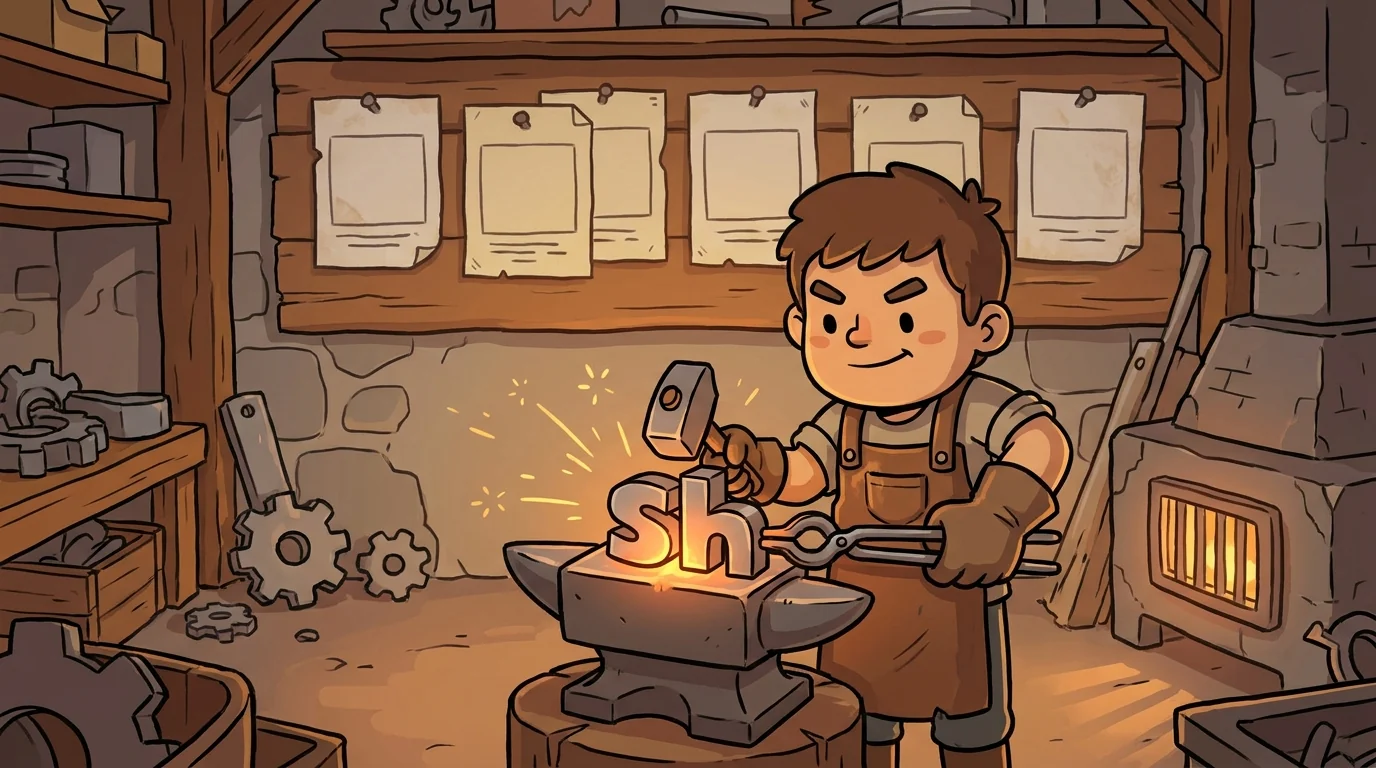
A student named Pia was reading shrine letter by letter and getting nowhere. "/s/… /h/… /r/…" — she was trying to say s and h separately, and the word kept coming out as gibberish.
Digby, playful and warm, put a hand up. "Stop — you're saying two sounds where there's only one. Watch." He wrote s and h, then drew a little arc joining them. "These two agreed to speak with one voice. Not /s/, not /h/ — together they say /sh/. That's a digraph: two letters, one brand-new sound. You don't add them. You fuse them."
Pia tried again — /sh/ /r/ /ine/ — and shrine fell out clean.
"See the difference?" Digby said. "In shrine, the sh is a digraph — one fused sound. The r after it is a blend-partner — a separate sound. So it's /sh/ + /r/. One fused, one separate. The whole trick of English is knowing which letters melt together and which just stand near each other."
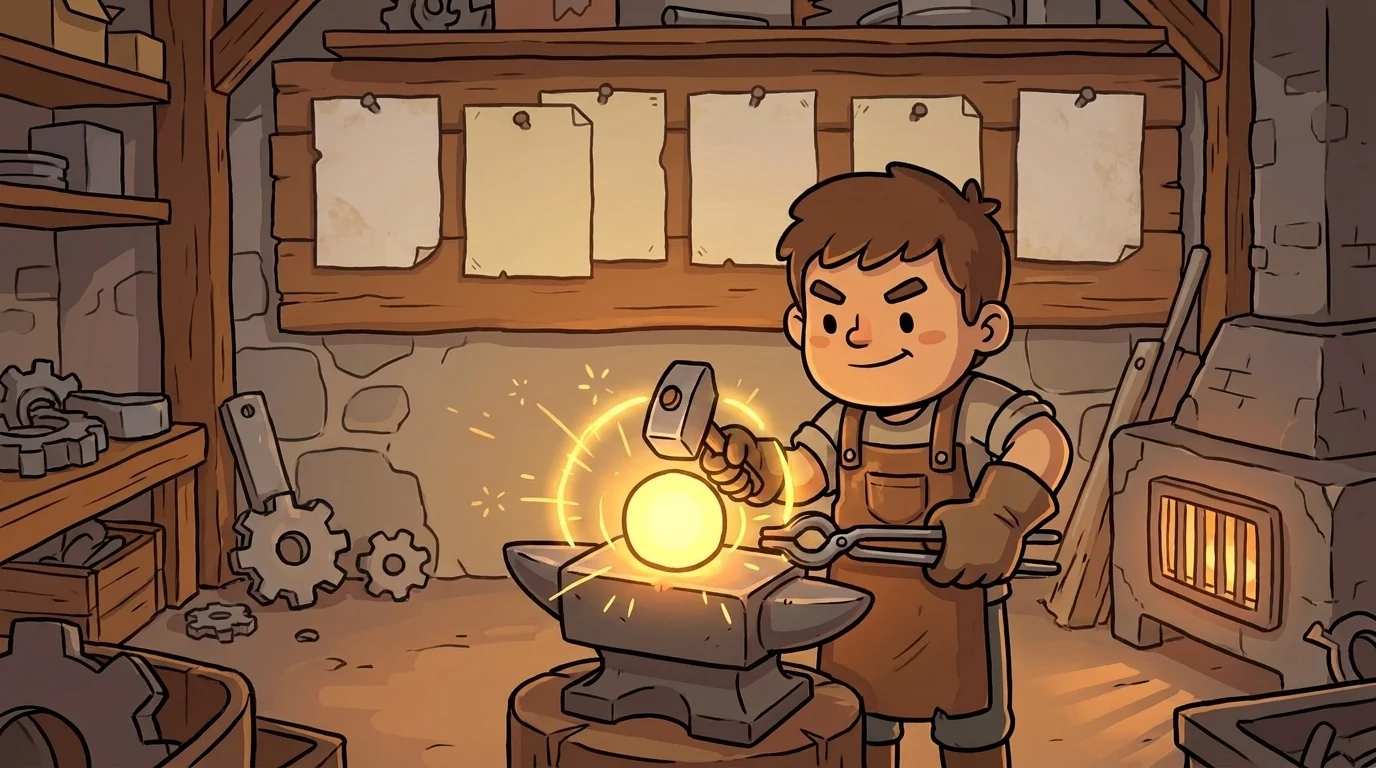
Digby had learned digraphs the hard way, by fighting them.
When he was young, he trusted a rule that felt obvious: one letter, one sound. So ship was "s-hip." Chop was "c-hop." Thin was "t-hin." Every word with a digraph came out broken, and he decided English was simply unfair — a code that changed its own rules. He wasn't wrong that it changed rules. He was wrong that it was unfair. It was just a bigger code than he'd been shown.
An old teacher wrote seven little pairs on cards: sh, ch, th, wh, ph, ck, ng. "These seven are the main teams," she said. "Each one makes ONE sound that neither letter makes alone. ph says /f/. ck says /k/. ng says /ng/, the sound at the end of sing. They're not exceptions to the code. They ARE the code — you just hadn't been handed this page of it." She turned a card over. "One letter one sound is where you start. Digraphs are the next page. Nobody's cheating you."
Digby memorized the seven teams — really knew them, the way you know a friend's face — and suddenly a third of the words that had broken on him read clean. The betrayed, the-rules-keep-changing feeling turned into a collector's delight. He hadn't been failing the code. He'd been reading with half the page missing.
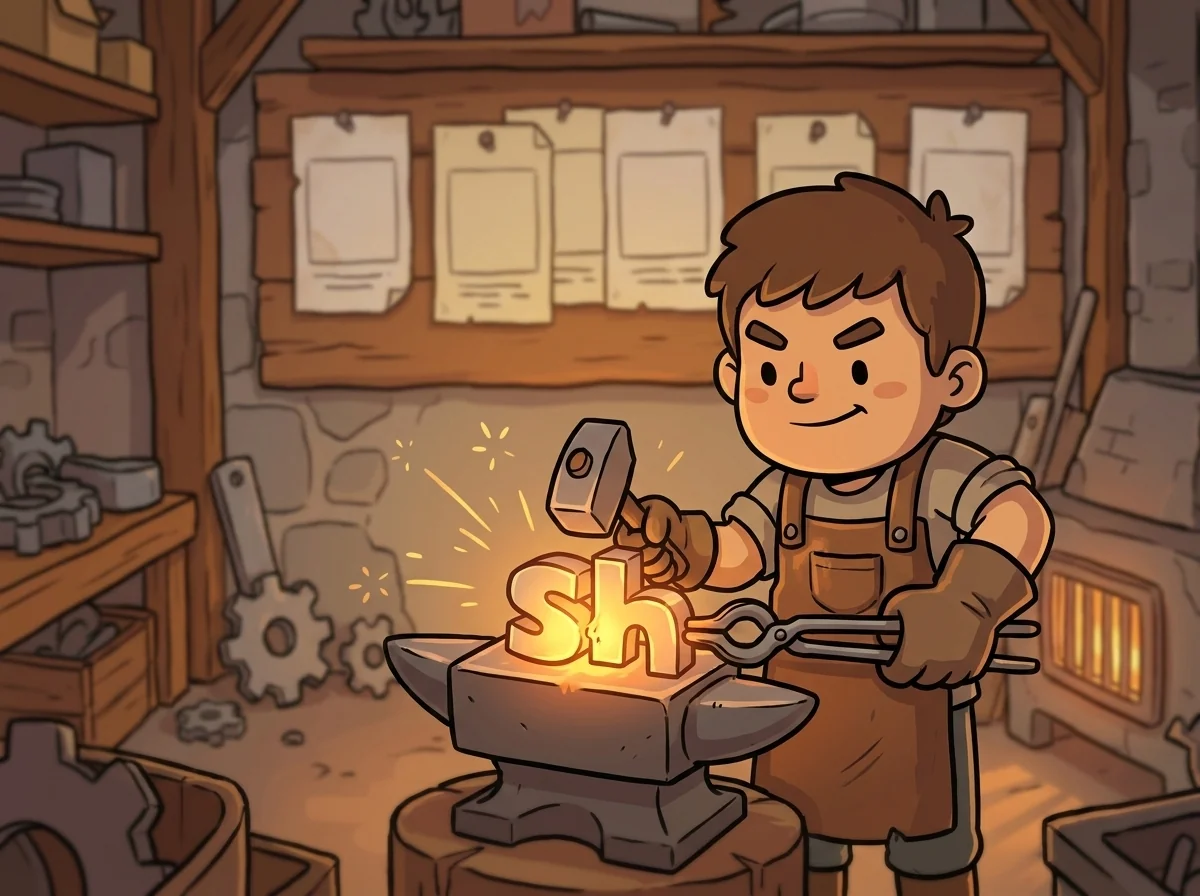
There is a subtlety, and Digby saved it for the readers ready to have their neat rule complicated on purpose.
"The same digraph can make more than one sound," he told Pia, "and that's not the code breaking — it's the code being rich. Say thin." She did. "Now say this." She did. "Feel it? thin is a quiet, breathy /th/ — your voice-box is off. this is a buzzy /th/ — your voice-box is on. Same two letters, two cousins of one sound. Voiced and unvoiced th." He grinned. "And ch has moods too — /ch/ in chip, but /k/ in school, and /sh/ in chef. You don't memorize every case cold. You try the most common sound first, and if the word isn't real, you flex to the next. Reading is a lot of try the likely thing, then adjust."
"And here's the line you must never blur," Digby said, tapping two words. "Ship and split. In ship, sh is a digraph — one sound. In split, sp is a blend — two sounds, /s/ /p/, both there. They look like the same kind of pair. They are opposites. A digraph welds; a blend lines up. Get that backwards and you either invent a sound that isn't there or drop one that is." He shrugged, cheerful. "Seven teams weld. Everything else that clusters, lines up. That's the whole map."
Pia went back to her book and hit whether.
Once she'd have said "w-hether" and stalled. Now she saw the wh team, spoke it with one voice — /w/ (or the breathy /hw/ if you're old-fashioned) — then the th team, voiced this time, buzzing. "Whether." Two digraphs in one word, each two letters speaking as one, and it read like nothing at all.
"That's it," said Digby, delighted. "Two letters, one voice. Learn the seven teams and you stop trying to say sounds that were never there." He drew one more little joining arc in the air. "English isn't unfair. It's just deeper than one-letter-one-sound. And now you've got the next page."
The broken, rules-keep-changing feeling settled into an easy confidence. Pia hadn't been bad at sounding out. She'd been sounding out letters that had quietly become a team.
The DecodeForge ensemble
Digby is part of DecodeForge's distributed-narrative cast. Each character embodies a different curricular primitive; together they teach the full subject.
-
Segwyn
Segment & blend (mentor) — the master decoder who slides a word apart into its sounds and back together, and coaches the rest
-
Chip
Syllable division — chips a big word into syllable chunks you can actually say
-
Blenda
Consonant blends — smashes a cluster together so each sound still shows
-
Silent Ellie
Silent / magic-e — stands silent at a word's end and makes the vowel say its name
-
Sylva
Vowel teams — pairs two vowels so the first does the talking
-
Prefa
Prefixes — clips a meaning-unit onto the FRONT of a word
-

Rootley
Roots / bases — holds the meaning core everything attaches to
-
Fixby
Suffixes — tacks a meaning-unit onto the END and guards the spelling-change rule
-
Fluenna
Fluency — reads the same passage until it flows, keeping the beat (repeated reading)
-
Mapper
Phoneme-grapheme mapping — maps each sound to its spelling tile on the board