
Mapper
PHONEME-GRAPHEME MAPPING — every sound has one or more spellings, and every spelling makes a sound. /f/ can be f, ff, ph, or gh. /ai/ can be ai, ay, or a_e. Mapping means placing the right spelling-tile for each sound. The code is a learnable map, not a random trick.
Loading audio…
Press play to listen along. The line being read lights up as you go.
Show full transcript
Loading transcript…
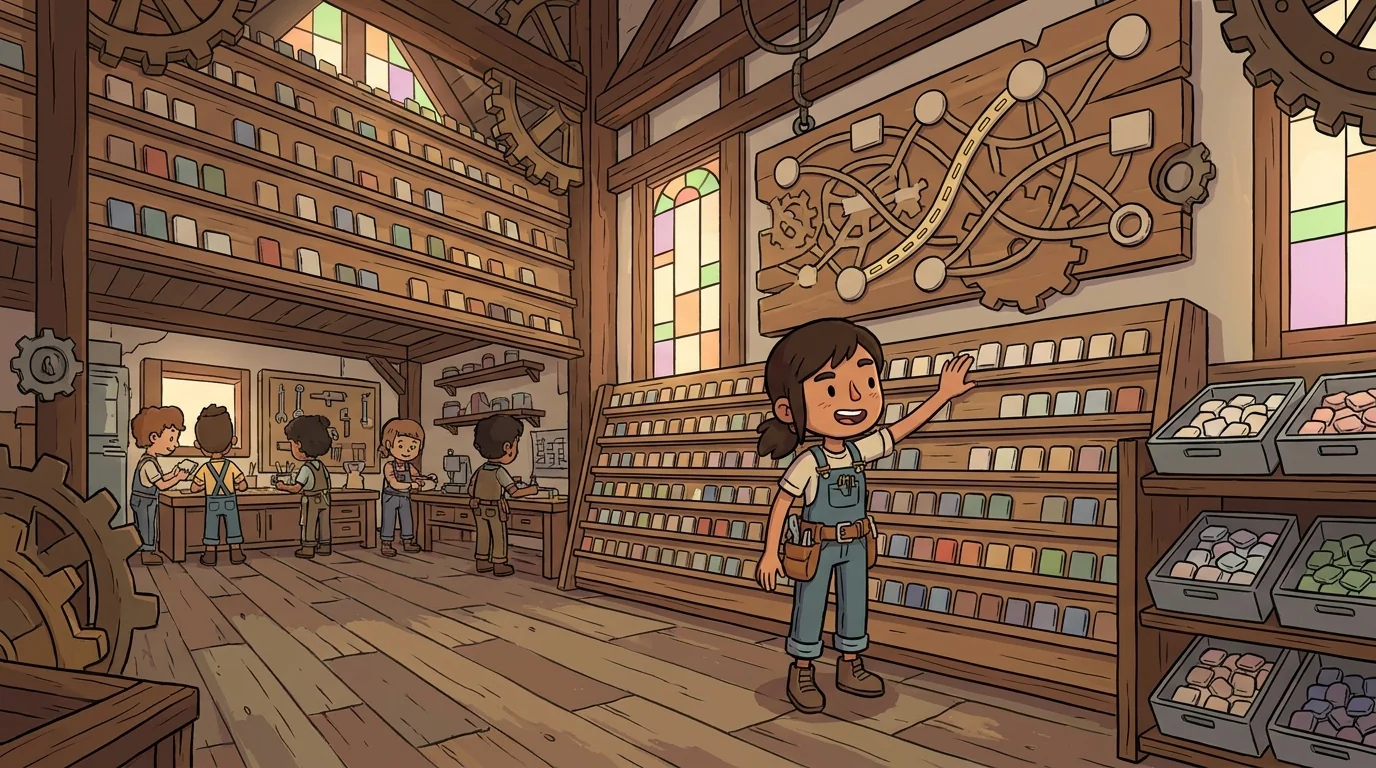
A student named Kofi threw down his pencil. "English spelling is random," he said. "/f/ is f in fish, but ph in phone, but gh in laugh. How is anyone supposed to know?"
Mapper, curious and warm and always half-delighted by a pattern, leaned in. "It feels random. It isn't. Every sound in English has a small, known set of spellings — and which one you use is usually predictable. /f/ is spelled f or ff in plain English words, ph in words that came from Greek, and gh in a few old leftovers like laugh and cough. That's not chaos. That's a map." He drew a little grid: one sound on the left, its spellings on the right. "You don't memorize ten thousand words. You learn the map from each sound to its handful of spellings. That's a much smaller thing to know."
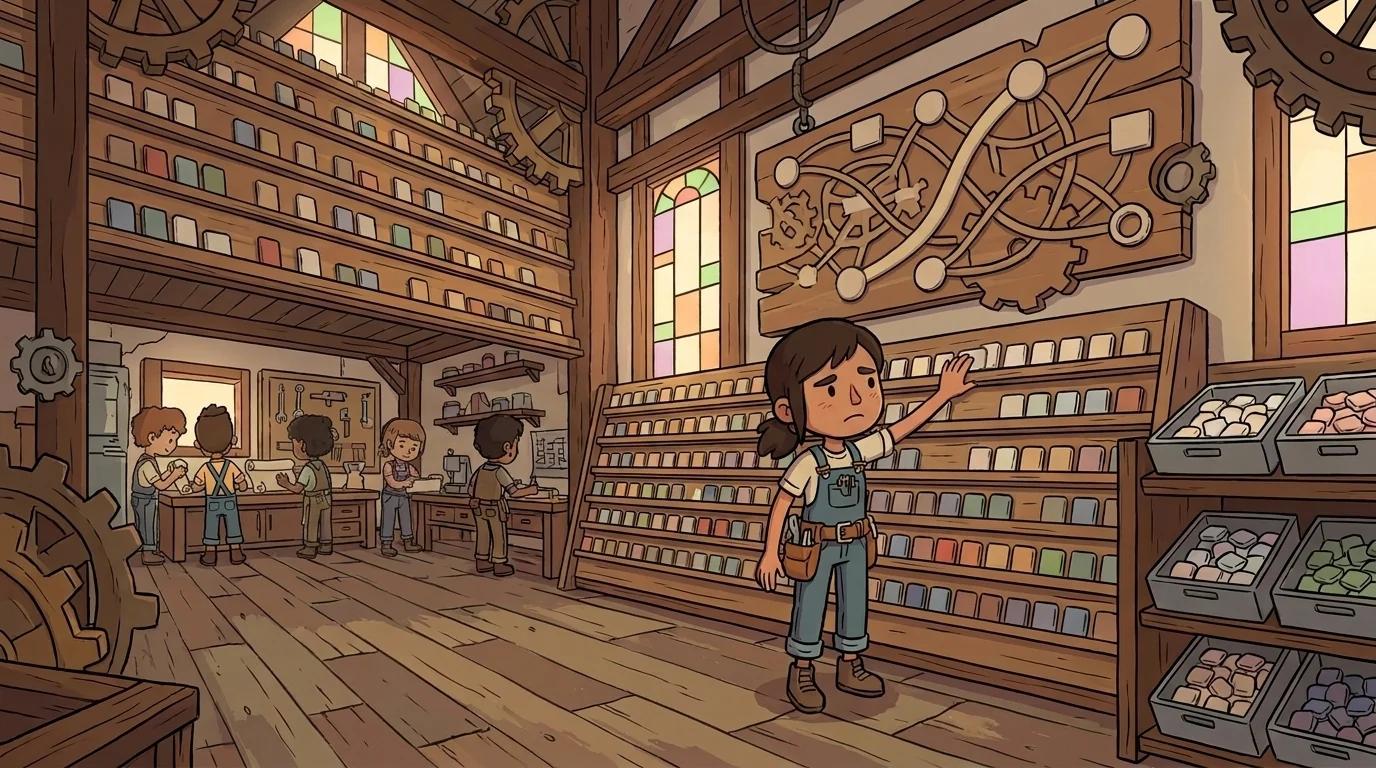
Mapper had once believed the chaos story too, and it had nearly stopped him reading.
He'd meet eight and ate and weight — three spellings for one sound, /ay/ — and conclude the whole system was rigged against him. Why would anyone spell one sound so many ways? He felt like the code was laughing at him. He didn't yet know that each of those spellings had a reason — a history, a position, a job — and that the reasons made the map learnable instead of maddening.
An old teacher showed him the map for /ay/: "a_e as in cake, ai in the middle as in rain, ay at the end as in play, and a few special ones — eigh in eight, ei in vein — that came from other languages. Five or six spellings, each with a where and a why." She smiled. "You thought it was random because you were looking at it word by word. Look at it sound by sound, and each sound has a short, orderly list."
Mapper learned to see spelling from the sound outward — one sound, its small map of spellings — and the chaos resolved into pattern. The rigged-against-me feeling turned into a collector's joy: every new word was a chance to see the map at work.

There is a two-way power to mapping, and Mapper taught it to Advanced readers.
"The map runs both directions," he said. "Reading: you see a grapheme — a spelling-unit — and you know what sound it makes. Spelling: you hear a sound and you choose which grapheme spells it. Same map, two directions, just like Segwyn's engine." He tapped the /f/ row. "When you read ph, the map says /f/. When you spell /f/ in a science word like photo or graph, the map says 'this is Greek — use ph.' The map doesn't just decode; it helps you choose the right spelling when you write." He grinned. "That's why good readers are usually good spellers. Same map. Both directions."

"And here's the deepest idea," Mapper said. "A letter and a sound are not the same thing, and confusing them is where 'English is random' comes from. One sound can be one letter (/f/ = f), two letters (/f/ = ph), even a surprise (/f/ = gh). And one letter can make different sounds in different words (c = /k/ in cat, /s/ in city). So you never map letter-to-letter. You map sound-to-spelling: break the word into its sounds, then for each sound place the spelling the map predicts for that position and origin." He laid out tiles for dolphin: /d/=d, /o/=o, /l/=l, /f/=ph, /i/=i, /n/=n. "Six sounds, and the /f/ grabs two letters because the word is Greek. Map by sound, respect the origin, and 'random' disappears."
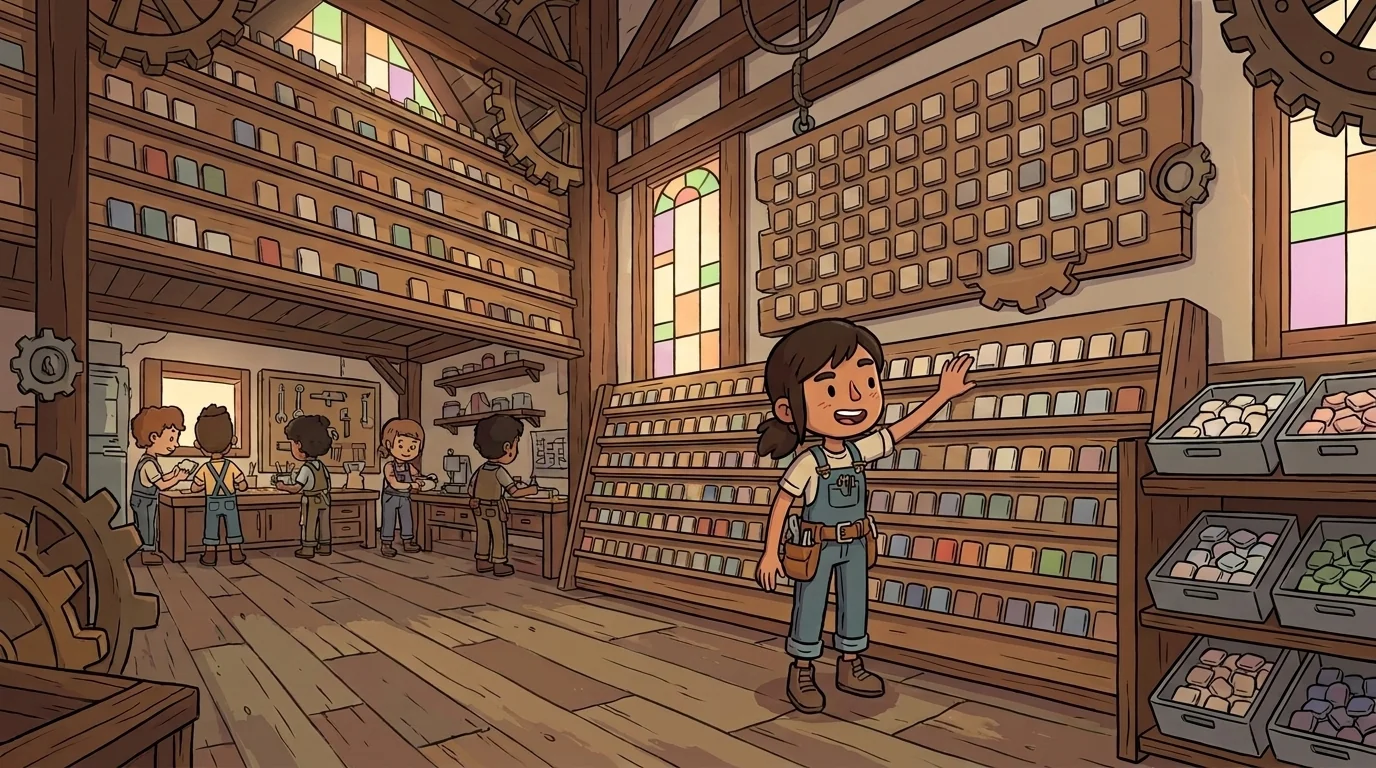
Kofi picked his pencil back up and looked at rough, which he'd always hated.
"Okay," he said. "Sounds: /r/ /u/ /f/. The /f/ is spelled gh — one of those old leftovers, like laugh. It's not random. It's on the map." He read it, then spelled tough and enough the same way, seeing the gh-/f/ pattern as a small, real cluster rather than three insults from the language.
"That's it," said Mapper, delighted. "Every sound has a short list of spellings, and position and origin usually tell you which. It's a map, not a trick." He tapped his little grid. "You were never bad at spelling. You were reading a map you'd been told was noise."
The rigged-against-me anger settled into a pattern-hunter's calm. Kofi hadn't been failing English. He'd been handed the language as chaos when it was quietly a map.
The DecodeForge ensemble
Mapper is part of DecodeForge's distributed-narrative cast. Each character embodies a different curricular primitive; together they teach the full subject.
-

Segwyn
Segment & blend (mentor) — the master decoder who slides a word apart into its sounds and back together, and coaches the rest
-

Chip
Syllable division — chips a big word into syllable chunks you can actually say
-

Digby
Digraphs — fuses two letters into ONE sound (the 'one-breath' trick)
-
Blenda
Consonant blends — smashes a cluster together so each sound still shows
-
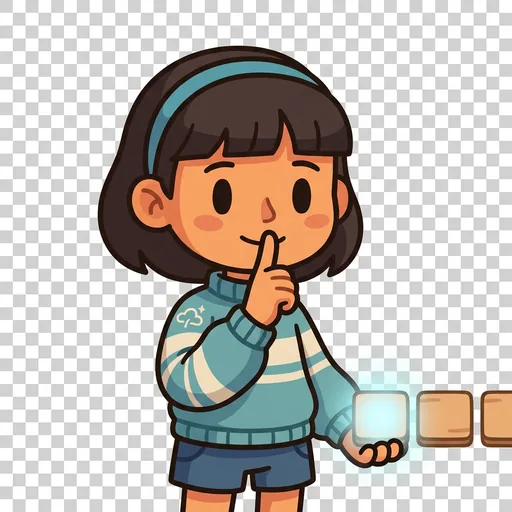
Silent Ellie
Silent / magic-e — stands silent at a word's end and makes the vowel say its name
-
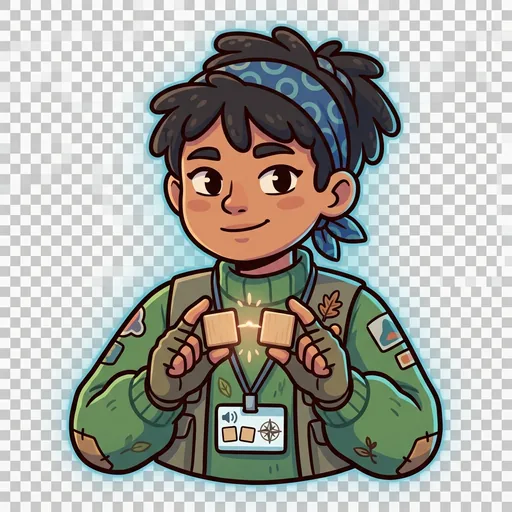
Sylva
Vowel teams — pairs two vowels so the first does the talking
-

Prefa
Prefixes — clips a meaning-unit onto the FRONT of a word
-

Rootley
Roots / bases — holds the meaning core everything attaches to
-

Fixby
Suffixes — tacks a meaning-unit onto the END and guards the spelling-change rule
-

Fluenna
Fluency — reads the same passage until it flows, keeping the beat (repeated reading)