
Lexi
DESIGN VOCABULARY — precise shared words for what you see (silhouette, motif, drape, hue) let people describe and compare things exactly instead of gesturing vaguely; naming a feature makes it VISIBLE and comparable, and shared terms turn private impressions into checkable claims
Loading audio…
Press play to listen along. The line being read lights up as you go.
Show full transcript
Loading transcript…
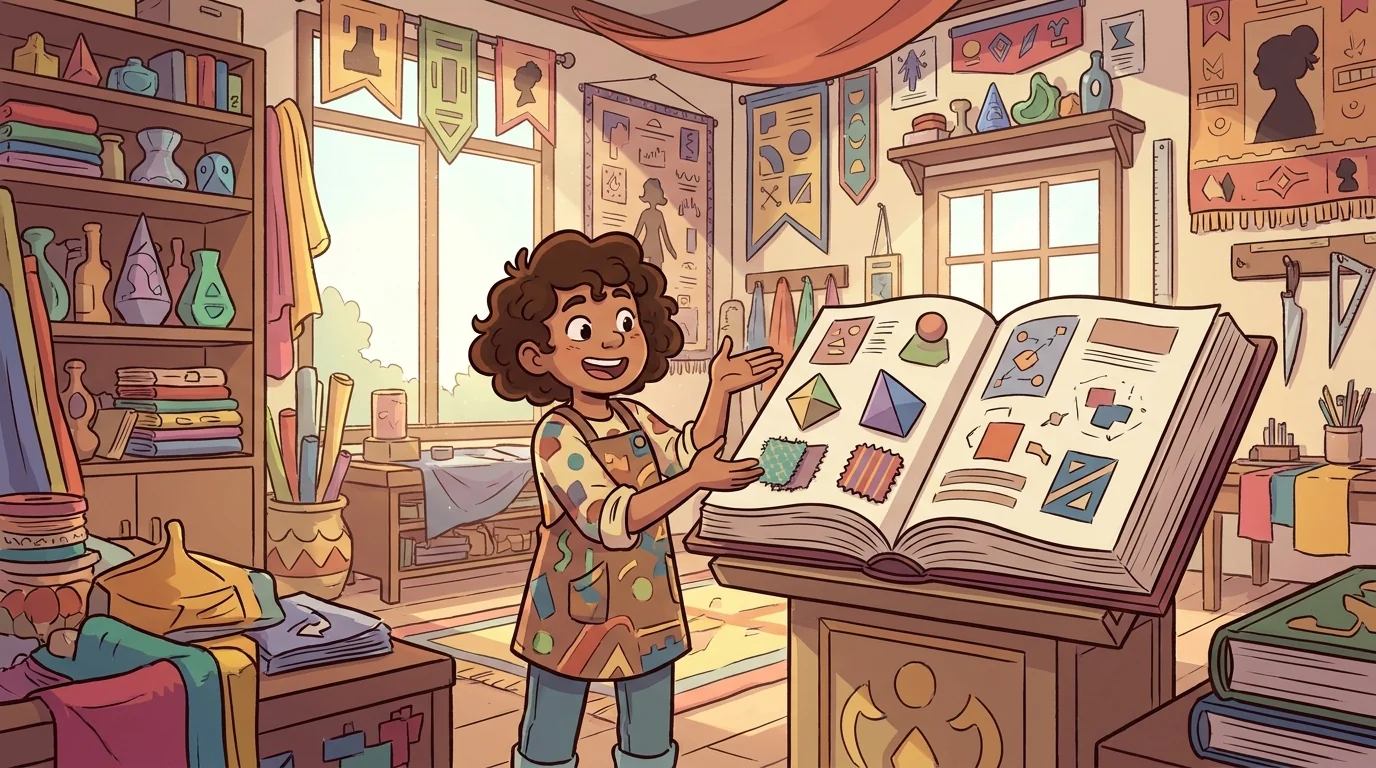
Lexi loved the exact right word the way a locksmith loves the exact right key, and it had watched the whole guild get sharper the moment they learned to name what they saw. When the apprentice gestured at a garment and said "it just looks... you know, old and fancy," Lexi laughed kindly.
"'Old and fancy' is a wave of the hand, not a reading," Lexi said. "You can't compare a wave. You can't check a wave. Give me the words — the silhouette, the motif, the drape, the hue — and 'old and fancy' turns into something you can actually think with."
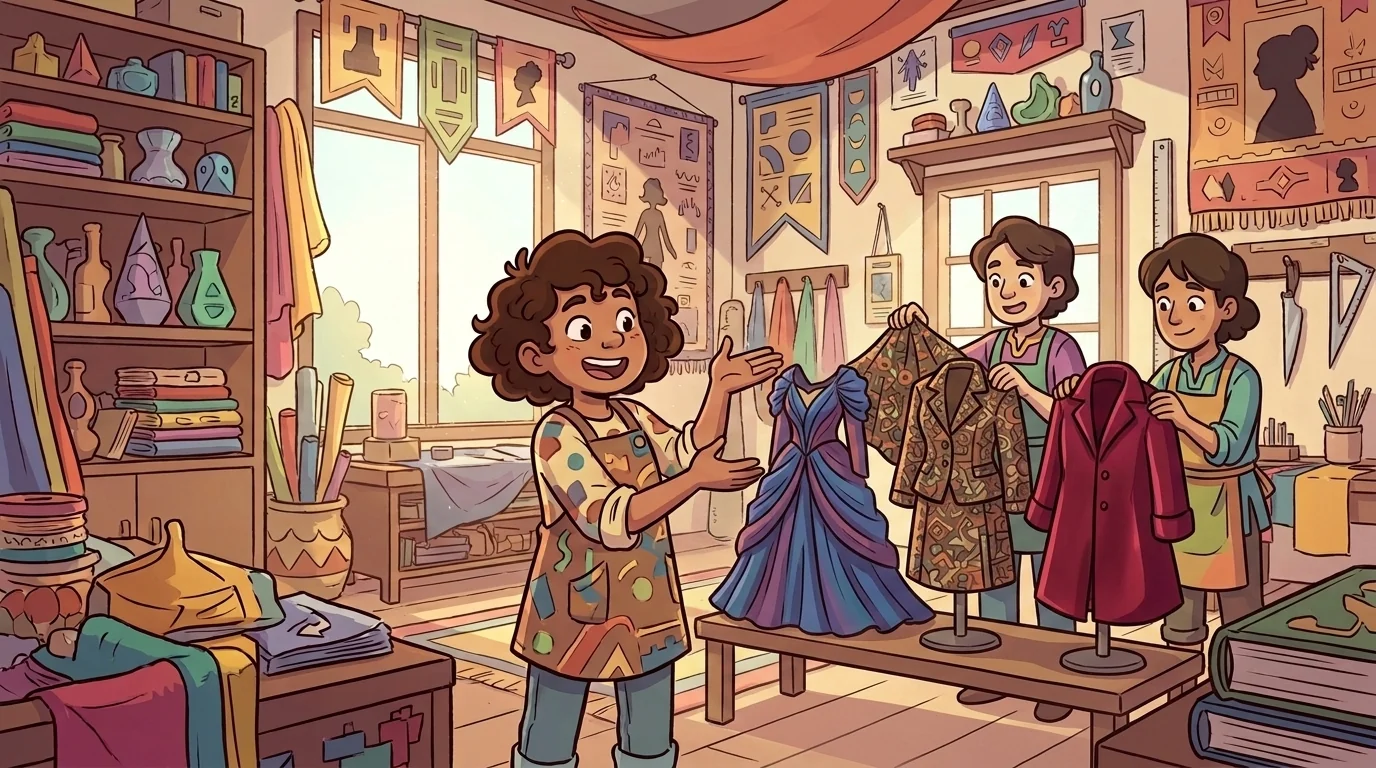
Lexi taught the first Advanced idea: naming a feature makes it visible.
"Here's the strange, true thing about words," Lexi said. "Before you have a name for a feature, your eye slides right over it. Once you have the word, you suddenly see it — everywhere. Learn the word silhouette and you start noticing the overall shape of everything. Learn drape and you feel how a fabric falls. Learn hue and colour splits into a hundred distinguishable shades. The vocabulary doesn't just describe what you see — it changes what you're able to see, by giving your attention a handle to grab." Lexi tapped its temple. "A namer isn't decorating a reading with fancy terms. A namer is unlocking perception. No word, no sight."
The apprentice asked why the whole guild needed to share the same words.
"Because shared words turn private impressions into checkable claims," Lexi said, delighted. "If I say 'it looks fancy' and you say 'it looks plain,' we're stuck — two vague feelings with no way to settle it. But if I say 'the silhouette is narrow, the hue is deep, the motif is repeated' — now we're pointing at specific, nameable features that we can both look at and agree or disagree about. Precise shared vocabulary is what lets a guild reason together instead of just trading impressions. It's the difference between 'I feel like it's older' and 'the silhouette matches the earlier shape and there's no anachronism — so it's likely older.' The second one, anyone can check." Lexi grinned. "Vague words make an argument. Precise words make an investigation."
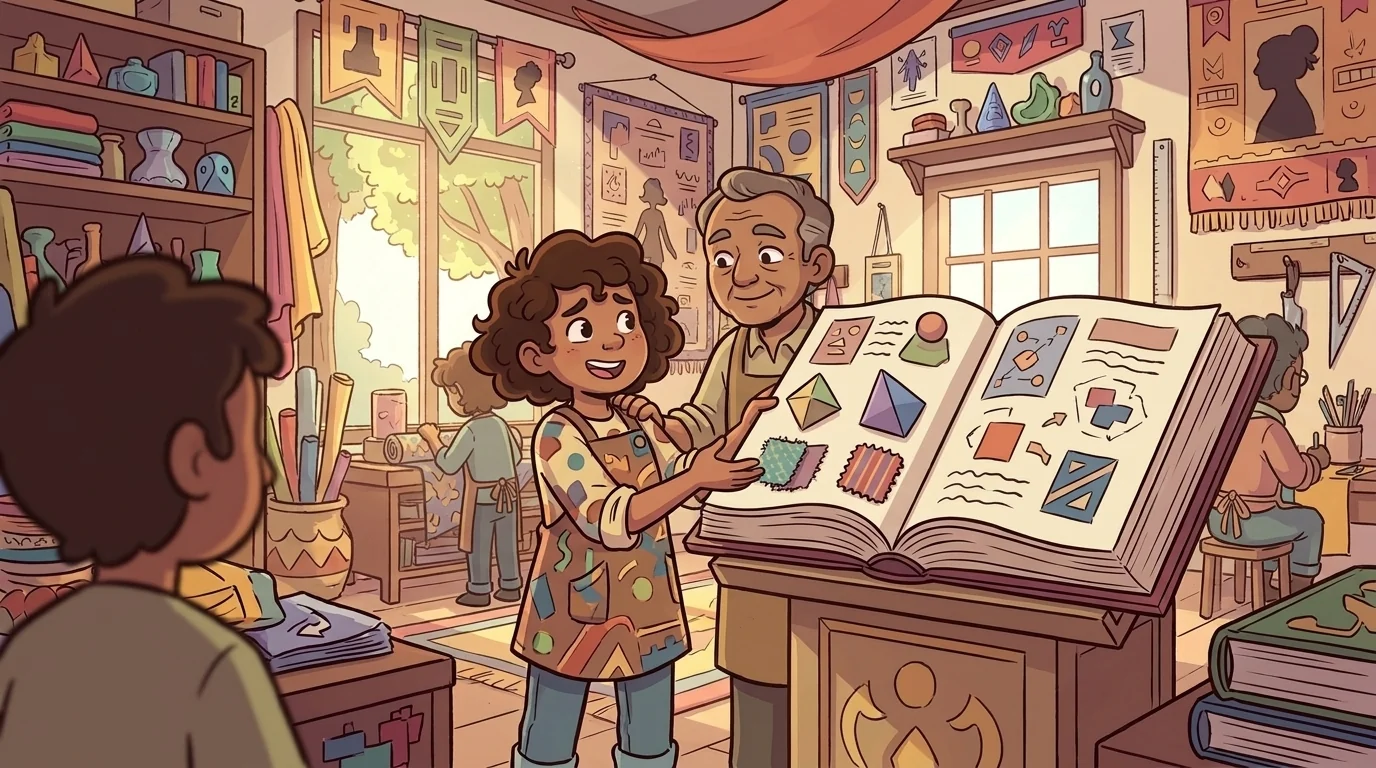
Then Lexi, being the last of the cast, tied every namer together.
"And this is why I come last," Lexi said warmly. "I don't add a new thing to read — I give you the words to read everything the others taught. Warp's fiber. Skein's route. Toile's motif. Madder's hue. Selvage's silhouette. Damask's anachronism. Argent's rank-signal. Vane's function. Relic's evidence. Every one of those is a word — a precise handle that turns a vague glance into a real reading. Learn the whole vocabulary and you don't just see a garment; you read it, feature by named feature, and you can say exactly what you know and exactly what you're still guessing." Lexi spread its hands. "The cast gave you the eyes. I give you the words. Together, that's how you read the past — precisely, and honestly."
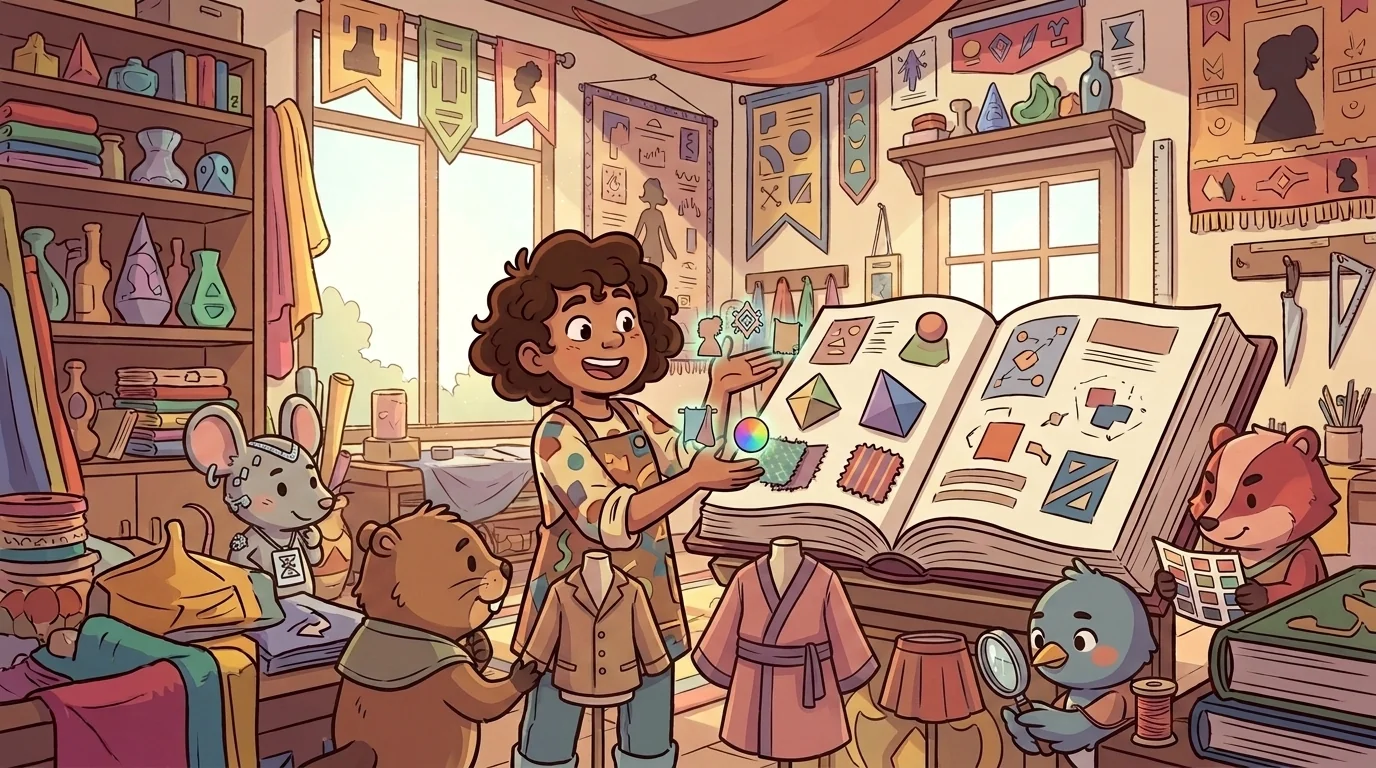
The apprentice looked at the garment again and, this time, named it instead of waving.
"So instead of 'old and fancy,'" the apprentice said, "I can say the silhouette is narrow, the hue is deep and hard-won, the motif is one I'd need to learn from its makers — and now I can actually compare it to others."
"Now you read like a namer," Lexi said, precise and pleased. "Precise shared words — silhouette, motif, drape, hue — let you describe and compare exactly, instead of waving vaguely. Name what you see, and you'll finally see it."
The EraForge ensemble
Lexi is part of EraForge's distributed-narrative cast. Each character embodies a different curricular primitive; together they teach the full subject.
-
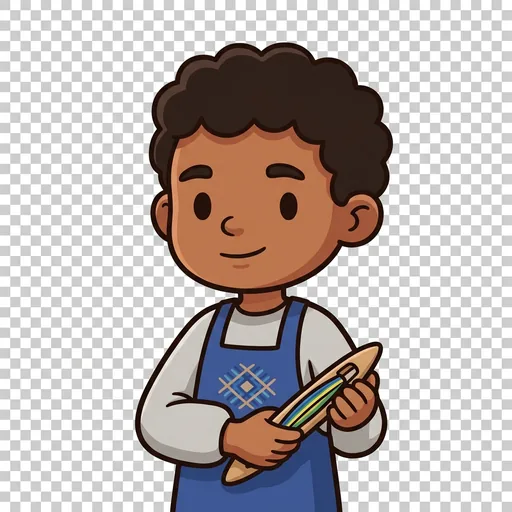
Warp
Fiber → cloth — every cloth remembers the land whose plant or animal made it
-
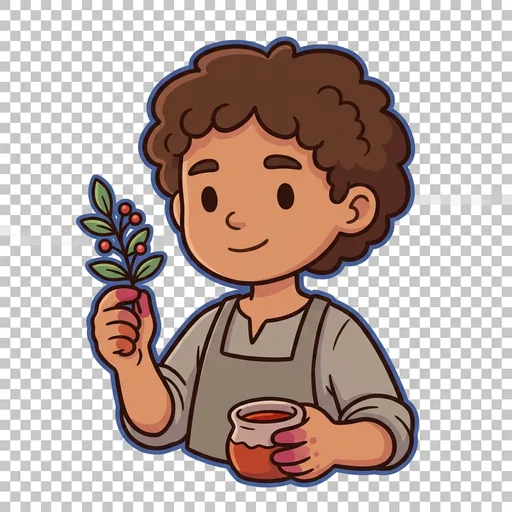
Madder
Natural dye — before factories every colour came from a plant, root, or shell; a rare colour meant a long reach
-
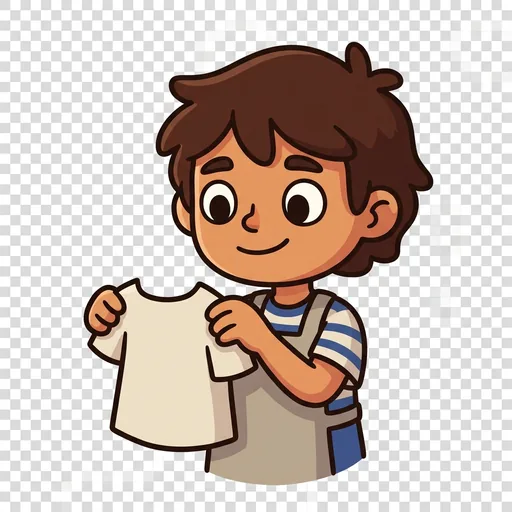
Selvage
Silhouette → era — the outer shape a dressed figure makes dates the look, even from a shadow
-
Toile
A motif is a message — read a woven pattern on its own makers' terms, never guess
-
Argent
Status dress — what a person may wear encodes rank and role; read the whole society
-

Vane
Climate & geography — clothing is a clever answer to a place's weather and terrain
-

Skein
Trade & exchange — where a fabric is worn traces the route that carried it, not just its source
-

Relic
Source-reading (the curator & mentor) — read an object as evidence: who made it, when, and why
-
Damask
Revival & anachronism — old styles return re-made; the out-of-time detail reveals the real age