Damask
REVIVAL & ANACHRONISM — old styles come back re-made in new eras, so spotting the out-of-time detail tells a true old thing from a later revival
Loading audio…
Press play to listen along. The line being read lights up as you go.
Show full transcript
Loading transcript…
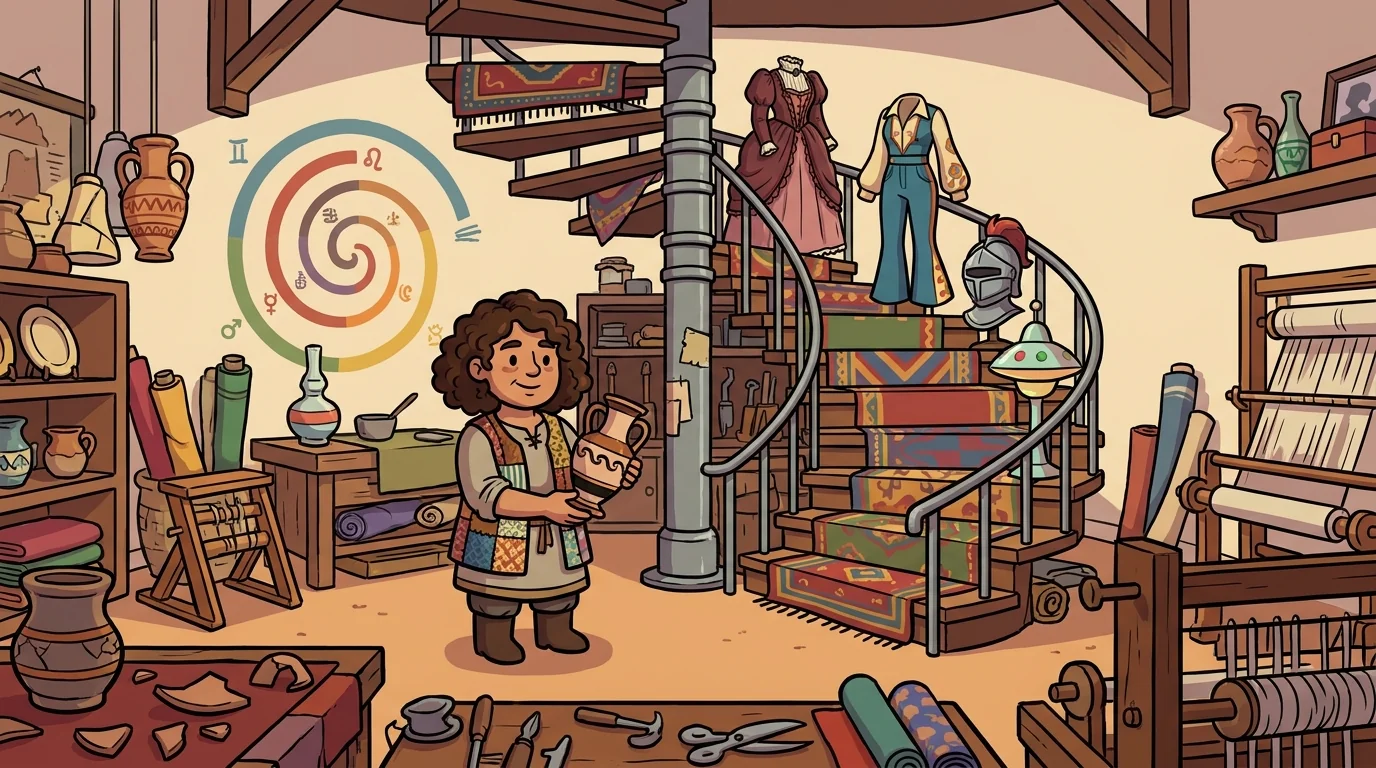
Damask loved old styles — and loved, even more, that they kept coming back. A shape from long ago would vanish for a century, then reappear, re-made for a new age. She thought of history as a spiral, not a line: fashions returning, dressed up in the tools and materials of whatever era called them back.
Which made her very good at one thing the others found hard: telling a truly old thing from a later thing pretending to be old. But she'd learned it by being fooled first.
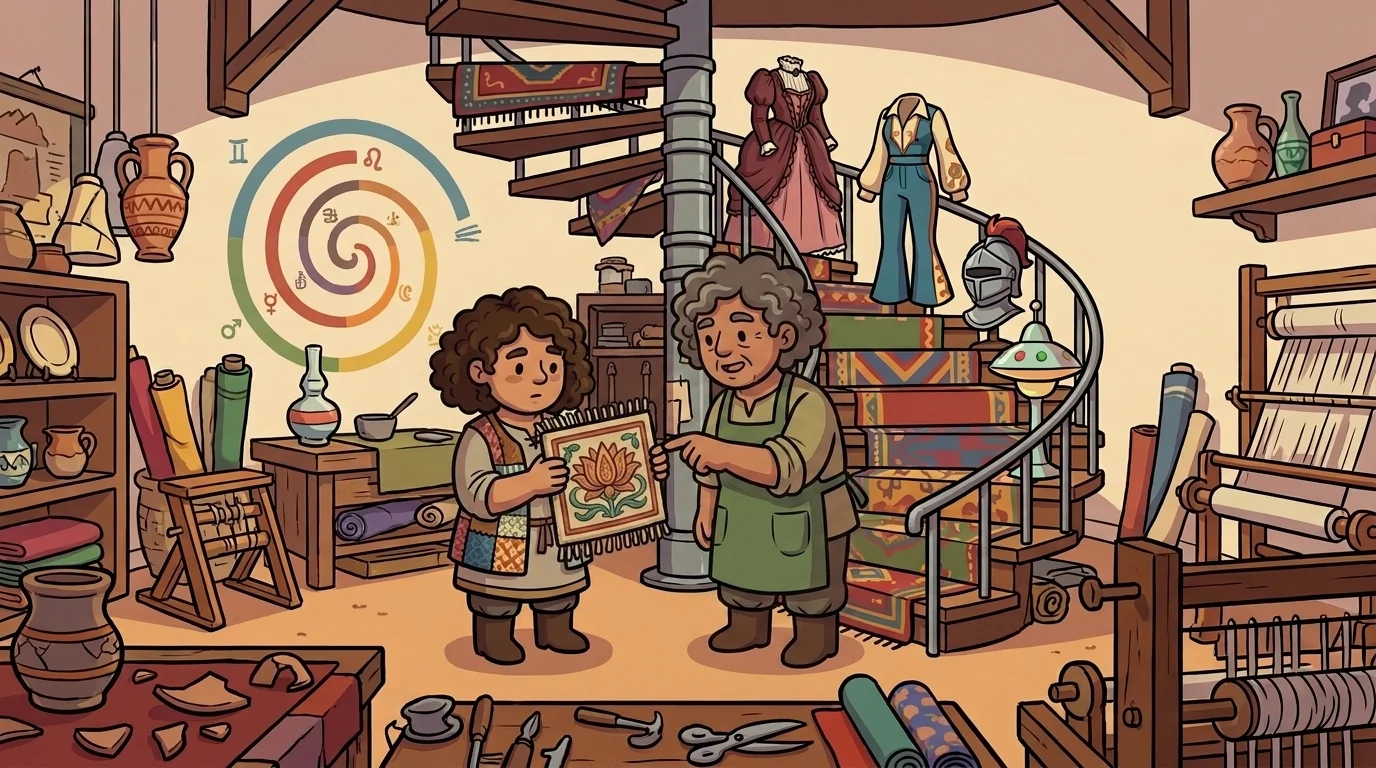
Relic handed her a "very old" embroidered panel a proud collector had donated. "Genuine antique," Damask said, admiring the aged, faded style.
"Look closer," said Relic. "Read every part for its era — and see if they all agree."
Damask looked, and looked, and then she saw it: the style was old, yes — but the thread had a strange, too-even shine, and the dye was a flat, perfect colour that no plant of that old era could have made. The design was a revival. Someone in a much later age had copied the old look — using modern thread and modern dye they couldn't hide.
"The style lied," Damask said slowly. "But the materials told the truth."
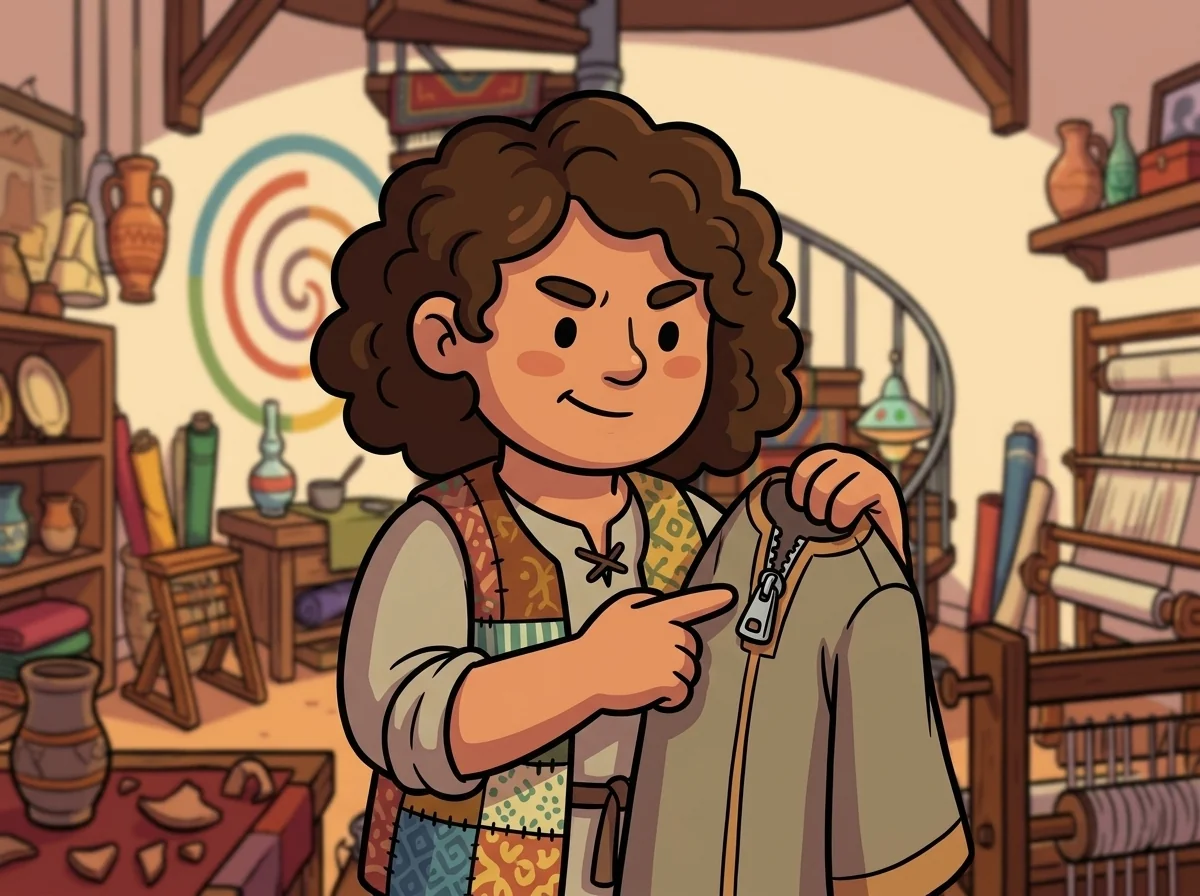
That became her method: when the parts of a thing don't all belong to the same era, the newest part tells you its real age. A garment might have an ancient-looking shape, but a zip-fastener or a machine-perfect seam or a factory dye gives away that it was actually made much later. The oldest-looking thing in a room can be the youngest, if you catch the anachronism — the one detail that doesn't fit its supposed time.
She practiced by hunting mismatches. An "ancient" scroll on modern paper. A "medieval" cloak sewn with perfectly even machine stitches. A "centuries-old" pattern printed by a method that hadn't been invented until recently. The trick wasn't to admire what looked right — it was to find the single thread that was wrong.
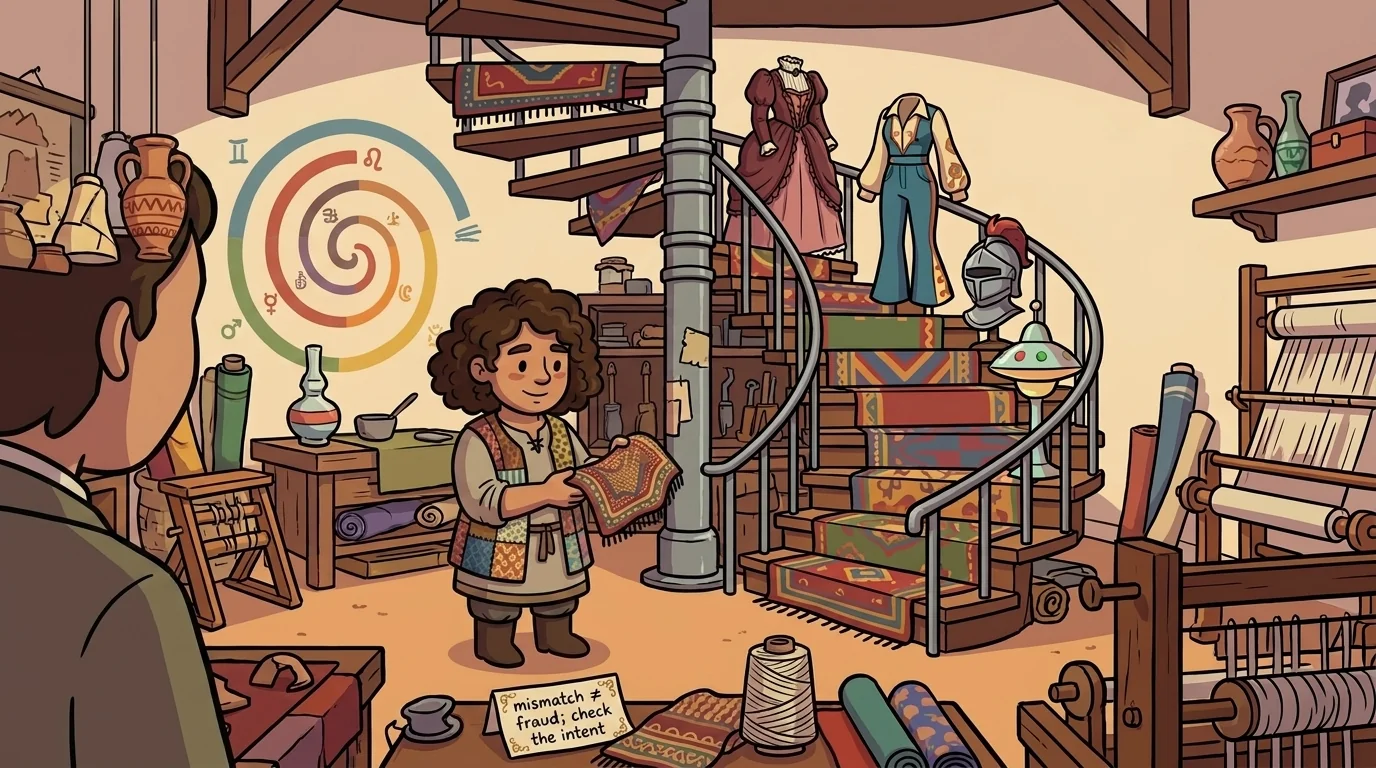
But Damask learned to be fair, too, because not every mismatch is a fake. Her honest mistake taught her that. She once triumphantly "caught" a garment as a forgery because it mixed an old shape with a newer fabric — only to learn it was an honest revival: a maker of a later age openly remaking an old style, never pretending it was ancient. "A revival isn't a fake," Relic reminded her. "A fake lies about its age; a revival celebrates an old idea in a new time and doesn't hide it. Catch the mismatch — then ask whether it's a lie or just a comeback." Damask wrote: mismatch ≠ fraud; check the intent.
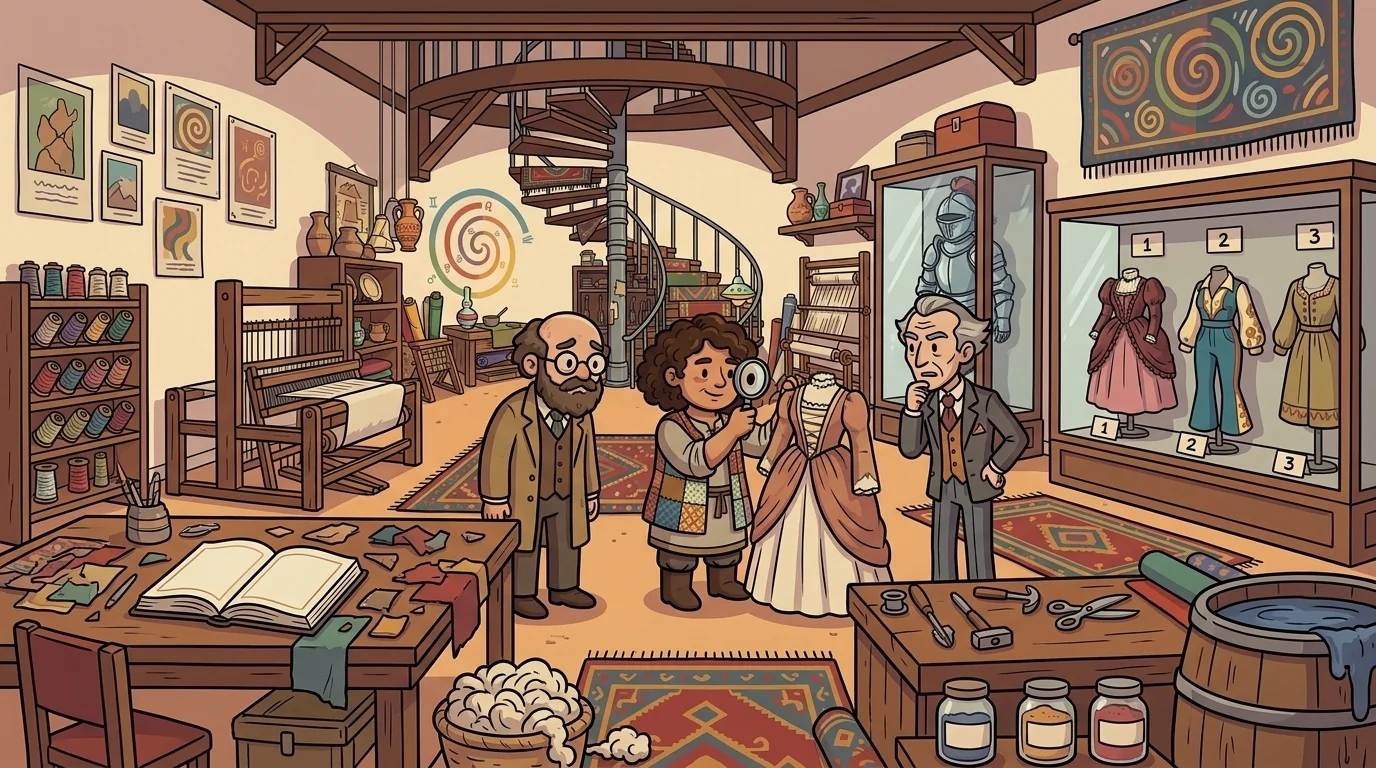
The test came when two experts nearly came to blows over a gown said to be a priceless ancient treasure.
"Flawless," insisted its owner. "Every detail is perfect for the era."
"Too perfect," murmured Damask. She examined it thread by thread until she found them: seams too even to be hand-sewn in that old age, and a dye too flat and bright for any plant of the time. "The style is a beautiful copy of the era," she said carefully. "But the making belongs to a much later one. This isn't an ancient treasure. It's a skilled, later revival — valuable in its own way, but not what it claims to be."
The room deflated, then buzzed. The owner checked the records; Damask was right.
"How did you spot it when the experts couldn't?" someone asked.
"They looked for what fit," said Damask. "I hunted for the one thing that didn't. Old styles come back all the time — so find the detail that doesn't belong to the era, and it'll tell you the real age every time."
The EraForge ensemble
Damask is part of EraForge's distributed-narrative cast. Each character embodies a different curricular primitive; together they teach the full subject.
-
Warp
Fiber → cloth — every cloth remembers the land whose plant or animal made it
-

Madder
Natural dye — before factories every colour came from a plant, root, or shell; a rare colour meant a long reach
-
Selvage
Silhouette → era — the outer shape a dressed figure makes dates the look, even from a shadow
-
Toile
A motif is a message — read a woven pattern on its own makers' terms, never guess
-
Argent
Status dress — what a person may wear encodes rank and role; read the whole society
-

Vane
Climate & geography — clothing is a clever answer to a place's weather and terrain
-

Skein
Trade & exchange — where a fabric is worn traces the route that carried it, not just its source
-

Relic
Source-reading (the curator & mentor) — read an object as evidence: who made it, when, and why
-
Lexi
Design vocabulary — the exact word (silhouette, motif, drape, hue) lets you describe and compare