Madder
NATURAL DYE — before factory colour, every hue came from a plant, root, insect, or mineral, and a rare colour was rare because its source was hard to get
Loading audio…
Press play to listen along. The line being read lights up as you go.
Show full transcript
Loading transcript…
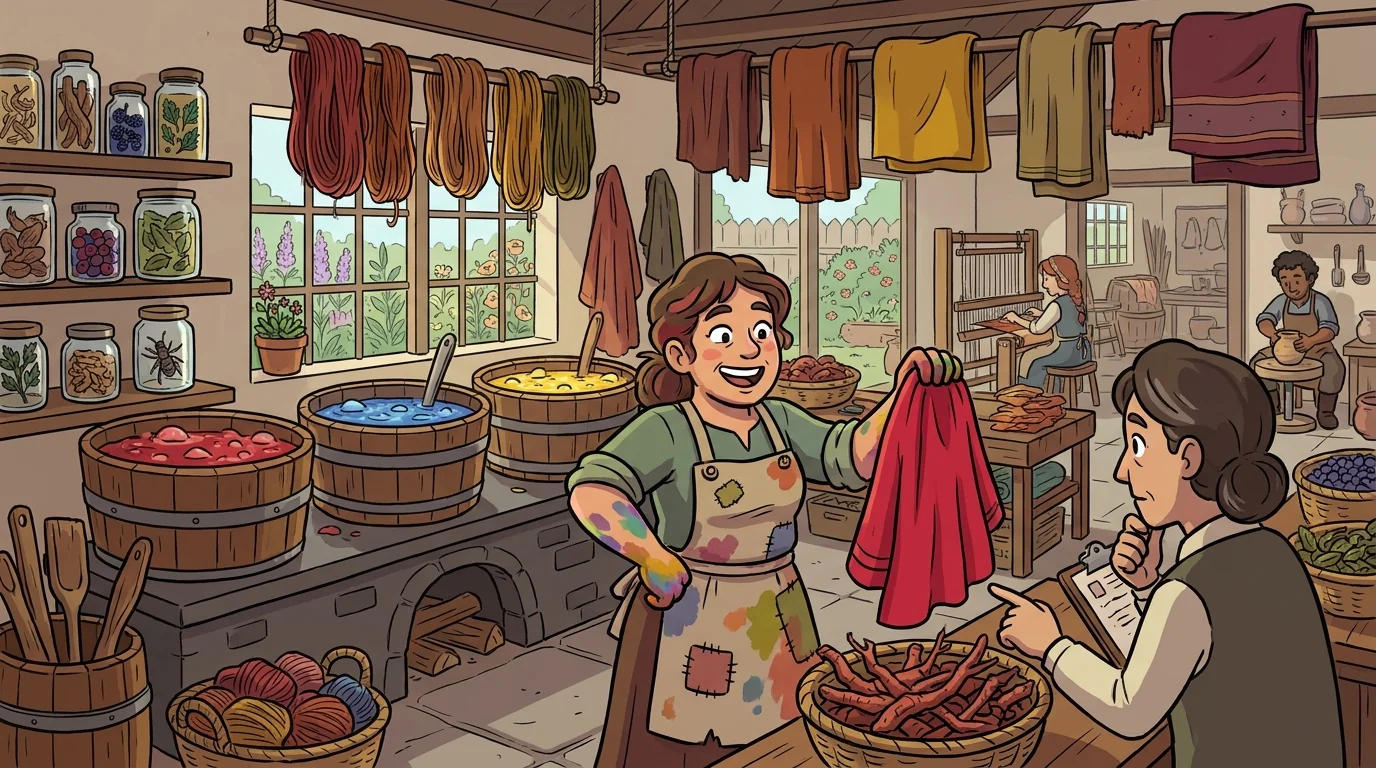
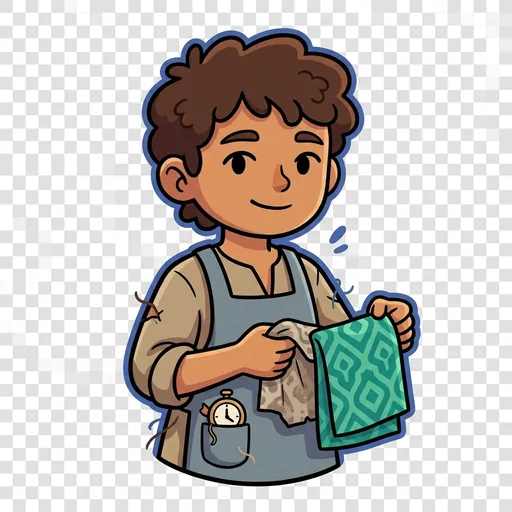
Two benches down from the weaver worked Madder, the Maker's Hall dyer, whose fingers were forever stained some new shade and who thought that was the best thing about the job.
Madder loved colour, but for a long time she loved it the shallow way — as if red were simply red and blue simply blue, the way they come out of a modern tube. She could match a shade beautifully. What she couldn't yet do was answer the question the curator kept asking her: where did this colour come from?
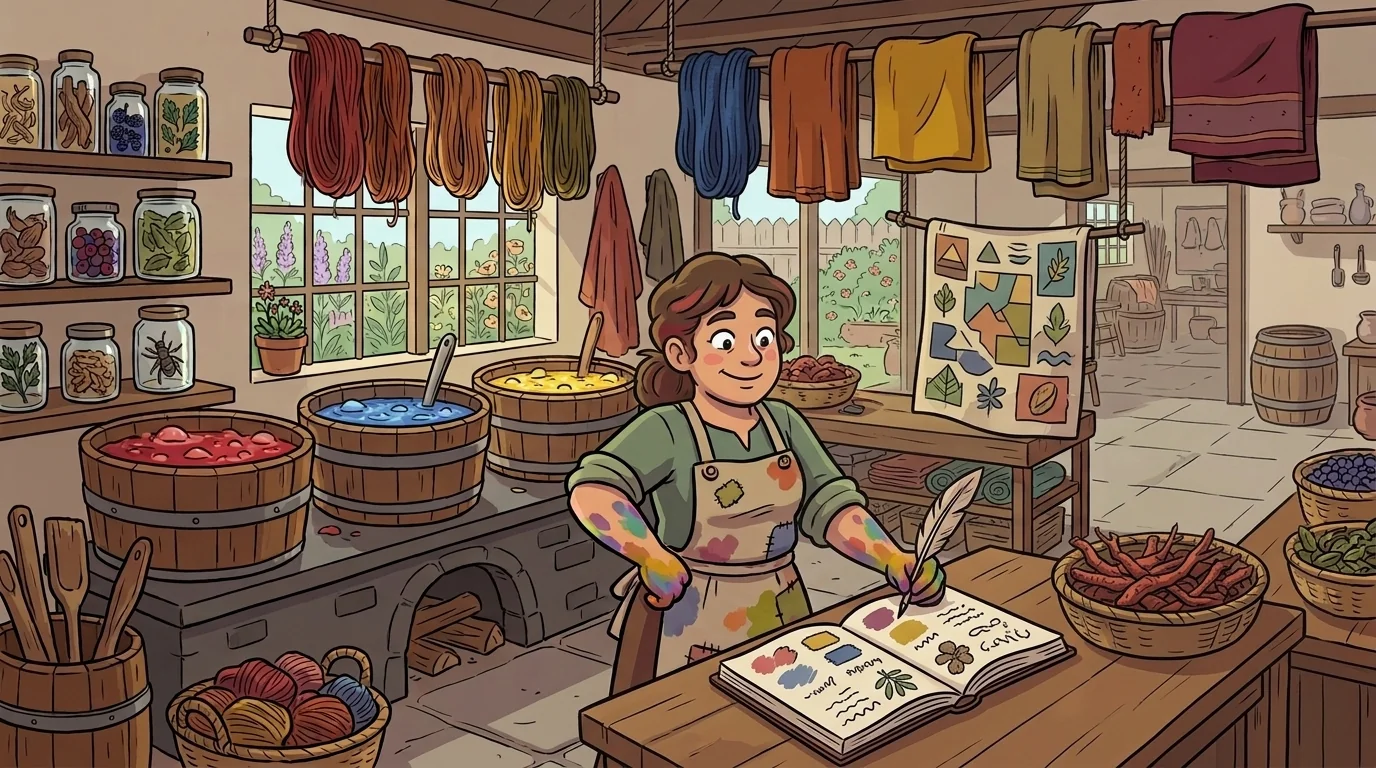
"Before the factories," Relic told her, "no colour came from nowhere. Every single hue had to be found — pulled out of a plant, a root, a bug, a shell, or a stone. If you know the source, you know the story."
Madder started keeping a colour-notebook, and colour stopped being flat. Red could come from the madder root she was named for, dug up and simmered. Blue came from the indigo plant, or from woad in colder lands — a slow, strange dye that turns cloth green in the air and then blue as you watch. Yellow was easy and everywhere, from onion skins to weld to saffron. Brown and black came from walnut hulls and oak galls.
Once she knew the sources, a dyed cloth became a little map again — not of where the fiber grew, but of what the dyers could reach.
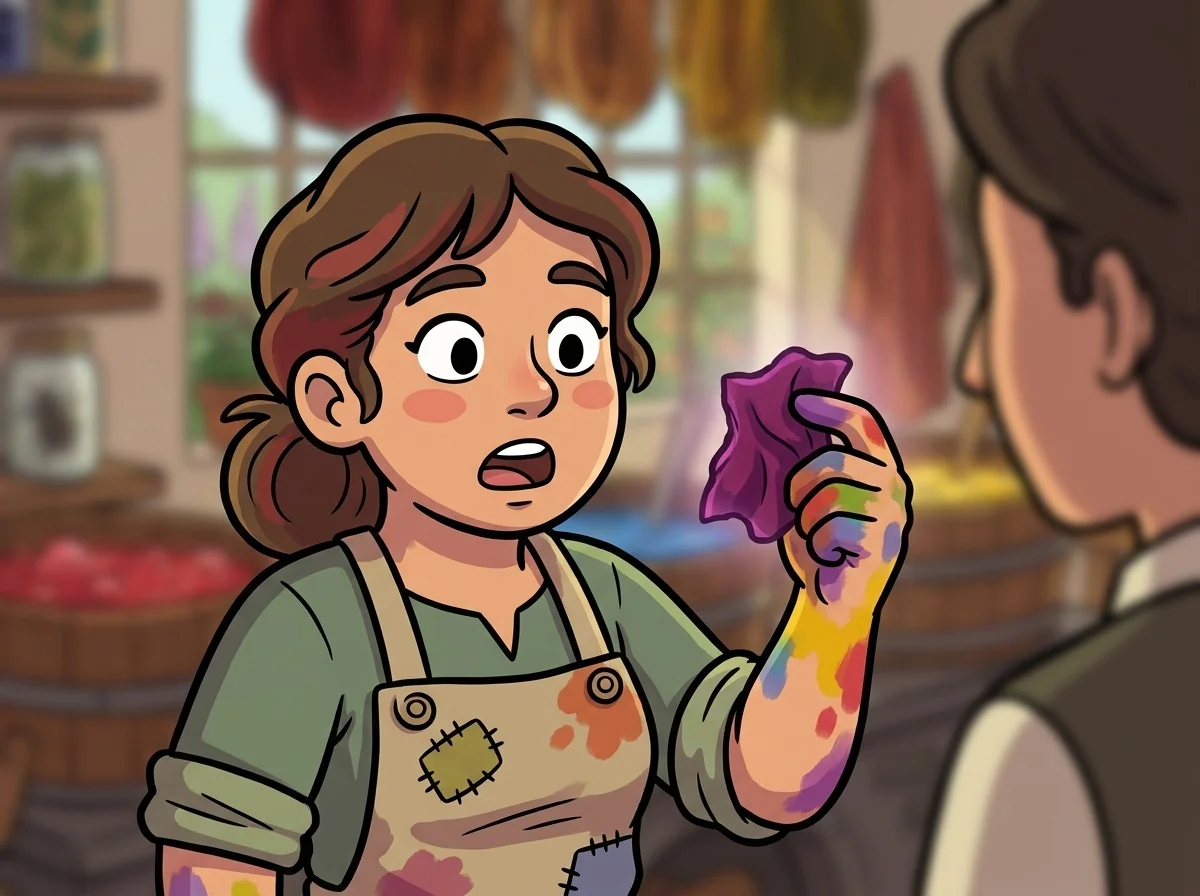
Then Relic showed her the colour that changed everything: a scrap of cloth dyed a deep, glowing purple.
"Tyrian purple," Relic said quietly. "Made from sea-snails. It took thousands of them to dye a single robe, and someone had to gather every one by the shore and process them by hand. That is why, in some places, only rulers were allowed to wear it — not because purple is magic, but because purple was almost impossible to make."
Madder stared. The colour hadn't been precious because a king declared it so. It was precious first, because of the sheer reaching it took — and the king-rules came after, to guard something already rare.
"So the colour is a receipt," she said slowly. "It shows how much effort someone spent."
"Now you're reading it," said Relic.
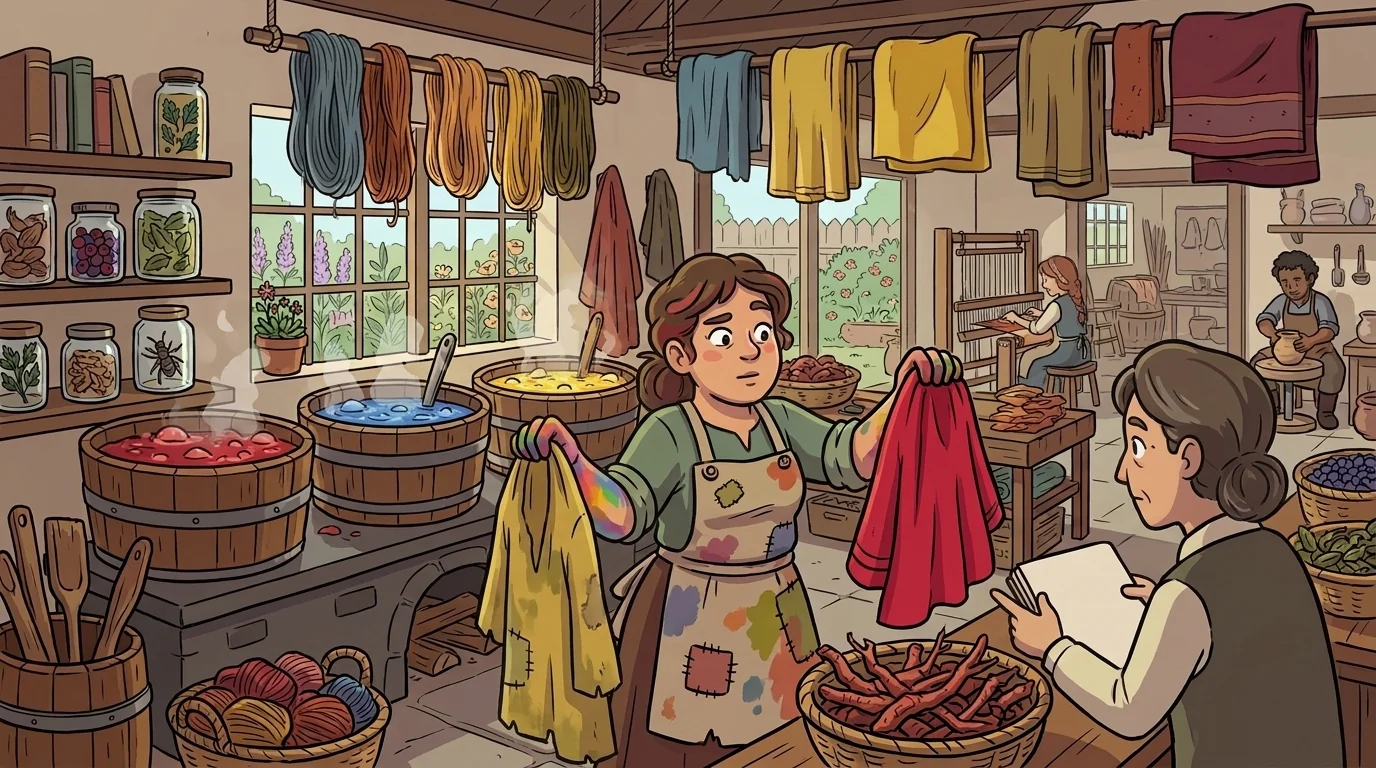
Madder began testing everyone's clothes, not for the shade but for the reach behind it. A field-worker's tunic dyed dull yellow — onion skins, easy, close to home. A festival sash in bright madder-red — more effort, a plant grown on purpose. And once, in the Evidence Room, a faded ribbon of that impossible sea-purple, guarded under glass.
She made one honest mistake worth keeping. She saw a brilliant, even blue and declared it "cheap — anyone could make blue." Relic corrected her kindly: even, colorfast blue from natural indigo took real skill and many careful dips; a patchy, fading blue was the cheap one. "The source matters," Relic said, "but so does the doing. A hard colour badly made isn't worth more than an easy colour made well." Madder underlined it twice.
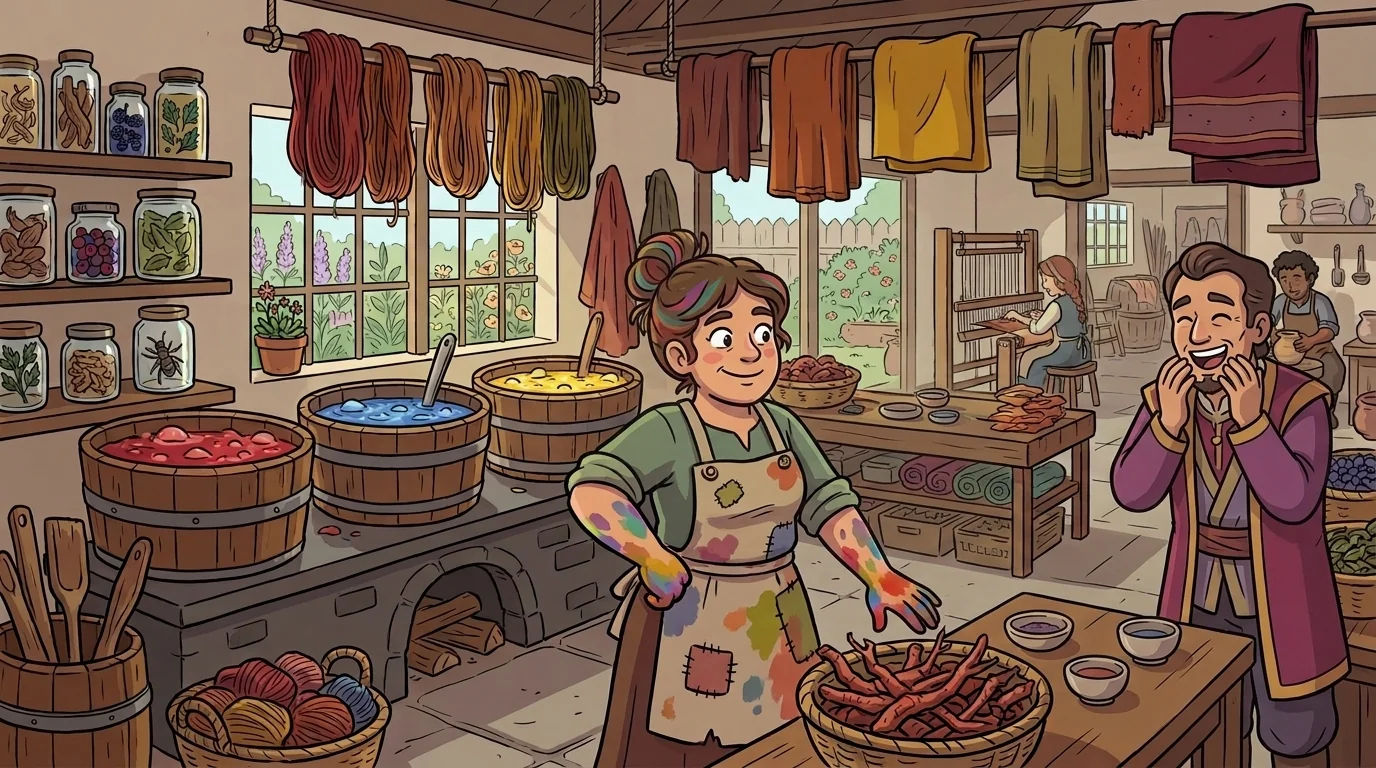
A visitor once bragged that his purple robe proved his family had always been powerful.
Madder didn't argue. She only asked, gently, whether she might test a thread. Under her eye and her small experiments, the "sea-purple" turned out to be a cheaper plant-purple, mixed to imitate the real thing — a good fake, but a fake. She didn't embarrass him. She simply explained what real Tyrian purple took: the shore, the snails, the endless labour, the reach.
"The colour tells you how far someone had to go to make it," she said. "Real purple is a whole coastline of work. This is a clever shortcut — which is its own kind of interesting."
The visitor, to his credit, laughed. And Madder went back to her stained and happy bench, thinking that colour had never once been just colour. It was always, quietly, a story about how far people were willing to reach.
The EraForge ensemble
Madder is part of EraForge's distributed-narrative cast. Each character embodies a different curricular primitive; together they teach the full subject.
-
Warp
Fiber → cloth — every cloth remembers the land whose plant or animal made it
-

Selvage
Silhouette → era — the outer shape a dressed figure makes dates the look, even from a shadow
-
Toile
A motif is a message — read a woven pattern on its own makers' terms, never guess
-

Argent
Status dress — what a person may wear encodes rank and role; read the whole society
-

Vane
Climate & geography — clothing is a clever answer to a place's weather and terrain
-

Skein
Trade & exchange — where a fabric is worn traces the route that carried it, not just its source
-

Relic
Source-reading (the curator & mentor) — read an object as evidence: who made it, when, and why
-
Damask
Revival & anachronism — old styles return re-made; the out-of-time detail reveals the real age
-
Lexi
Design vocabulary — the exact word (silhouette, motif, drape, hue) lets you describe and compare