Skein
TRADE & EXCHANGE — a material can be worn far from where it was made, so a fabric's presence traces the routes that carried it, not just the place it began
Loading audio…
Press play to listen along. The line being read lights up as you go.
Show full transcript
Loading transcript…
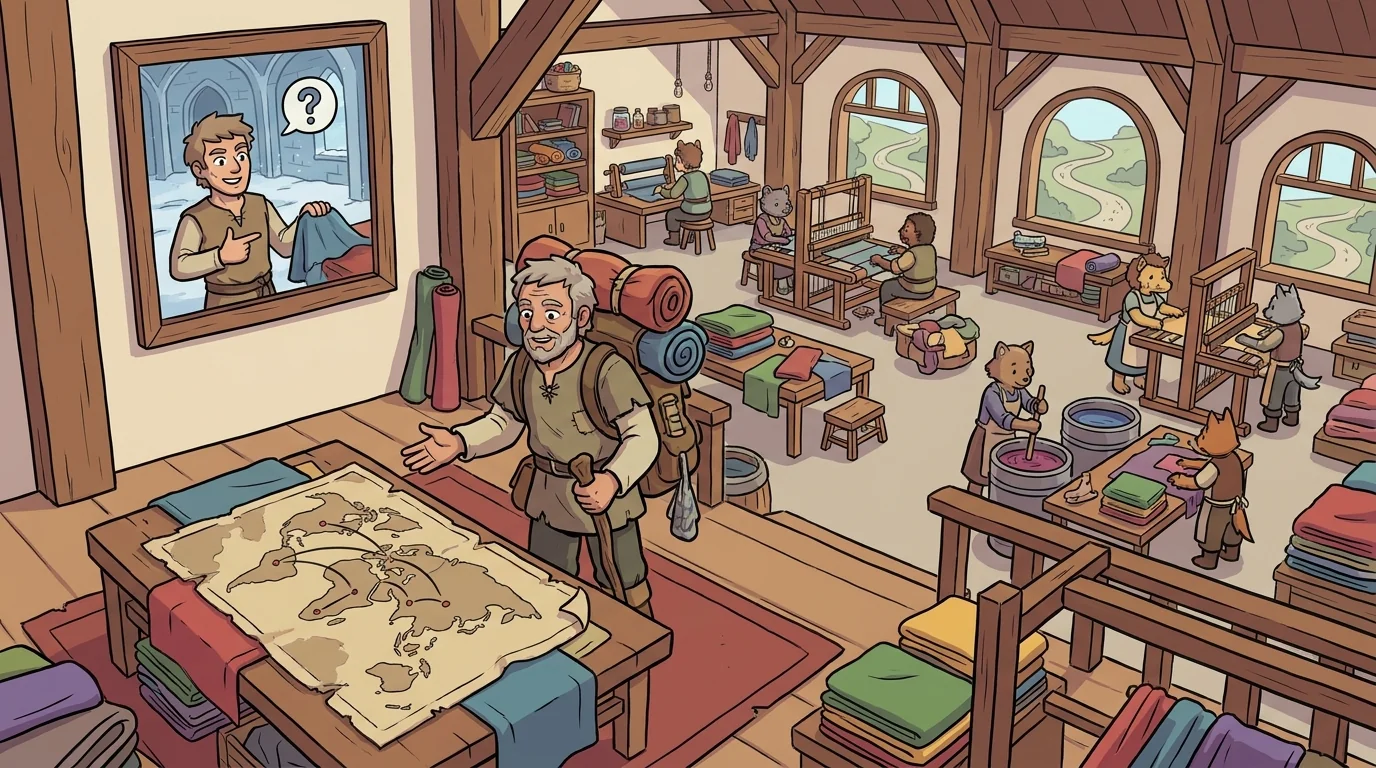
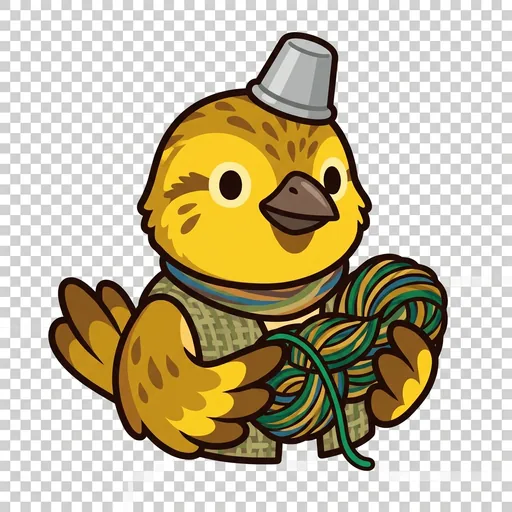
Skein had walked more roads than anyone in the Maker's Hall, or liked to say so. Where the others read a single cloth, Skein read the journey a cloth had taken — because he knew a hard truth the others sometimes forgot: where a thing ends up is not always where it began.
His younger self hadn't known that. Back then, if he found silk in a cold northern hall, he'd have declared "so they made silk here!" — never wondering how many hands and how many miles had carried it there.
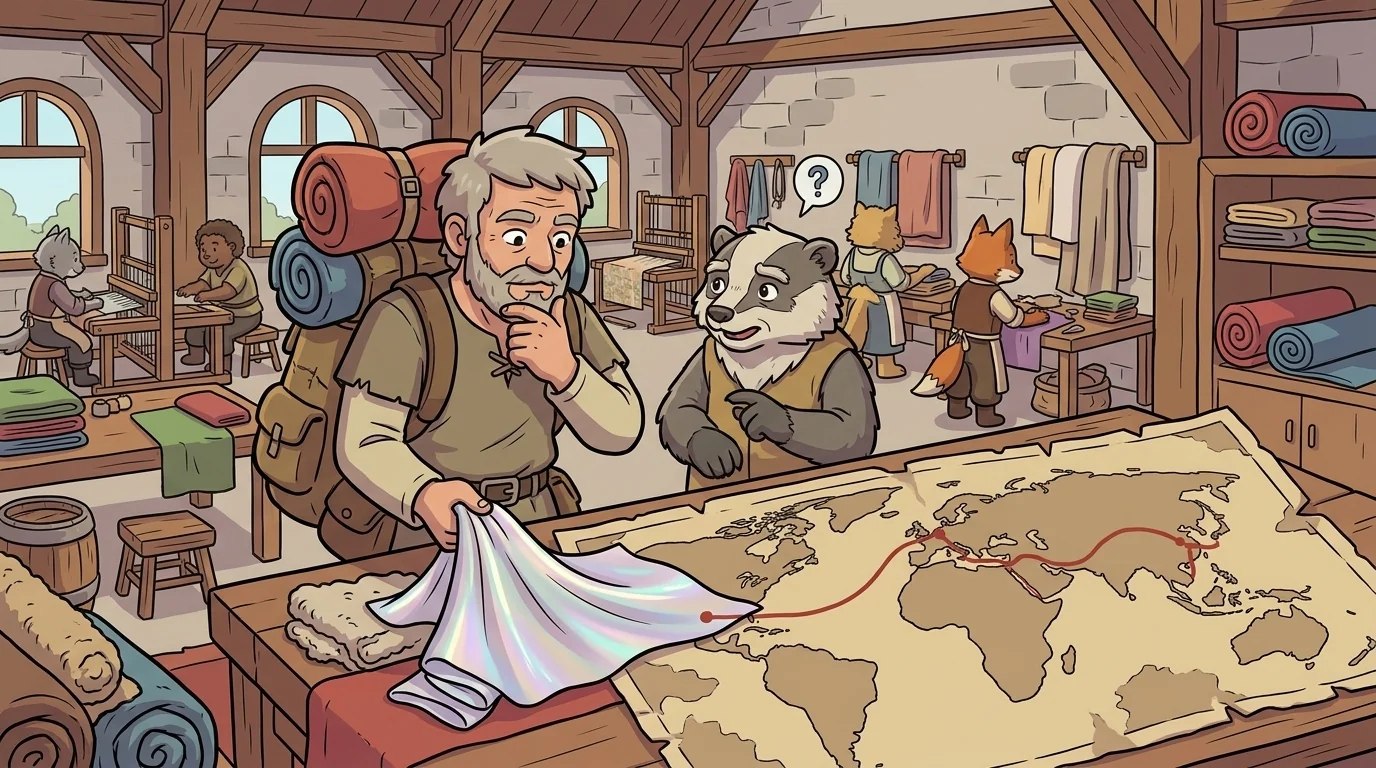
Relic set him straight with a single bolt of fine silk found, of all places, in the ruins of a chilly inland town far from any mulberry grove.
"Did they make silk here?" Relic asked, testing.
"Obviously not," Skein began — then stopped, because his old self would have said obviously yes. "No," he corrected. "Silk needs mulberry trees and a warm land to raise the worms. This place is cold and far inland. So the silk didn't start here. It traveled here."
"Then what does its presence prove?" said Relic.
"Not where it's from," said Skein slowly. "But that a route reached this town. Someone carried it a very long way."
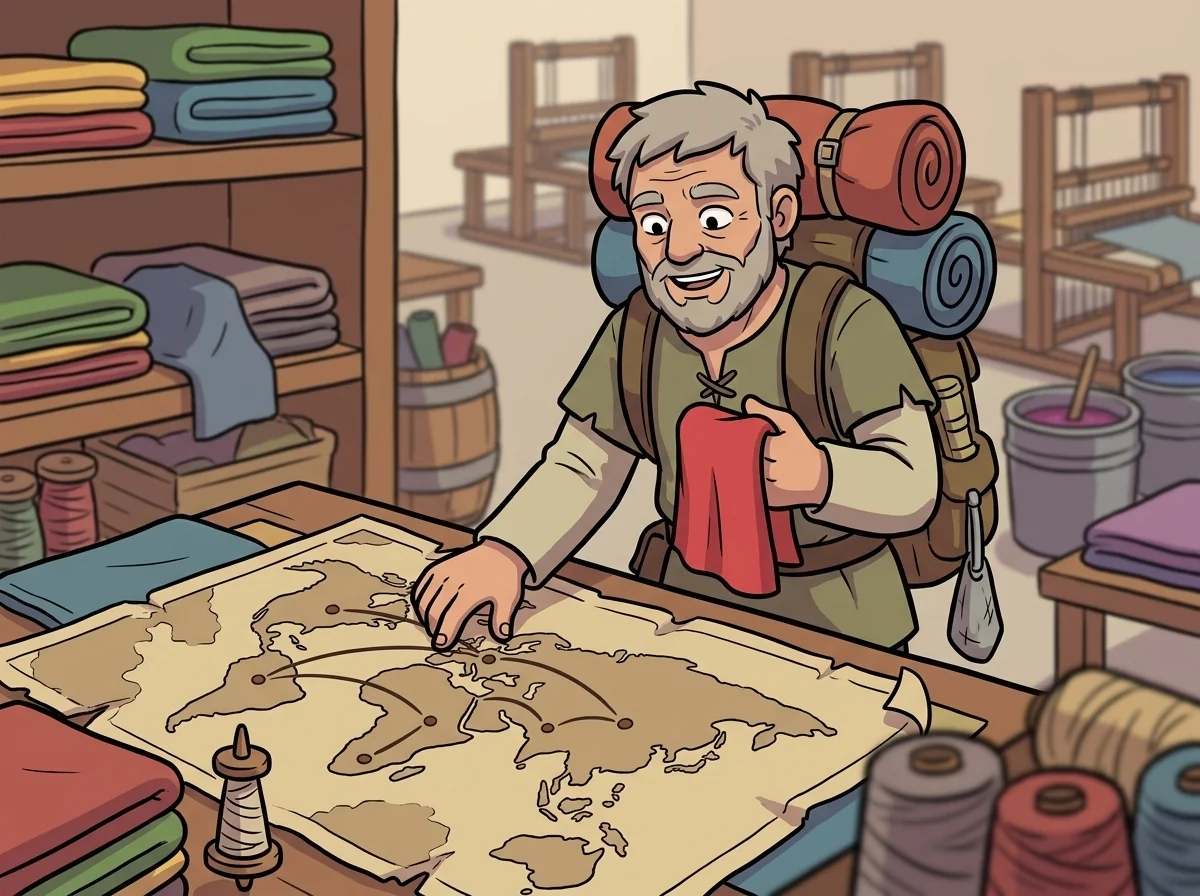
That was the whole of Skein's craft: reading a fabric as evidence of a route, not just a source. Silk found far from mulberry country meant a long trade road stretched between them — one of the great overland or sea routes that carried precious cloth across the world. Cotton in a place too cold to grow it meant trade with a warmer land. A dye like indigo turning up far from where its plant grew meant merchants had carried the colour, not just the cloth.
So a single foreign fabric, in the right place, could sketch an invisible road across a map — proof that two distant peoples had reached each other.
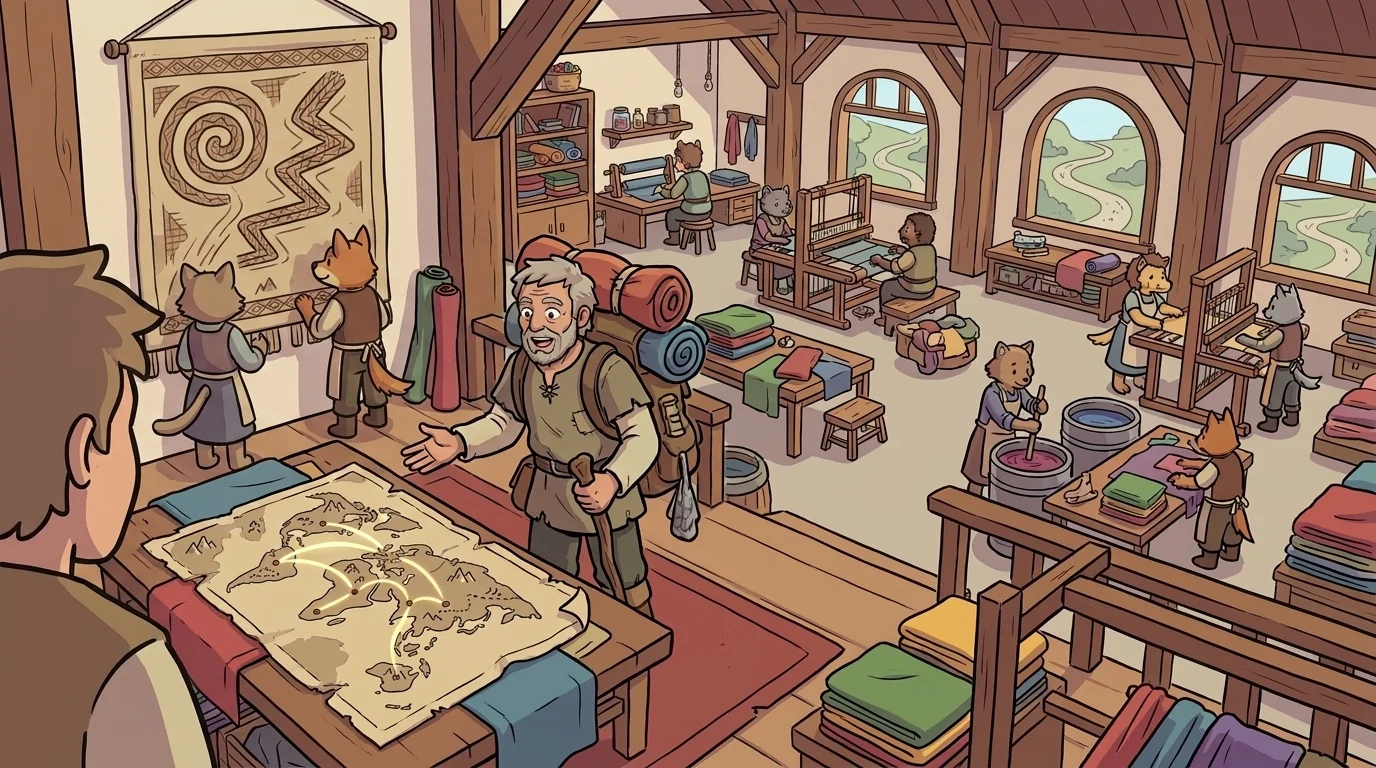
And routes, Skein learned, carried more than goods. Along with the silk and cotton and dyes traveled ideas — a pattern admired in one land and rewoven in another, a technique taught hand to hand at a trading post, a shape that caught on far from where it started. When he found a familiar motif turning up in two far-apart places, he didn't cry "coincidence." He looked for the road between them.
His honest mistake kept him careful: he once saw two similar patterns in distant lands and declared, thrilled, that one people had "copied" the other. Relic slowed him down. Sometimes there was a trade road and a borrowing; sometimes two peoples simply invented a simple shape on their own — a spiral, a zigzag — because simple shapes occur to everyone. "A route is a strong explanation," Relic said, "not the only one. Look for the road before you claim the journey." Skein added: find the road first.
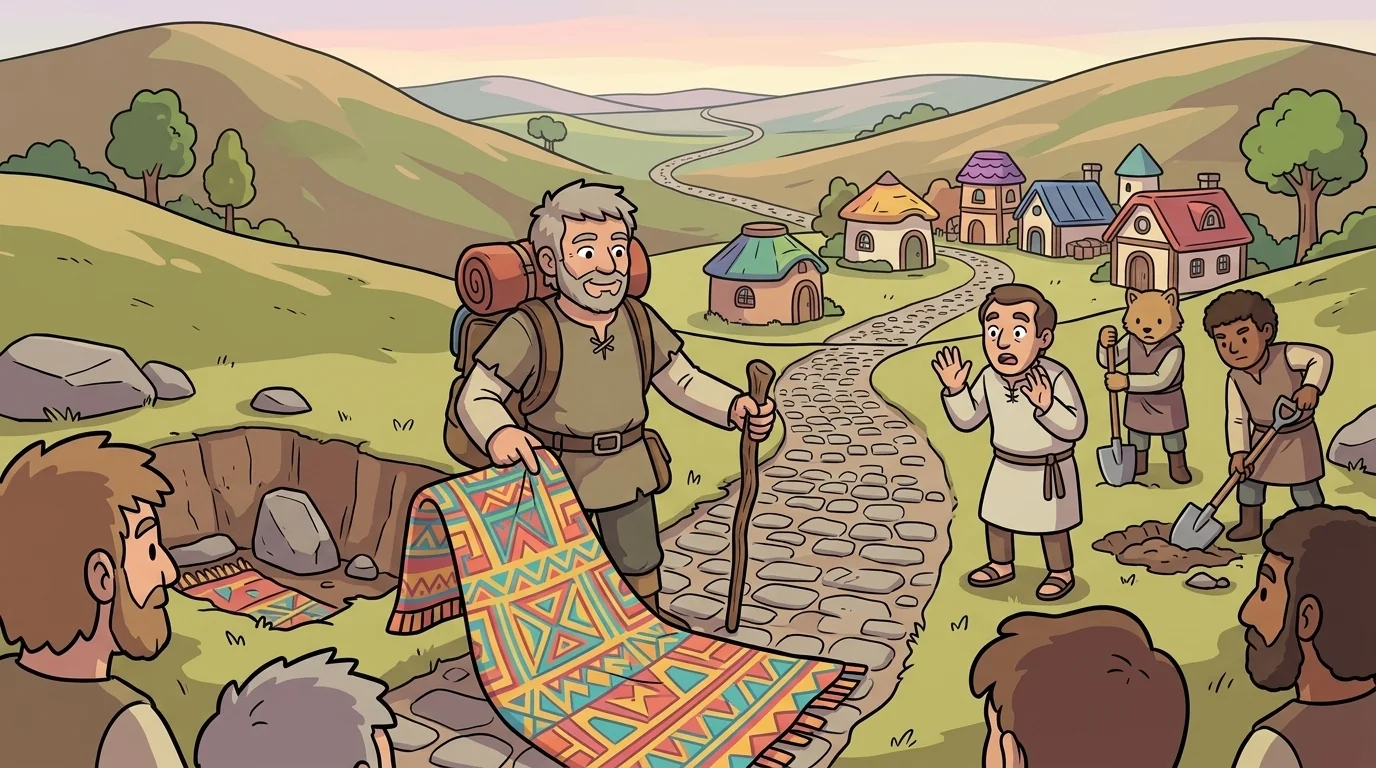
The test came when scholars argued over a burial where a body wrapped in clearly foreign cloth had been found in a remote village.
"An impostor," one insisted. "A local pretending to be from far away."
Skein studied the cloth — its fiber, its dye, its weave, all pointing to a distant land — and offered a quieter, better story. "Or," he said, "this village sat on a trade road we've forgotten. The cloth is real and truly foreign, which means goods — and travelers, and ideas — passed through here. This wasn't a nobody's village. It was a stop on a long road."
Later digging found the old road, exactly where the cloth had pointed.
"How did you know to look for a road?" a scholar asked.
"Because I trace the route, not just the source," said Skein. "Where a fabric is worn can be a whole journey from where it was made — and if you follow the thread, it'll show you the road."
The EraForge ensemble
Skein is part of EraForge's distributed-narrative cast. Each character embodies a different curricular primitive; together they teach the full subject.
-
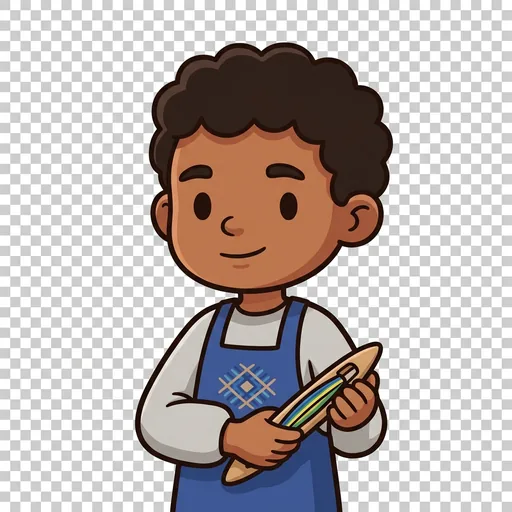
Warp
Fiber → cloth — every cloth remembers the land whose plant or animal made it
-
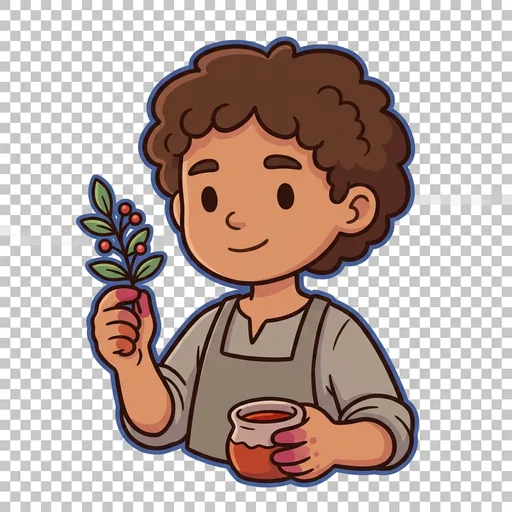
Madder
Natural dye — before factories every colour came from a plant, root, or shell; a rare colour meant a long reach
-
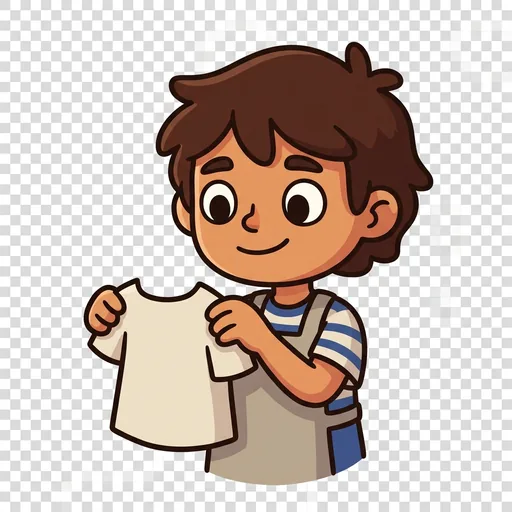
Selvage
Silhouette → era — the outer shape a dressed figure makes dates the look, even from a shadow
-
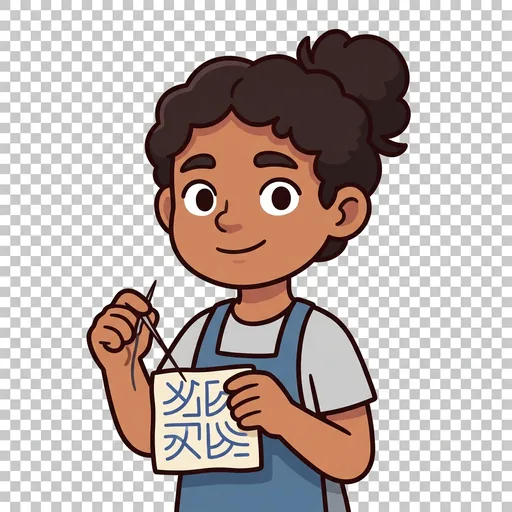
Toile
A motif is a message — read a woven pattern on its own makers' terms, never guess
-
Argent
Status dress — what a person may wear encodes rank and role; read the whole society
-
Vane
Climate & geography — clothing is a clever answer to a place's weather and terrain
-

Relic
Source-reading (the curator & mentor) — read an object as evidence: who made it, when, and why
-
Damask
Revival & anachronism — old styles return re-made; the out-of-time detail reveals the real age
-
Lexi
Design vocabulary — the exact word (silhouette, motif, drape, hue) lets you describe and compare