Toile
SYMBOL MEANING — a woven or printed motif is a message, and it must be read on its own makers' terms, never guessed from the outside
Loading audio…
Press play to listen along. The line being read lights up as you go.
Show full transcript
Loading transcript…
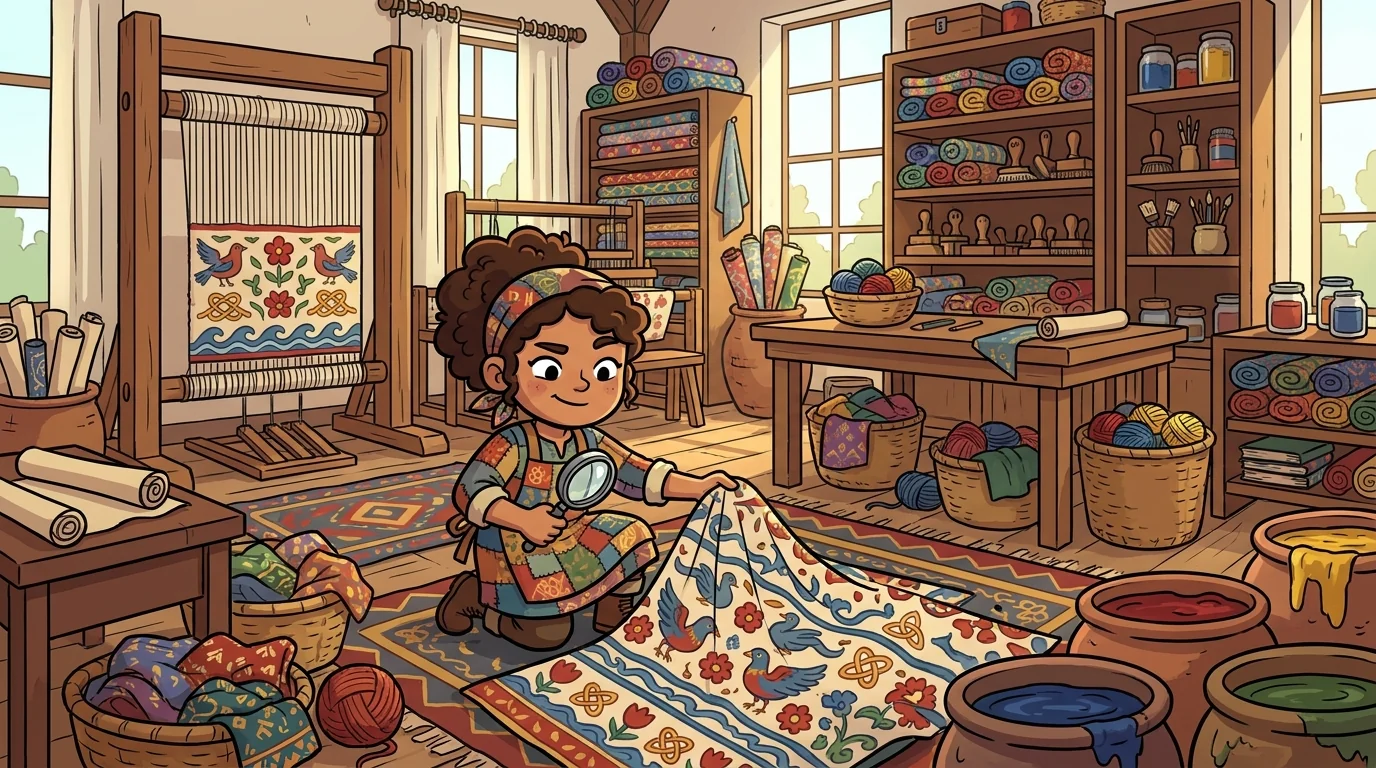
Toile made patterns and, more importantly, read them. Every motif that ran across a cloth — every repeating flower, star, wave, or knot — was to her a sentence in a language, and she wanted to understand what it said.
Her early trouble was a kind of confidence. She'd see a motif, decide on the spot what it "obviously" meant, and move on. A bird meant freedom, surely. A red flower meant love. She was quick, and she was often quite wrong, and for a while she didn't even know it.
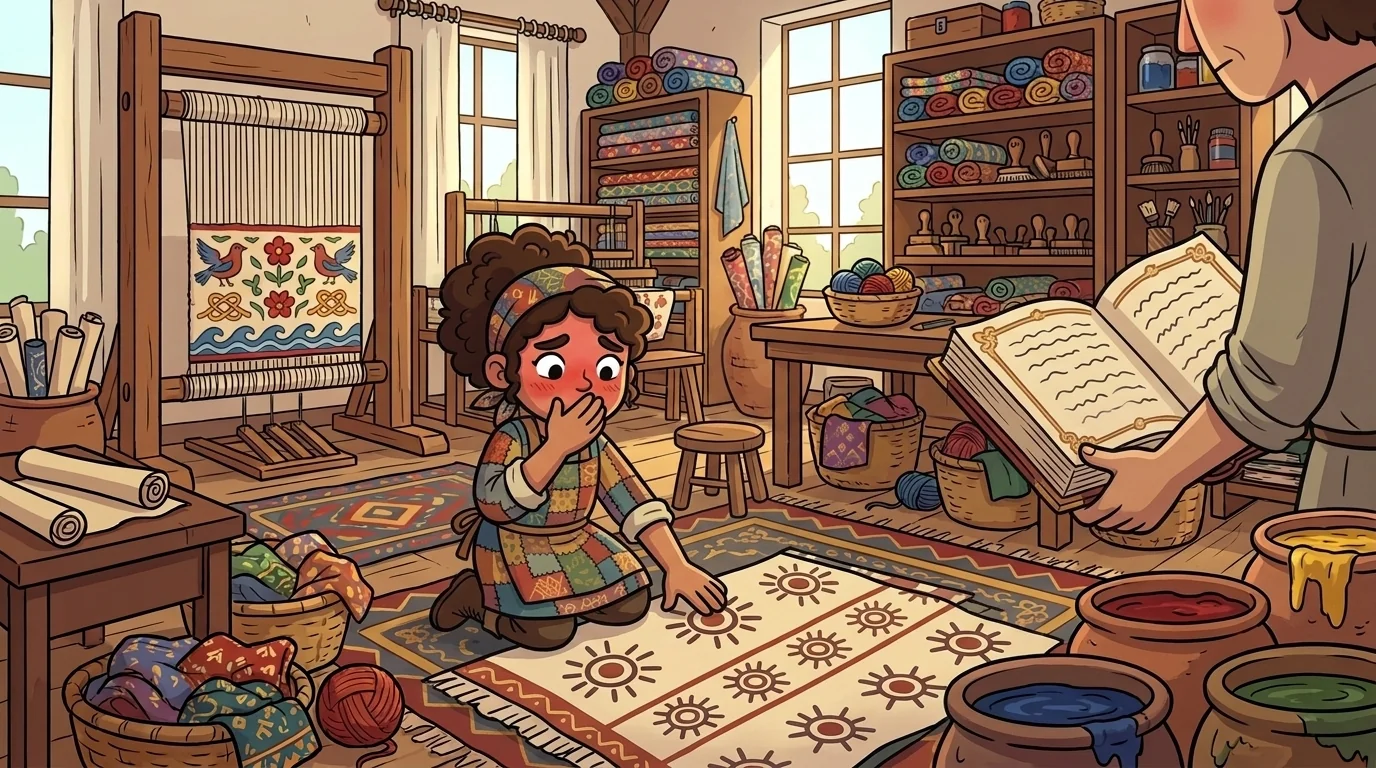
Relic set a length of patterned cloth in front of her — rows of a repeating symbol Toile had never seen. "What does it mean?" the curator asked.
"Oh, that's clearly a sun," Toile said breezily. "So — warmth, life, a happy design."
Relic didn't say yes and didn't say no. Instead the curator opened a book written by the people who had made the pattern, and there Toile read that the symbol wasn't a sun at all. It marked a family line — a record of who belonged to whom, passed down for generations. It was closer to a name than a decoration.
Toile felt her face go hot. She hadn't read the pattern. She'd read herself — her own guesses — and pasted them onto someone else's cloth.
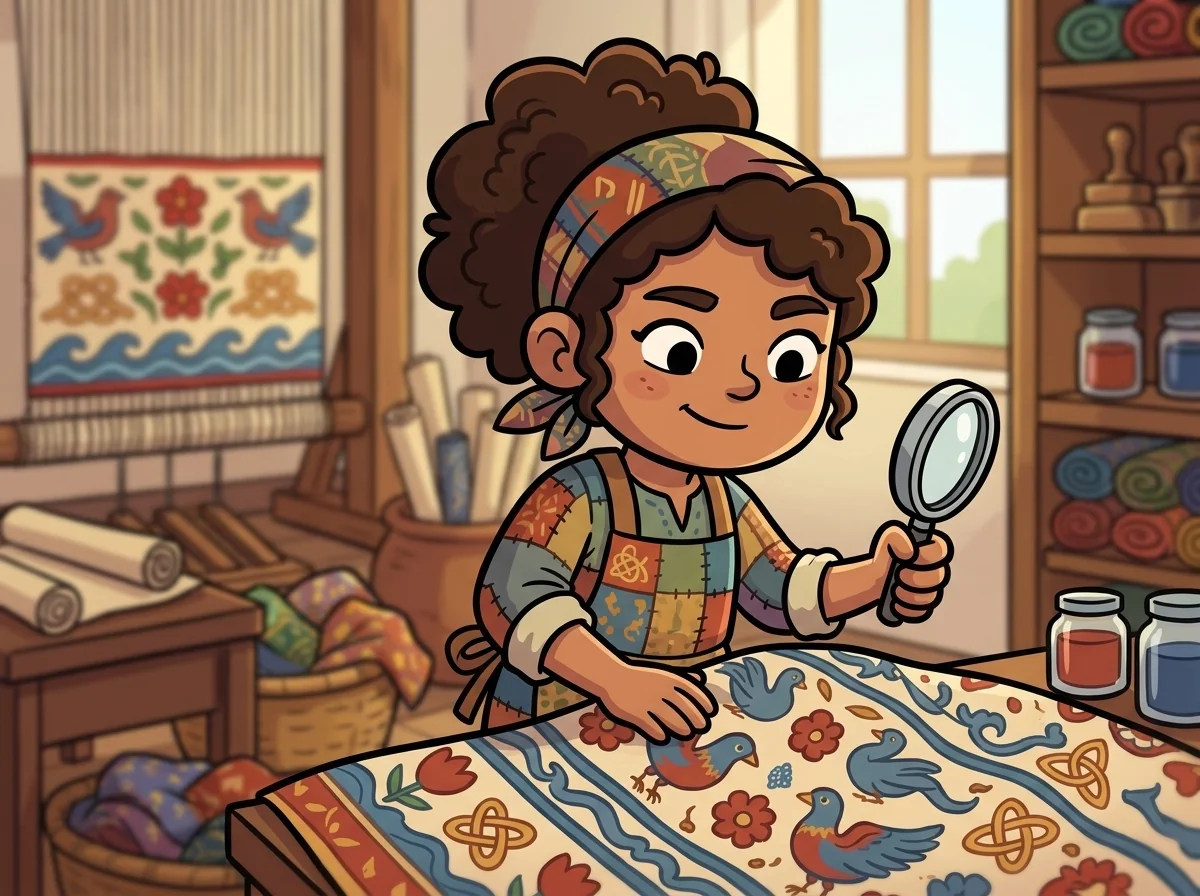
"That is the whole danger," Relic said, gently. "A motif is a message, but it's written in its makers' language, not yours. The same shape can mean opposite things in two places. A colour that means joy to one people means mourning to another. If you decide from the outside what a symbol means, you're not reading it — you're talking over it."
So Toile learned a slower, better habit: find out. When she met a pattern, she looked for who made it and what they said it meant — from their own words, their own records, the people who still carried the tradition. She stopped treating motifs as decoration to be guessed and started treating them as messages to be understood.
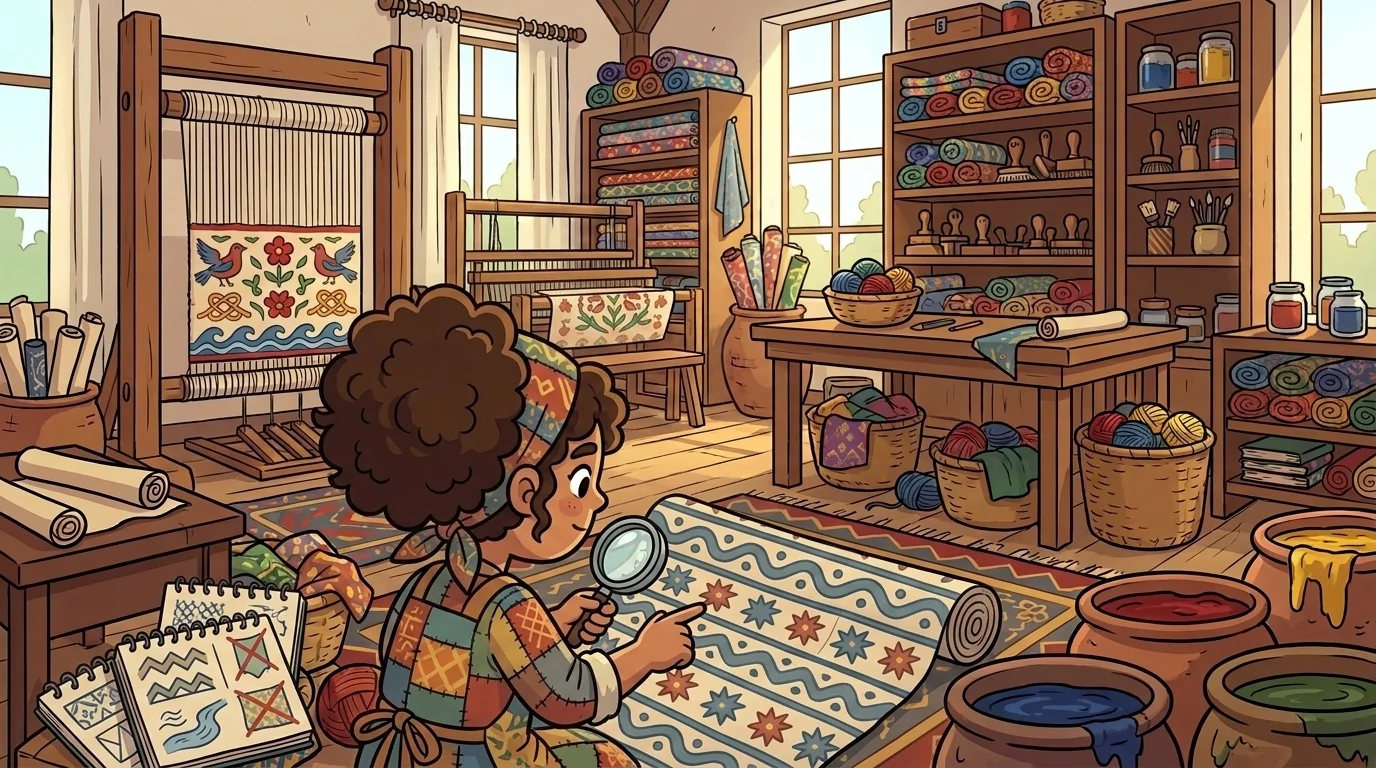
It changed how she saw everything. A geometric border she once called "just a nice zigzag" turned out, in its makers' telling, to trace a river that had kept a village alive. A pattern she'd assumed was "only pretty" was in fact reserved for a coming-of-age — not something to be copied onto a napkin. She kept a rule at the top of her notebook: when in doubt, it is not mine to decide.
Her honest, humbling mistake stayed with her: she'd nearly labeled a sacred pattern as an ordinary print and put it on a market banner. Catching it in time taught her that reading patterns wasn't only about being right — it was about being respectful. Some meanings belong to their people, and the correct reading is sometimes "this isn't for me to use."
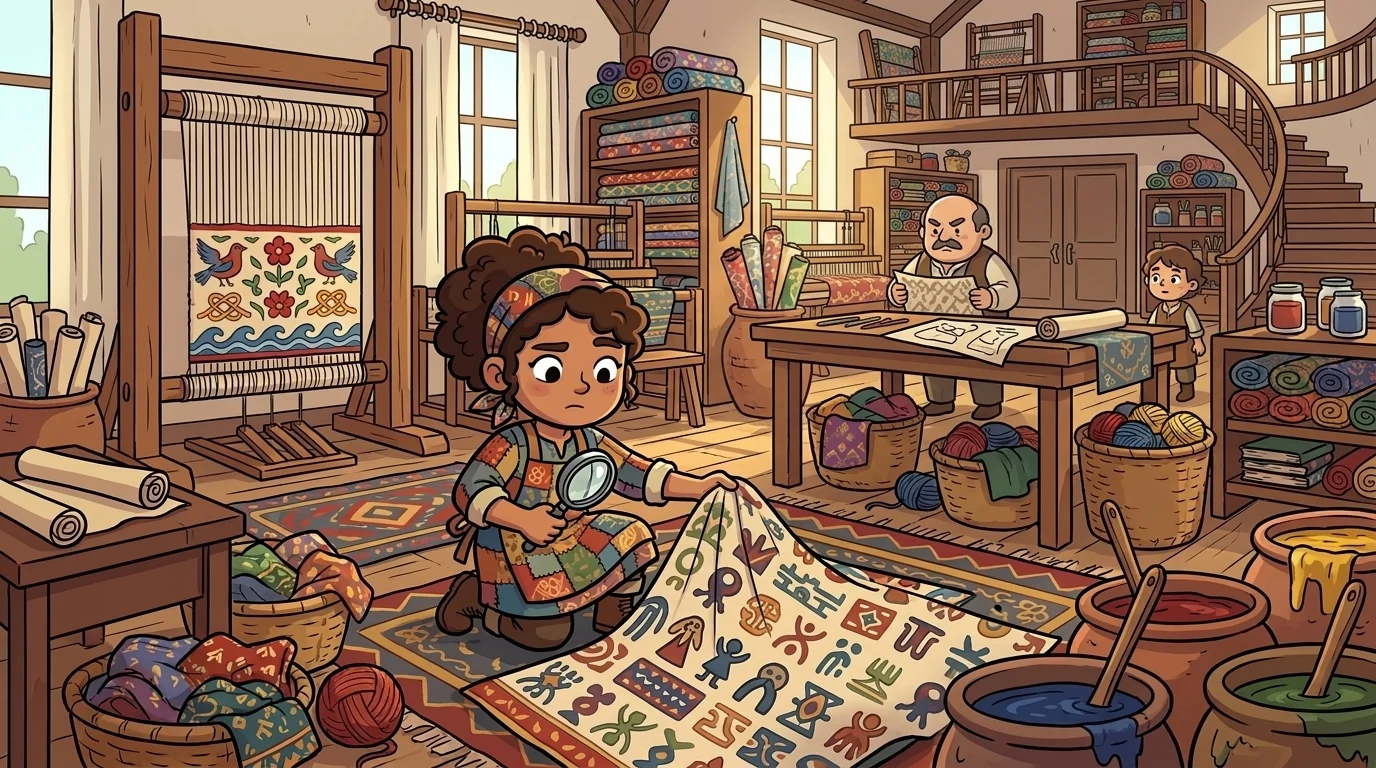
The test came when a merchant wanted to slap a striking foreign motif across a whole line of cushions. "It just looks good," he said. "Who cares what it means?"
Toile cared. She found the people whose motif it was and learned what it stood for — a mark tied to mourning and remembrance. Quietly, she told the merchant. "It's beautiful," she agreed. "And it's a message about grief that belongs to them. Putting it on cushions isn't reading it — it's using it without listening."
The merchant grumbled, then chose a pattern he was actually free to use.
"How did you know what it really meant?" a young apprentice asked afterward.
"I didn't guess," said Toile. "A pattern is a message. So I asked the people who wrote it what it says — instead of deciding for them."
The EraForge ensemble
Toile is part of EraForge's distributed-narrative cast. Each character embodies a different curricular primitive; together they teach the full subject.
-
Warp
Fiber → cloth — every cloth remembers the land whose plant or animal made it
-
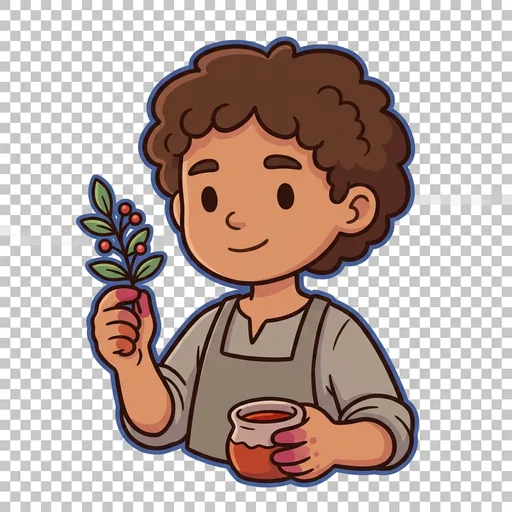
Madder
Natural dye — before factories every colour came from a plant, root, or shell; a rare colour meant a long reach
-
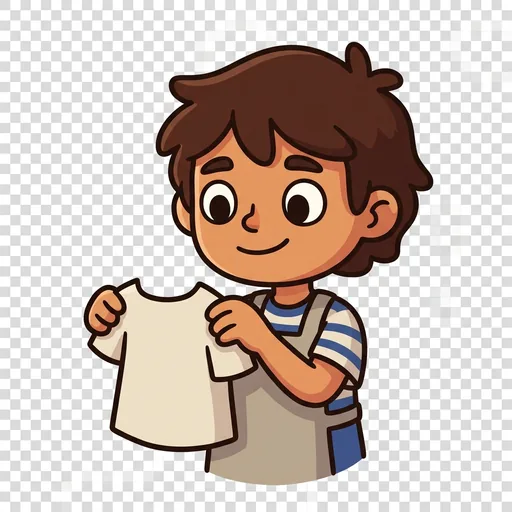
Selvage
Silhouette → era — the outer shape a dressed figure makes dates the look, even from a shadow
-
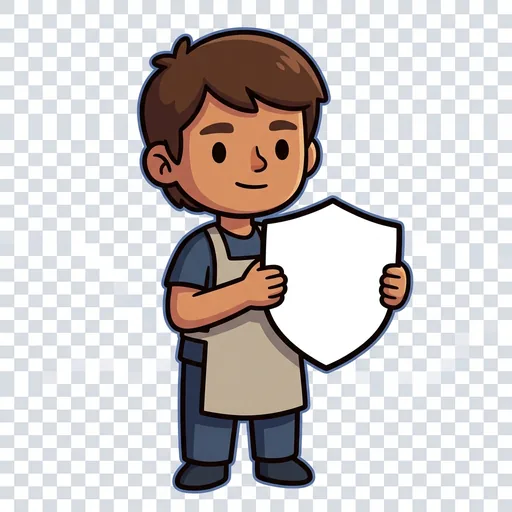
Argent
Status dress — what a person may wear encodes rank and role; read the whole society
-
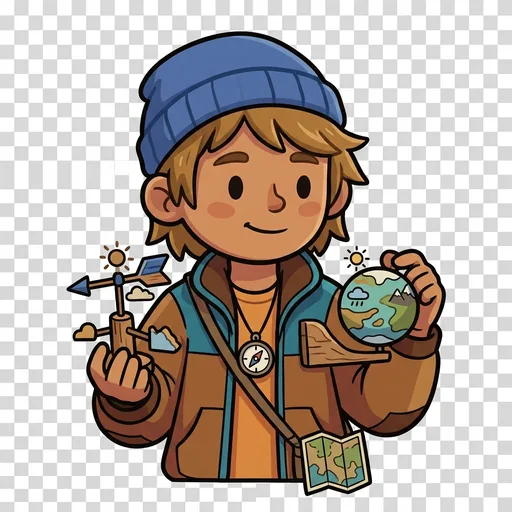
Vane
Climate & geography — clothing is a clever answer to a place's weather and terrain
-

Skein
Trade & exchange — where a fabric is worn traces the route that carried it, not just its source
-

Relic
Source-reading (the curator & mentor) — read an object as evidence: who made it, when, and why
-
Damask
Revival & anachronism — old styles return re-made; the out-of-time detail reveals the real age
-
Lexi
Design vocabulary — the exact word (silhouette, motif, drape, hue) lets you describe and compare