
Madder
NATURAL DYE — before synthetic colour, every hue came from a plant, root, insect, or mineral, so a colour is evidence of an available source; a colour's RARITY tracked the difficulty of its source, which is why some colours signalled wealth
Loading audio…
Press play to listen along. The line being read lights up as you go.
Show full transcript
Loading transcript…
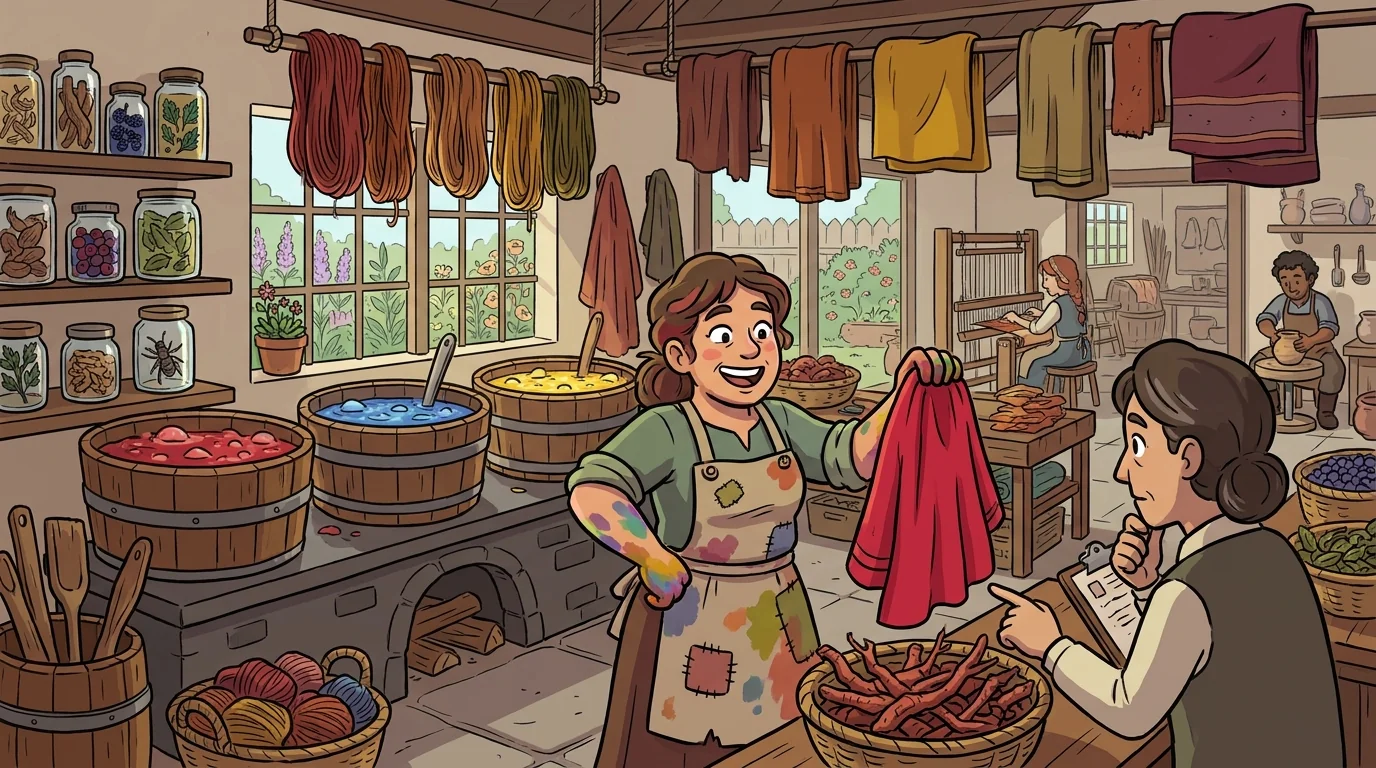
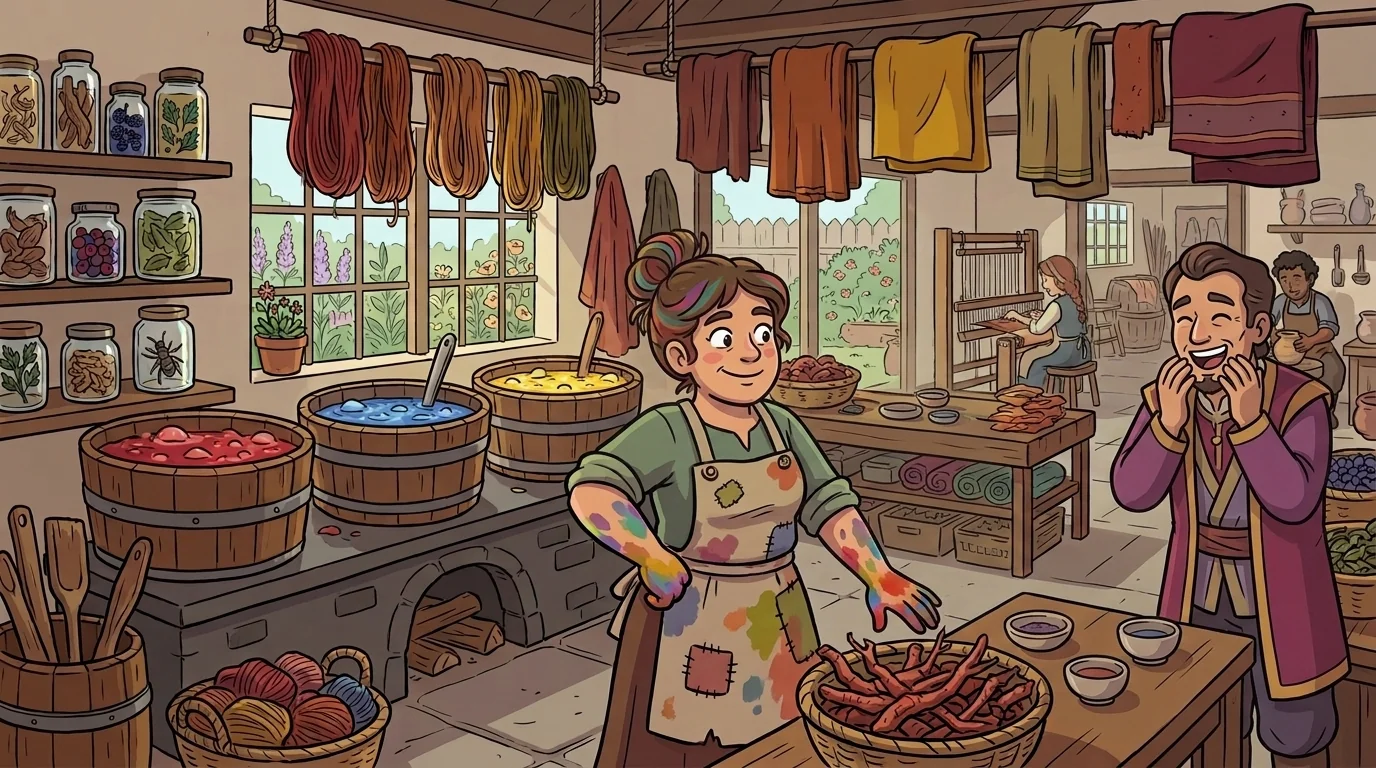
Madder loved colour the way some people love music, and it had one delighted secret to share with the apprentice, who had grown up in a world where colour came from a bottle. "Every colour on an old cloth," Madder announced, "came from something alive or something dug up. No factories. A plant, a root, a tiny insect, a crushed mineral. Colour used to be harvested."
The apprentice stared. "All of it?"
"All of it," Madder said, eyes shining. "And that changes everything about how you read a dyed cloth."
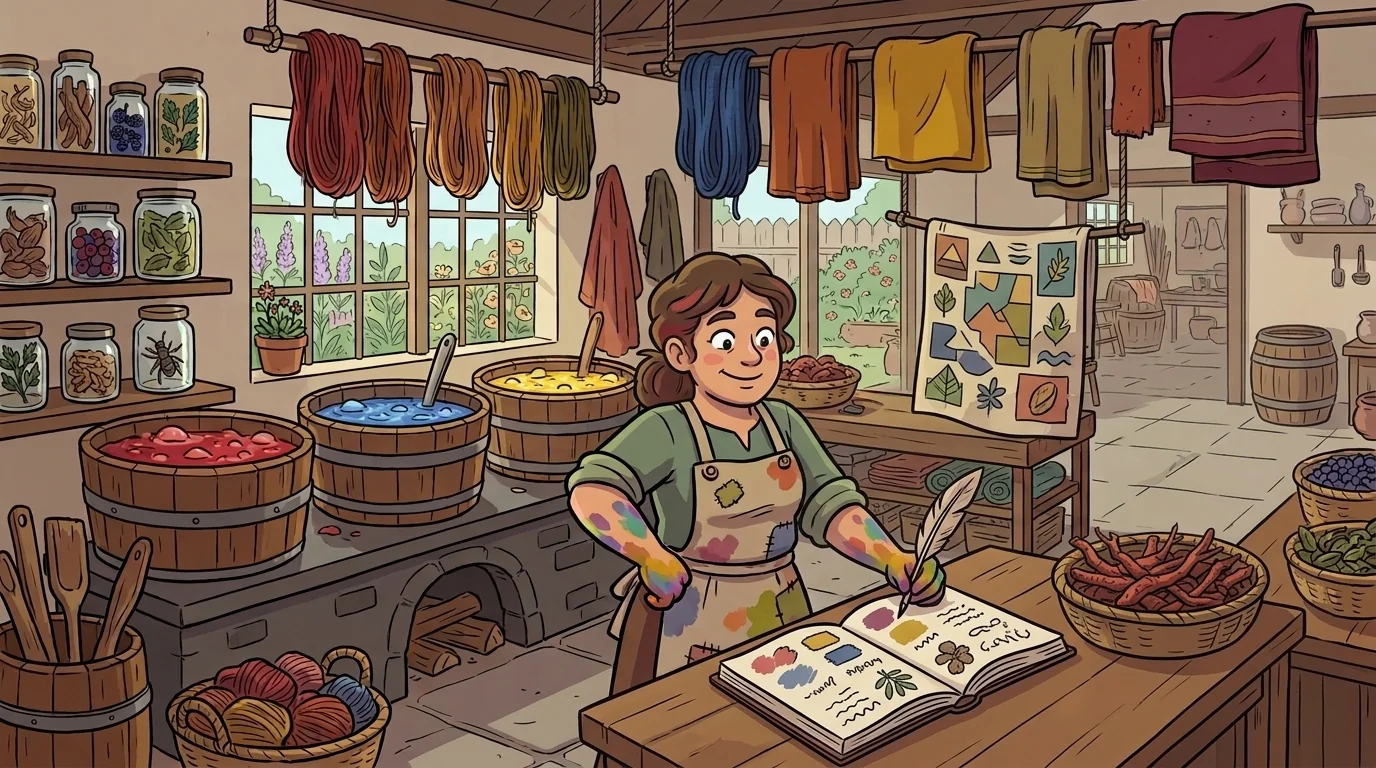
Madder taught the first Advanced idea: a colour is evidence of an available source.
"If a cloth is a certain colour, then whatever made that colour was available to its makers," Madder said. "A colour from a root means that root grew within reach. A colour from an insect means that insect could be gathered nearby or traded for. So a hue isn't just pretty — it's a clue to what the makers had." Madder held up an imagined swatch. "Read a colour backward, like Warp reads a fiber: this shade came from that source, and that source came from this kind of place. A palette is a portrait of a landscape's plants and minerals."
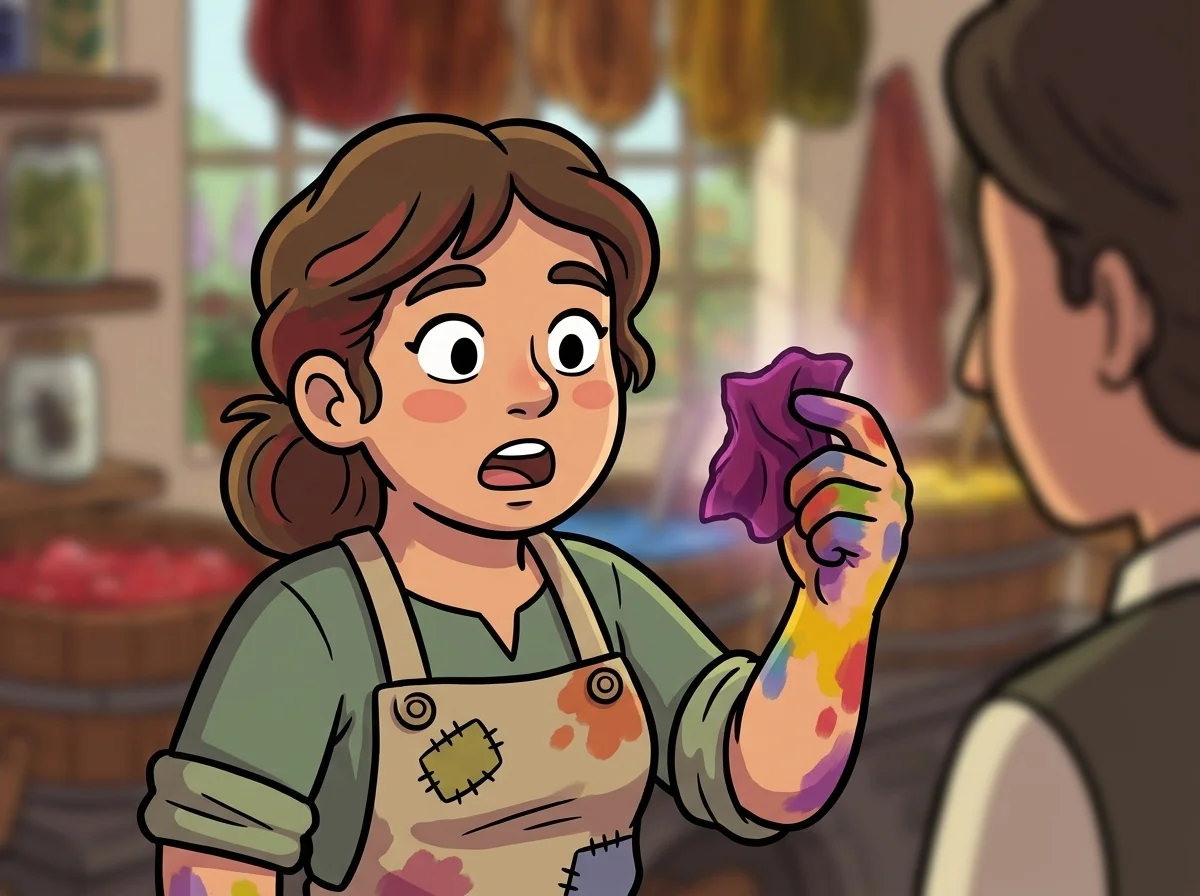
The apprentice asked why some colours in old cloth were so much rarer than others.
"Because rarity followed the source, not the colour," Madder said, growing theatrical. "Some dye-sources were everywhere — common plants that gave browns and yellows, so those colours were cheap and ordinary. But other colours came from sources that were painfully hard to get: a dye that needed thousands of tiny creatures for a small amount, or a mineral found in only a few places, or a plant that took years and skill to turn into fast colour. When the source was scarce or difficult, the colour became precious — not because the eye valued it more, but because getting it cost so much." Madder swept a hand. "So a rare, brilliant colour on an old garment often meant wealth — the wearer could afford a hard-won hue. The colour was the receipt."
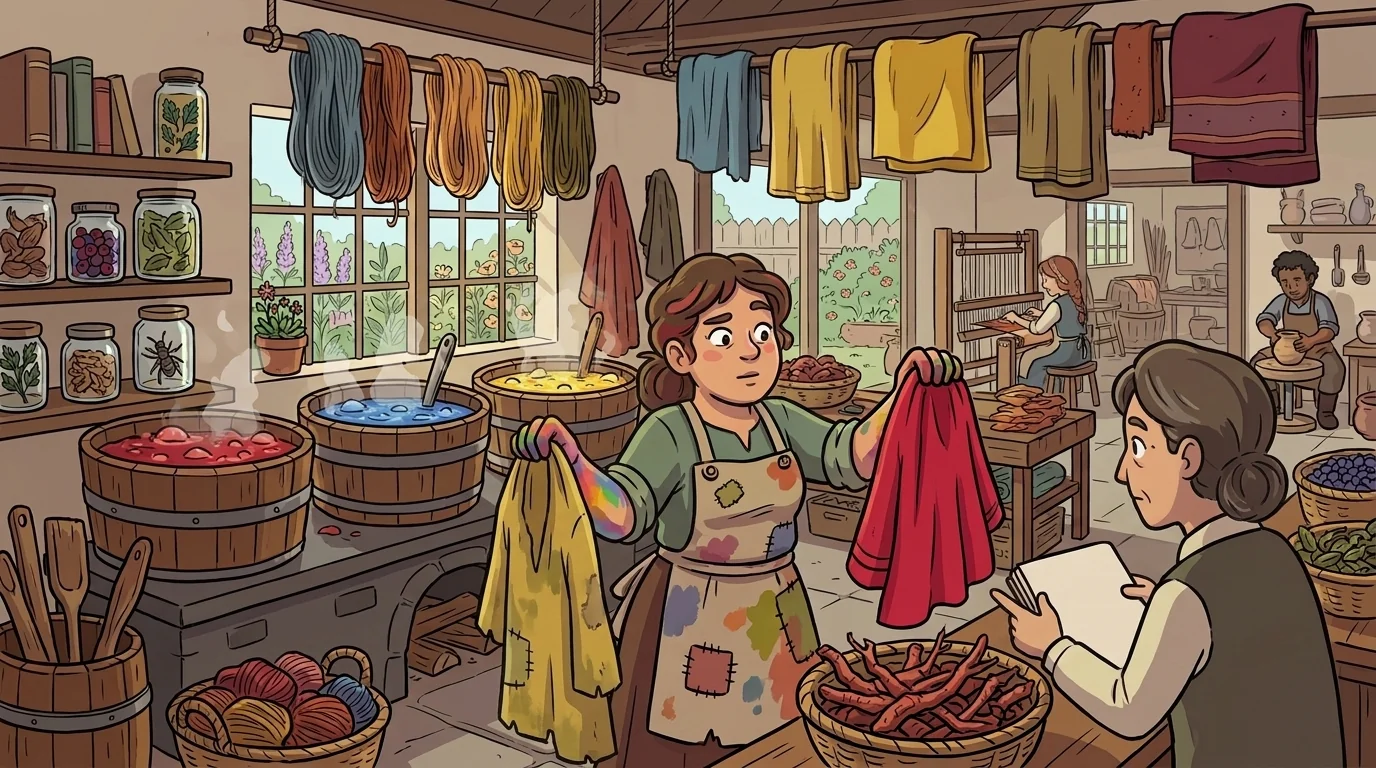
Then Madder taught the honest limit, keeping the reading truthful.
"But hold the reading gently, as always," Madder said. "A colour points to a possible source, not a certain one — sometimes different sources can make similar shades, and dye-knowledge itself traveled and was traded. And a precious colour meant the wearer could access wealth or status, which isn't quite the same as knowing exactly who they were. So say what the evidence shows: 'this brilliant colour came from a hard-to-get source, so it likely signalled resources.' Don't leap from a colour straight to a whole life-story. The dye is a strong clue to means, read backward from what the colour cost to make."
The apprentice looked at a vivid old swatch with completely new eyes.
"So this brilliant colour came from some natural source that was hard to get," the apprentice said, "which probably means the person who wore it had real resources — but I shouldn't invent the rest of their story."
"Now you read colour like a dyer," Madder said, bright and delighted. "Before factories, every colour came from a plant, root, insect, or mineral — and a rare colour was rare because its source was hard to get. Read the hue back to its source, and the source back to what it cost."
The EraForge ensemble
Madder is part of EraForge's distributed-narrative cast. Each character embodies a different curricular primitive; together they teach the full subject.
-

Warp
Fiber → cloth — every cloth remembers the land whose plant or animal made it
-

Selvage
Silhouette → era — the outer shape a dressed figure makes dates the look, even from a shadow
-
Toile
A motif is a message — read a woven pattern on its own makers' terms, never guess
-

Argent
Status dress — what a person may wear encodes rank and role; read the whole society
-

Vane
Climate & geography — clothing is a clever answer to a place's weather and terrain
-

Skein
Trade & exchange — where a fabric is worn traces the route that carried it, not just its source
-

Relic
Source-reading (the curator & mentor) — read an object as evidence: who made it, when, and why
-

Damask
Revival & anachronism — old styles return re-made; the out-of-time detail reveals the real age
-
Lexi
Design vocabulary — the exact word (silhouette, motif, drape, hue) lets you describe and compare