
Relic
SOURCE-READING — treat an artifact as EVIDENCE: ask who made it, when, and why, and never claim more than the object can show; distinguish what the object DEMONSTRATES from what you INFER, and account for what has NOT survived (survival bias in the record)
Loading audio…
Press play to listen along. The line being read lights up as you go.
Show full transcript
Loading transcript…
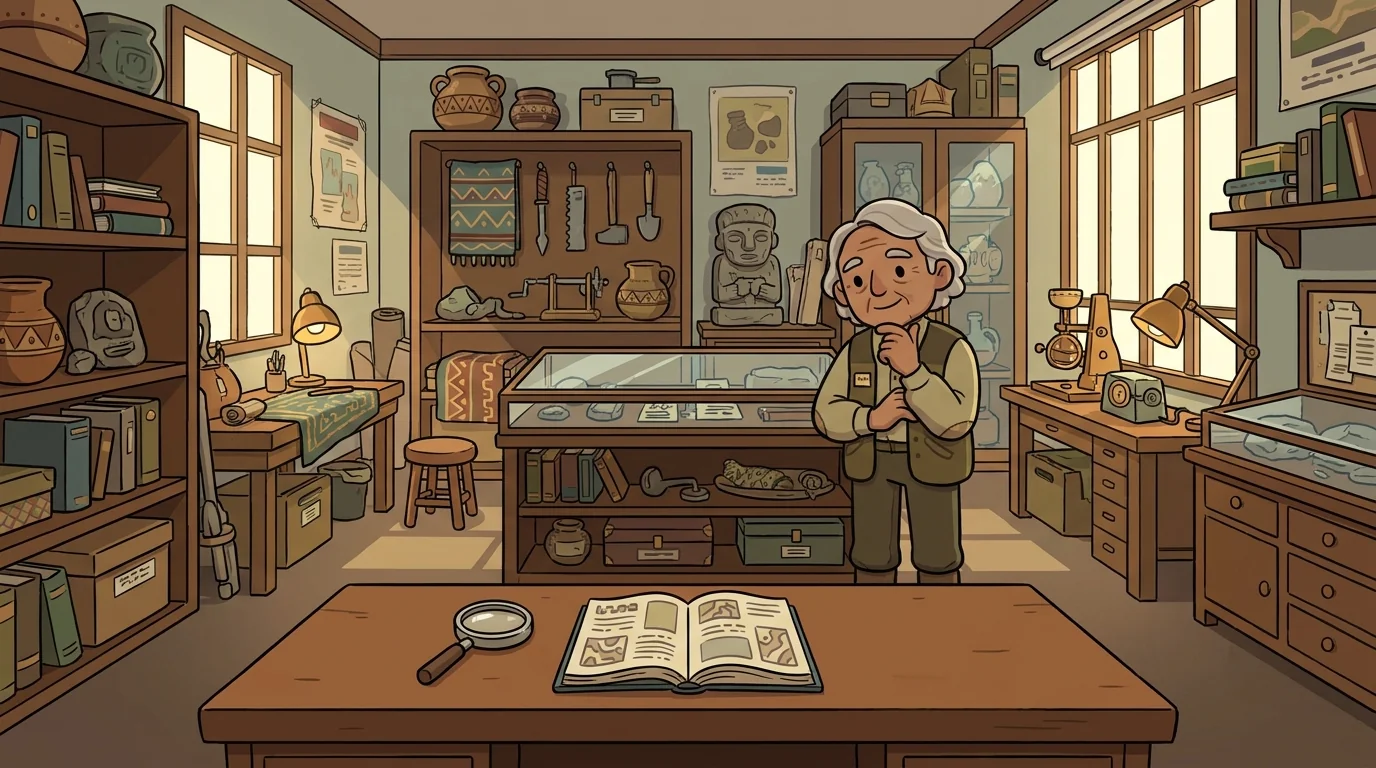
Relic was the guild's curator and its wisest voice, the one who met every confident claim with a calmer, better question. When the apprentice held up an old object and announced a whole story about the person who owned it, Relic didn't say "wrong." Relic said, "How much of that does the object actually tell you — and how much did you add?"
"An artifact is evidence," Relic said. "Evidence answers some questions and stays silent on others. The whole art is knowing which is which."
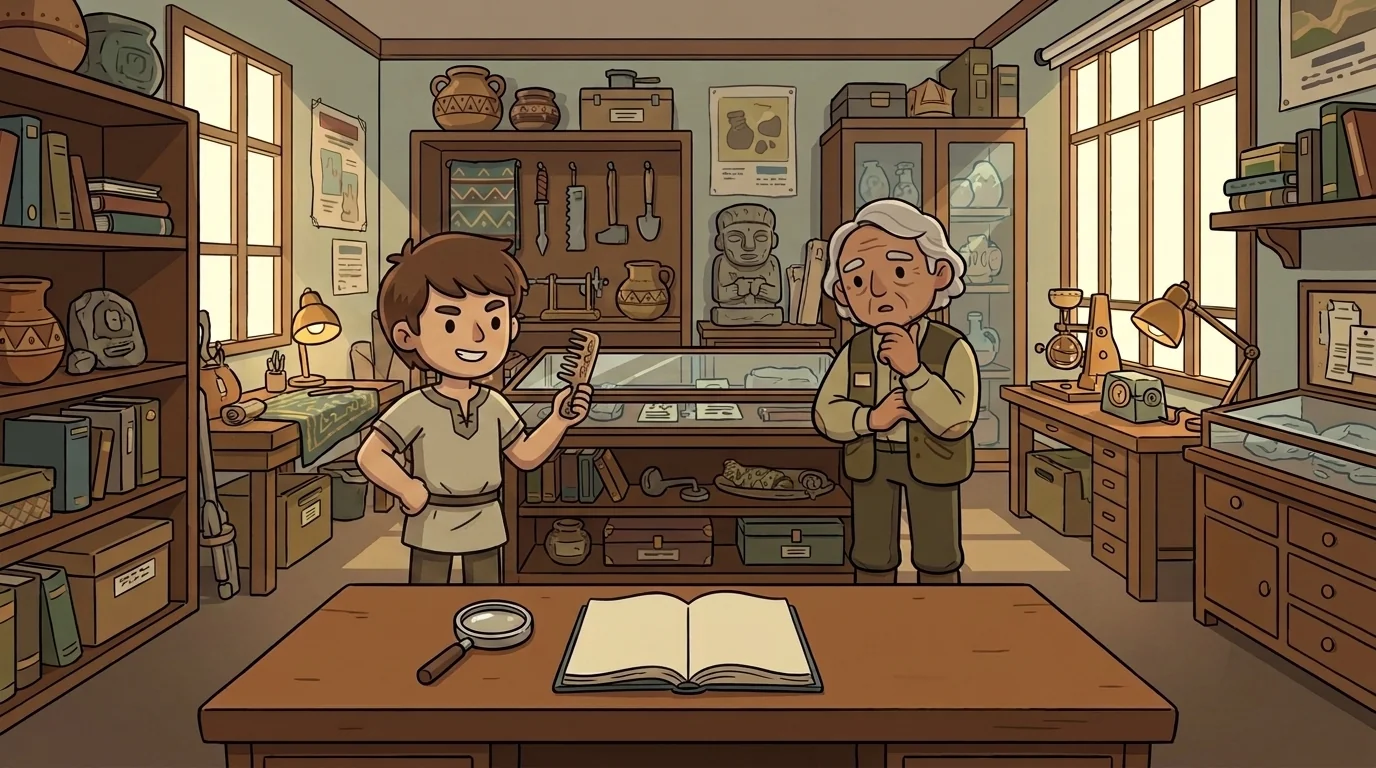
Relic taught the first Advanced idea: separate what an object demonstrates from what you infer.
"Every artifact splits into two kinds of knowledge," Relic said. "What it demonstrates — things the object itself directly shows: its material, how it was made, its wear, its size. And what you infer — reasonable guesses you build on top: who used it, why, what it meant to them. Both are useful. But they are not the same, and the great error is letting an inference wear the costume of a fact." Relic turned the object gently. "So keep two lists in your mind. 'The object shows: this material, this making, this wear.' 'I infer: perhaps this use, perhaps this owner.' Label your guesses as guesses. That single habit separates a historian from a storyteller."
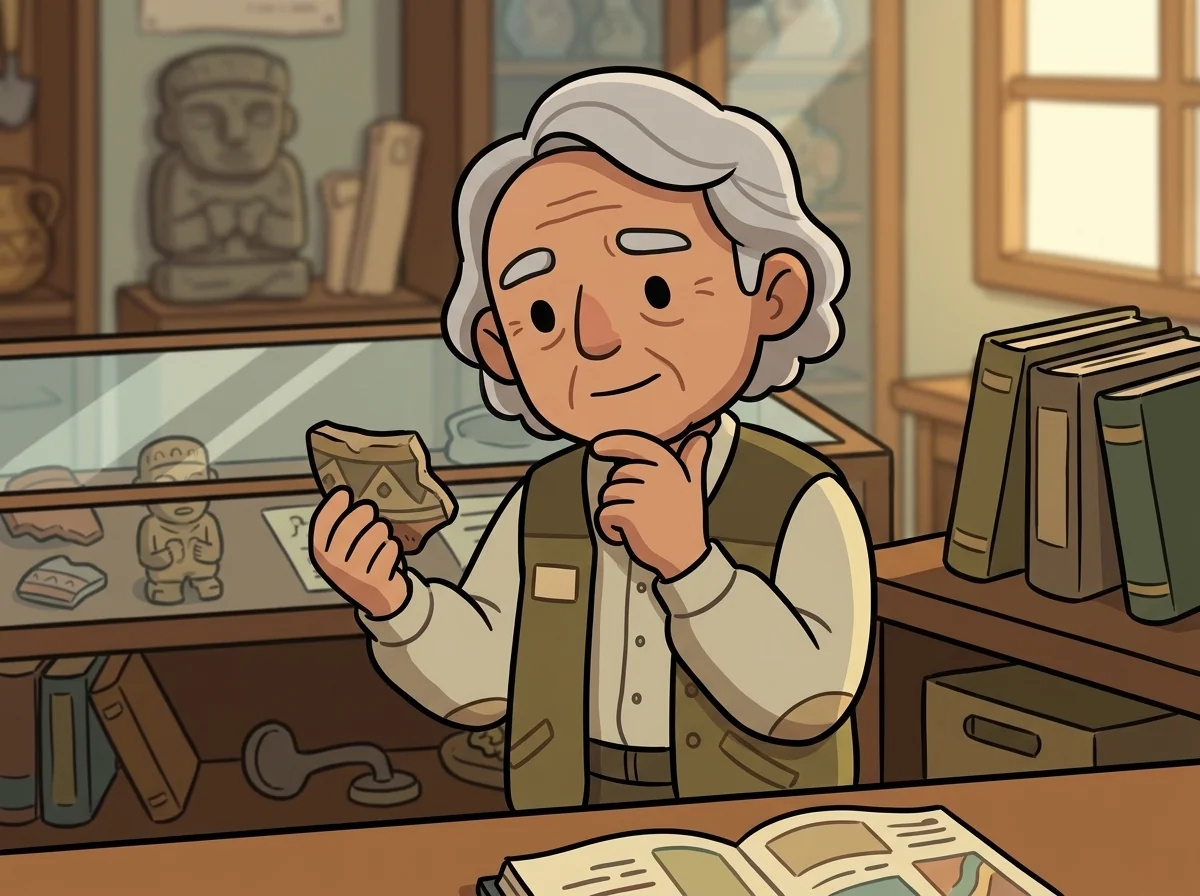
The apprentice asked how to know how far an inference could safely go.
"Ask the three questions and go no further than they carry you," Relic said. "Who made or used it? When was it made? Why — what was it for? Push each question only as far as the evidence supports, then stop and mark the edge. If the object shows fine, costly making, you may infer it belonged to someone with resources — that's a supported inference. But leaping from there to 'and they were kind, and they lived here, and they felt this' — that's invention. The object didn't say it." Relic's calm eyes held the apprentice's. "Never claim more than the object can show. 'I don't know' is a complete, honest answer, and it is far stronger than a confident guess dressed as fact."
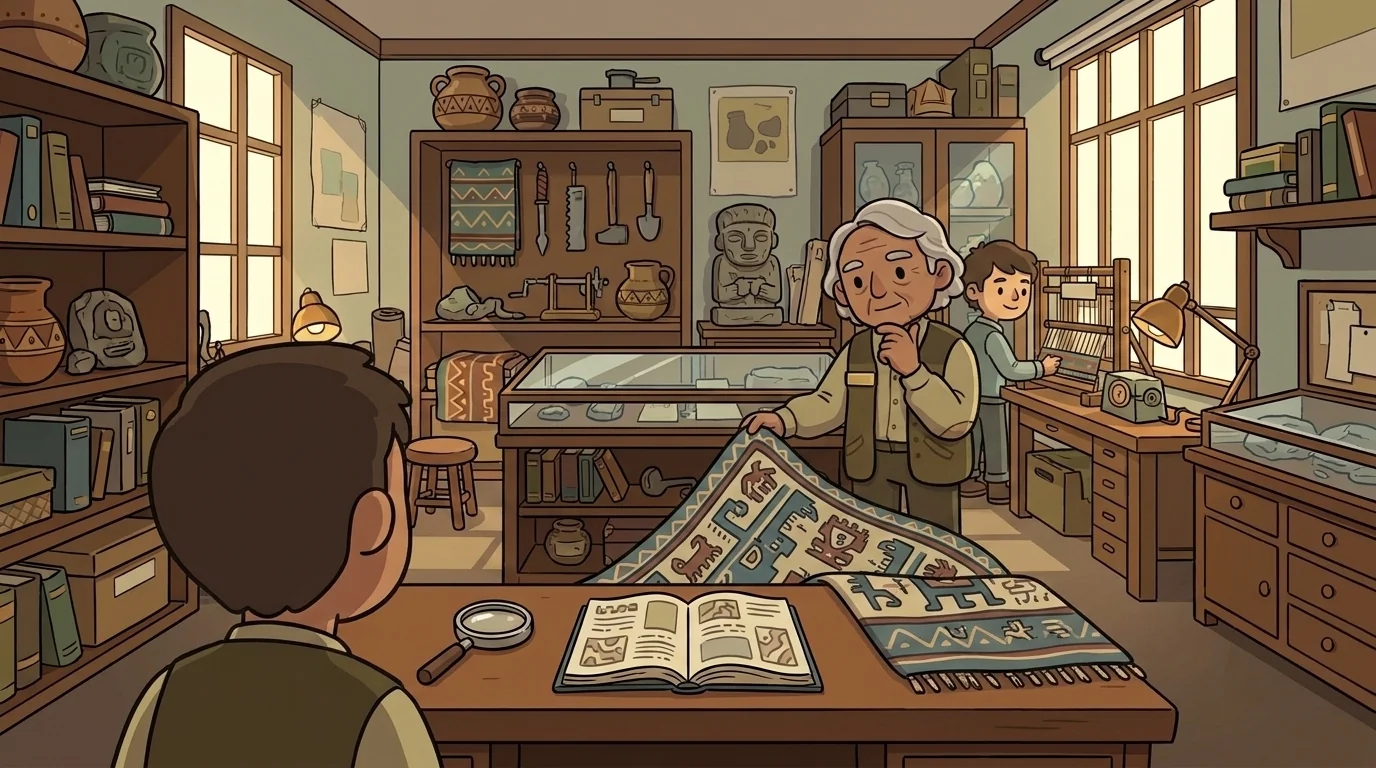
Then Relic taught the deepest idea, the one that humbles every reader of the past.
"And remember what isn't here," Relic said quietly. "Most things from the past did not survive. The sturdy, the precious, the buried-and-protected lasted; the everyday, the fragile, the ordinary mostly vanished. So the objects we have are not a fair sample of what once existed — they're a biased survival. If you read only what survived and forget the vast amount that didn't, you'll picture a past that's too grand, too durable, too much like its treasures. A wise reader always asks: 'what didn't last, and how does its absence bend my picture?'" Relic almost smiled. "The gaps in the record are part of the record."
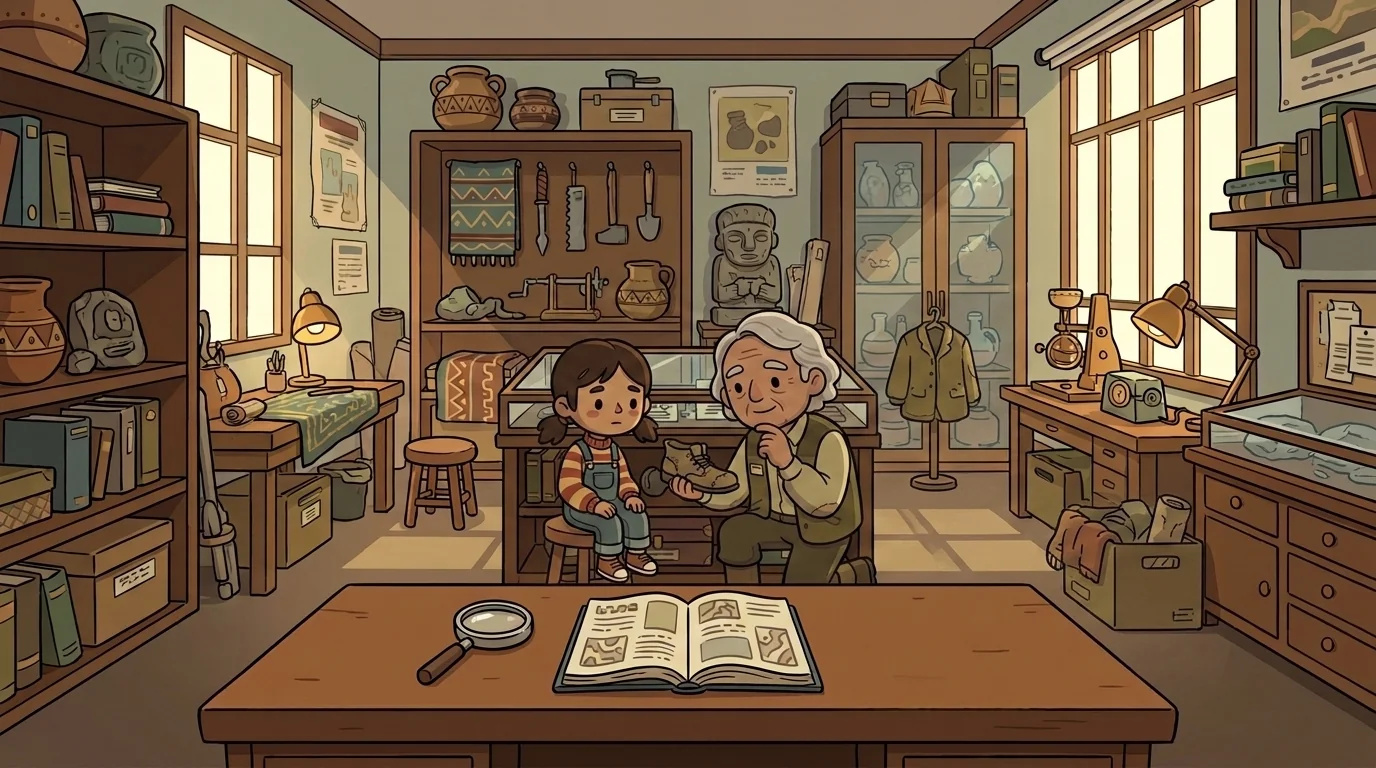
The apprentice looked at the old object again and, this time, sorted knowledge from guess.
"So the object shows me its material and making," the apprentice said, "and I can infer the owner had some resources — but I shouldn't invent their whole life, and I should remember this survived while most things didn't."
"Now you read like a curator," Relic said, wise and warm. "Treat an artifact as evidence — ask who made it, when, and why, and never claim more than the object can show. Label your guesses, mind the gaps, and let 'I don't know' be an honest answer."
The EraForge ensemble
Relic is part of EraForge's distributed-narrative cast. Each character embodies a different curricular primitive; together they teach the full subject.
-
Warp
Fiber → cloth — every cloth remembers the land whose plant or animal made it
-

Madder
Natural dye — before factories every colour came from a plant, root, or shell; a rare colour meant a long reach
-
Selvage
Silhouette → era — the outer shape a dressed figure makes dates the look, even from a shadow
-
Toile
A motif is a message — read a woven pattern on its own makers' terms, never guess
-
Argent
Status dress — what a person may wear encodes rank and role; read the whole society
-

Vane
Climate & geography — clothing is a clever answer to a place's weather and terrain
-

Skein
Trade & exchange — where a fabric is worn traces the route that carried it, not just its source
-
Damask
Revival & anachronism — old styles return re-made; the out-of-time detail reveals the real age
-
Lexi
Design vocabulary — the exact word (silhouette, motif, drape, hue) lets you describe and compare