
Selvage
SILHOUETTE → TIME — the outer SHAPE a dressed figure makes shifts from era to era, so the silhouette alone can date a look even without colour or detail; the silhouette is the STRONGEST, fastest dating clue because it changes on a recognizable timeline
Loading audio…
Press play to listen along. The line being read lights up as you go.
Show full transcript
Loading transcript…
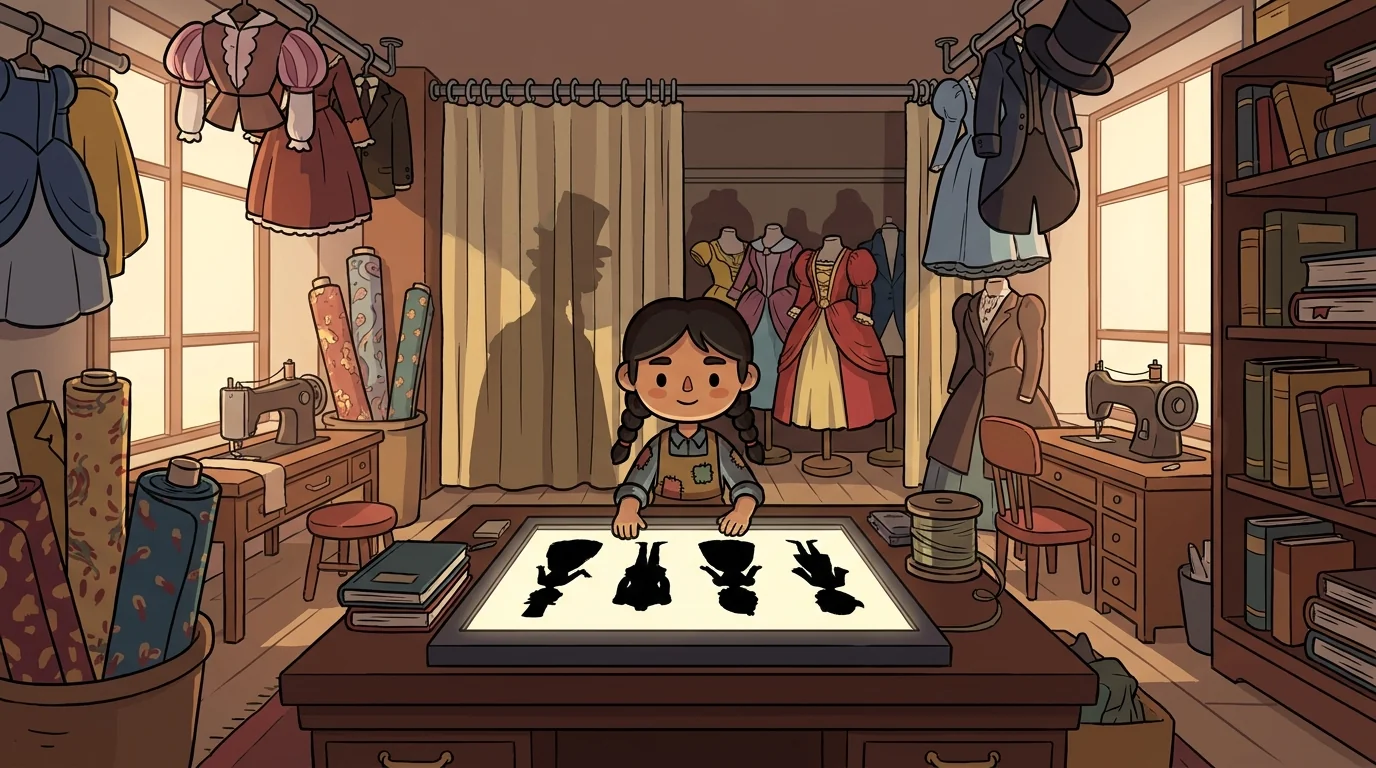
Selvage saw the world in outlines. Where others noticed a garment's colour or its trim, Selvage squinted past all of that to the shape — the outer edge a dressed figure cut against the light. "Show me only the shadow of a person," Selvage said, "no colour, no face, no detail — just the silhouette — and I can usually tell you roughly when. The shape alone carries the time."
The apprentice was skeptical. "From just the outline?"
"From just the outline," Selvage said quietly. "Because the outline is the thing that changes the most, on the most recognizable schedule."
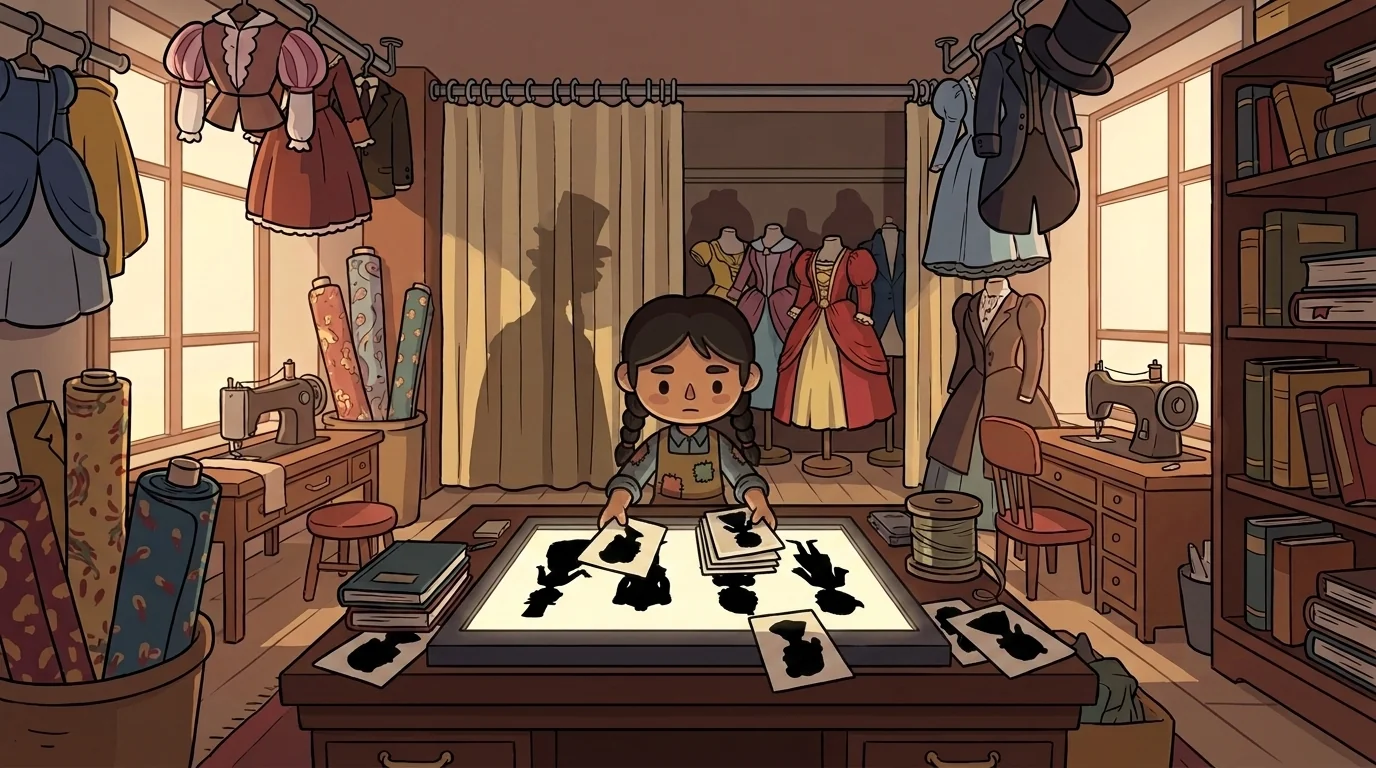
Selvage taught the first Advanced idea: the silhouette is the strongest dating clue.
"A look is made of many things — colour, fabric, trim, fasteners, small details," Selvage said. "Any of them can help you date it. But they're slow and fiddly. The silhouette — the overall shape, where it's wide, where it's narrow, where it juts or drapes — changes boldly and on a timeline you can learn. Wide shoulders give way to narrow ones; a full, sweeping lower shape gives way to a slim, straight one, then back again. These big shape-shifts are dramatic and datable." Selvage traced an outline in the air. "So when you want to place a look in time, read the biggest thing first: the shape. Details refine the answer, but the silhouette gets you there fastest."
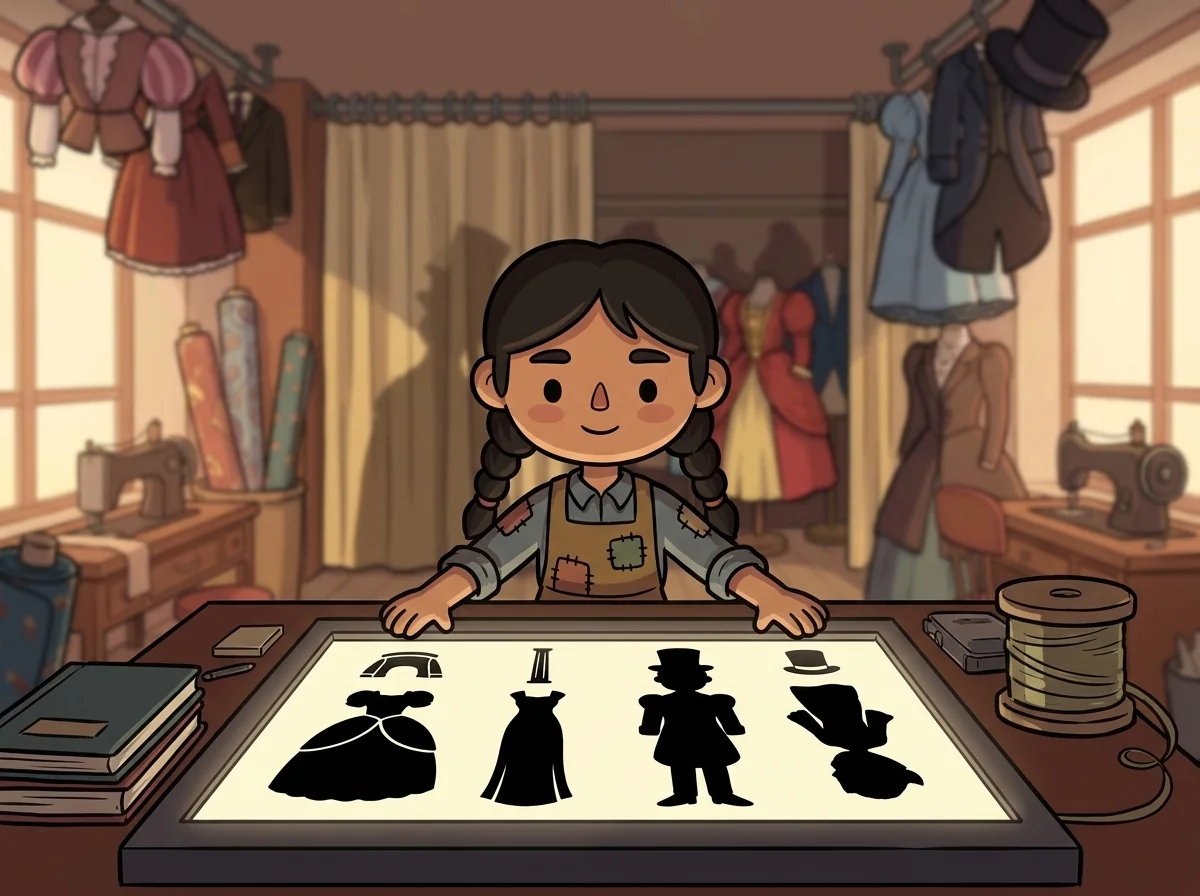
The apprentice asked why the shape changed so reliably when details were so varied.
"Because a whole society tends to move toward a shared idea of the fashionable shape at a given time," Selvage said, "and then, after a while, away from it. The shape is a kind of collective agreement that shifts era to era — which is exactly what makes it datable. Two people from the same time, wearing totally different colours and details, will often share the same underlying silhouette, because they're both answering the same moment's idea of the shape. Colour is personal. The silhouette is the era speaking through the outline." Selvage's precise eyes narrowed. "That's why a shadow can carry a date: the shape is the era's fingerprint."
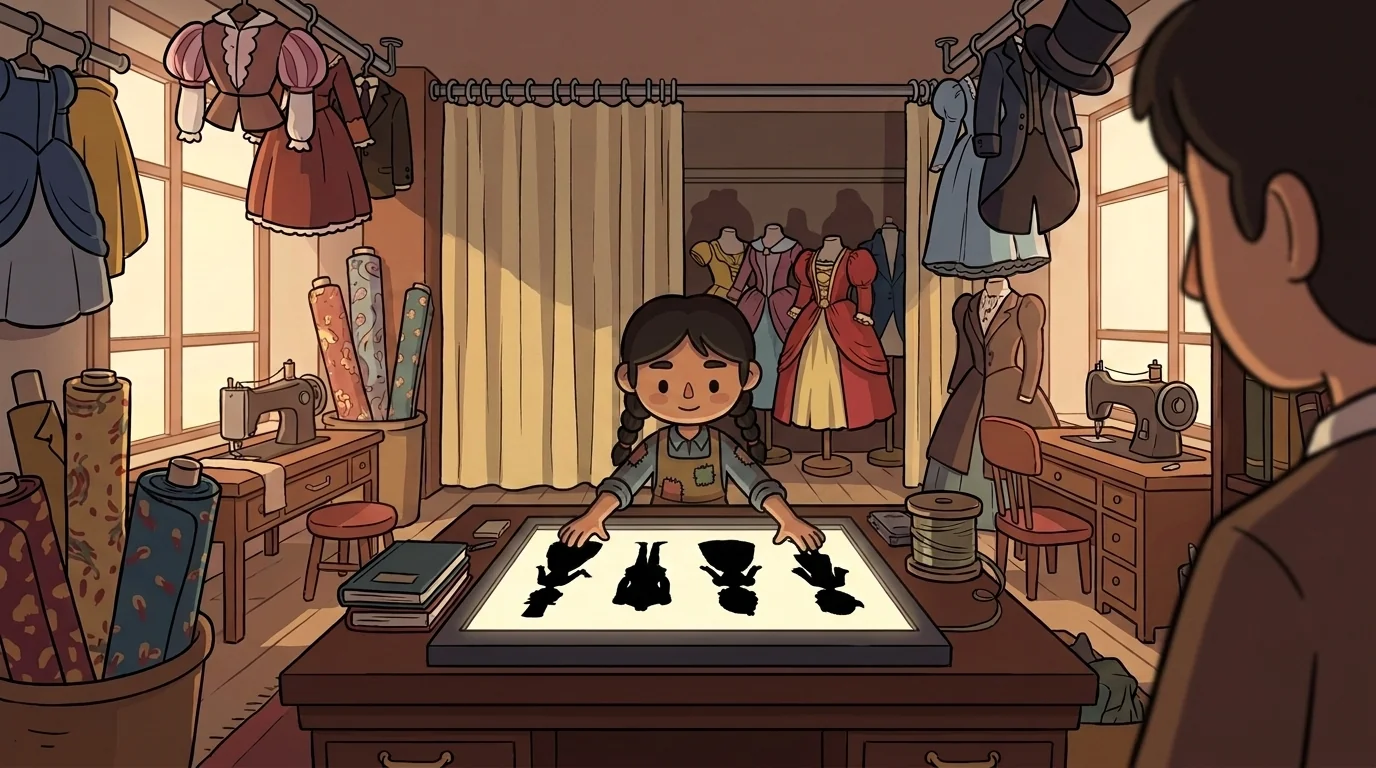
Then Selvage taught the discipline that keeps a fast clue from becoming a careless one.
"But even the silhouette is a strong clue, not a stamp," Selvage said. "Shapes can echo across eras — a later look can deliberately bring back an earlier shape (ask Damask about that). And a rough shadow can trick the eye. So use the silhouette to get close fast, then confirm with a second clue — a detail, a fastener, a fabric — before you commit. One strong clue points; two clues that agree convict. The silhouette is where you start reading time, not where you stop." Selvage nodded once. "Read the shape first. Then check your work."
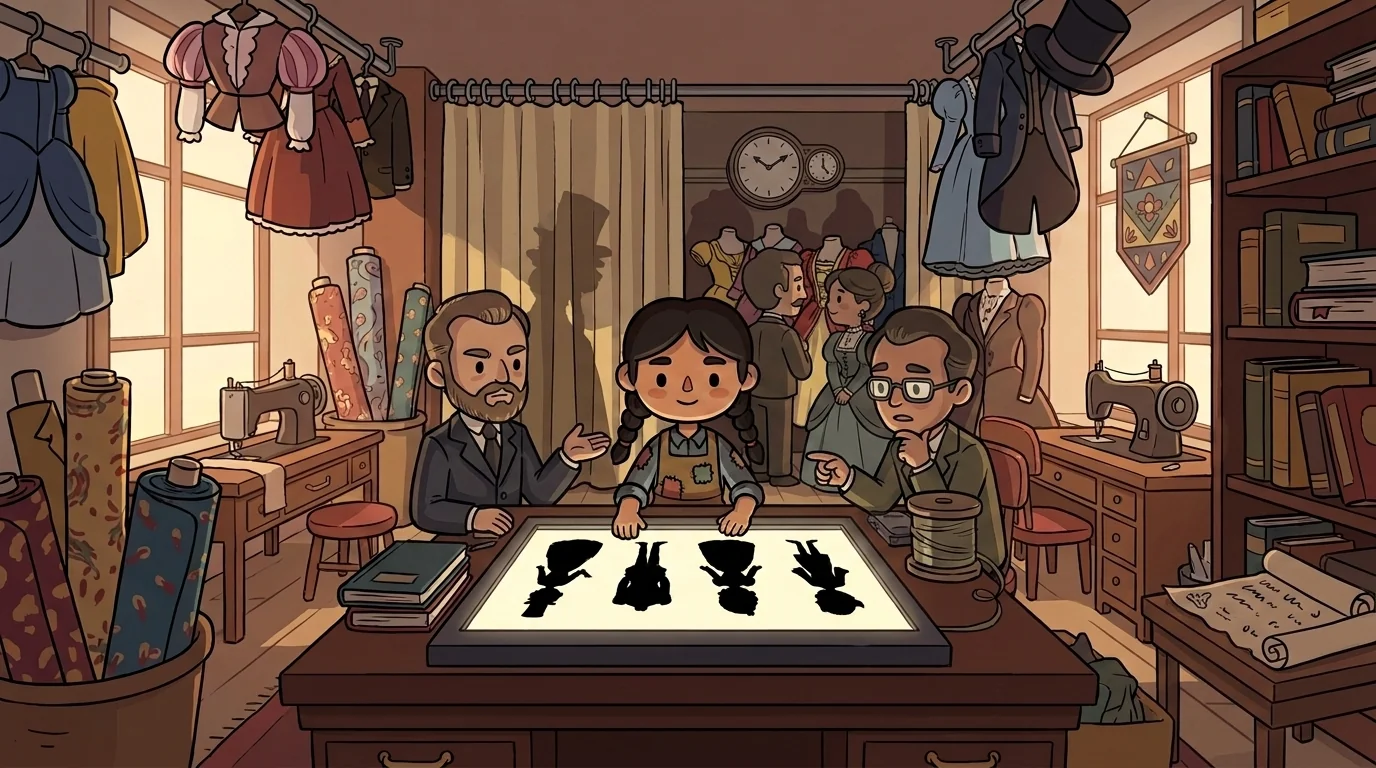
The apprentice looked at a figure's outline against the light and, ignoring everything else, read the shape.
"So the silhouette gets me close to the era fastest," the apprentice said, "because the whole society moves toward a shared shape — but I should confirm with a detail before I'm sure, since shapes can come back."
"Now you read like an outline-reader," Selvage said, sharp and quiet. "The outer shape a dressed figure makes changes era to era — the silhouette alone can date a look, even from a shadow. Start with the shape, then check your work."
The EraForge ensemble
Selvage is part of EraForge's distributed-narrative cast. Each character embodies a different curricular primitive; together they teach the full subject.
-
Warp
Fiber → cloth — every cloth remembers the land whose plant or animal made it
-

Madder
Natural dye — before factories every colour came from a plant, root, or shell; a rare colour meant a long reach
-
Toile
A motif is a message — read a woven pattern on its own makers' terms, never guess
-
Argent
Status dress — what a person may wear encodes rank and role; read the whole society
-

Vane
Climate & geography — clothing is a clever answer to a place's weather and terrain
-

Skein
Trade & exchange — where a fabric is worn traces the route that carried it, not just its source
-

Relic
Source-reading (the curator & mentor) — read an object as evidence: who made it, when, and why
-
Damask
Revival & anachronism — old styles return re-made; the out-of-time detail reveals the real age
-
Lexi
Design vocabulary — the exact word (silhouette, motif, drape, hue) lets you describe and compare