
Toile
SYMBOL MEANING — a woven or printed motif is a deliberate message in a maker's own system, so it must be read from the makers' knowledge, never guessed from the outside; a symbol's meaning is CONTEXTUAL, and the same shape can mean opposite things in different systems
Loading audio…
Press play to listen along. The line being read lights up as you go.
Show full transcript
Loading transcript…
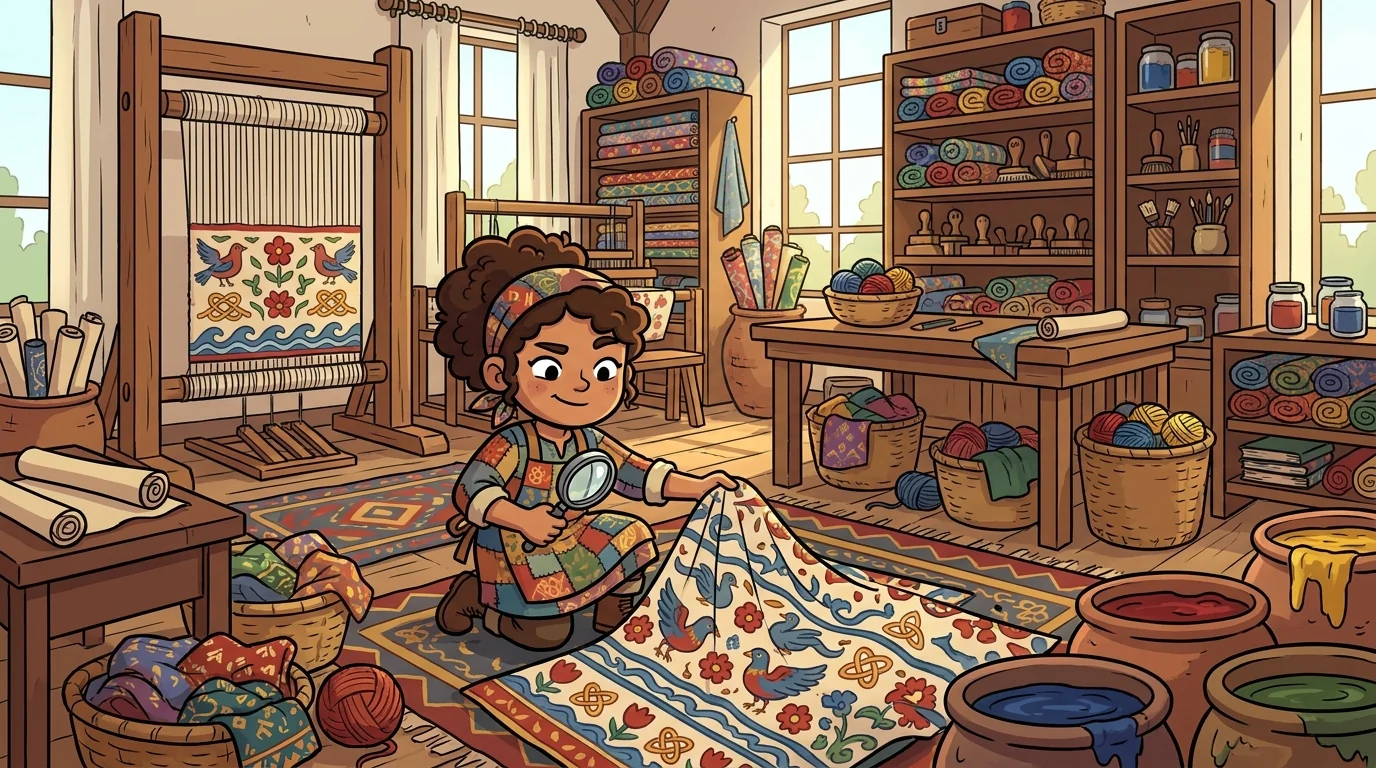
Toile handled a patterned cloth the way a reader handles a letter written in a language they respect but do not fully know — carefully, and without pretending. When the apprentice glanced at a bold motif and started to say "oh, that obviously means—", Toile gently stopped the sentence in the air.
"Careful," Toile said. "A motif is not decoration. It is a message — chosen on purpose, in a system its makers understood. And the fastest way to be wrong about it is to guess its meaning from the outside, using your ideas instead of theirs."
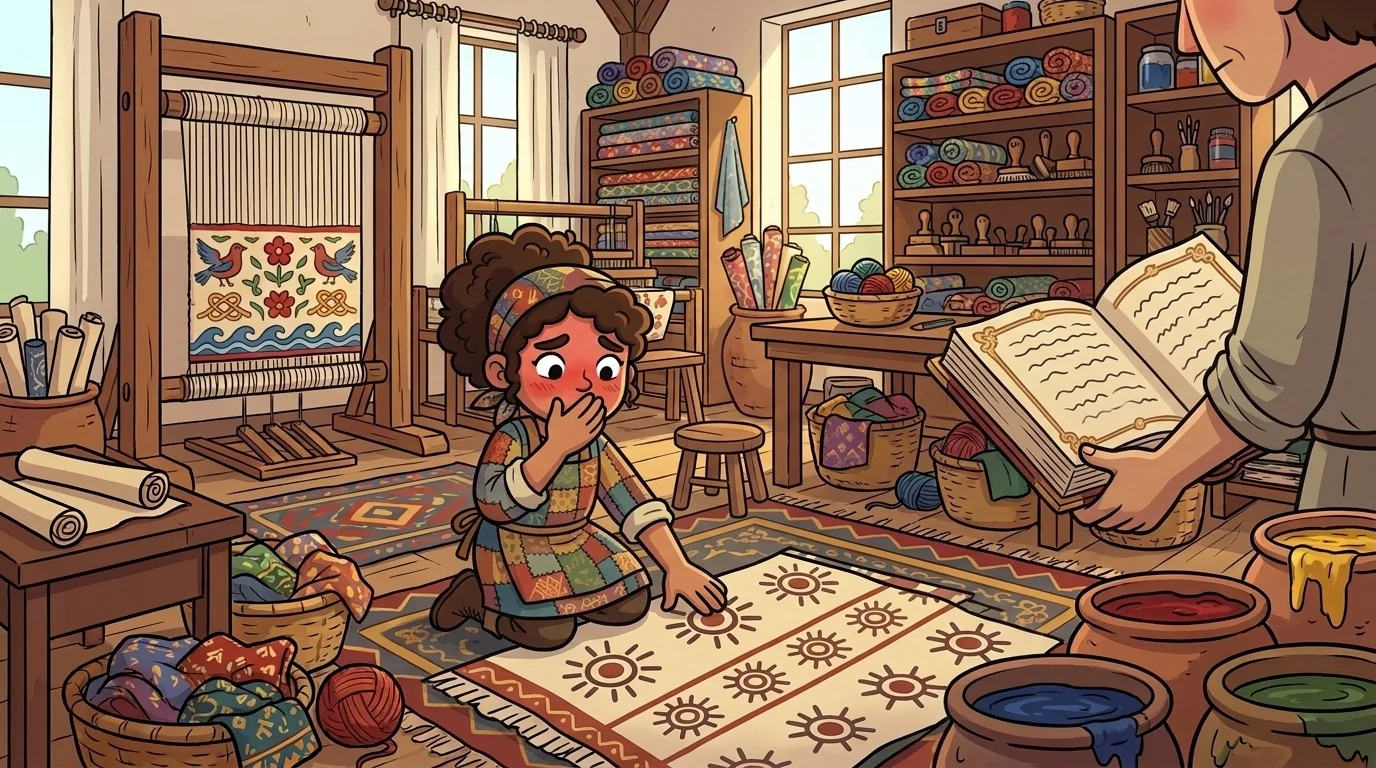
Toile taught the first Advanced idea: a symbol is a deliberate message inside a system.
"When people weave or print a pattern, they aren't just making it pretty," Toile said. "They're often saying something — this belongs to a certain group, this marks a certain occasion, this carries a certain hope or story. The motif has meaning because the makers share a system that assigns it meaning, the way letters mean sounds because readers agree they do. So a pattern is a kind of writing." Toile traced the motif without claiming it. "And like writing in an unfamiliar script, you can see it clearly and still not read it — unless you learn the system from the people who use it."
The apprentice asked why they couldn't just reason out what a symbol probably meant.
"Because meaning is contextual, not obvious," Toile said, and this was the heart of it. "The same shape can mean opposite things in different systems. A colour that signals joy to one group of makers can signal mourning to another. A pattern that means 'welcome' in one place can mean something entirely different somewhere else. There is no universal dictionary of symbols floating in the air that you can consult with common sense. Meaning lives inside each system. So 'it probably means what it would mean to me' is exactly the wrong move — it replaces the makers' meaning with your own and calls it understanding."
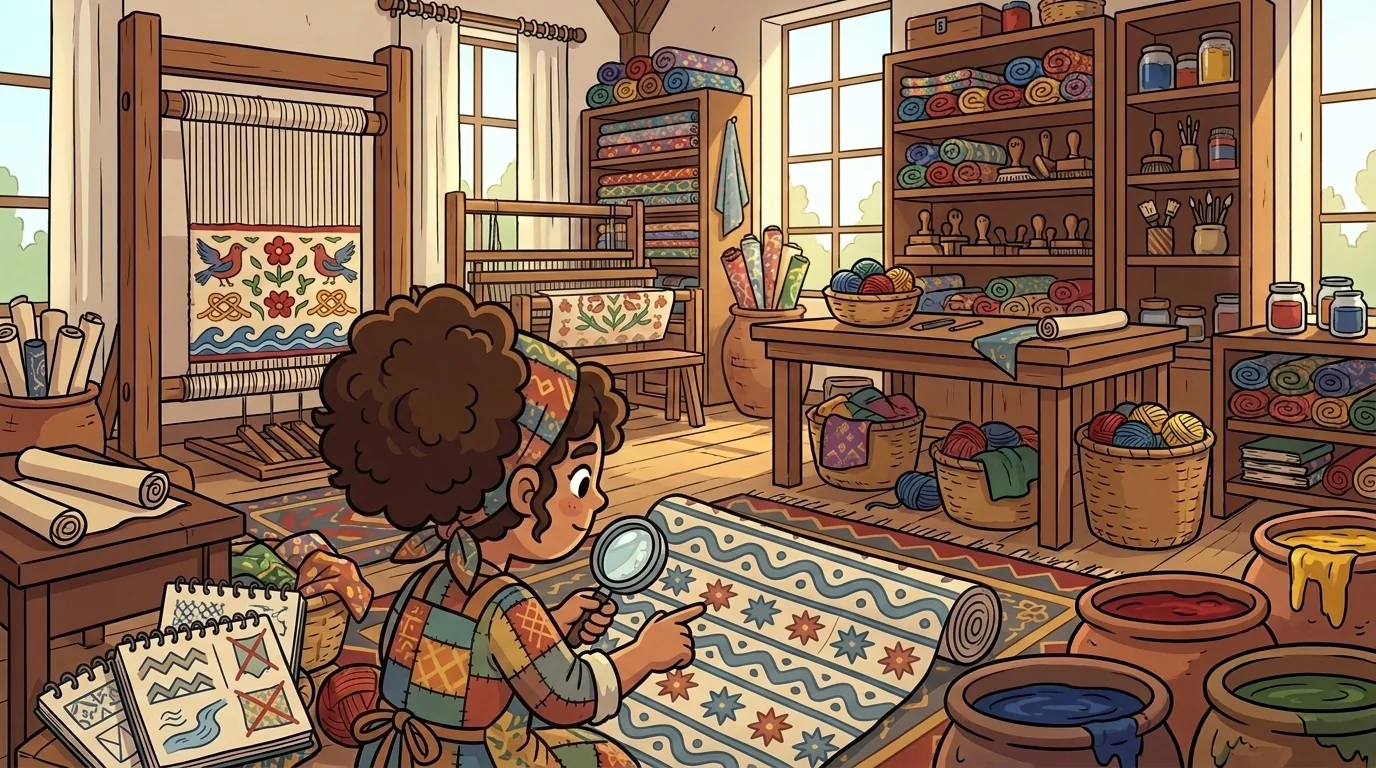
Then Toile taught the respectful discipline, which is also simply the accurate one.
"So here is how a careful reader handles a motif," Toile said. "First, resist the guess. Notice the urge to decide instantly, and don't. Second, ask whose system this is and learn the meaning from them — from the makers, their words, their knowledge — not from your assumptions. Third, if you can't learn it, say so honestly: 'this is a meaningful motif, and I don't yet know what it means to its makers.' That sentence is not a failure. It is the truthful reading. Claiming a meaning you invented isn't knowledge — it's a costume worn over ignorance, and it can disrespect the people whose message you overwrote." Toile's voice was quiet and firm. "Reading a symbol on its makers' terms is both the respectful thing and the correct thing. They are the same thing."
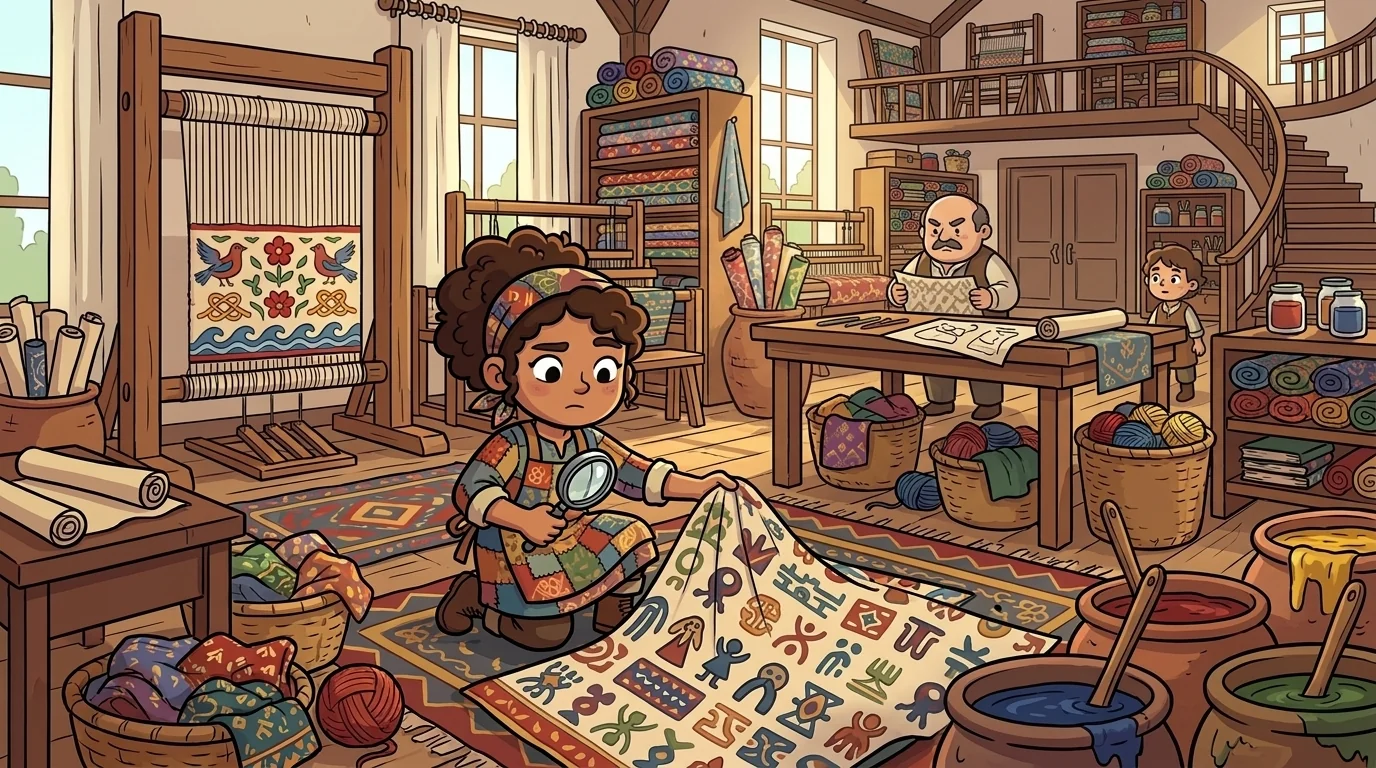
The apprentice looked at the bold motif again — and this time did not finish the guess.
"So I shouldn't decide what it means from the outside," the apprentice said. "I should find out whose system it belongs to and learn it from them — and if I can't, I should say plainly that I don't know yet."
"Now you're reading like someone worth trusting," Toile said, thoughtful and warm. "A motif is a message — read it on its own makers' terms, never guess its meaning from the outside. The honest 'I don't know yet' is worth more than a confident wrong answer, every time."
The EraForge ensemble
Toile is part of EraForge's distributed-narrative cast. Each character embodies a different curricular primitive; together they teach the full subject.
-
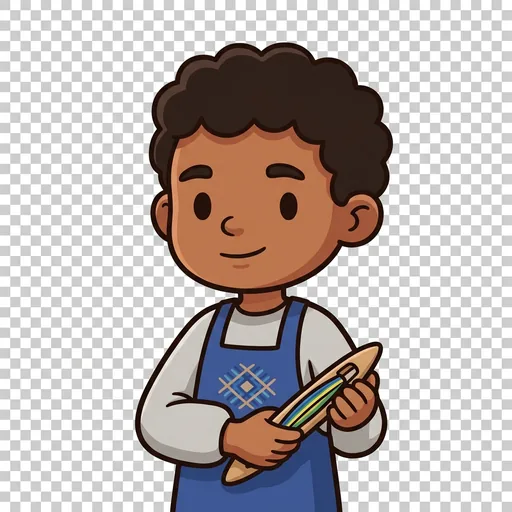
Warp
Fiber → cloth — every cloth remembers the land whose plant or animal made it
-
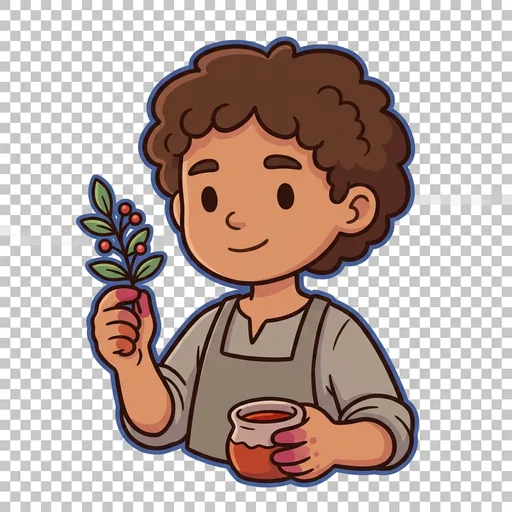
Madder
Natural dye — before factories every colour came from a plant, root, or shell; a rare colour meant a long reach
-
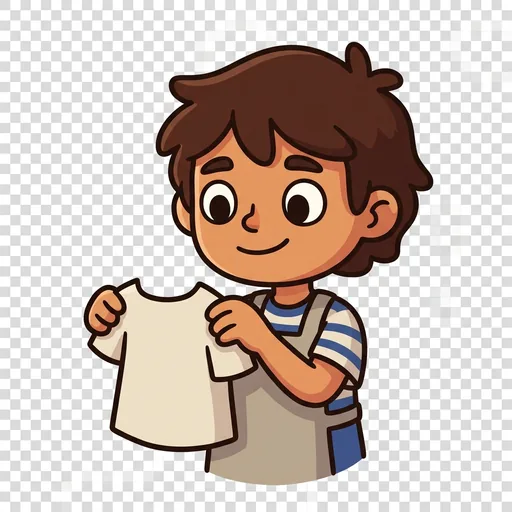
Selvage
Silhouette → era — the outer shape a dressed figure makes dates the look, even from a shadow
-
Argent
Status dress — what a person may wear encodes rank and role; read the whole society
-
Vane
Climate & geography — clothing is a clever answer to a place's weather and terrain
-

Skein
Trade & exchange — where a fabric is worn traces the route that carried it, not just its source
-

Relic
Source-reading (the curator & mentor) — read an object as evidence: who made it, when, and why
-
Damask
Revival & anachronism — old styles return re-made; the out-of-time detail reveals the real age
-
Lexi
Design vocabulary — the exact word (silhouette, motif, drape, hue) lets you describe and compare