
Warp
FIBER → CLOTH — cloth is made from a fiber that a real place could grow or raise (plant, animal, or mineral), so a fabric is evidence of its home landscape; but fiber TRAVELS, so a fiber points to a possible origin, never a certainty
Loading audio…
Press play to listen along. The line being read lights up as you go.
Show full transcript
Loading transcript…
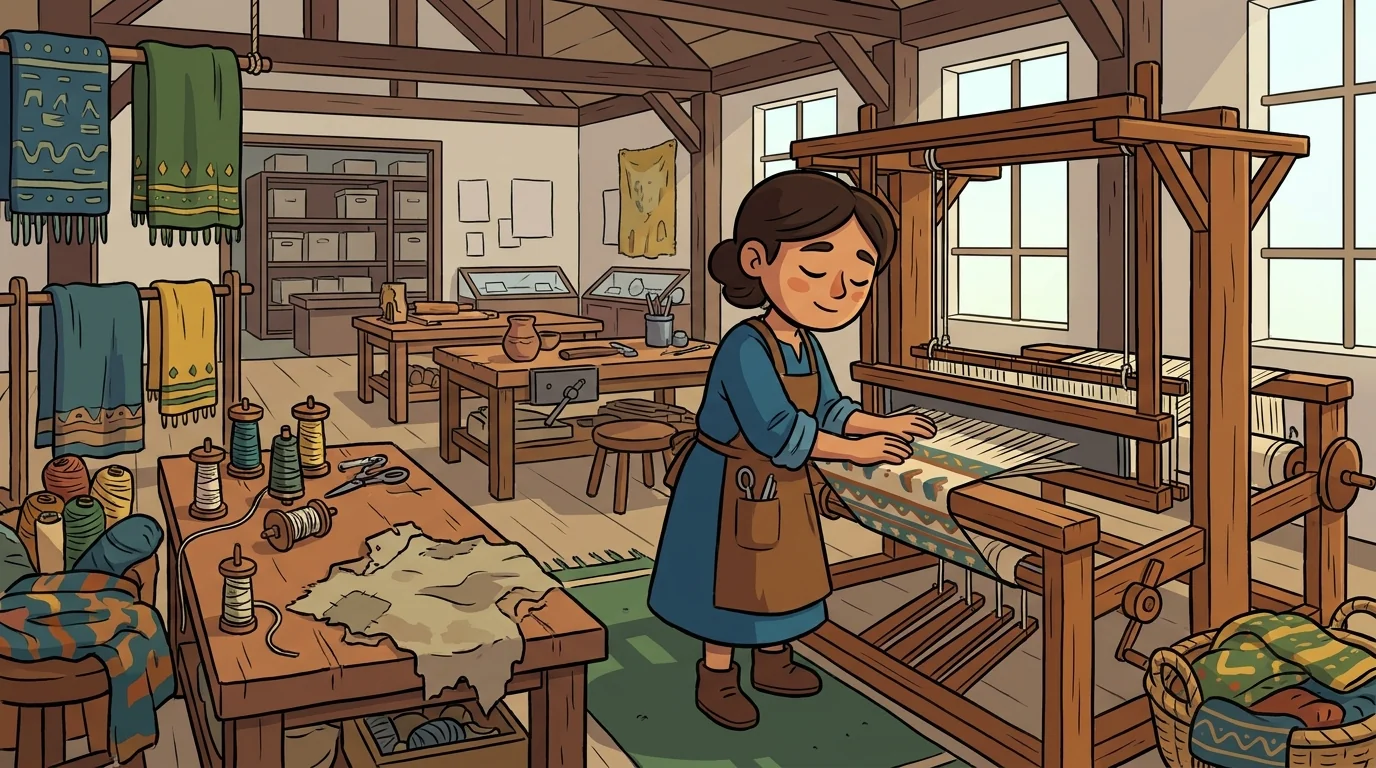
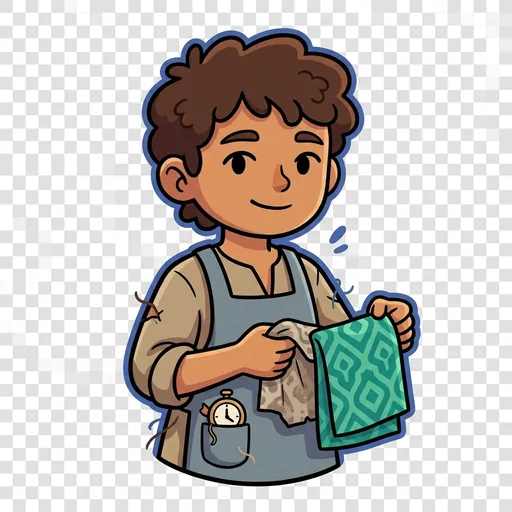
Warp worked slowly, the way weavers do, and taught the same way — one steady thread at a time. A young apprentice had brought a scrap of cloth and asked what it was. Warp turned it over in patient hands and answered a bigger question than the one asked.
"Before this was a cloth, it was a fiber," Warp said. "And before it was a fiber, it grew or was raised somewhere real — in a field, on an animal's back, from a plant that needed a certain soil and sky. A cloth is a plant or an animal that a place made possible. So if you can read the fiber, you can read something about the land."
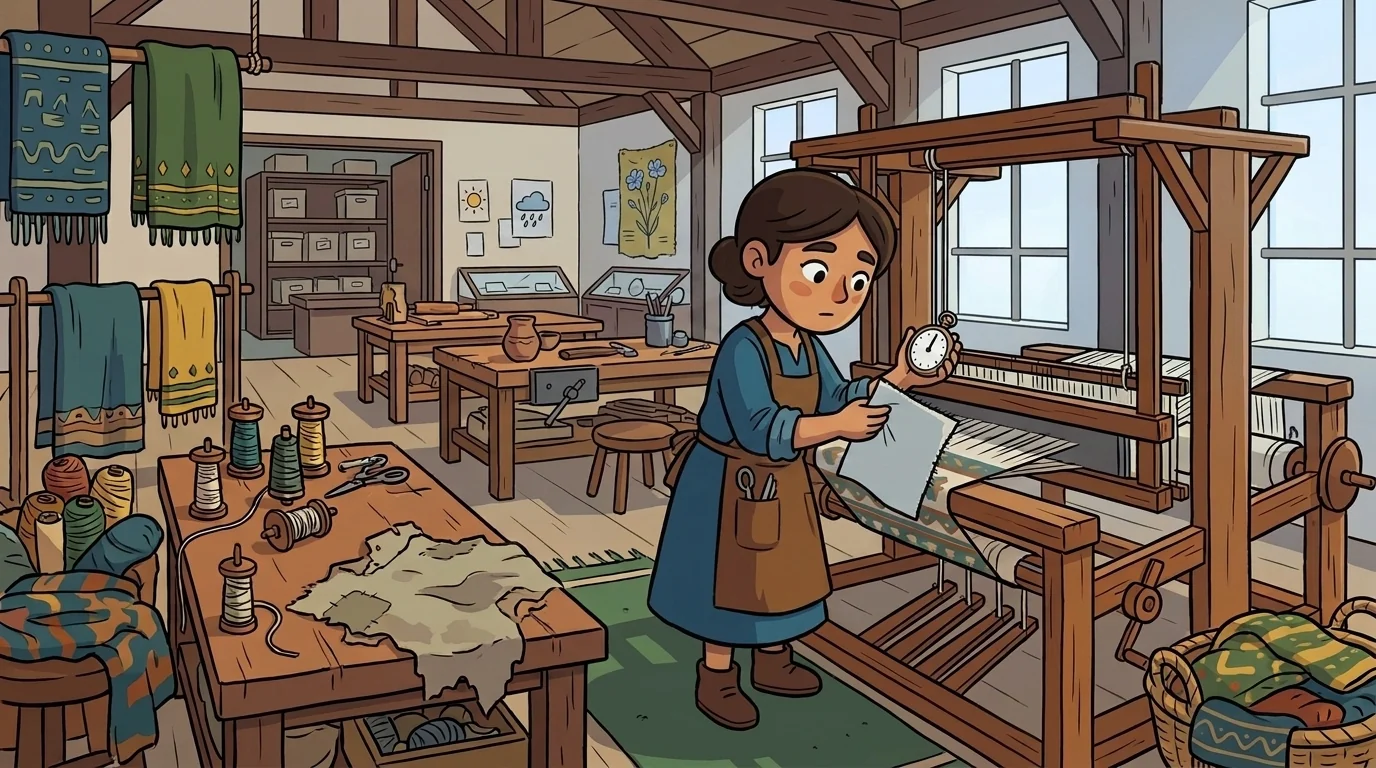
Warp taught the first Advanced idea: read the finished thing backward to its raw beginning.
"Most people look at cloth and see only the surface — the colour, the pattern," Warp said. "A maker looks through it, back down the chain: cloth came from thread, thread came from fiber, fiber came from a living thing, the living thing came from a place." Warp separated a single strand. "This is a plant fiber — you can tell by how it takes a crease and how it feels cool. A plant fiber means a place warm and wet enough to grow that plant. An animal fiber — springy, warm, holding its shape — means a place that could keep the animal that grew it. The cloth is the end of a long chain, and every link points home."
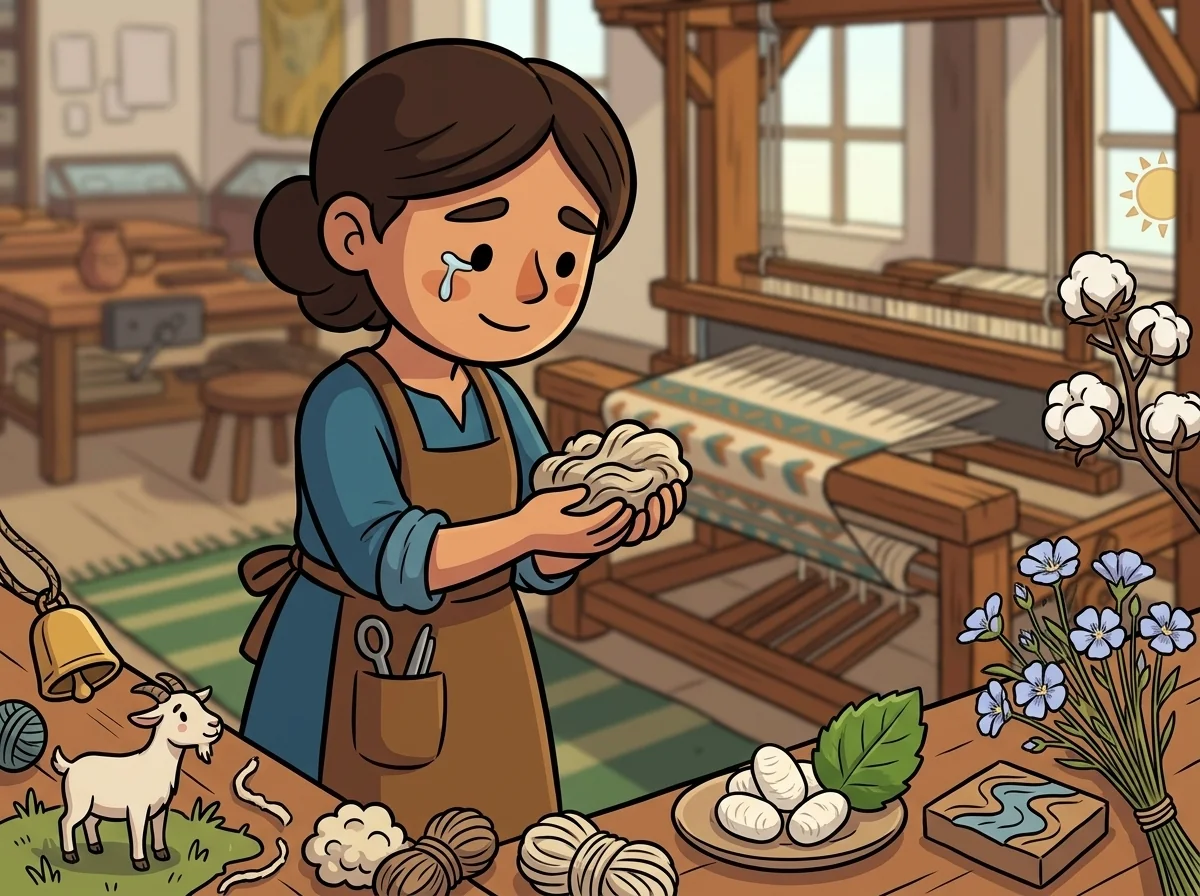
The apprentice wanted to know how a fiber could reveal a place.
"Because a fiber can only come from what a place can support," Warp said. "A plant that needs long hot summers won't grow where the ground freezes half the year. An animal bred for thick warm fleece belongs to cold uplands, not baking flatlands. So the fiber is evidence of climate and terrain — it whispers what the weather was like where it began." Warp smiled slowly. "A cloth carries its birthplace woven into it. Learn what grows where, and a scrap of fabric becomes a little map."
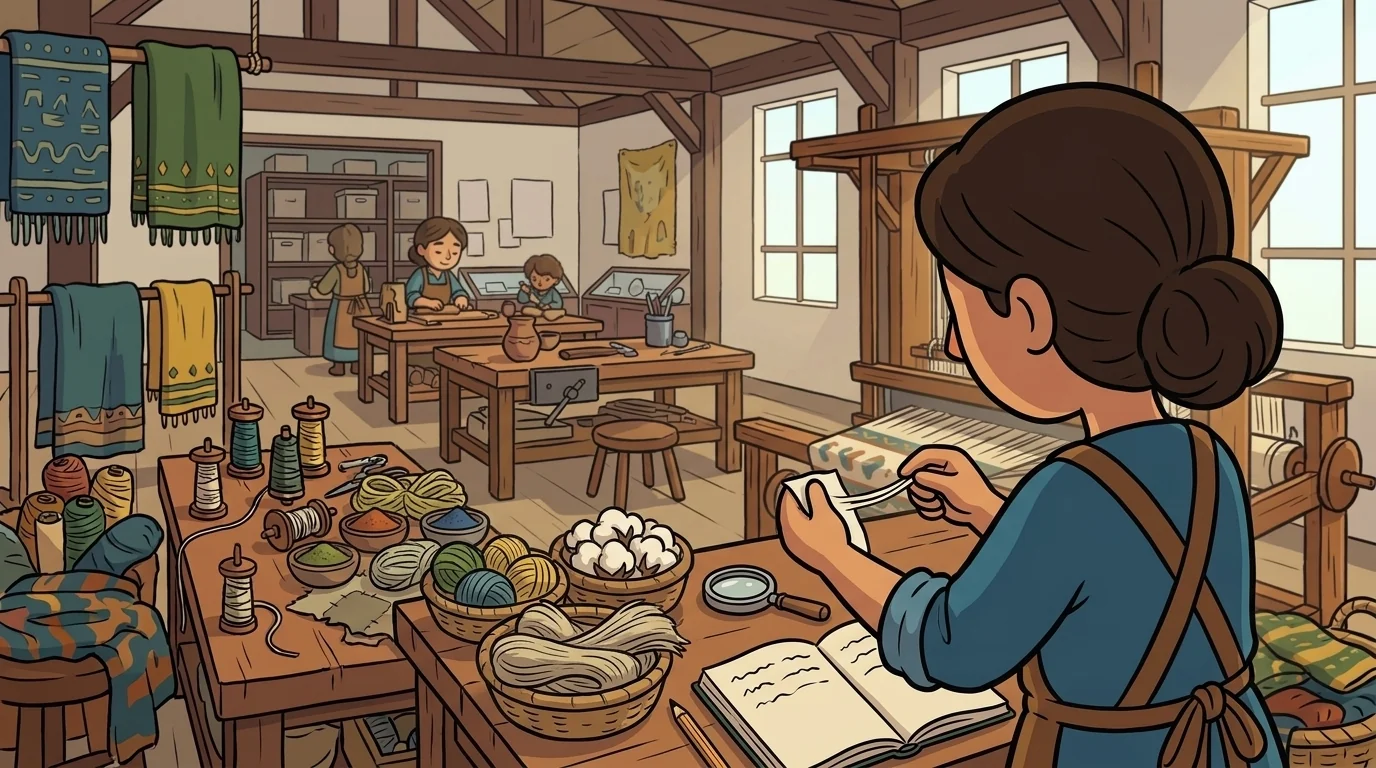
Then Warp taught the honest limit, the one a careful reader never forgets.
"But here is where a hasty reader goes wrong," Warp said, setting the scrap down. "Fiber travels. People have carried and traded materials across enormous distances for as long as there have been people. So a fiber tells you where it could have grown — its possible home — but not for certain where the cloth was made or worn. The plant fiber in your hand might have grown in one place, been spun in another, woven in a third, and worn in a fourth. A fiber is a strong clue to origin, never a stamped certainty. Say 'this fiber points to a warm place,' not 'this cloth is from there.' Evidence gives you a likely story, and an honest reader keeps the story open."
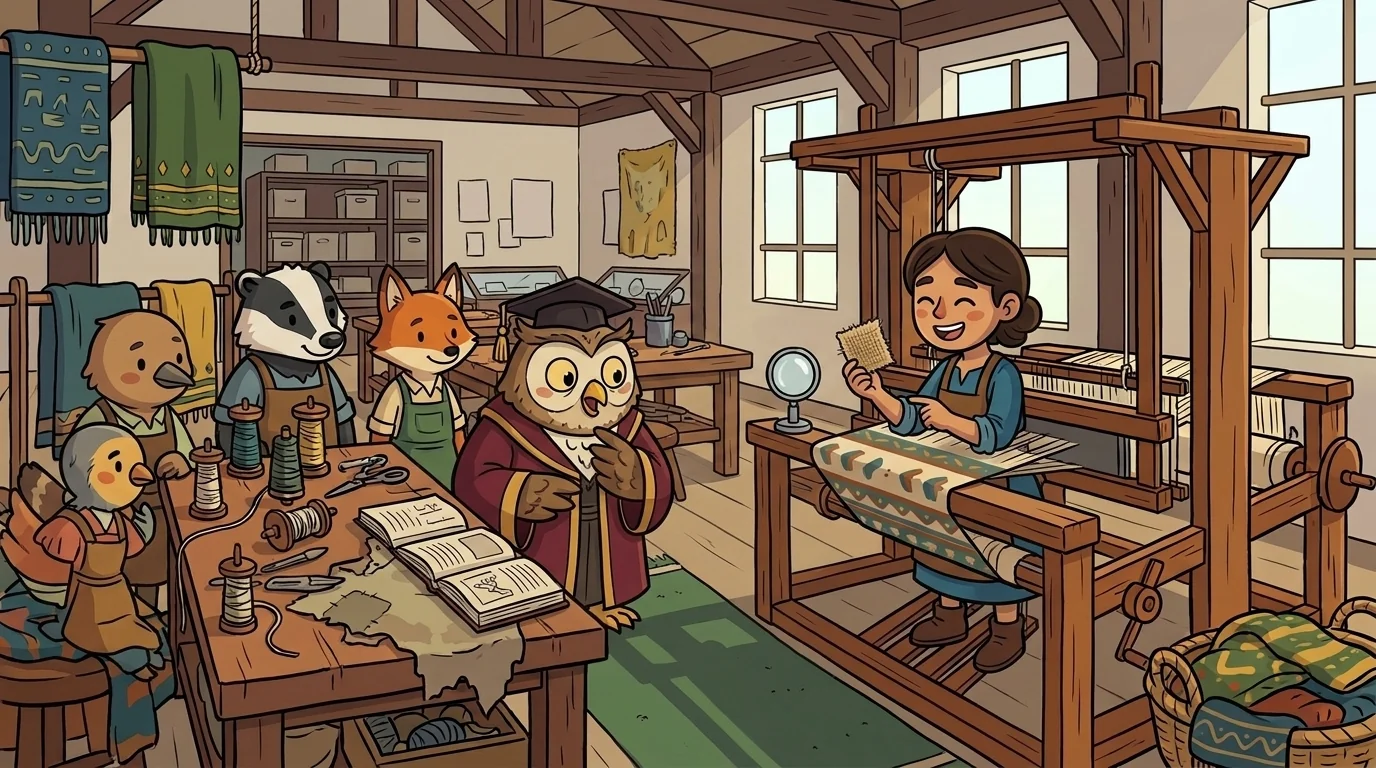
The apprentice held the scrap up to the light and, for the first time, saw past the pattern to the plant.
"So this is a plant fiber," the apprentice said slowly, "which points to somewhere warm and wet — but it could have traveled a long way before it became this cloth."
"Now you're reading like a maker," Warp said, warm and unhurried. "Cloth remembers the land — a fiber a place could grow or raise becomes a fabric that carries that place with it. Read the fiber back to its home, and hold the answer gently, because the thread may have journeyed far."
The EraForge ensemble
Warp is part of EraForge's distributed-narrative cast. Each character embodies a different curricular primitive; together they teach the full subject.
-
Madder
Natural dye — before factories every colour came from a plant, root, or shell; a rare colour meant a long reach
-
Selvage
Silhouette → era — the outer shape a dressed figure makes dates the look, even from a shadow
-
Toile
A motif is a message — read a woven pattern on its own makers' terms, never guess
-
Argent
Status dress — what a person may wear encodes rank and role; read the whole society
-
Vane
Climate & geography — clothing is a clever answer to a place's weather and terrain
-
Skein
Trade & exchange — where a fabric is worn traces the route that carried it, not just its source
-
Relic
Source-reading (the curator & mentor) — read an object as evidence: who made it, when, and why
-
Damask
Revival & anachronism — old styles return re-made; the out-of-time detail reveals the real age
-
Lexi
Design vocabulary — the exact word (silhouette, motif, drape, hue) lets you describe and compare