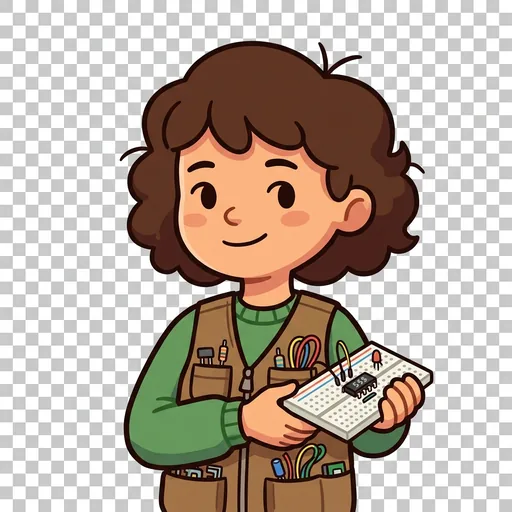
Coattail
THE SHARED LADDER — *on the star you may hop over ANY peg — your own or an opponent's — and nothing is ever removed, so a rival's pegs are not obstacles to avoid but stepping-stones to ride. Reading the whole board (not just your own marbles) for a chain that borrows other players' pegs is how the longest, most surprising leaps get made.*
Loading audio…
Press play to listen along. The line being read lights up as you go.
Show full transcript
Loading transcript…
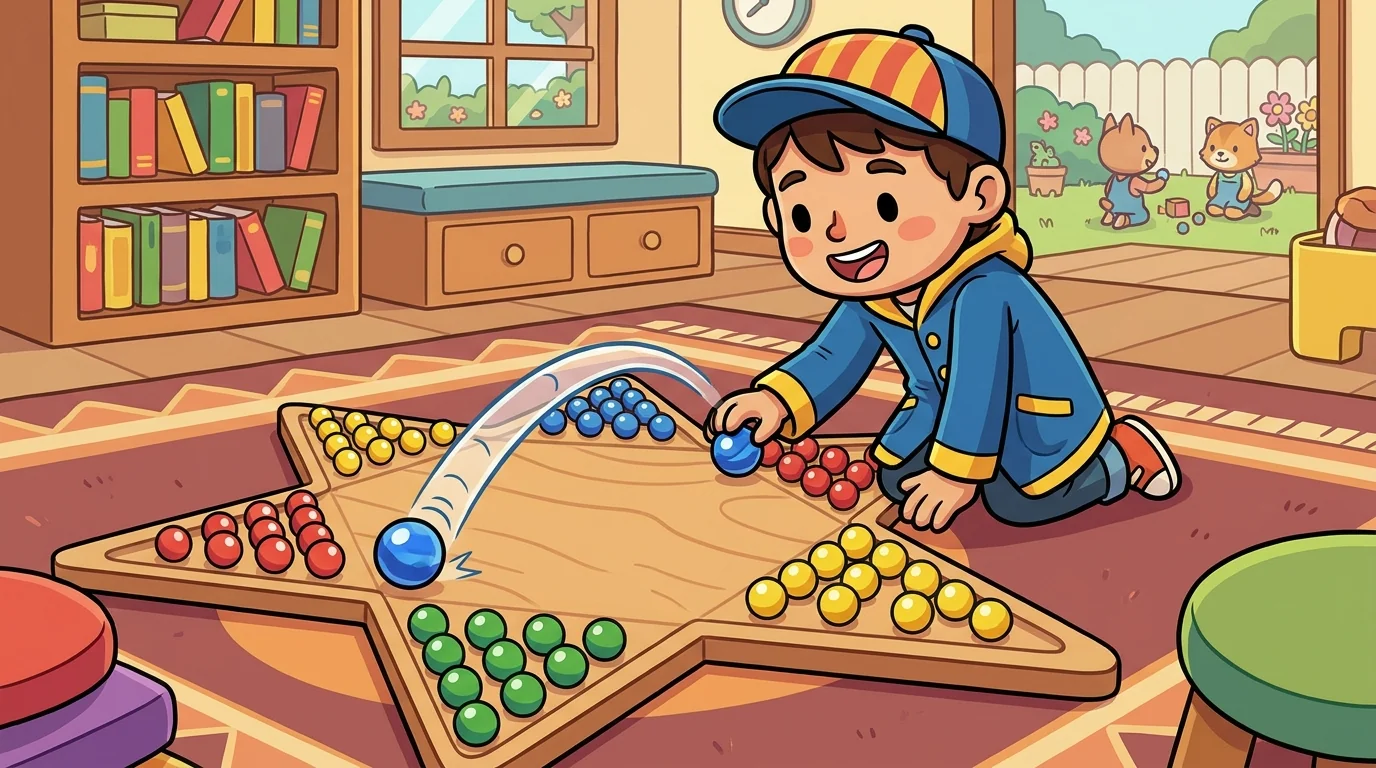
Coattail rode other people's pegs shamelessly and cheerfully. Where other players eyed a rival's cluster of marbles as a wall to go around, Coattail saw a staircase — because on the star you can hop over anyone's peg, and no peg is ever taken. "Nobody gets captured here," Coattail would say, bounding a marble over a rival's line and landing three spaces up. "So why treat their pegs like enemies? Their marbles hold still and let me leap them just as well as mine do. Every peg on this board is a stepping-stone — I just ride whichever ones point where I'm going."
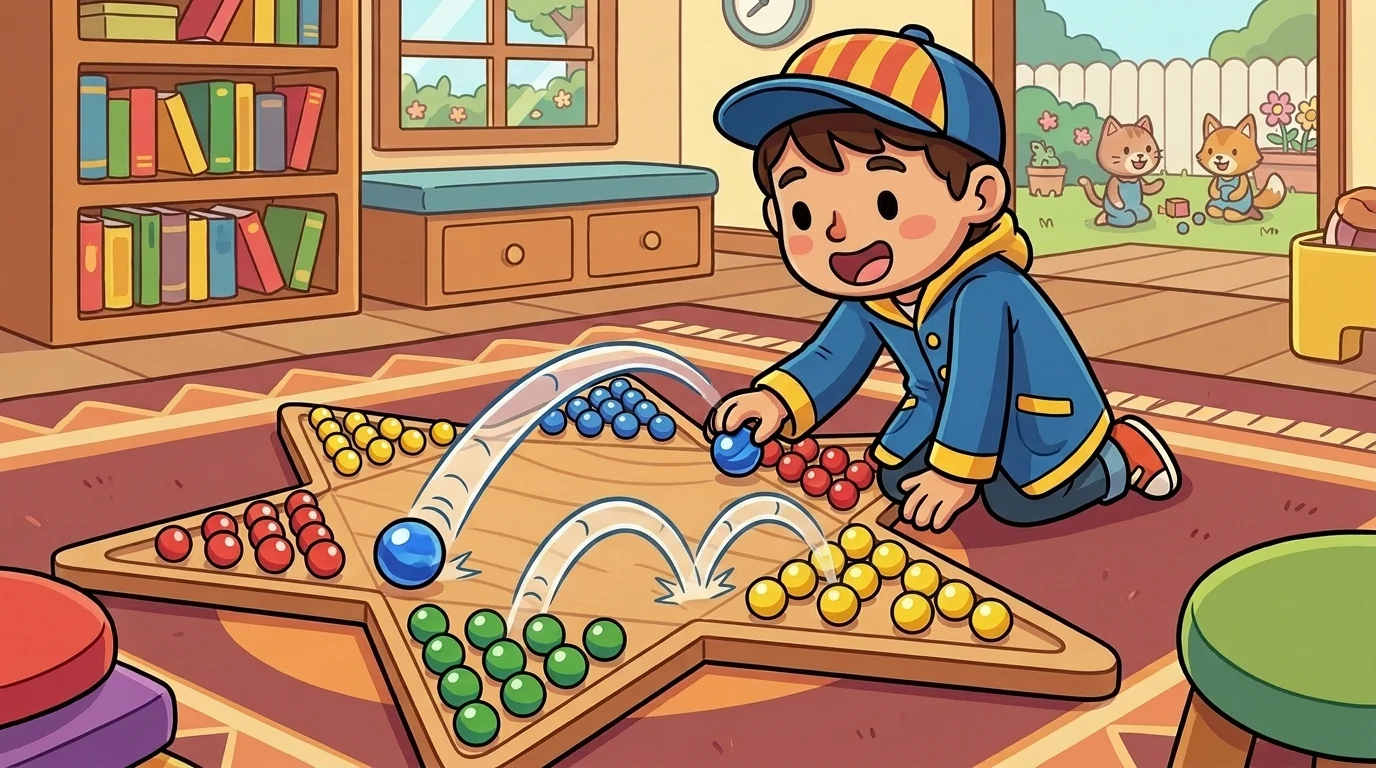
Coattail used to play as if alone in the world. In early games Coattail hopped only over his own pegs, ignored everyone else's entirely, and got jammed constantly — stuck behind a rival's cluster, waiting for it to move, convinced the other players' marbles were nothing but roadblocks in his way. It felt lonely and grim, like the whole board was against him: I have to do this all by myself, and everyone's in my path.
Cairn, the pathfinding coach, watched Coattail wait glumly behind a rival's line and asked, "Why are you going around those pegs?" "They're not mine," Coattail said. "On this star," Cairn said, "that doesn't matter — you can hop over any peg, and none of them ever get taken. That cluster you're avoiding is a ladder somebody else built for free. Ride it." Coattail leapt his marble straight over the rival's pegs and chained clear up the board, astonished. The lonely grimness lifted. He wasn't alone against everyone. The whole board — every player's pegs — was his to hop.
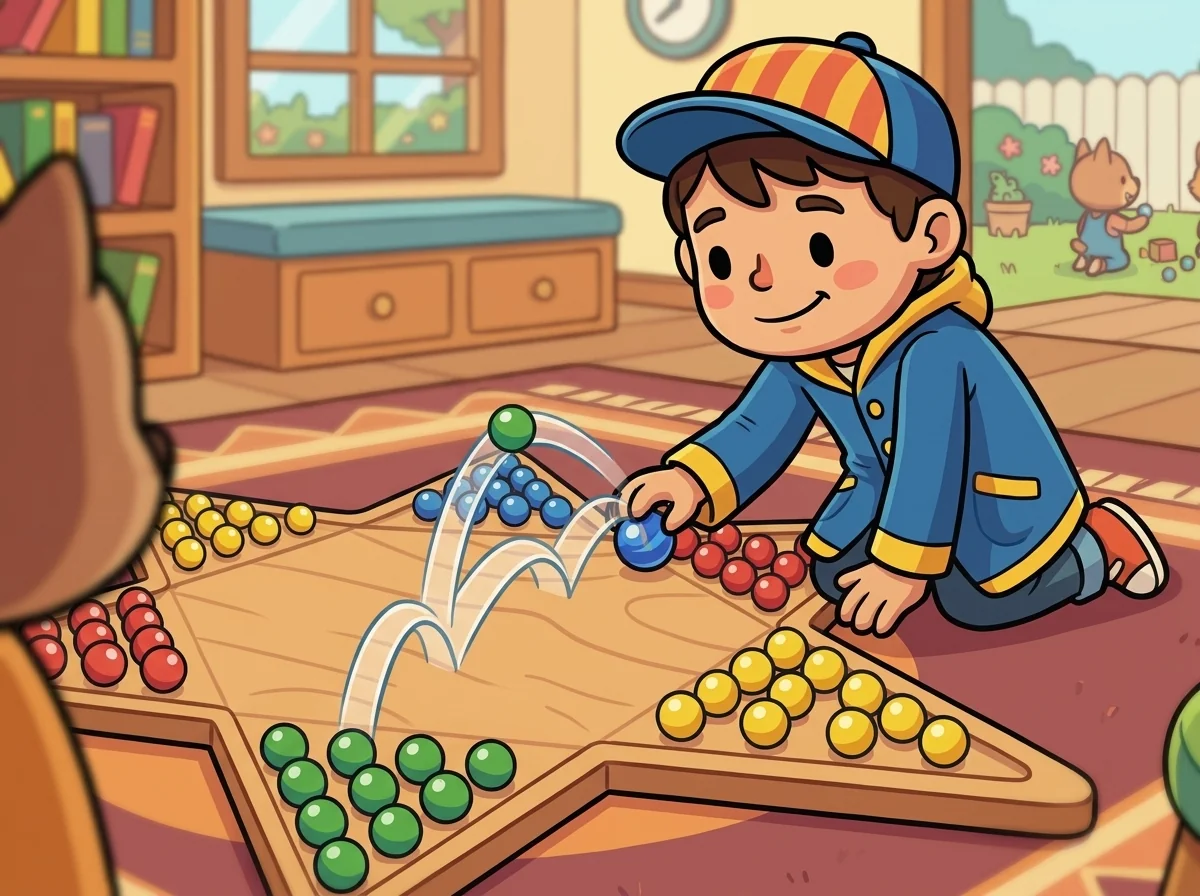
A boy named Dov came to Coattail frustrated and isolated. "I get so stuck," he said. "The other players' pegs are always blocking me and I just have to wait." Coattail laughed, warm and knowing. "You're only using half the board," he said. "Those aren't blocks — they're a free staircase. You can hop their pegs, and nobody loses anything. Show me where you're stuck." Dov pointed at a rival's cluster hemming his marble in.
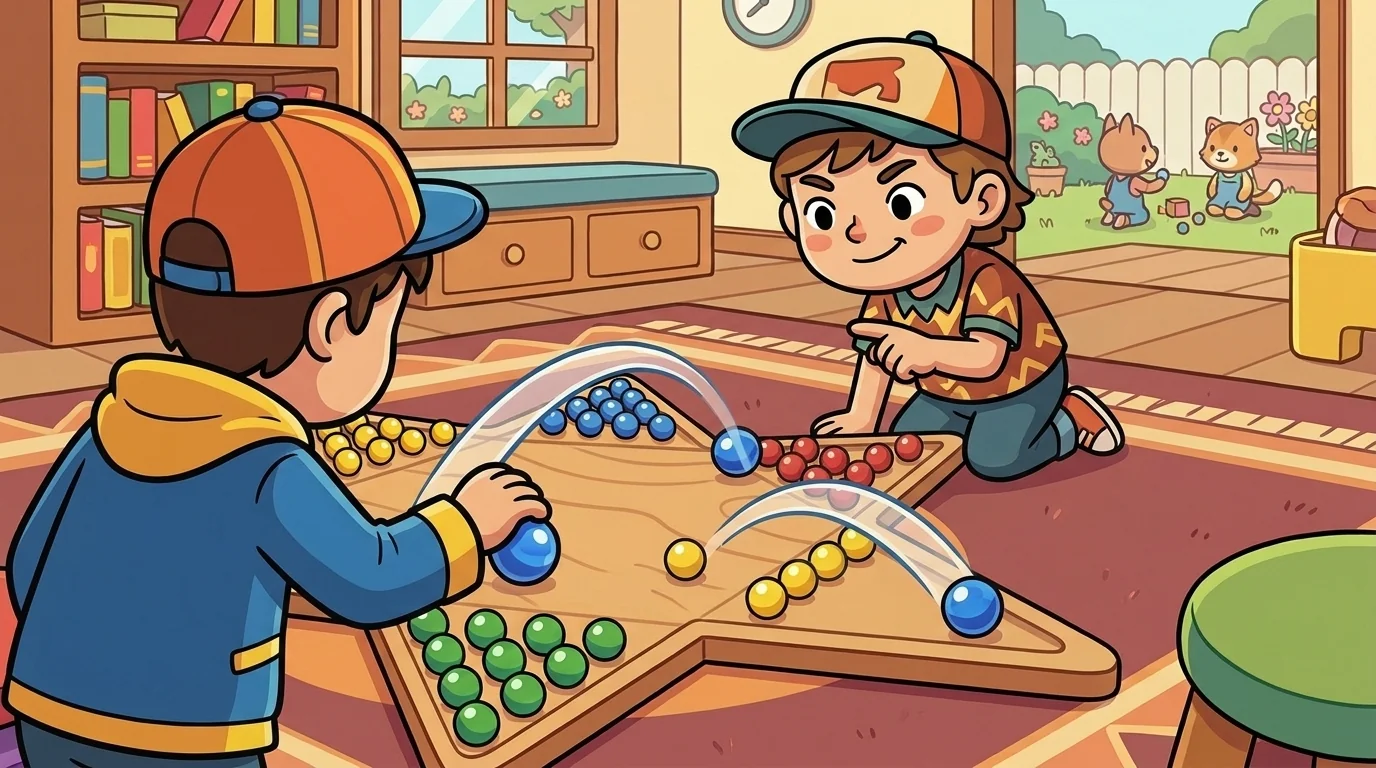
"Now count a chain that hops over their pegs," Coattail said. Dov traced it, hesitant — hopping a rival's marble felt almost rude — and found his own peg could bound over the whole enemy cluster and land far ahead, a chain he'd never have seen while treating their pegs as walls. He did it, half-laughing at the cheek of it. "That's allowed?" "Nobody gets captured — it's encouraged," Coattail said. They played on; Dov started reading the whole board, borrowing rivals' pegs and his own alike, and the longest leaps of his game came from ladders other people had built without meaning to. His "everyone's in my way" loneliness turned into something almost generous: we're all building the staircase together, even the ones I'm racing.
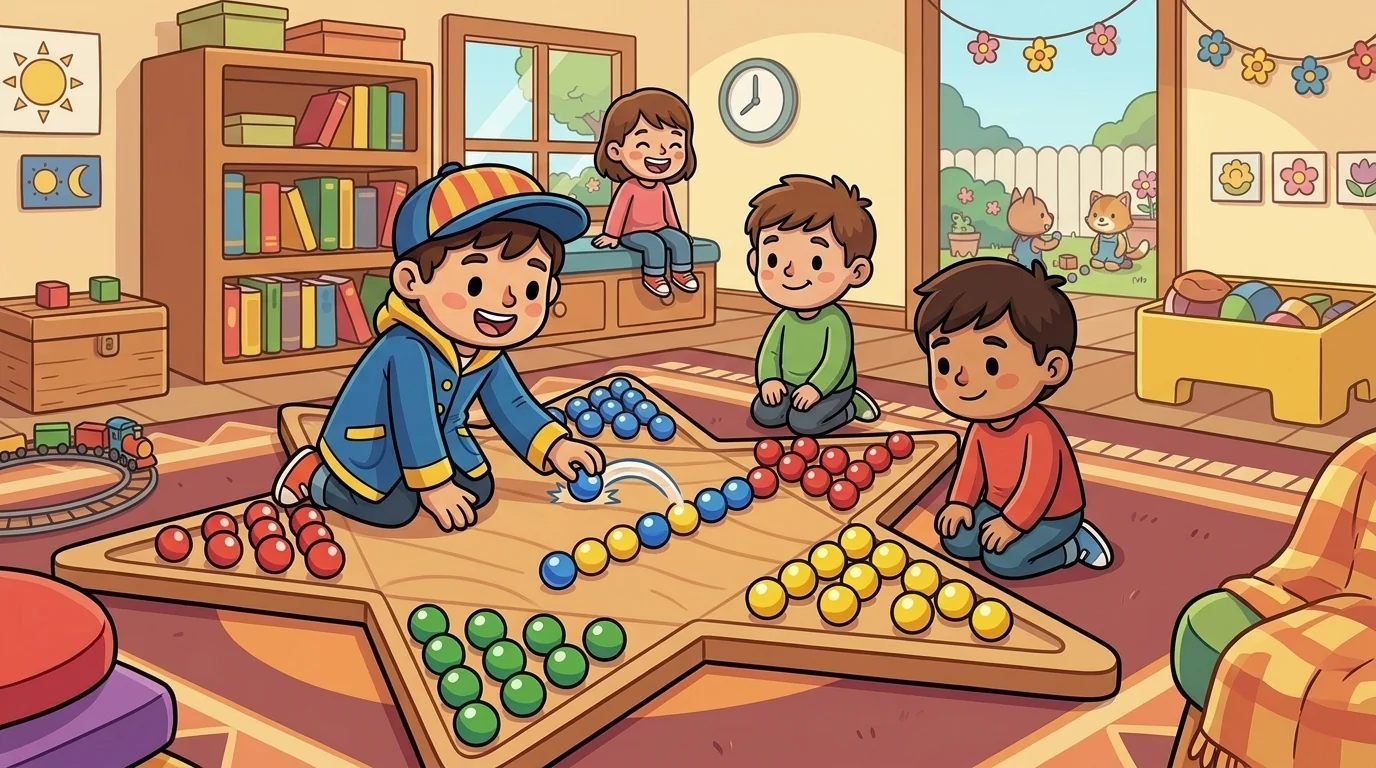
"You've got it," Coattail said. "No captures means no enemies-underfoot — just stepping-stones everywhere, whoever laid them. Read the whole board, not only your own marbles, and the biggest chains show up in the places you were trying to avoid." Dov nodded, eyeing a rival's cluster now like an invitation. Cairn watched from across the room, delighted — a kid who'd felt alone against the board was now riding everyone's pegs with a grin. "Say it when a rival's pegs block your path," Coattail told him. "I hop over anyone's pegs — mine or my rival's — because nobody gets captured, so every peg on the star is a stepping-stone I can ride."
The LeapTale ensemble
Coattail is part of LeapTale's distributed-narrative cast. Each character embodies a different curricular primitive; together they teach the full subject.
-
Bounder
The Ladder-Chainer — links several hops into ONE long move, always finding the longest efficient multi-hop route across the star (jump-chain / laddering)
-
Gate
The Junction-Holder — parks a peg on a key crossing so a rival's chain breaks; the one defensive idea in a game with no captures (blocking)
-
Kern
The Centre-Keeper — occupies the central hexagon where the most jump-lines cross, keeping the most options open (centre control)
-
Overleap
The Long-Jumper — reaches the gapped, longer hop the ordinary jump can't, clearing distance in a single leap (the long / gapped jump)
-
Sidra
The Lane-Opener — plays the classic sideways-developing first moves that open the fastest lanes out of the home point (the opening)
-
Caboose
The Straggler-Minder — never strands the last peg, because you only win when ALL ten reach home and the last one is hardest (leave no peg behind)
-
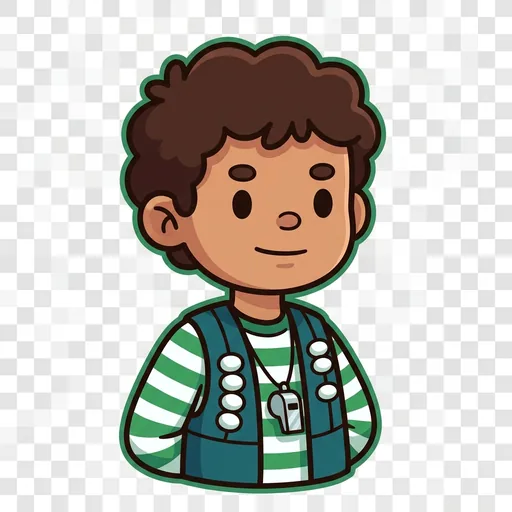
Pacer
The Race-Counter — counts who reaches home first and spends every single move advancing, never idling (tempo / parity)
-
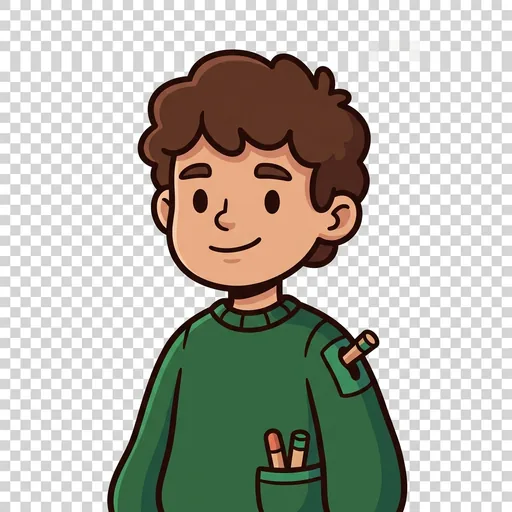
Snugg
The Back-Filler — tucks pegs into the BACK of the target point first so incoming pegs are never blocked by ones already home (home-fill order)
-
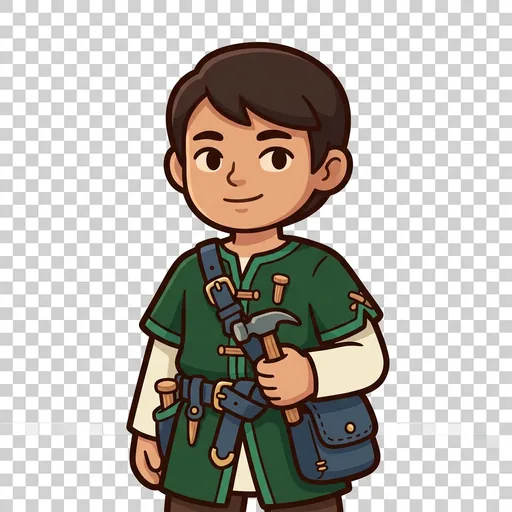
Trellis
The Bridge-Layer — places a peg NOW to enable a long chain LATER, setting up the ladder several turns ahead (deferred planning)