Bounder
THE JUMP-CHAIN / LADDERING — *on the star you may hop over a peg into the empty space just beyond it, and if another peg waits one step past THAT landing you may hop again, and again, chaining several single hops into ONE long move. Reading the board for the longest connected ladder of hops — instead of settling for one — is how a peg crosses the whole star in a single turn.*
Loading audio…
Press play to listen along. The line being read lights up as you go.
Show full transcript
Loading transcript…
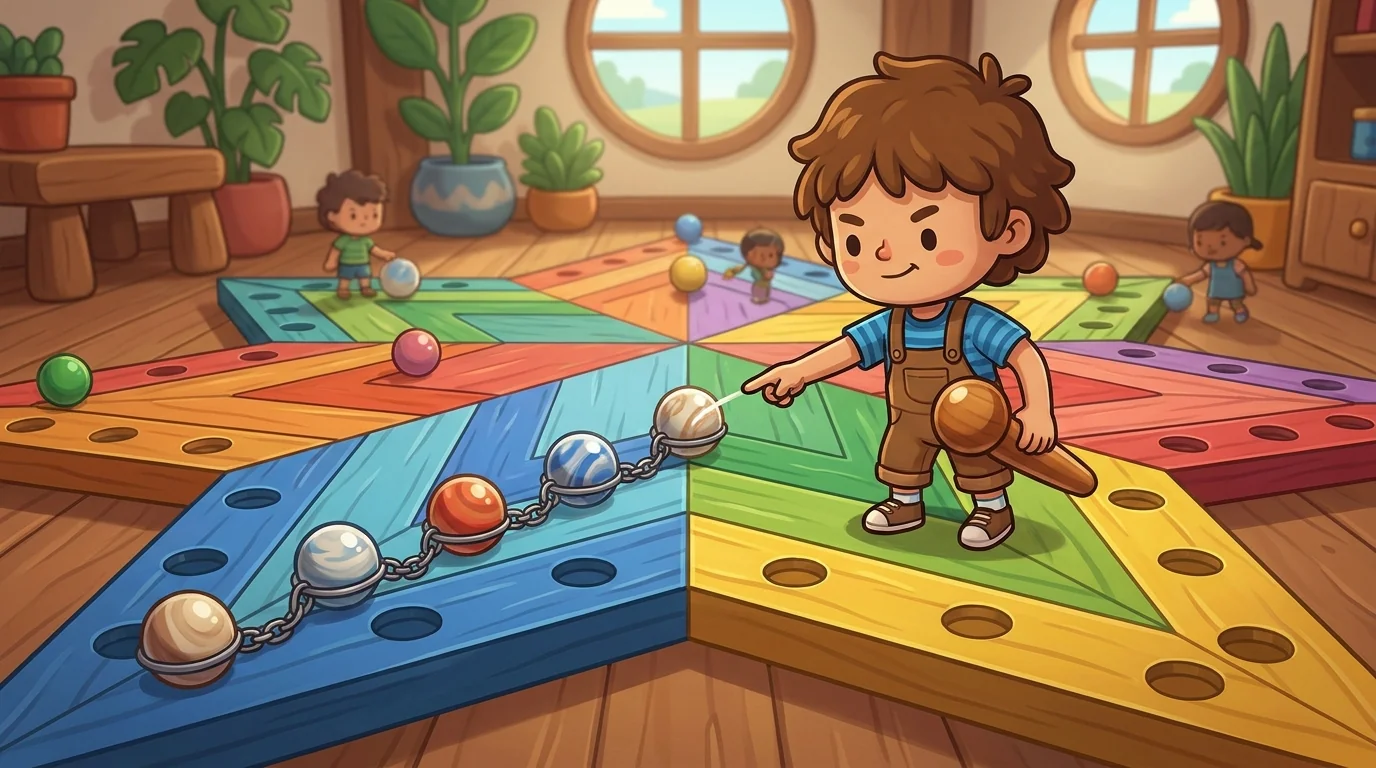
Bounder never took one hop when he could take six. On the star board he would stand behind a marble, tip his head, and go quiet — reading the pegs the way other kids read a sentence. "One hop is a step," he'd say. "But look — there's a peg just past where I'd land, and another past that, and another." His finger traced the line. "That's not four little moves. That's one ladder, and I can climb the whole thing in a single turn." He'd nudge his peg and it went bounding across the board, hop-hop-hop-hop, clear from one side of the star almost to the other, while everyone else was still shuffling one space at a time.
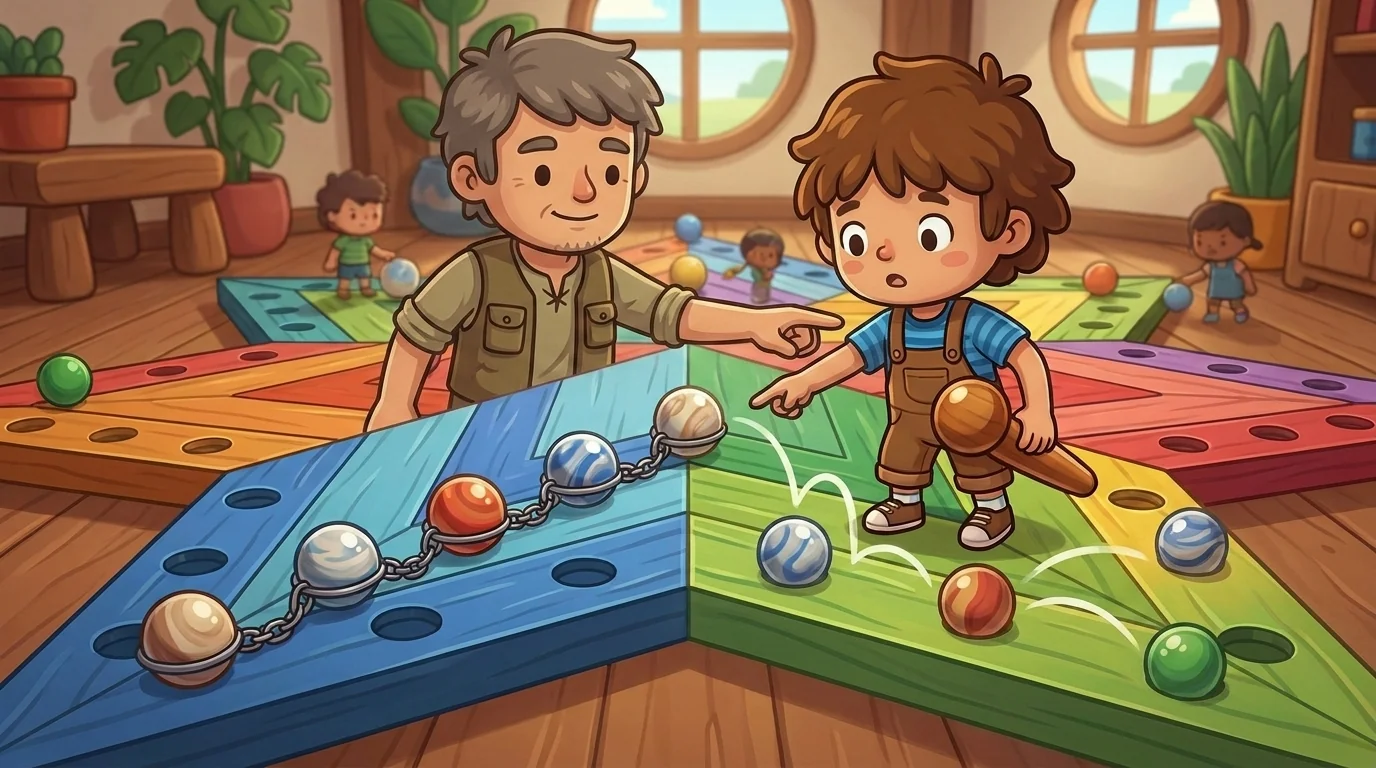
Bounder used to be the most impatient player at the academy. When it was his turn he'd move the nearest peg the nearest space and slap the board — done, your go — proud of being fast. He lost, and lost, and told himself the winners were just lucky. It stung. He started to think he simply wasn't a "board-game kid."
Cairn, the pathfinding coach, watched him rush one afternoon and didn't scold. Cairn just set two extra marbles down in a little line past Bounder's peg and said, "Before you move — trace where you could land, then where you could land from there." Bounder traced it grudgingly, and stopped. The single hop he'd been about to take was actually the first rung of a ladder that reached almost home. "The fast move and the far move aren't the same," Cairn said gently. "Slowing down for one breath to see the whole ladder isn't losing time. It's the only way to find it." Something unknotted in Bounder's chest. He hadn't been bad at the game. He'd just been leaping before he looked.
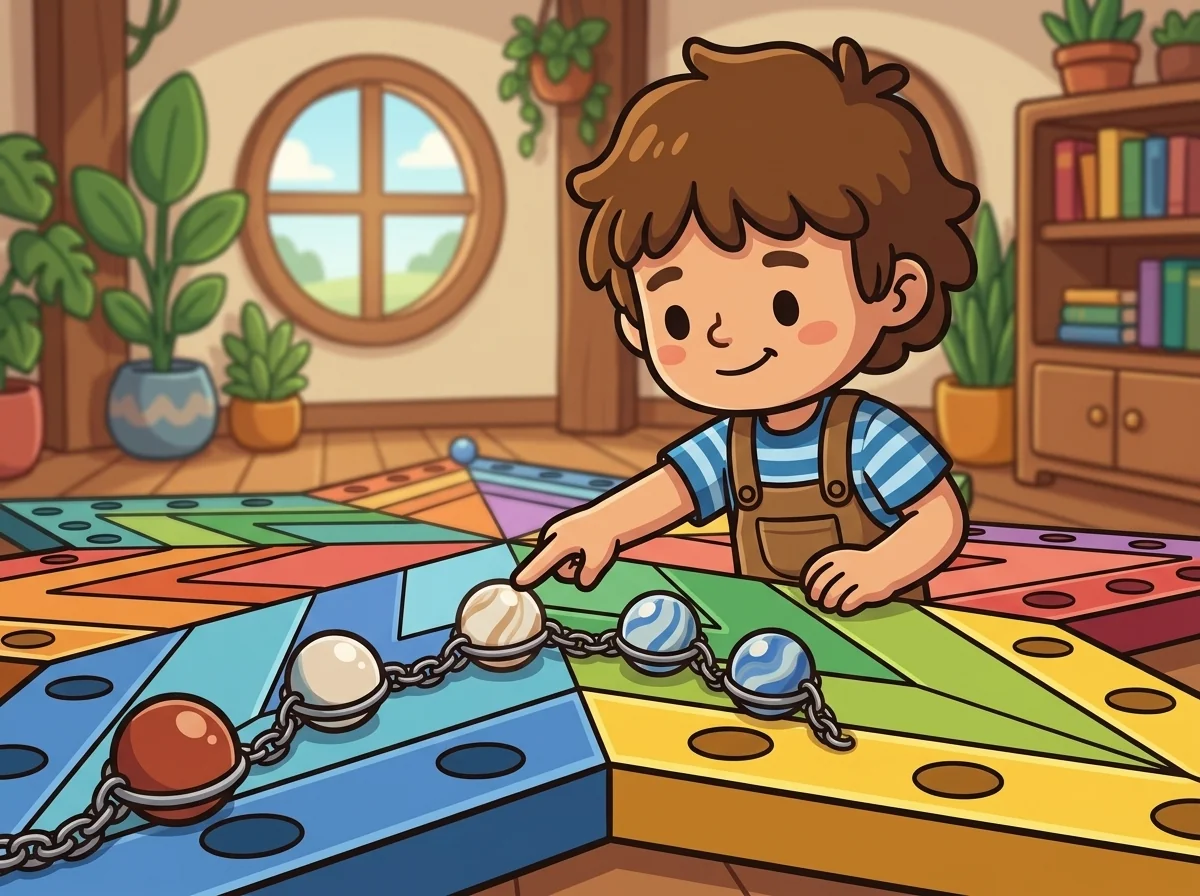
A girl named Petra came to his workshop convinced she was hopeless. "I move, and I've barely gone anywhere," she said, "and then the game's over and I'm stuck at the back." Bounder didn't tell her to try harder. He set her peg down and put three marbles in a rough curving line ahead of it. "You see four separate marbles," he said. "I want you to see a staircase. Hop the first one — where do you land?" She moved it one hop. "Now — is there a peg just past that?" She looked, surprised. "Yeah." "Then you're not done. Hop again."
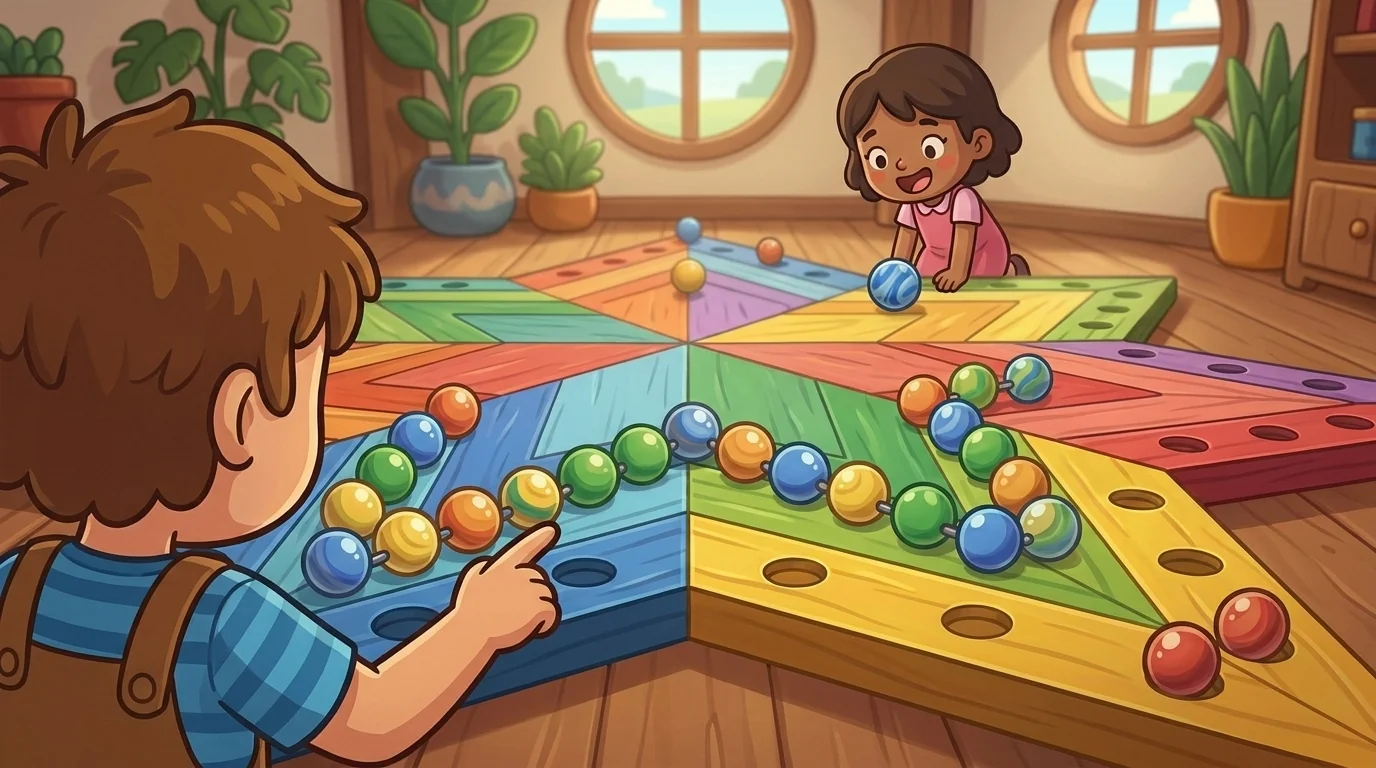
Petra hopped, and there was another peg one step beyond, and she hopped again, and again, her marble bounding down the line she'd thought was a dead end — and in one single turn it crossed almost the whole board and sat, astonished, near the far point. She actually laughed. "That was one move?" "That was one move," Bounder said. "Same rule everyone gets. The only difference is you looked for the chain instead of stopping at the first rung." They set up three more, and each time Petra made herself pause, trace the whole ladder, and take the long ride instead of the little step. Her stuck feeling didn't just fade — it flipped into something eager, a hunt: where's the longest ladder here?
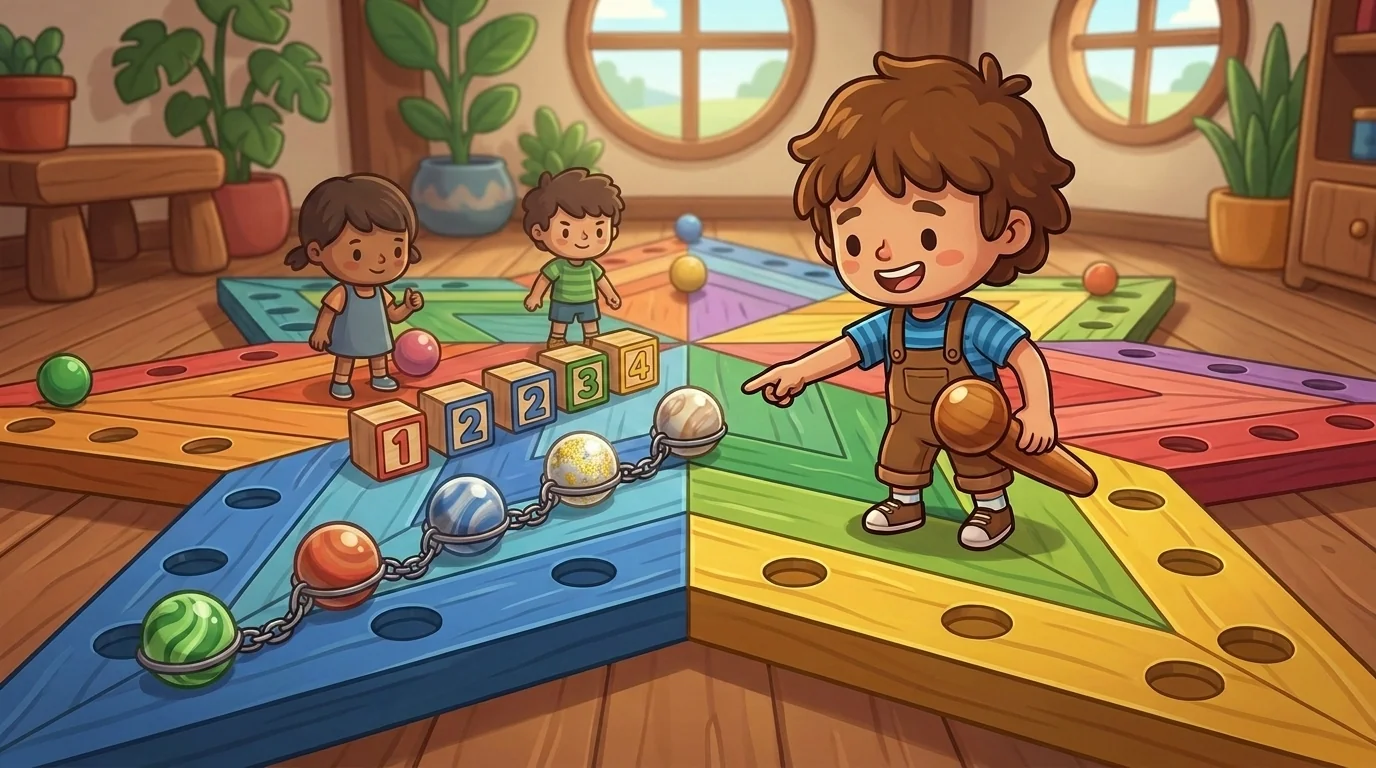
By the end she was beating Bounder half the time, which delighted him. "You found the thing I found," he said. "Everybody can hop one peg. The players who win are the ones who keep asking is there another one just past where I'd land — and chain them all into a single leap." Petra nodded, already scanning the board for the next staircase, and Cairn, passing by, gave the smallest approving nod, because a kid who used to think she wasn't going anywhere was now reading the board three, four, five rungs ahead. "Say it before you move," Bounder told her, grinning. "I don't take one small hop — I chain the whole ladder of pegs and ride it home in a single long leap."
The LeapTale ensemble
Bounder is part of LeapTale's distributed-narrative cast. Each character embodies a different curricular primitive; together they teach the full subject.
-
Gate
The Junction-Holder — parks a peg on a key crossing so a rival's chain breaks; the one defensive idea in a game with no captures (blocking)
-

Kern
The Centre-Keeper — occupies the central hexagon where the most jump-lines cross, keeping the most options open (centre control)
-

Overleap
The Long-Jumper — reaches the gapped, longer hop the ordinary jump can't, clearing distance in a single leap (the long / gapped jump)
-

Sidra
The Lane-Opener — plays the classic sideways-developing first moves that open the fastest lanes out of the home point (the opening)
-

Caboose
The Straggler-Minder — never strands the last peg, because you only win when ALL ten reach home and the last one is hardest (leave no peg behind)
-

Pacer
The Race-Counter — counts who reaches home first and spends every single move advancing, never idling (tempo / parity)
-

Snugg
The Back-Filler — tucks pegs into the BACK of the target point first so incoming pegs are never blocked by ones already home (home-fill order)
-
Trellis
The Bridge-Layer — places a peg NOW to enable a long chain LATER, setting up the ladder several turns ahead (deferred planning)
-

Coattail
The Line-Rider — hops over ANYONE's pegs, yours or the opponent's, riding a rival's line as free stepping-stones (the shared ladder / opportunism)