Overleap
THE LONG (GAPPED) JUMP — *a variant rule: instead of only hopping a peg into the space immediately beyond it, you may leap a peg from farther away and land the SAME distance beyond it, as long as the run of empty spaces before the peg equals the run of empty spaces after it. Counting the matching gaps on each side of a peg unlocks a leap the ordinary one-step hop can never reach.*
Loading audio…
Press play to listen along. The line being read lights up as you go.
Show full transcript
Loading transcript…
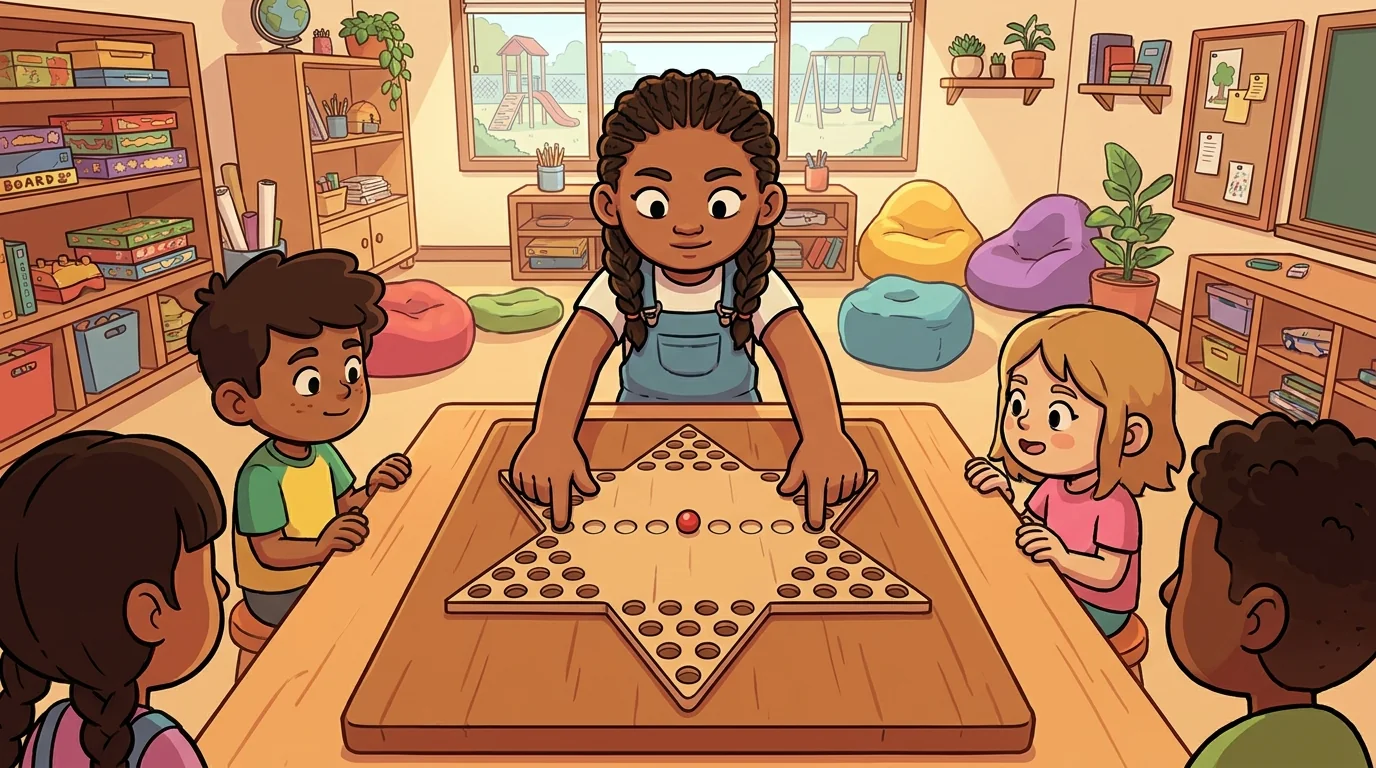
Overleap played by a rule the others sometimes forgot existed. Where everyone else hopped a peg into the space right next to it, Overleap could leap a peg from far away — count the empty spaces before it, count the empty spaces after it, and if the two runs matched, sail clean over the top and land the same distance on the other side. "One-step hoppers see a peg too far to jump," Overleap would say, measuring the gaps with two fingers. "I see: three empty before, three empty after — matched — so I can leap the whole way. It's not a different game. It's the same peg, jumped the long way."
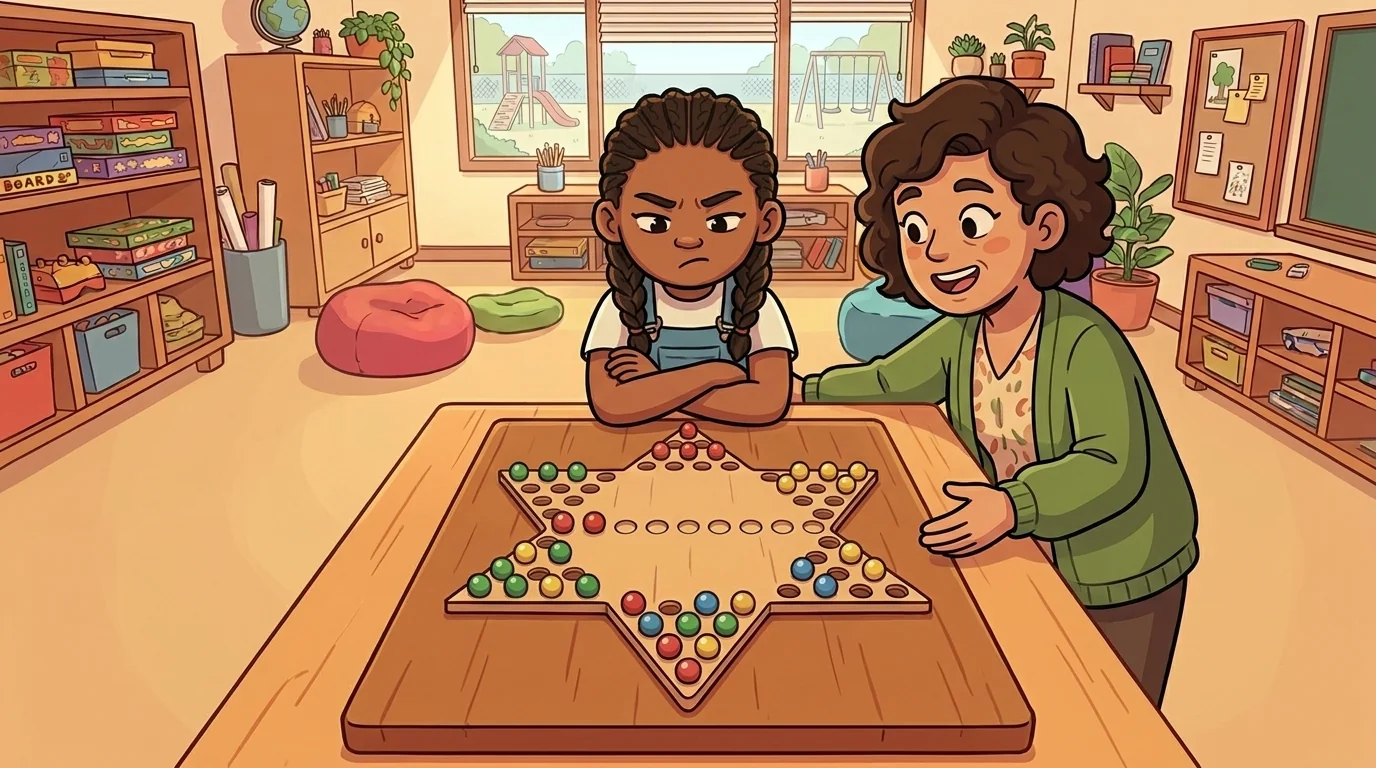
Overleap grew up feeling like the odd one out. In the standard game the long jump was an extra rule, a variant, something the others waved off — "we don't usually play with that" — and so Overleap's favourite move felt almost like cheating, or like being weird for no reason. There was a real ache in it: why can't I just play the normal way like everyone else?
Cairn, the pathfinding coach, found Overleap sitting out a game, arms crossed. "Show me the move they told you not to use," Cairn said. Overleap counted a matched gap and made the long leap, half-defiant. Cairn watched it and smiled. "That's not weird. That's a tool. Some positions can only be crossed with a gapped jump — the short hop just can't reach. A rule being uncommon doesn't make it wrong; it makes it yours, and one day it'll be the only move on the board that works." The ache eased. Overleap wasn't broken for jumping differently. Overleap had a key the others had left in a drawer.
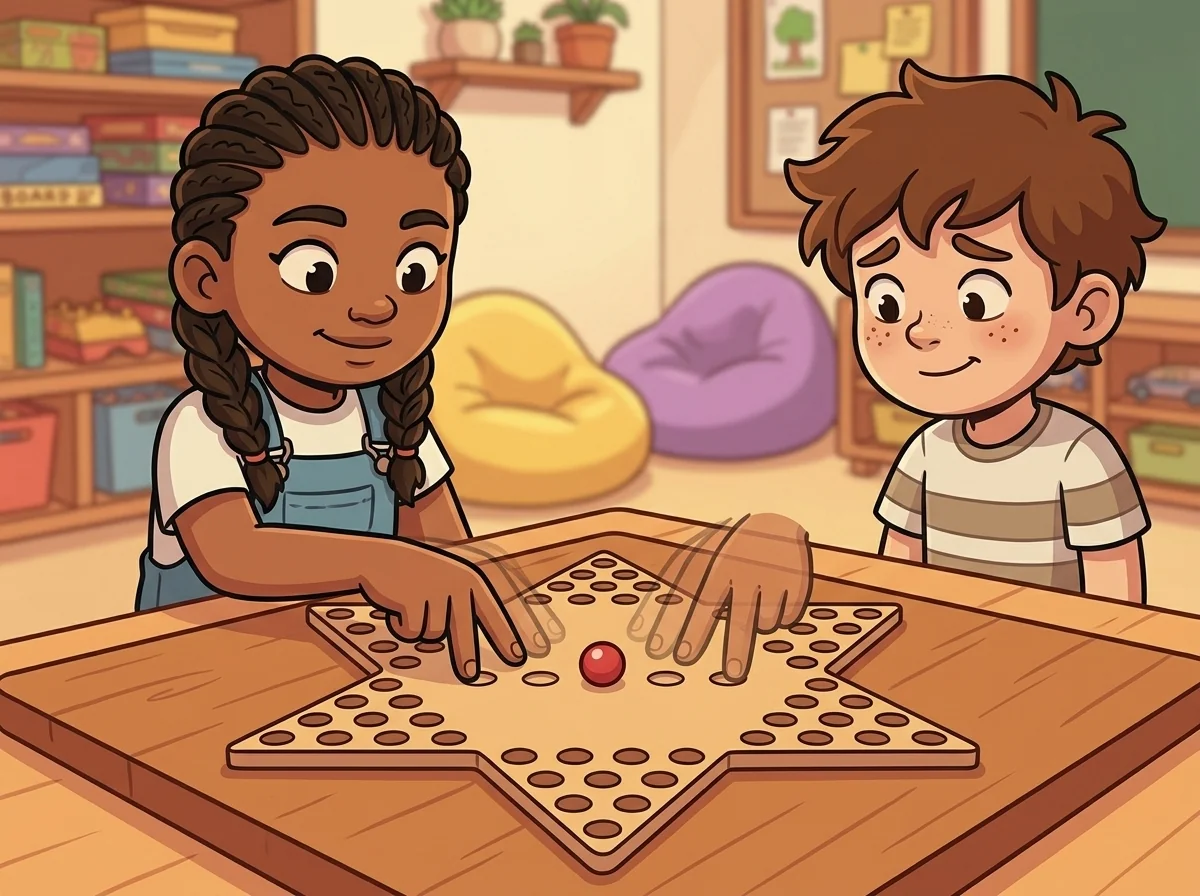
A boy named Tomasz came to Overleap embarrassed. "I always play the 'extra' variants," he admitted, "and my friends say I'm doing it wrong." Overleap felt the exact old sting and softened. "Nobody's doing it wrong," Overleap said. "Let me show you why the long jump is worth counting." They set a peg with two empty spaces in front of it and two empty spaces behind. "Ordinary hop — can you jump this peg?" Tomasz shook his head; it was too far for a single step.
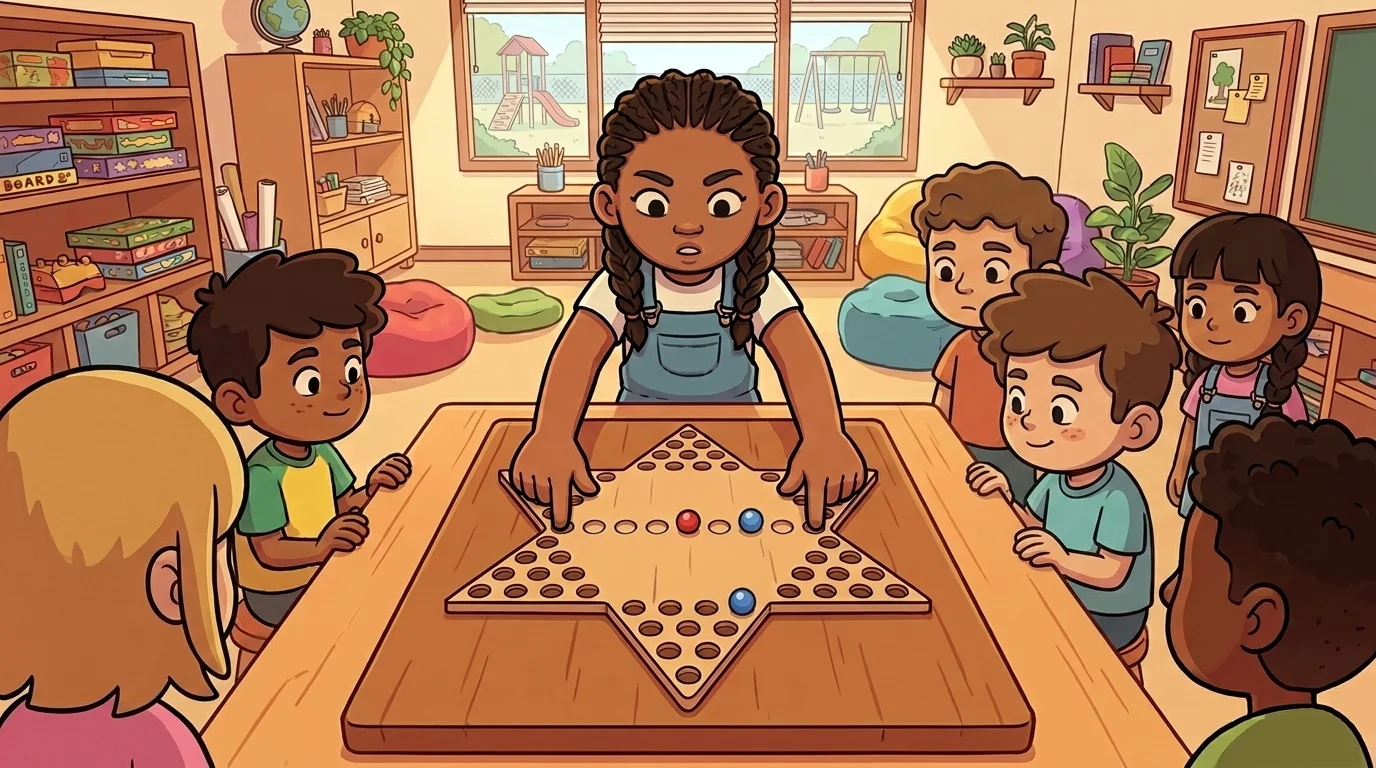
"Now count," Overleap said. "Empties before the peg?" "Two." "Empties after?" "Two — they match." "Then leap it — same distance over and beyond." Tomasz slid his marble up and over and it landed exactly two spaces past, in open air a plain hop could never have reached, and he stared like a small trick had just turned real. They set up three more — a matched three-and-three, a matched one-and-one, and a mismatched two-and-one where the leap wasn't allowed, so Tomasz learned to check both sides, not just hope. Each time he counted the gaps and found the leap, the "I'm doing it wrong" shrank, and a careful pride grew: he was seeing moves other players walked right past.
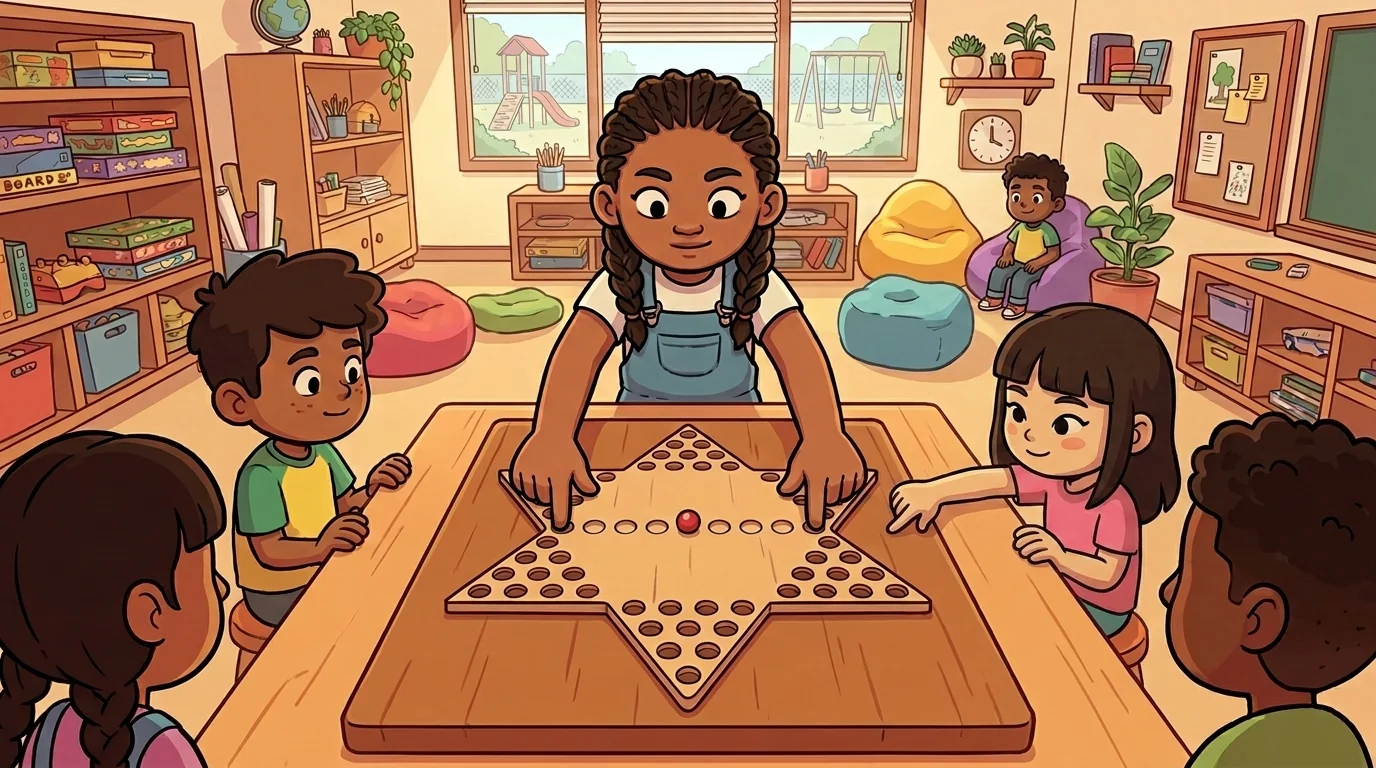
"You've got it," Overleap said. "The gapped jump isn't extra credit and it isn't weird — it's a real leap you unlock by counting. Empty before, empty after, matched — go. Different from the plain hop, and sometimes the only path across." Tomasz nodded, already measuring gaps on the rest of the board with two careful fingers. Cairn watched from across the room, quietly glad — a kid who'd been teased for his favourite move was now the one spotting leaps nobody else could see. "Say it when a peg looks too far to hop," Overleap told him. "I count the empty gap before a peg and the empty gap after it — when they match, I can leap the long way the short hop never could."
The LeapTale ensemble
Overleap is part of LeapTale's distributed-narrative cast. Each character embodies a different curricular primitive; together they teach the full subject.
-
Bounder
The Ladder-Chainer — links several hops into ONE long move, always finding the longest efficient multi-hop route across the star (jump-chain / laddering)
-
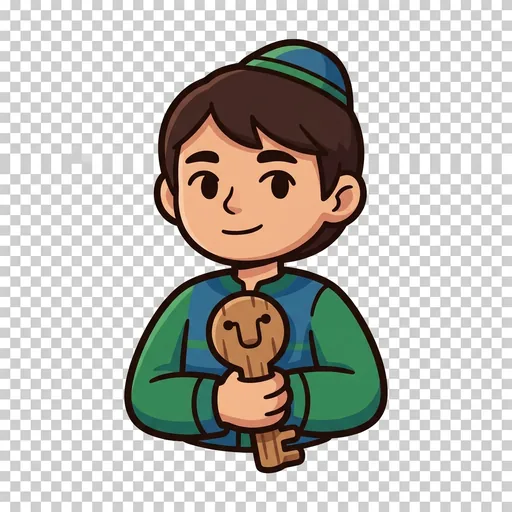
Gate
The Junction-Holder — parks a peg on a key crossing so a rival's chain breaks; the one defensive idea in a game with no captures (blocking)
-
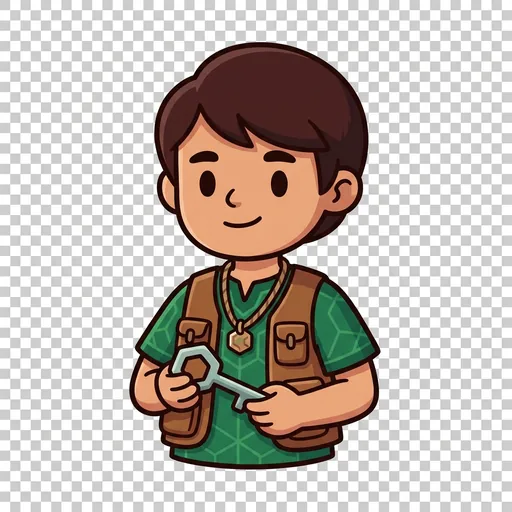
Kern
The Centre-Keeper — occupies the central hexagon where the most jump-lines cross, keeping the most options open (centre control)
-
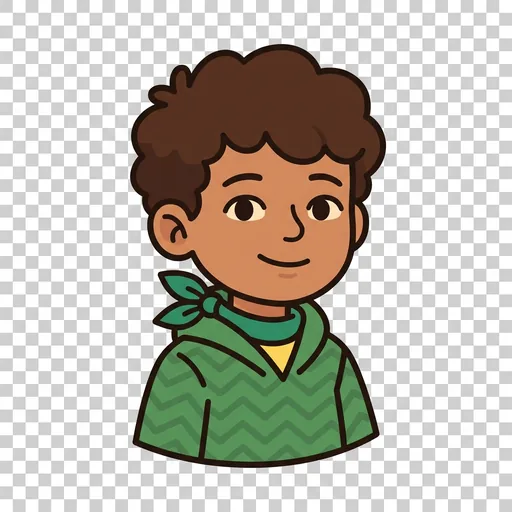
Sidra
The Lane-Opener — plays the classic sideways-developing first moves that open the fastest lanes out of the home point (the opening)
-
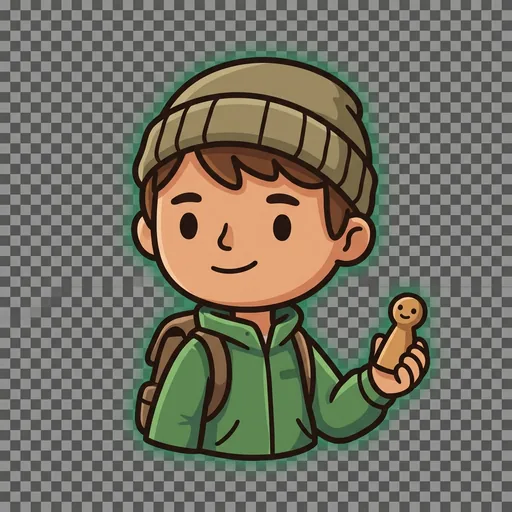
Caboose
The Straggler-Minder — never strands the last peg, because you only win when ALL ten reach home and the last one is hardest (leave no peg behind)
-

Pacer
The Race-Counter — counts who reaches home first and spends every single move advancing, never idling (tempo / parity)
-
Snugg
The Back-Filler — tucks pegs into the BACK of the target point first so incoming pegs are never blocked by ones already home (home-fill order)
-
Trellis
The Bridge-Layer — places a peg NOW to enable a long chain LATER, setting up the ladder several turns ahead (deferred planning)
-
Coattail
The Line-Rider — hops over ANYONE's pegs, yours or the opponent's, riding a rival's line as free stepping-stones (the shared ladder / opportunism)