Pacer
THE TEMPO / RACE — *LeapTale is a race: whoever gets all ten pegs across first wins, so every single turn either gains ground or wastes it. A move that advances is a tempo won; a sideways shuffle or a wasted turn is a tempo lost, and the leader is simply whoever has spent fewer wasted moves. Counting the race — am I ahead or behind on tempo, and does THIS move gain a step — is how you keep the lead.*
Loading audio…
Press play to listen along. The line being read lights up as you go.
Show full transcript
Loading transcript…
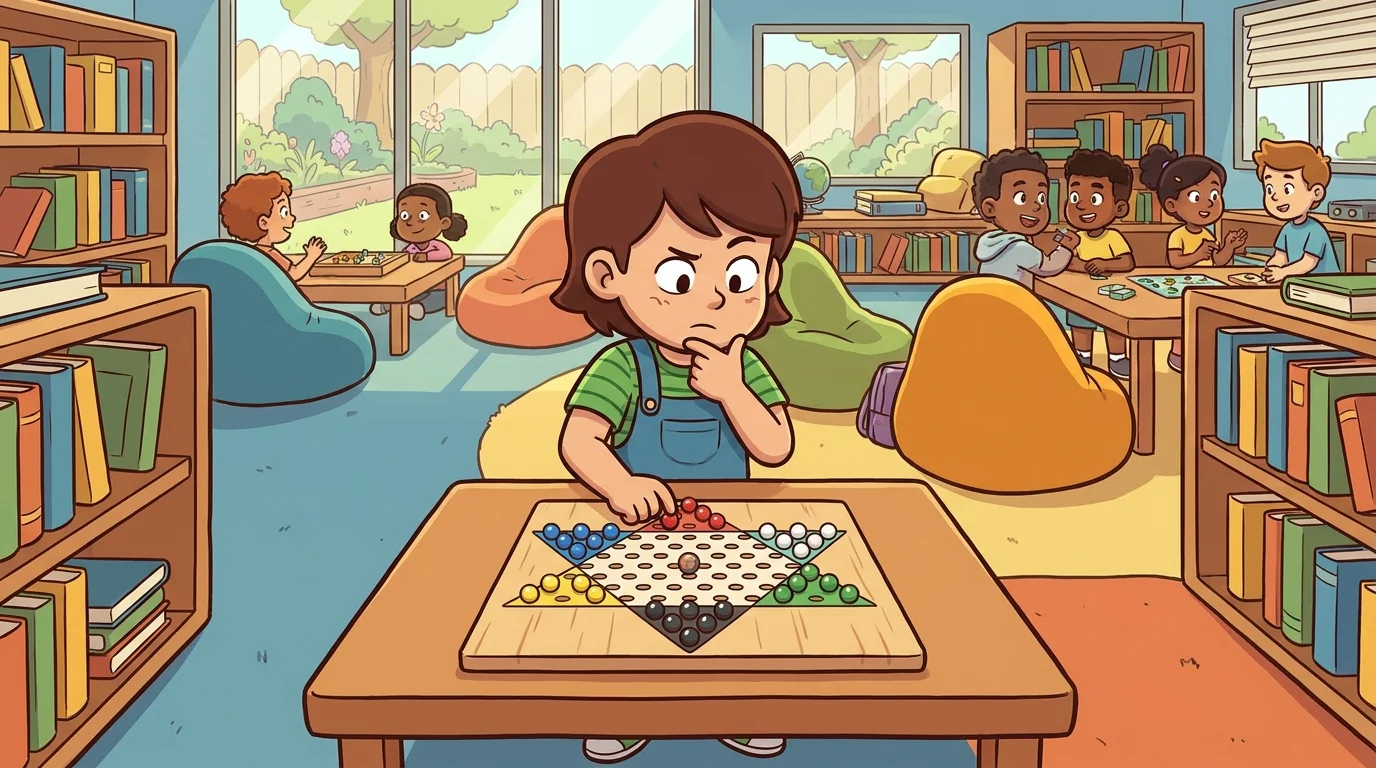
Pacer thought about the game as a race, always — and in a race, Pacer said, the only question that mattered each turn was did I gain a step or not? Before every move Pacer would murmur a quick count: how far am I, how far are they, and does this hop close the gap? "Being busy isn't the same as being ahead," Pacer would say, moving a peg firmly forward and never sideways. "Every turn you either gain ground or you waste it. Win enough turns of gaining ground and you're just... home first. That's the whole trick. The race adds up one step at a time."
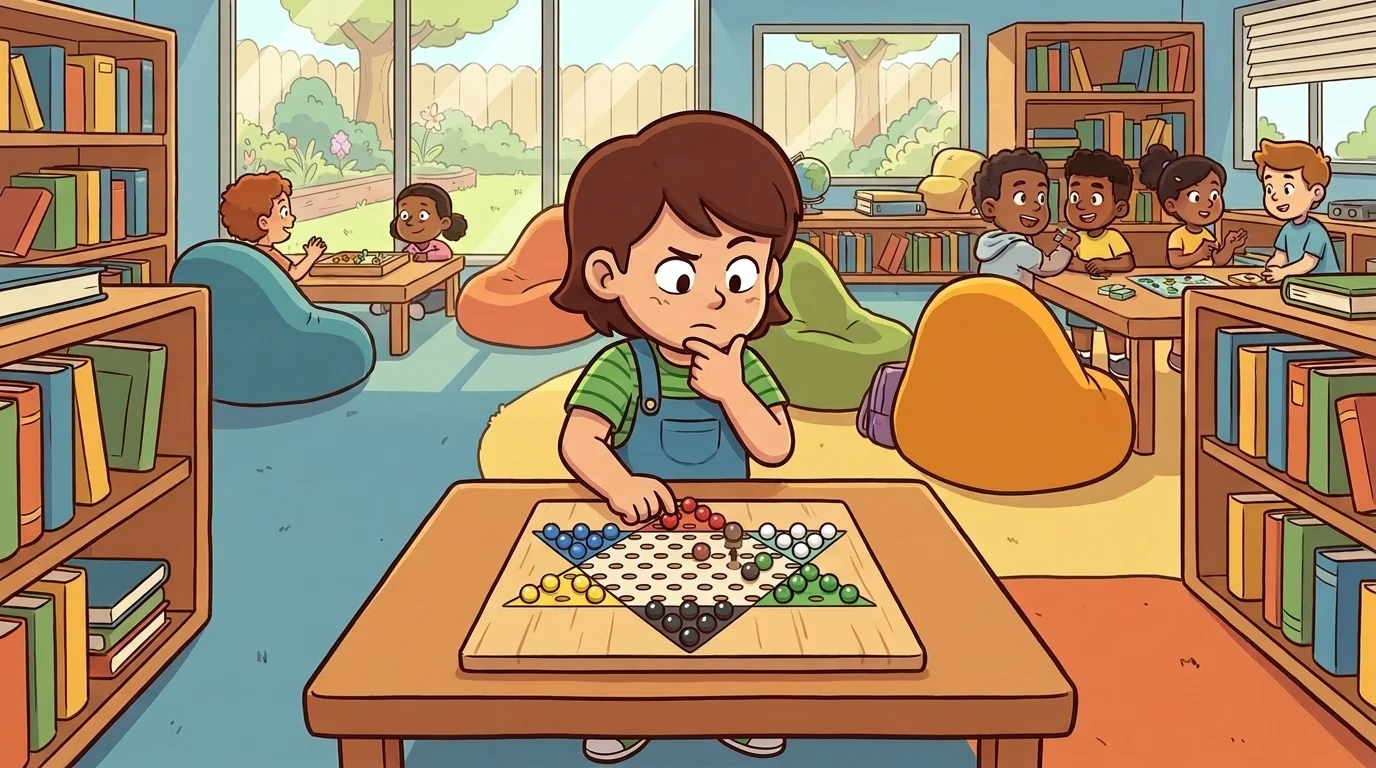
Pacer used to fidget. In early games Pacer would spend turns nudging pegs back and forth, tidying up, admiring a nice-looking shape — feeling busy, feeling engaged — and then be baffled to look up and find a rival's pegs streaming home while Pacer's had barely advanced. It was a confusing, sinking feeling: I was playing the whole time — how am I behind?
Cairn, the pathfinding coach, watched Pacer fuss and asked one question. "That last move — did it get a peg closer to home?" Pacer looked. It hadn't; it had just rearranged. "Then it was a lost turn," Cairn said, not unkindly. "In a race, a move that doesn't advance is a move your rival used to pass you. You don't have to make the biggest hop every time — you just have to make sure each turn gains something." Pacer felt the fog clear. All that busyness had been standing still. The game wasn't about looking active. It was about the count: forward, forward, forward.
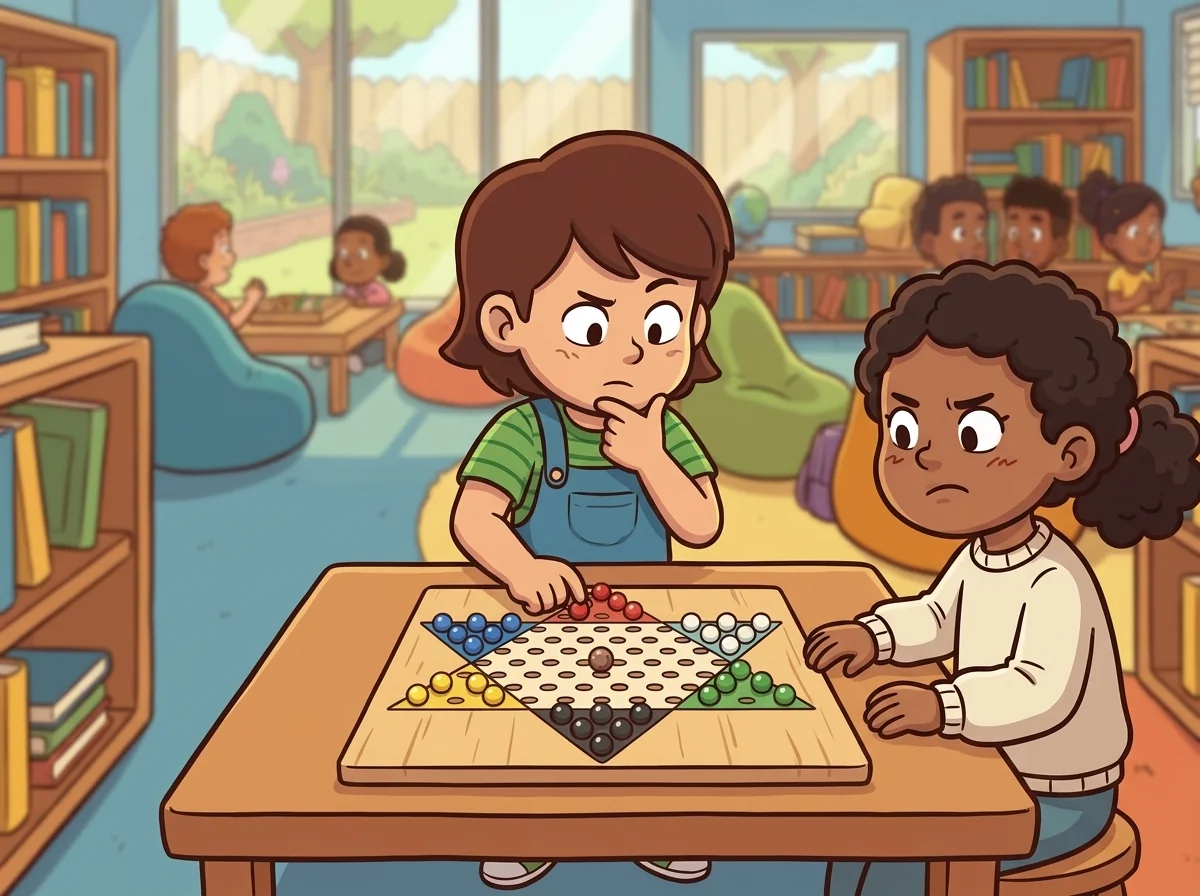
A girl named Suri came to Pacer confused and a little defensive. "I'm always doing stuff on my turn," she said, "but I keep losing the race. It's not fair." Pacer recognised the fidget instantly. "You're busy," Pacer said gently, "but busy and ahead aren't the same. Let's check your moves against one question." They set up a mid-game position. "Point at the move you'd make." Suri pointed at a tidy little sideways shuffle.
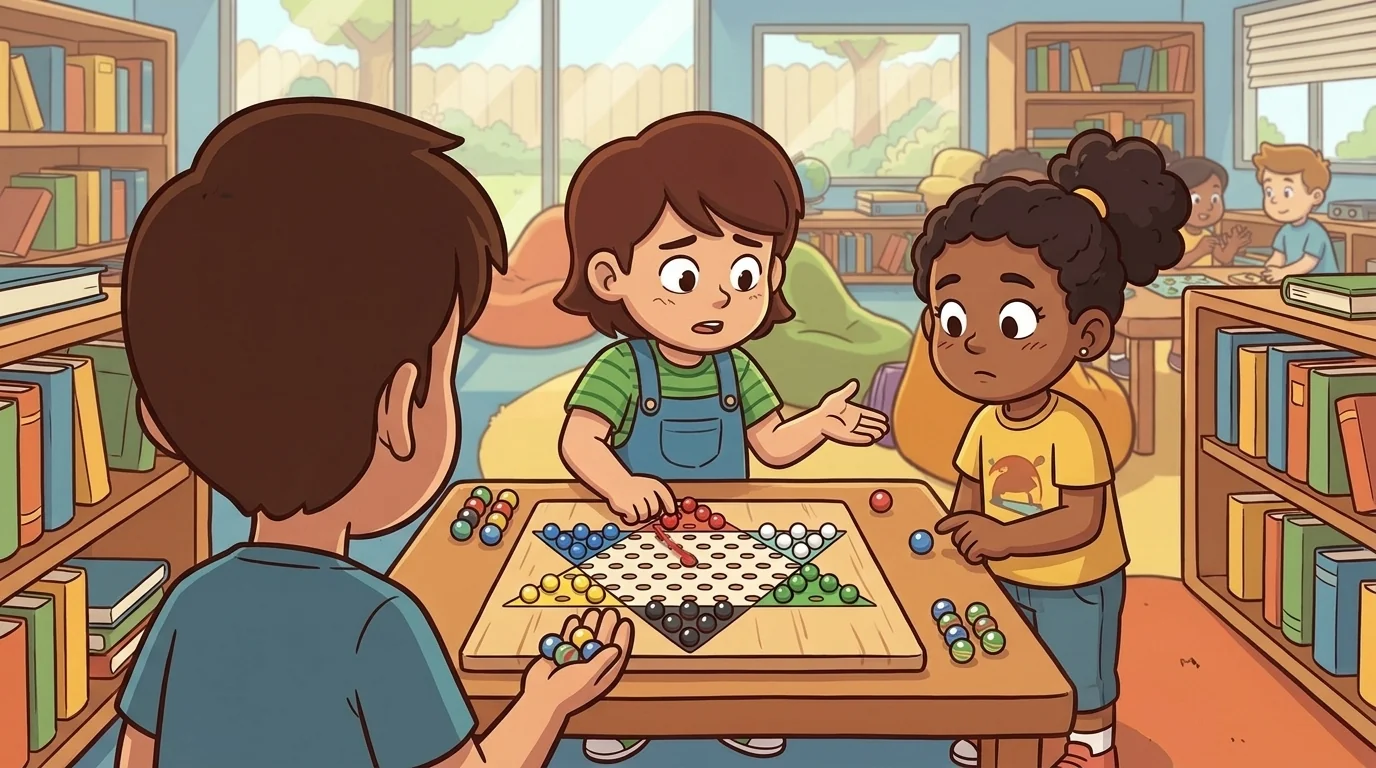
"Does it get a peg closer to the far point?" Pacer asked. Suri looked, and slowly shook her head. "No. It just... looks neat." "Then it's a wasted tempo," Pacer said. "Find a move that gains a step instead — even a small hop forward beats a pretty shuffle." Suri hunted, found a modest forward hop, and took it — and then another forward move, and another, refusing every tempting sideways fidget. Turn by turn her pegs actually climbed the board, and for the first time she pulled level with a rival and then ahead. "I'm winning the race," she said, startled. They played on; each turn she asked does this gain a step? and skipped the ones that didn't, and her "I'm always busy but always behind" frustration turned into a clean, ticking confidence: forward counts; busy doesn't.
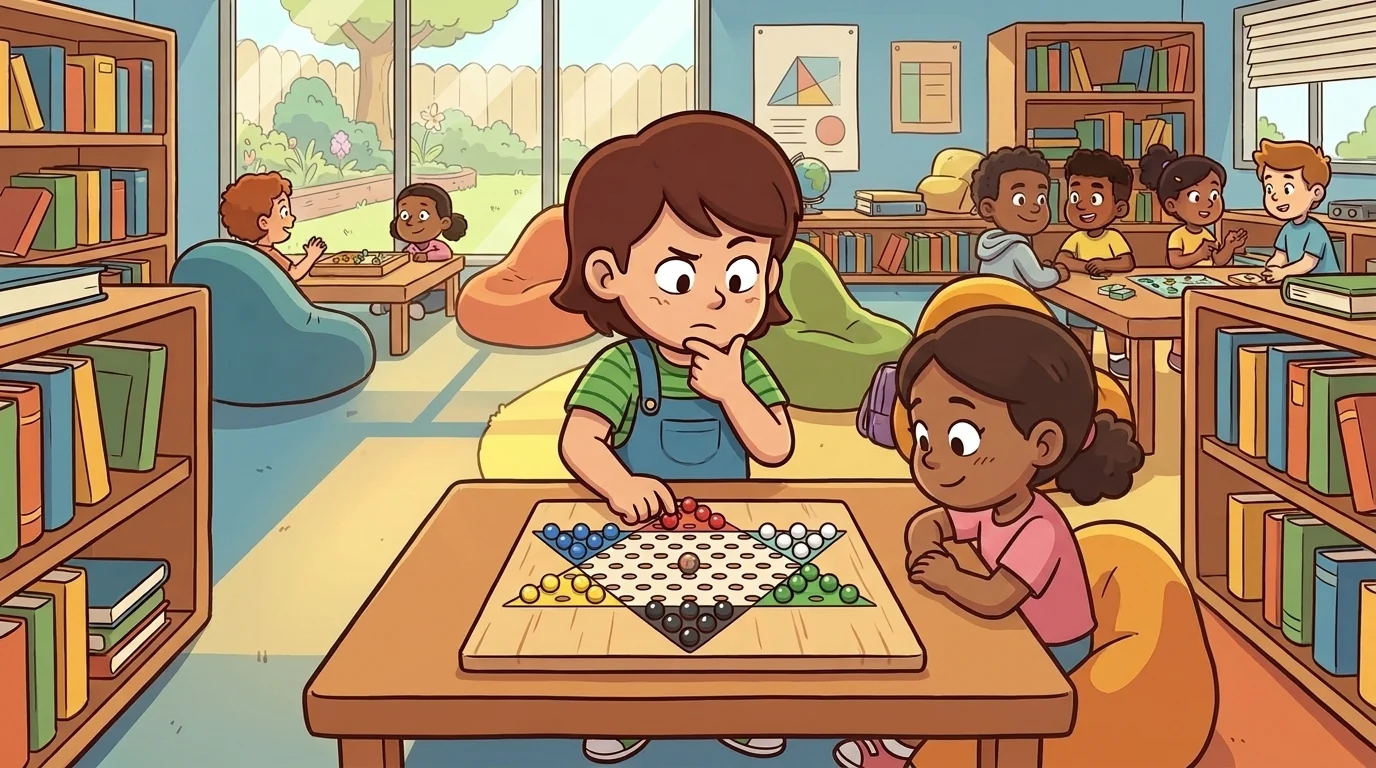
"You found it," Pacer said. "A race is just a pile of turns. Waste turns and you fall behind; spend every turn gaining a step and you pull ahead — even with small hops, as long as they're always forward." Suri nodded, already eyeing her next genuine step. Cairn watched from across the room, pleased — a kid who used to mistake fidgeting for playing was now counting the race like a runner. "Say it before every move," Pacer told her. "Every move I make goes forward — I never idle, because the race is won one tempo at a time."
The LeapTale ensemble
Pacer is part of LeapTale's distributed-narrative cast. Each character embodies a different curricular primitive; together they teach the full subject.
-

Bounder
The Ladder-Chainer — links several hops into ONE long move, always finding the longest efficient multi-hop route across the star (jump-chain / laddering)
-

Gate
The Junction-Holder — parks a peg on a key crossing so a rival's chain breaks; the one defensive idea in a game with no captures (blocking)
-

Kern
The Centre-Keeper — occupies the central hexagon where the most jump-lines cross, keeping the most options open (centre control)
-

Overleap
The Long-Jumper — reaches the gapped, longer hop the ordinary jump can't, clearing distance in a single leap (the long / gapped jump)
-

Sidra
The Lane-Opener — plays the classic sideways-developing first moves that open the fastest lanes out of the home point (the opening)
-

Caboose
The Straggler-Minder — never strands the last peg, because you only win when ALL ten reach home and the last one is hardest (leave no peg behind)
-

Snugg
The Back-Filler — tucks pegs into the BACK of the target point first so incoming pegs are never blocked by ones already home (home-fill order)
-

Trellis
The Bridge-Layer — places a peg NOW to enable a long chain LATER, setting up the ladder several turns ahead (deferred planning)
-

Coattail
The Line-Rider — hops over ANYONE's pegs, yours or the opponent's, riding a rival's line as free stepping-stones (the shared ladder / opportunism)