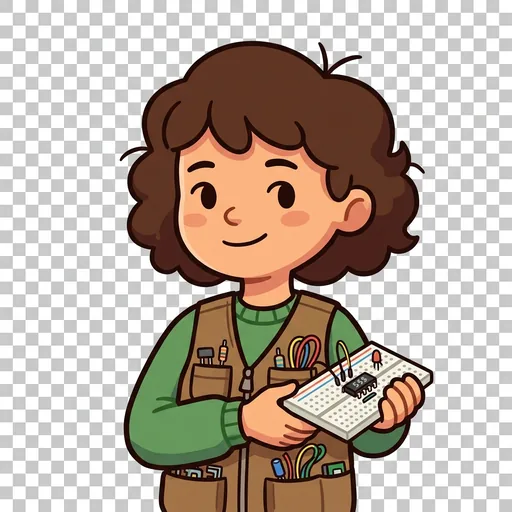
Caboose
THE LAST PEG — *you win only when ALL ten of your pegs reach the far point, so the race is decided by the SLOWEST peg, not the fastest. The hardest peg is the final straggler — often left far behind because it had no ladder to ride. Planning so that the last peg still has a route home (bringing up the rear, not abandoning it) is how a game is actually finished.*
Loading audio…
Press play to listen along. The line being read lights up as you go.
Show full transcript
Loading transcript…
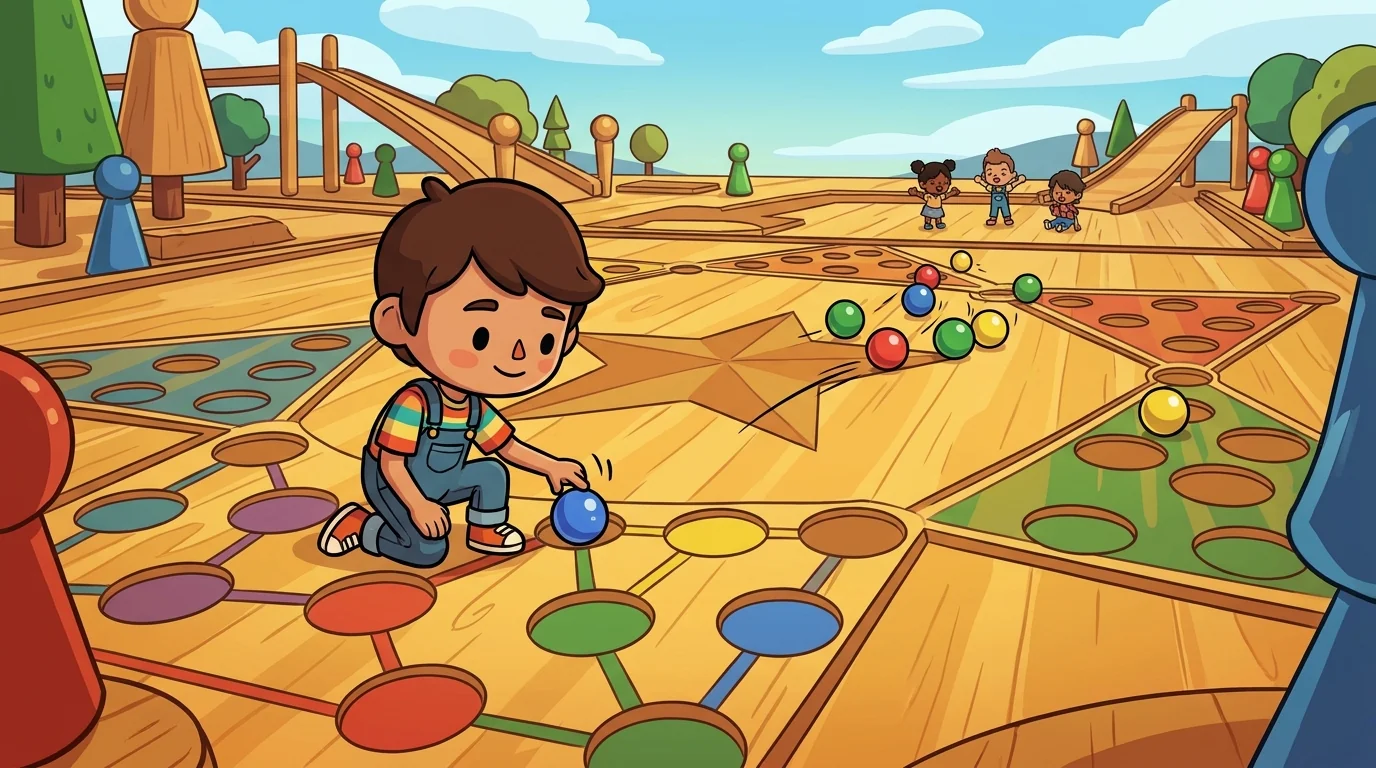
Caboose always counted to ten. Other players would send peg after peg bounding home, celebrate the leaders, and forget — until it was too late — the one straggler dawdling at the back of the star. Caboose never forgot it. "You don't win when your first peg gets home," Caboose would say, tapping the lonely last marble far behind the pack. "You win when your tenth does. So this one — the slowest, the farthest back — this is the one I'm really playing for. Bring up the rear, and the whole line finishes."
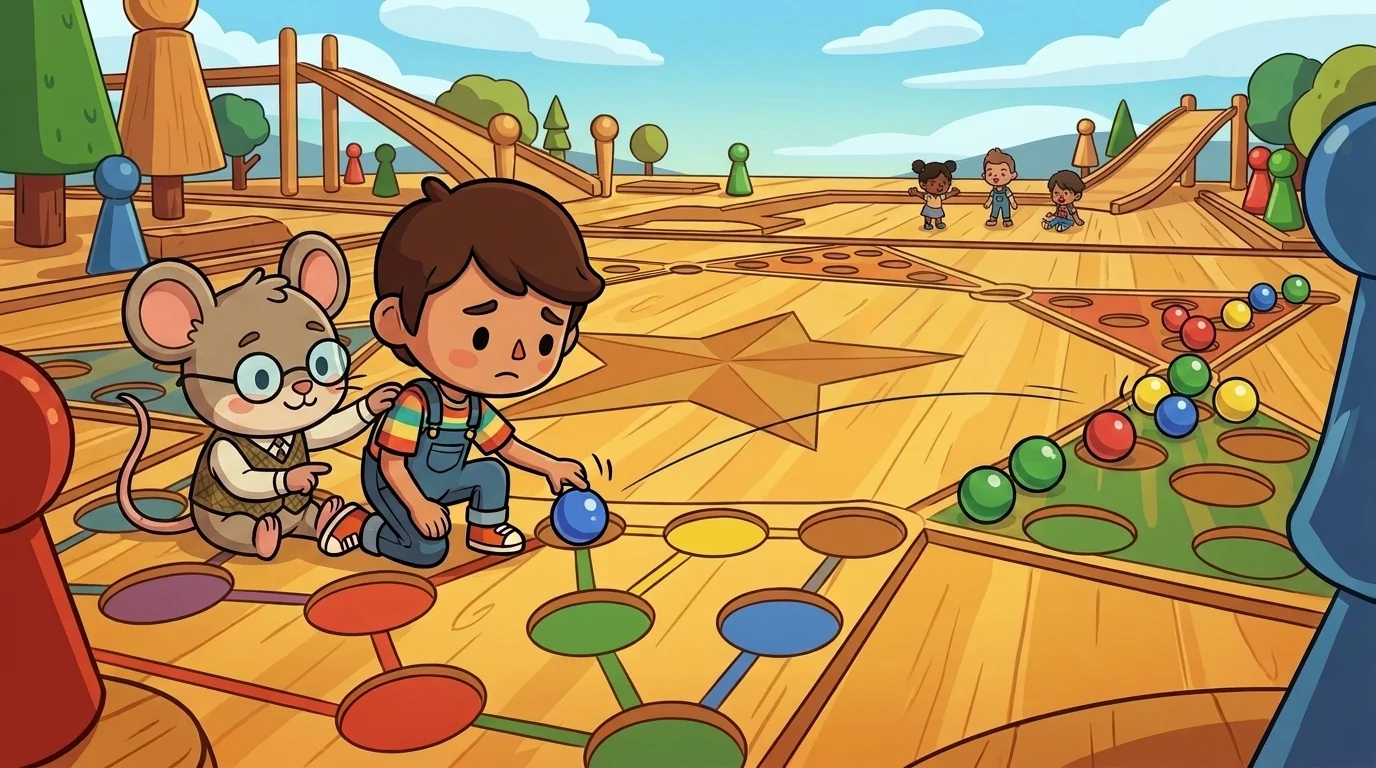
Caboose learned this the painful way. In an early game Caboose had raced nine pegs home in a glorious rush, sure the win was locked, and then discovered the tenth peg abandoned in a corner with no ladder left to ride — every other marble had already leapt away, leaving it stranded with nothing to hop over. Caboose lost that game by one lonely peg, and it hurt in a particular way: I did almost everything right and still lost, because I forgot the last one.
Cairn, the pathfinding coach, sat with Caboose afterward. "Nine home is not a win," Cairn said gently. "It's nine-tenths of a win, which is a loss. The race is measured by the slowest peg — so the slowest peg deserves a plan too, not just leftovers." Cairn slid the stranded marble forward. "If you'd carried this one along with the pack instead of leaving it for last, it would have had ladders to ride. Look after the straggler early, and it's never stranded." Something shifted in Caboose. The last peg wasn't a nuisance to mop up. It was the whole finish line.
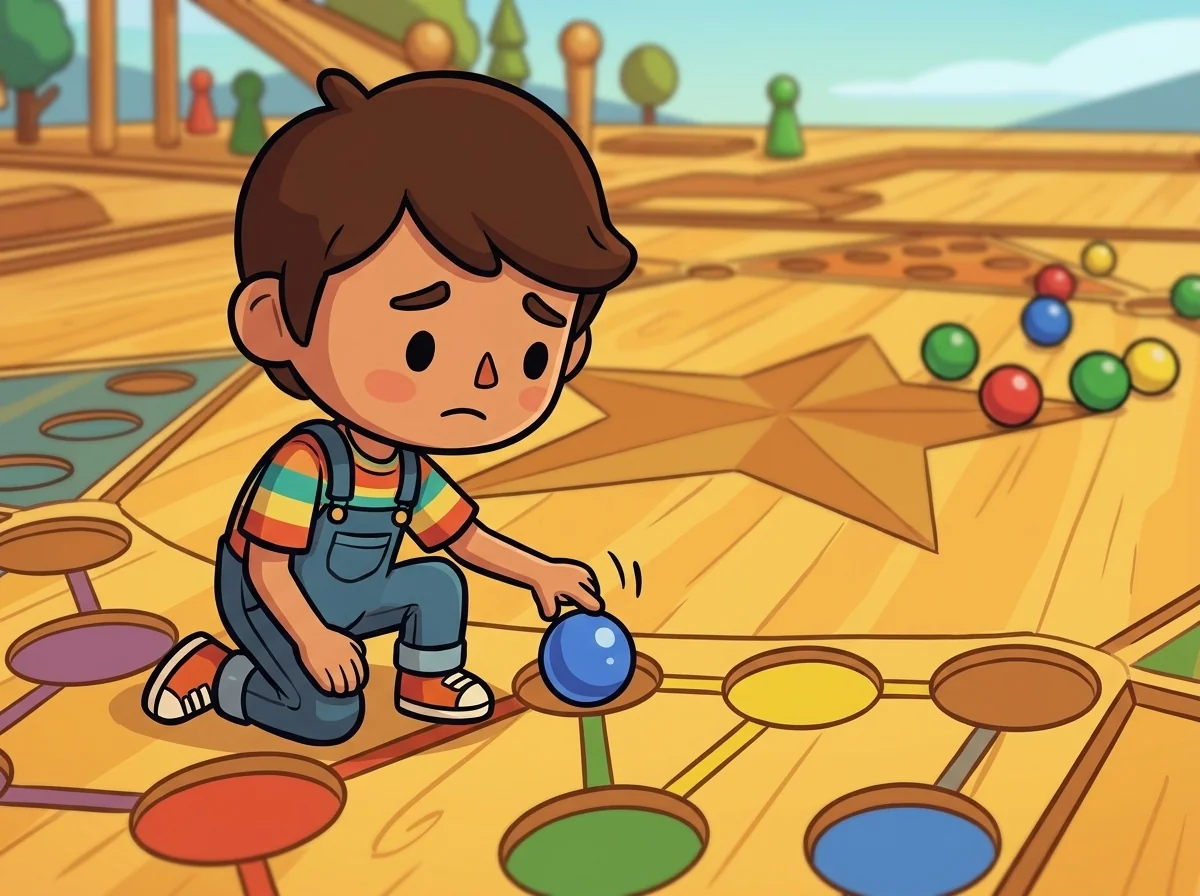
A boy named Rafe came to Caboose crushed. "I had five pegs home and I still lost," he said. "One got stuck at the back and I couldn't move it at all." Caboose knew that exact ache. "Because everyone left it," Caboose said kindly. "All the pegs it could have hopped over had already gone home, so it had nothing to leap on. Let's play it again — and this time we keep an eye on the back the whole way." They reset. "Every few turns," Caboose said, "before you move a leader — check: how's your last peg doing?"
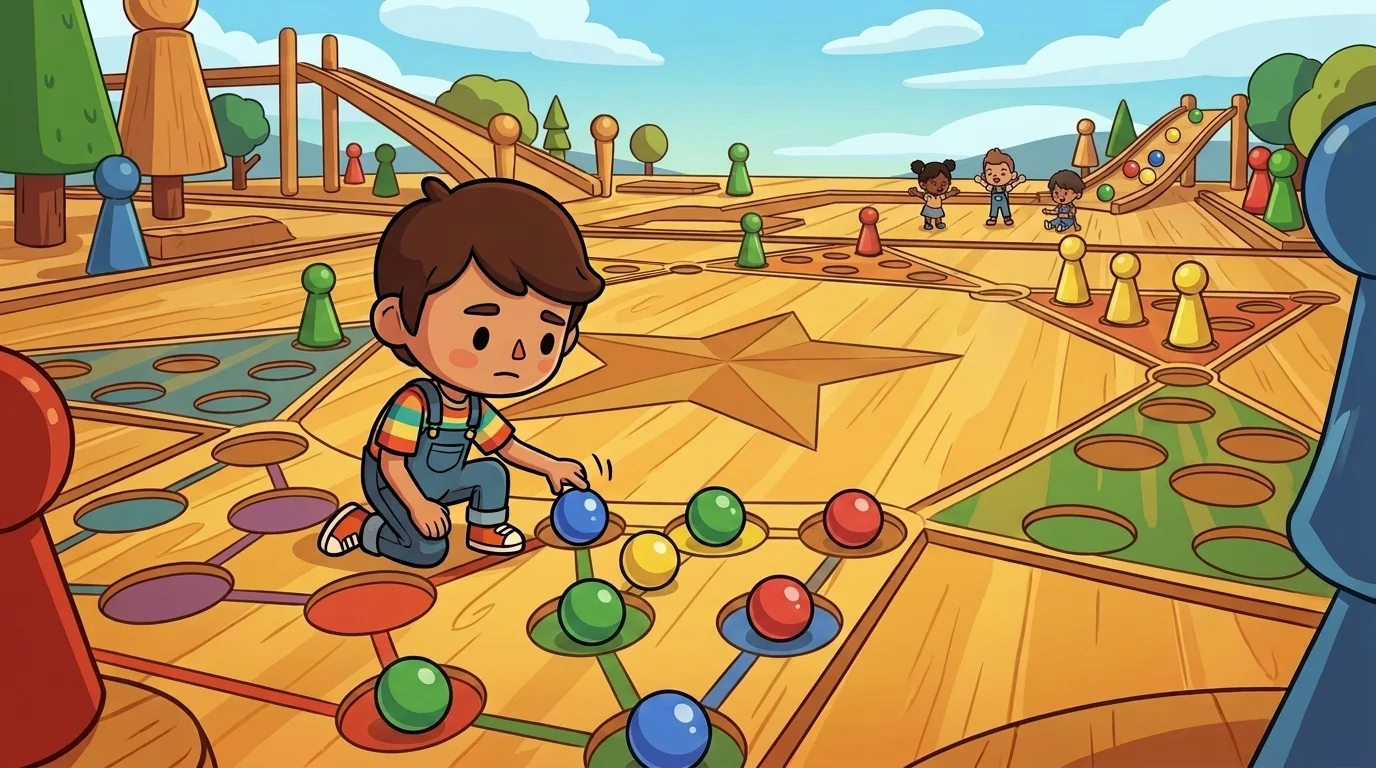
Rafe played it that way, glancing back at his rearmost marble every few moves and nudging it along with the pack instead of racing everyone else off and leaving it alone. When the endgame came, his last peg still had companions to hop over — a ladder home instead of an empty stranded corner — and it landed, and all ten were in, and Rafe won a game he'd have lost the old way. "It came home," he said, almost surprised. They played once more; he kept counting to ten, kept the straggler cared for, and the old sick "so close and still lost" feeling turned into something steadier: finish everyone, not just the fast ones.
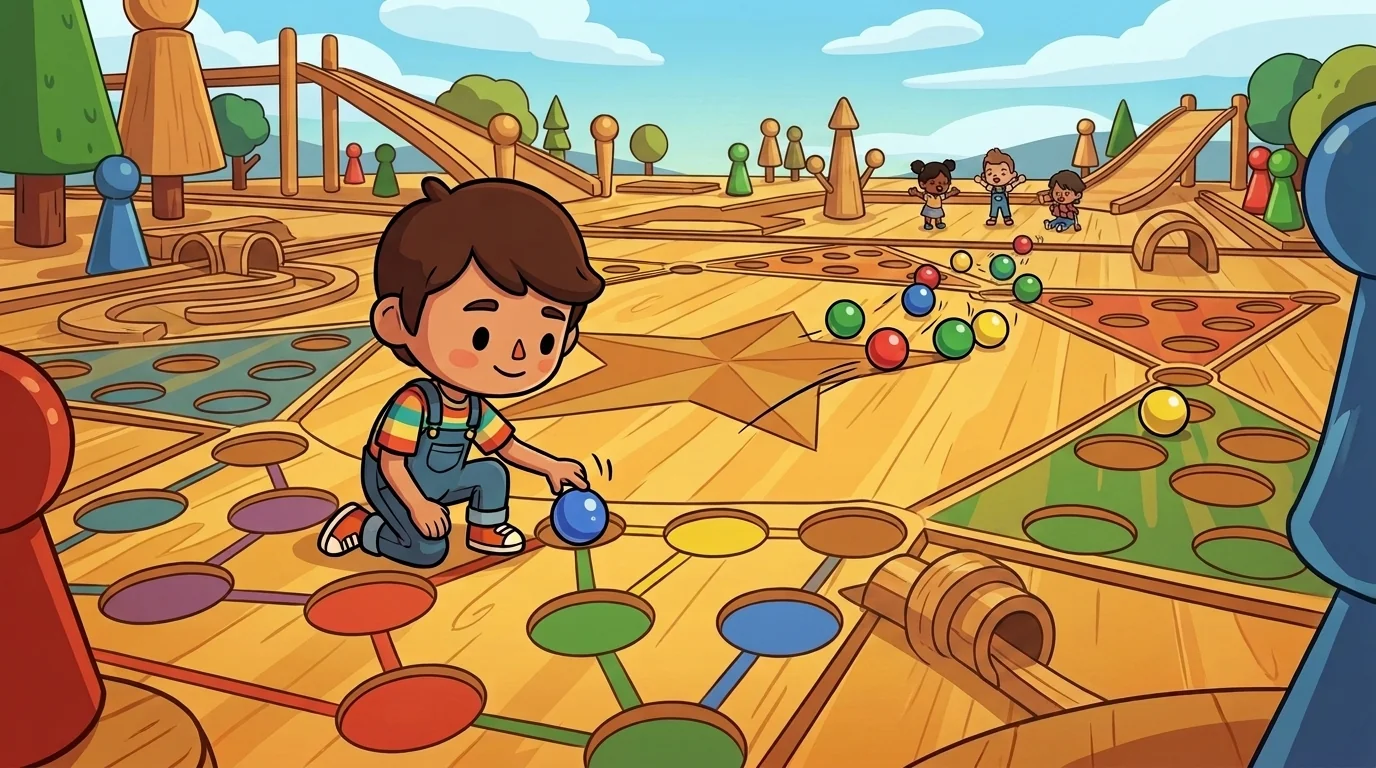
"You've got it," Caboose said. "The exciting pegs take care of themselves. It's the slow last one that decides the game — so give it a route home before it's the only one left." Rafe nodded, and for the rest of the day he kept quietly checking his rear peg without being reminded. Cairn watched from across the room, glad — a kid who used to abandon his stragglers was now the one bringing everyone home. "Say it when the leaders start peeling away," Caboose told him. "I count all ten pegs home — I never leave the slowest one stranded, because the race isn't won until the last peg lands."
The LeapTale ensemble
Caboose is part of LeapTale's distributed-narrative cast. Each character embodies a different curricular primitive; together they teach the full subject.
-
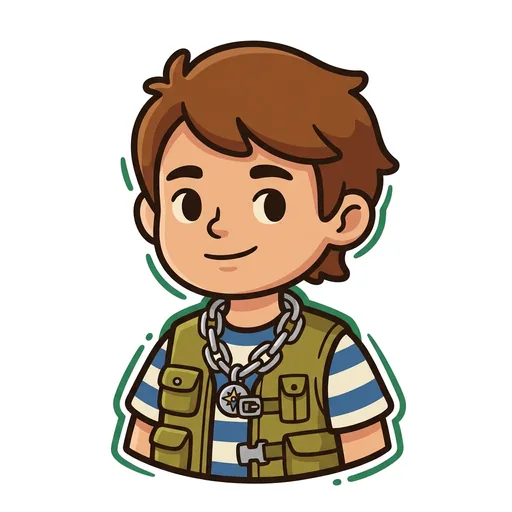
Bounder
The Ladder-Chainer — links several hops into ONE long move, always finding the longest efficient multi-hop route across the star (jump-chain / laddering)
-
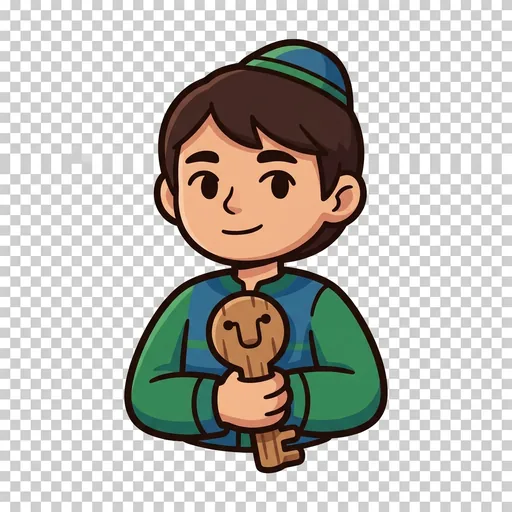
Gate
The Junction-Holder — parks a peg on a key crossing so a rival's chain breaks; the one defensive idea in a game with no captures (blocking)
-
Kern
The Centre-Keeper — occupies the central hexagon where the most jump-lines cross, keeping the most options open (centre control)
-

Overleap
The Long-Jumper — reaches the gapped, longer hop the ordinary jump can't, clearing distance in a single leap (the long / gapped jump)
-

Sidra
The Lane-Opener — plays the classic sideways-developing first moves that open the fastest lanes out of the home point (the opening)
-

Pacer
The Race-Counter — counts who reaches home first and spends every single move advancing, never idling (tempo / parity)
-

Snugg
The Back-Filler — tucks pegs into the BACK of the target point first so incoming pegs are never blocked by ones already home (home-fill order)
-
Trellis
The Bridge-Layer — places a peg NOW to enable a long chain LATER, setting up the ladder several turns ahead (deferred planning)
-

Coattail
The Line-Rider — hops over ANYONE's pegs, yours or the opponent's, riding a rival's line as free stepping-stones (the shared ladder / opportunism)