Sidra
THE OPENING (SIDEWINDER) — *the first few moves shape the whole race. A classic strong opening develops pegs SIDEWAYS out of the corners of your starting triangle before pushing straight ahead, so that early hops build a wide, connected lane of pegs to chain across later — instead of rushing one peg up the centre and stranding the rest. Planning the opening (spread and connect first, sprint second) is how the fastest routes get built before the sprint even begins.*
Loading audio…
Press play to listen along. The line being read lights up as you go.
Show full transcript
Loading transcript…
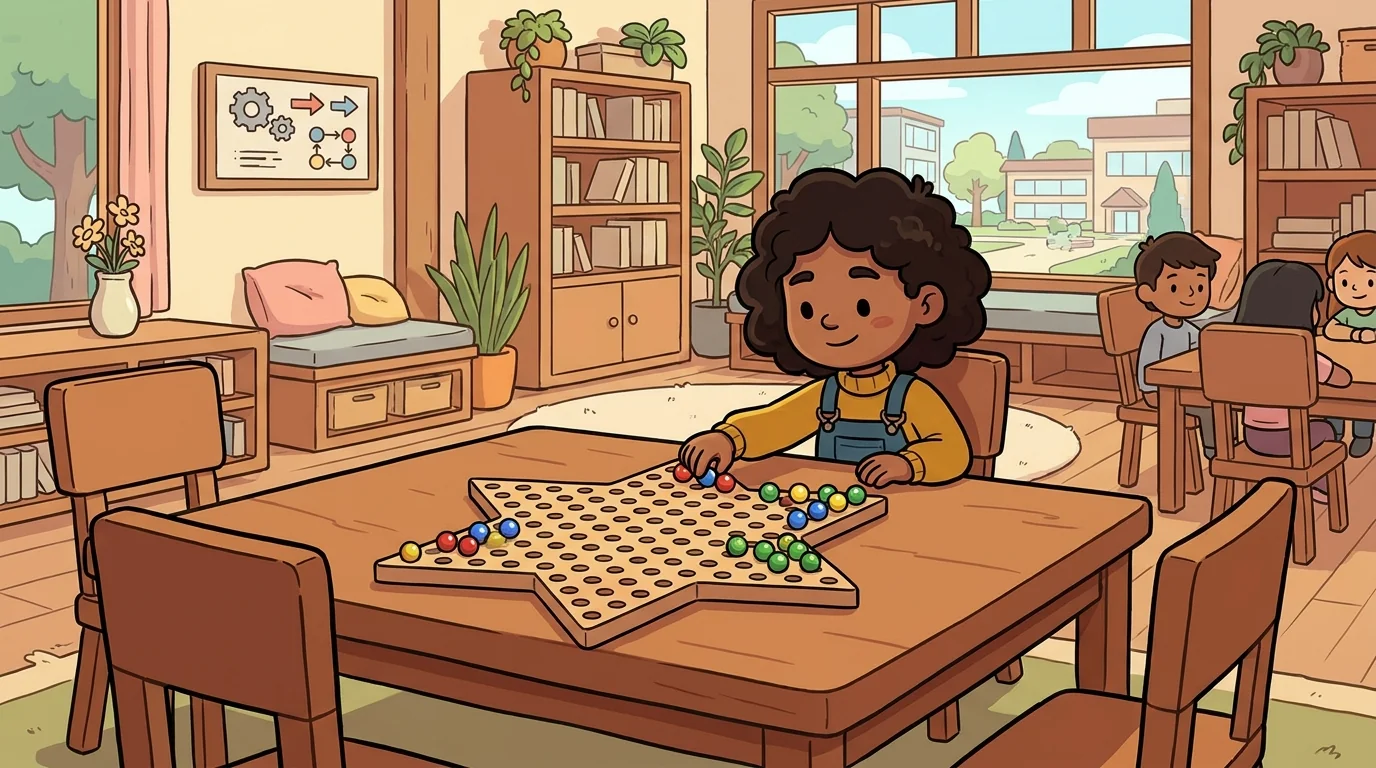
Sidra treated the first three moves of a game like the most important ones — which surprised people, because nothing dramatic happened. Instead of shoving a peg straight up the middle, Sidra fanned marbles sideways out of the corners of the starting triangle, spreading them into a wide, loose curve. "Everyone wants to sprint on turn one," Sidra would say, easing a peg out to the side. "But you can't sprint on an empty board. First you build the lane — spread out, connect up — and then, when it's time to run, there's a whole ladder already waiting for you."
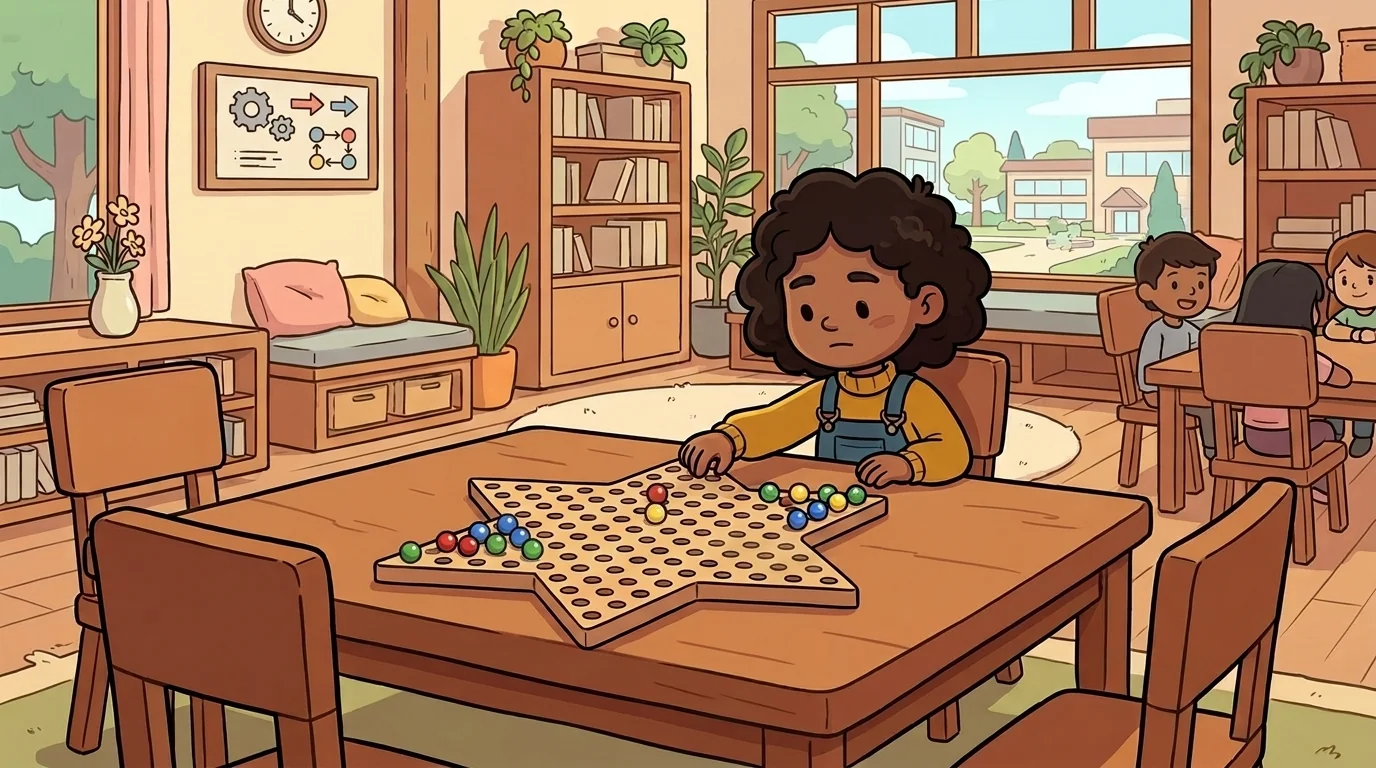
Sidra used to be the worst rusher of all. The instant a game started, Sidra would grab one peg and drive it straight up the centre, fast and proud — and then watch it strand there, alone, while nine other pegs sat clogged in the starting corner with nowhere to go. Game after game the fast start turned into a slow, jammed middle, and Sidra would think, bitterly, I got out front, so why am I losing?
Cairn, the pathfinding coach, watched one of these lonely sprints and asked, "Where are your other pegs?" Sidra glanced back at the jammed corner and winced. "Stuck." "The peg you rushed can't win alone," Cairn said. "It needs a lane of friends to hop across — and a lane has to be built before it can be used. Spend your first moves spreading out and connecting, and the sprint builds itself." Sidra tried it — sideways first, no glory, just careful spreading — and three turns later a chain was suddenly there, ready to ride. The bitterness turned into something almost like patience. Getting out front early wasn't the same as getting home first.
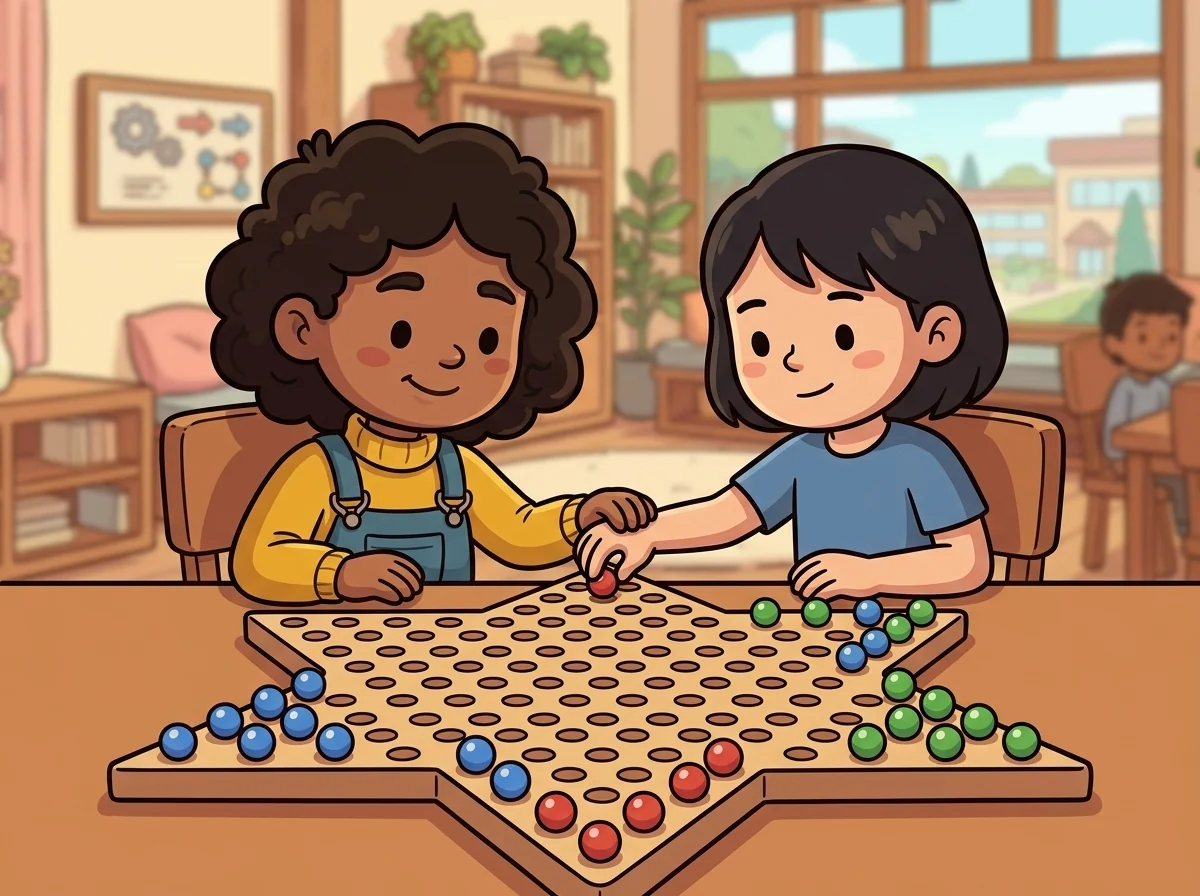
A girl named Anouk came to Sidra impatient. "I always lose even though I start fast," she said. "I get one peg way ahead and then everything jams." Sidra nodded — the exact old mistake. "Because a race isn't won by the first peg out the gate," Sidra said. "It's won by the lane. Come, we'll build one." They cleared the board to a fresh start. "Don't touch the middle yet. Fan your corner pegs out to the sides — spread them wide and even."
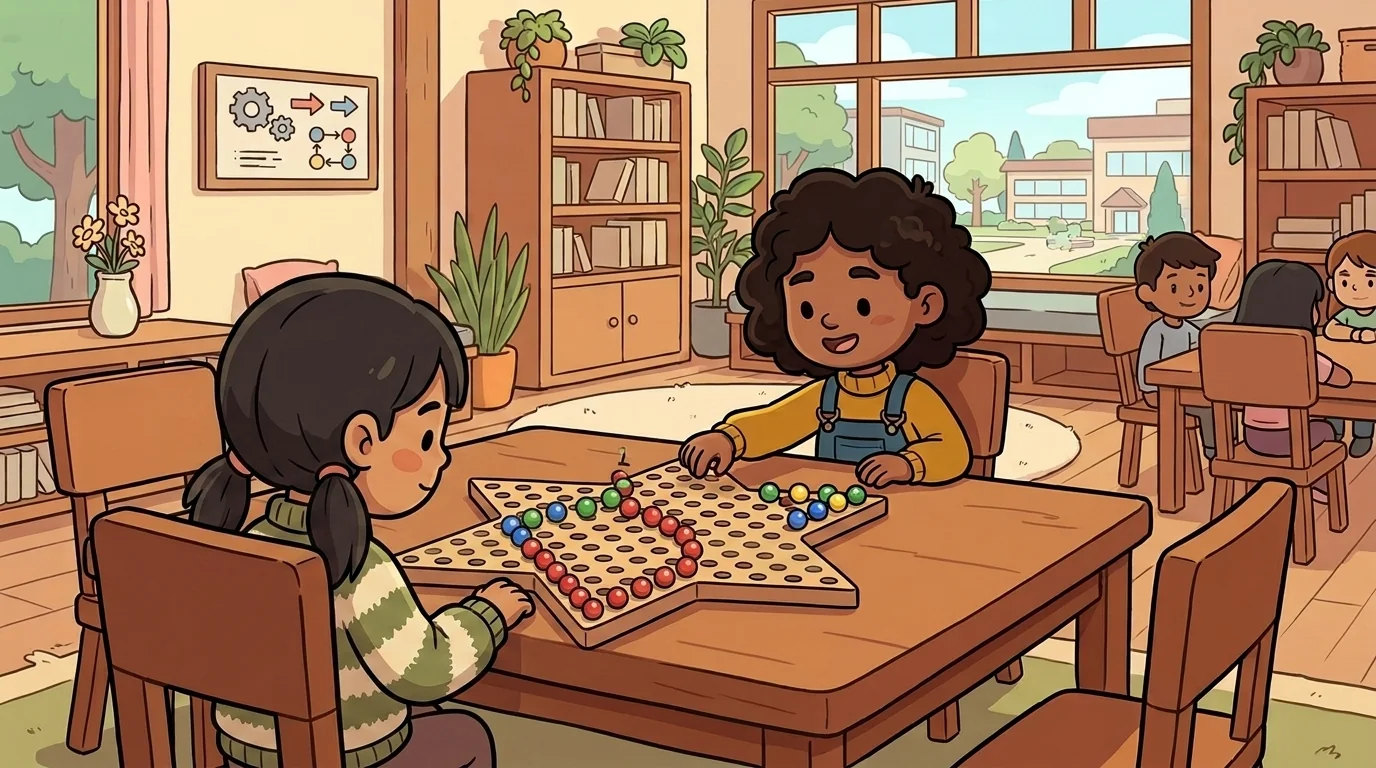
Anouk fanned her pegs out sideways, feeling like she was wasting turns — "nothing's happening" — until Sidra said "now look." The spread pegs had quietly formed a connected curve, and when Anouk finally pushed toward home, her lead peg found hop after hop waiting, a ladder she'd built without noticing. It bounded across in a single long chain while her rival's lonely front-runner sat stranded. "That's what the opening is for," Anouk breathed. They replayed it twice; each time she made herself spread-and-connect first and sprint second, and the "I start fast but lose" knot untied into a calmer confidence: set it up, then run. The quiet early moves, she saw, were the whole reason the loud later ones worked.
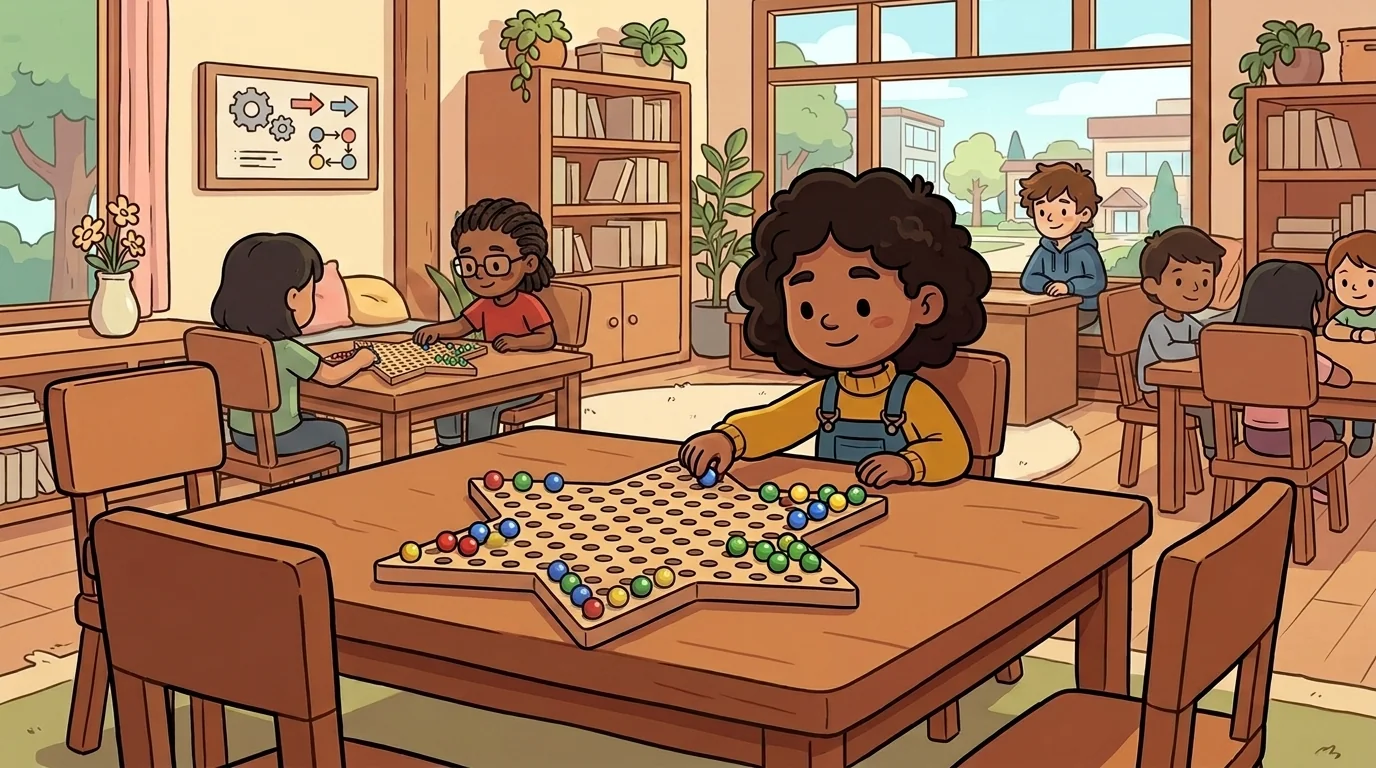
"You felt it," Sidra said. "The flashy sprint on turn one strands you. The boring spread on turn one wins you the race — because it builds the lane the sprint rides on." Anouk nodded, and on her next game she opened sideways without being told, trusting the setup. Cairn watched from across the room, quietly satisfied — a kid who used to burn every game on one lonely dash was now building lanes like a planner. "Say it before your first move," Sidra told her. "I don't charge straight up the middle first — I open sideways, and the widest fast lane appears where I stepped out."
The LeapTale ensemble
Sidra is part of LeapTale's distributed-narrative cast. Each character embodies a different curricular primitive; together they teach the full subject.
-

Bounder
The Ladder-Chainer — links several hops into ONE long move, always finding the longest efficient multi-hop route across the star (jump-chain / laddering)
-
Gate
The Junction-Holder — parks a peg on a key crossing so a rival's chain breaks; the one defensive idea in a game with no captures (blocking)
-

Kern
The Centre-Keeper — occupies the central hexagon where the most jump-lines cross, keeping the most options open (centre control)
-

Overleap
The Long-Jumper — reaches the gapped, longer hop the ordinary jump can't, clearing distance in a single leap (the long / gapped jump)
-

Caboose
The Straggler-Minder — never strands the last peg, because you only win when ALL ten reach home and the last one is hardest (leave no peg behind)
-

Pacer
The Race-Counter — counts who reaches home first and spends every single move advancing, never idling (tempo / parity)
-

Snugg
The Back-Filler — tucks pegs into the BACK of the target point first so incoming pegs are never blocked by ones already home (home-fill order)
-
Trellis
The Bridge-Layer — places a peg NOW to enable a long chain LATER, setting up the ladder several turns ahead (deferred planning)
-

Coattail
The Line-Rider — hops over ANYONE's pegs, yours or the opponent's, riding a rival's line as free stepping-stones (the shared ladder / opportunism)