Squill
SQUARING NEAR A BASE — *the mental calculator whose recurring act is squaring a number by stepping equally above and below it to a friendly product, then adding back the square of that step.*
Loading audio…
Press play to listen along. The line being read lights up as you go.
Show full transcript
Loading transcript…
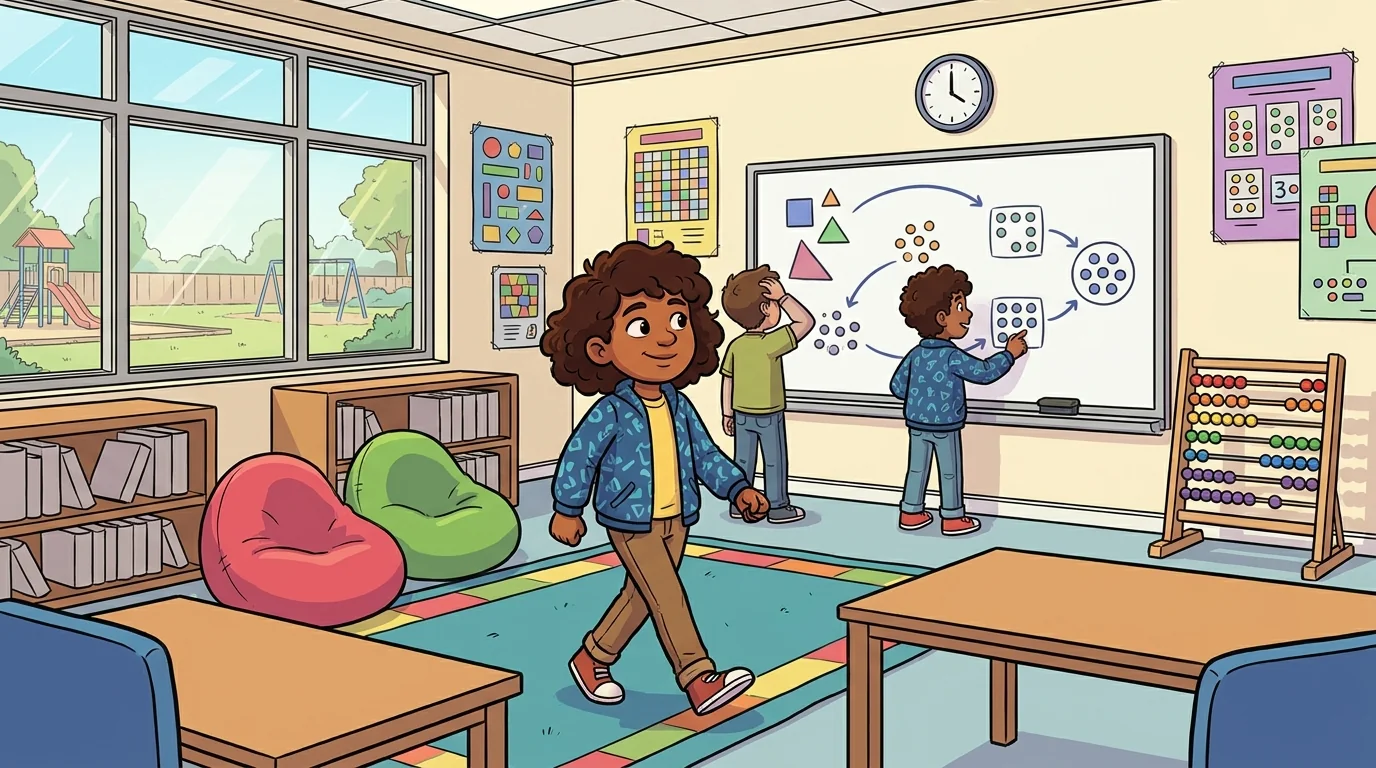
A student stared at "square 48" on the board like it had insulted them. Forty-eight times forty-eight — they didn't even know where to begin. Squill wandered over, unbothered. "Forty-eight is scary," Squill agreed, "but look who it's standing next to. It's practically holding hands with fifty, and fifty is lovely. Let's borrow fifty's easiness."
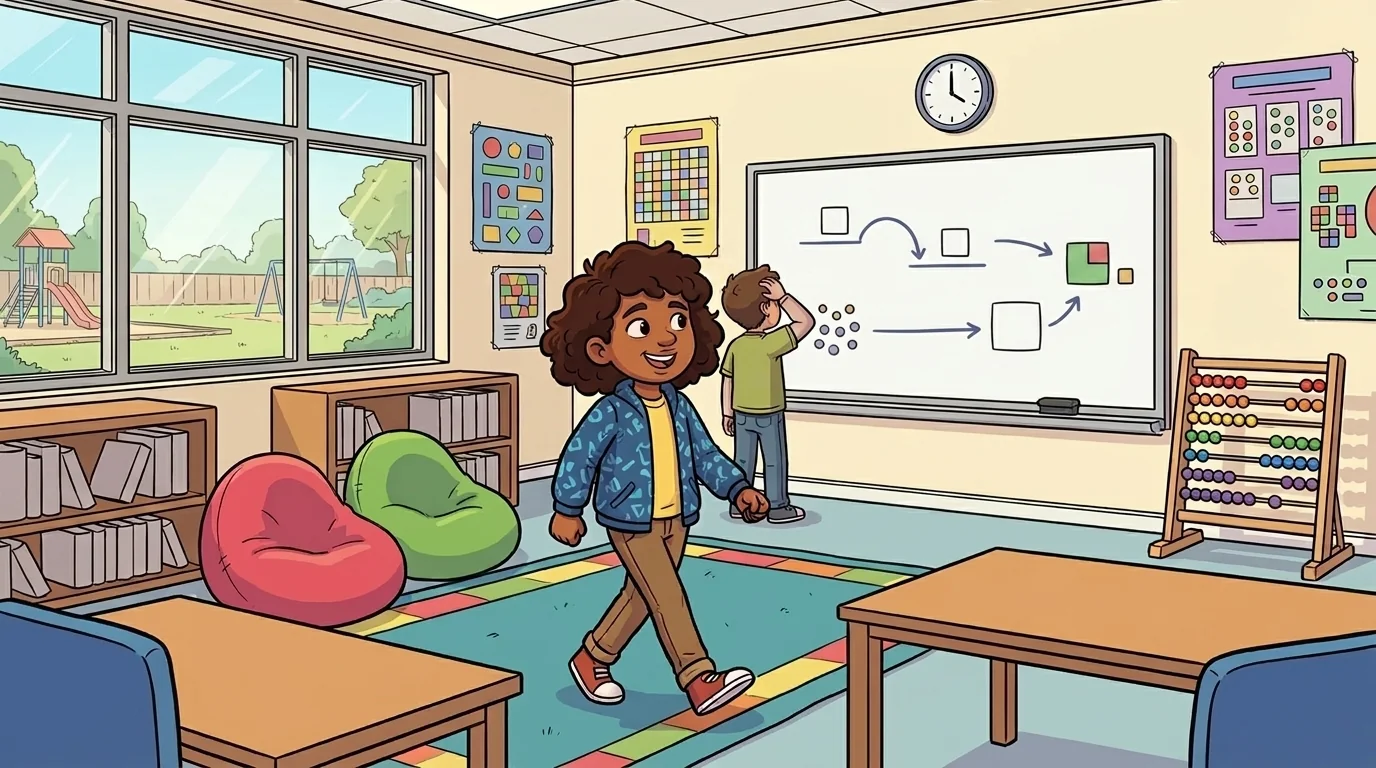
"Here's the move," Squill said. "Forty-eight is two below fifty. So I spread it two each way — down to forty-six and up to fifty. Now I multiply the friendly pair: forty-six times fifty. Forty-six times fifty is twenty-three hundred — easy, it's just half of forty-six hundred. Then, because I stepped two away in each direction, I add back the square of that step: two times two, four. Twenty-three hundred plus four — two thousand three hundred and four. That's forty-eight squared." Squill smiled. "Step down and up the same amount to reach an easy multiply, then add the little square of the step."
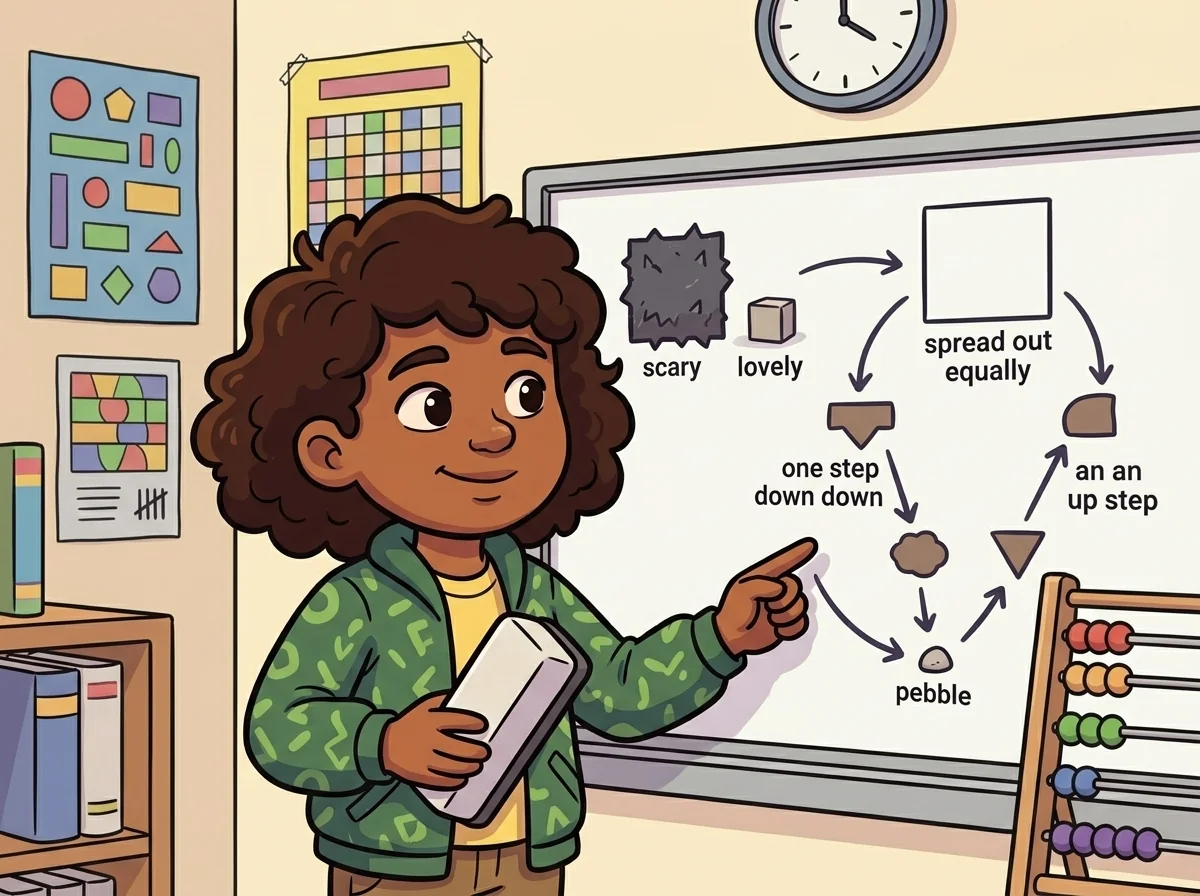
"The reason the little square comes back," Squill said, "is that when you spread a number out equally — one down, one up — the product dips by exactly the step, squared. So you multiply the easy spread pair, then repay that tiny dip. It sounds fussy, but the beauty is the hard part vanishes: you never actually multiply forty-eight by forty-eight. You multiply fifty by something, which your mind can do half-asleep, and then you add a number as small as four or nine or twenty-five. Squaring near a base means the scary square becomes an easy multiply with a pebble on top."
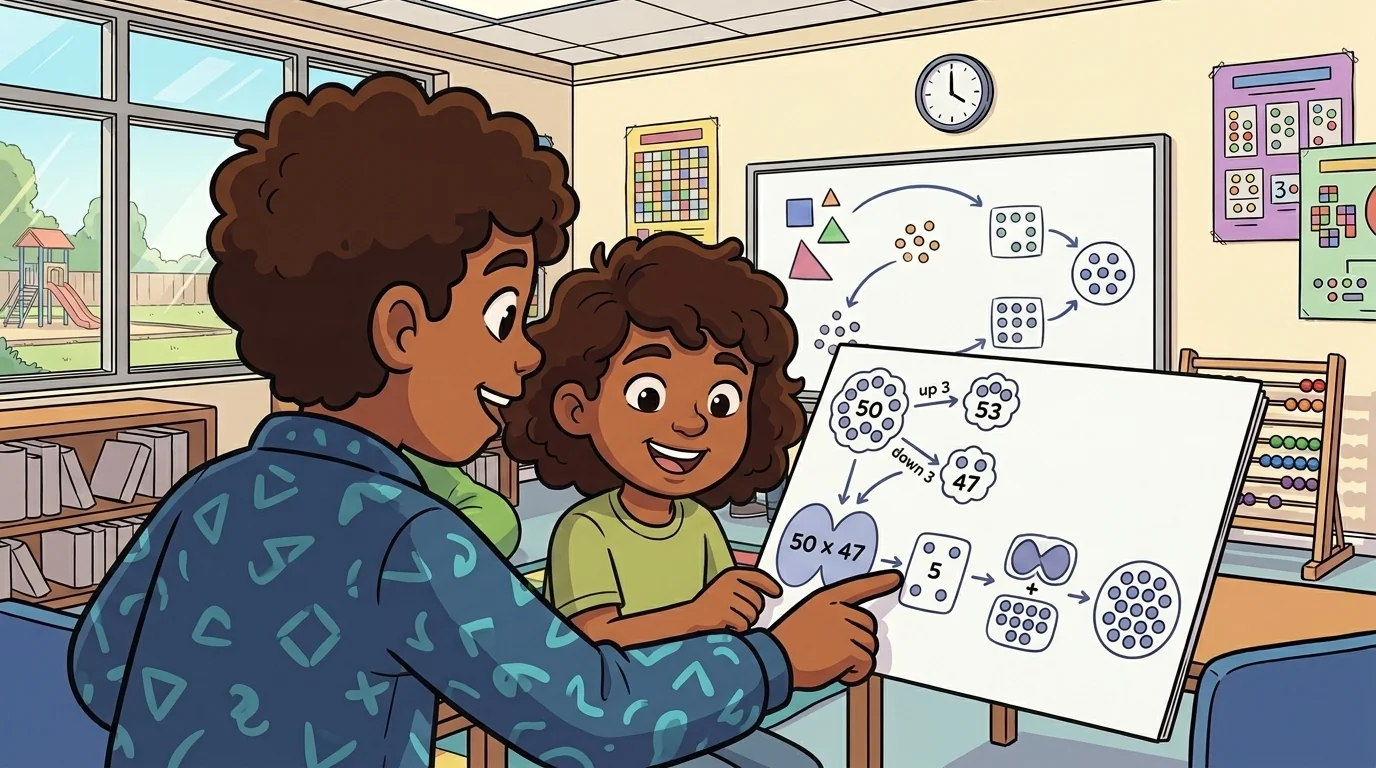
The student tried squaring 53. "Fifty-three is three above fifty. So I spread it three each way — down to fifty and up to fifty-six. Fifty times fifty-six is... twenty-eight hundred. Then add three squared, nine. Two thousand eight hundred nine." They double-checked and their eyes went wide. "Fifty-three squared is two thousand eight hundred and nine." Squill leaned in. "Exactly — fifty times fifty-six is twenty-eight hundred, then plus nine, two thousand eight hundred nine. Trust the base." The student redid it and grinned. "Two thousand eight hundred nine. I never squared fifty-three. I just spread it around fifty and added nine."
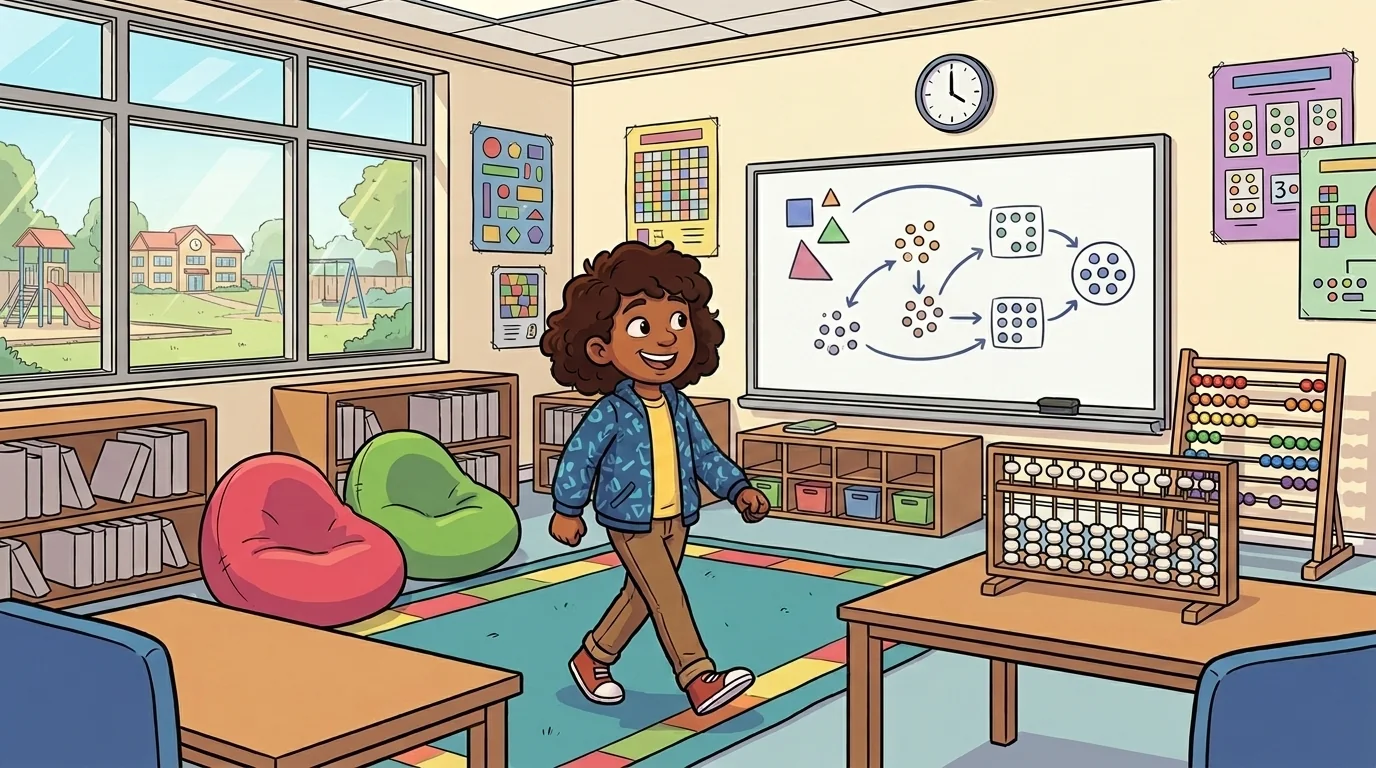
They squared 98 next — step to 100 and 96, take a hundred times ninety-six, nine thousand six hundred, add four, nine thousand six hundred four — and the number that would once have sent them reaching for paper simply appeared, calm and whole. What stayed with the student wasn't the answer; it was the discovery that a frightening number is almost always leaning on a friendly one, and that they were allowed to lean on it too. The dread that used to rise at the word "square" had quietly gone, replaced by a small thrill of I know a way in. That feeling — the scary number is standing right next to an easy one, and I can borrow its easiness — settled bright into them, and Squill watched it with delight, because teaching someone to reach for the nearby base was really teaching them that no number is as alone, or as frightening, as it first looks. "Step equally, multiply easy, add the little square," Squill said, and the student was already eyeing the next square without flinching.
The MentalForge ensemble
Squill is part of MentalForge's distributed-narrative cast. Each character embodies a different curricular primitive; together they teach the full subject.
-

Lefty
Left-to-right — add the biggest places first, not last
-
Tenna
Make-a-ten — round up to a friendly ten, then adjust back
-

Halvor
Double & halve — double one factor and halve the other
-
Soro
Soroban beads — picture the beads to add and subtract fast
-
Elva
The ×11 trick — add each pair of neighbouring digits
-

Grandel
Subtract from a round number — take from 100 or 1000 by complements
-
Crisca
Cross-multiply — two 2-digit numbers in one criss-cross
-

Nina
Cast out nines — a quick check that catches most slips
-

Rounda
Estimate first — get close, then check the exact answer looks right
-

Splitt
Break apart — split a hard product into easy distributive pieces
-
Abaca
(Mentor) — the mental-math coach who sets the sprint and reflection