Splitt
DISTRIBUTIVE SPLITTING — *the mental calculator whose recurring act is breaking one factor into friendly place-value pieces, multiplying each piece separately, and adding the partial products back together.*
Loading audio…
Press play to listen along. The line being read lights up as you go.
Show full transcript
Loading transcript…
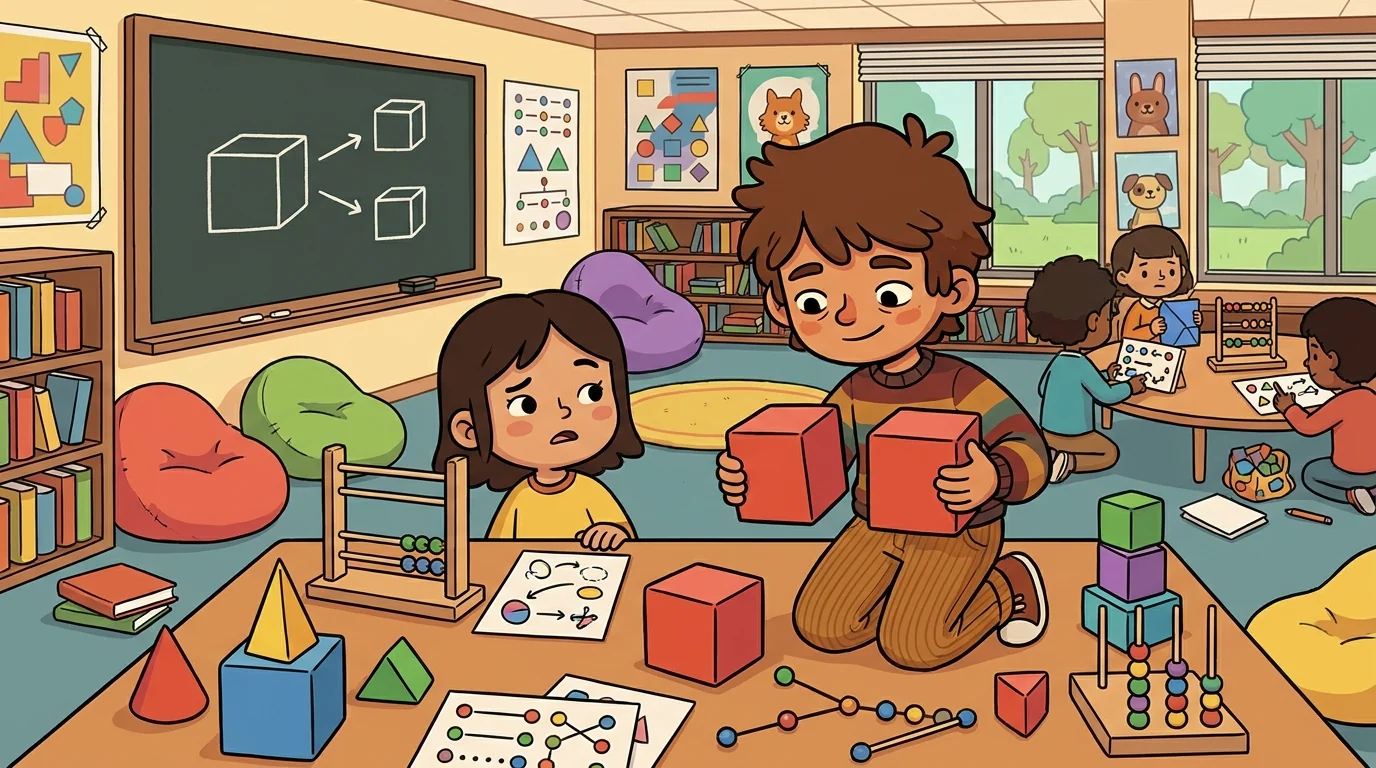
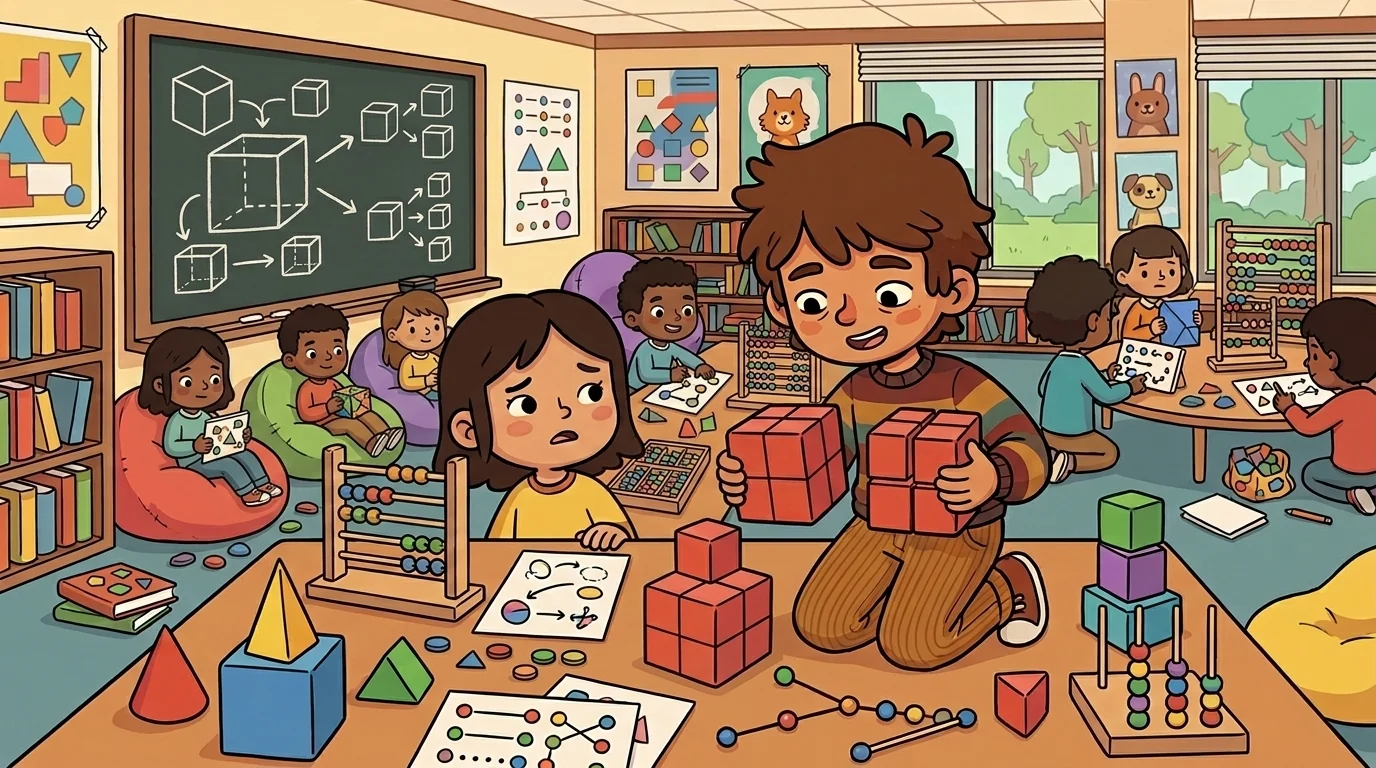
A student stared at 7 × 34 and went quiet — that was somewhere in the thirties-times-seven, a fact they'd never memorized, and they had no path in. Splitt crouched next to them and picked up two blocks, setting them slightly apart. "Thirty-four is a big lump," Splitt said. "But nobody says you have to swallow it whole. Break it into pieces you already know how to eat."
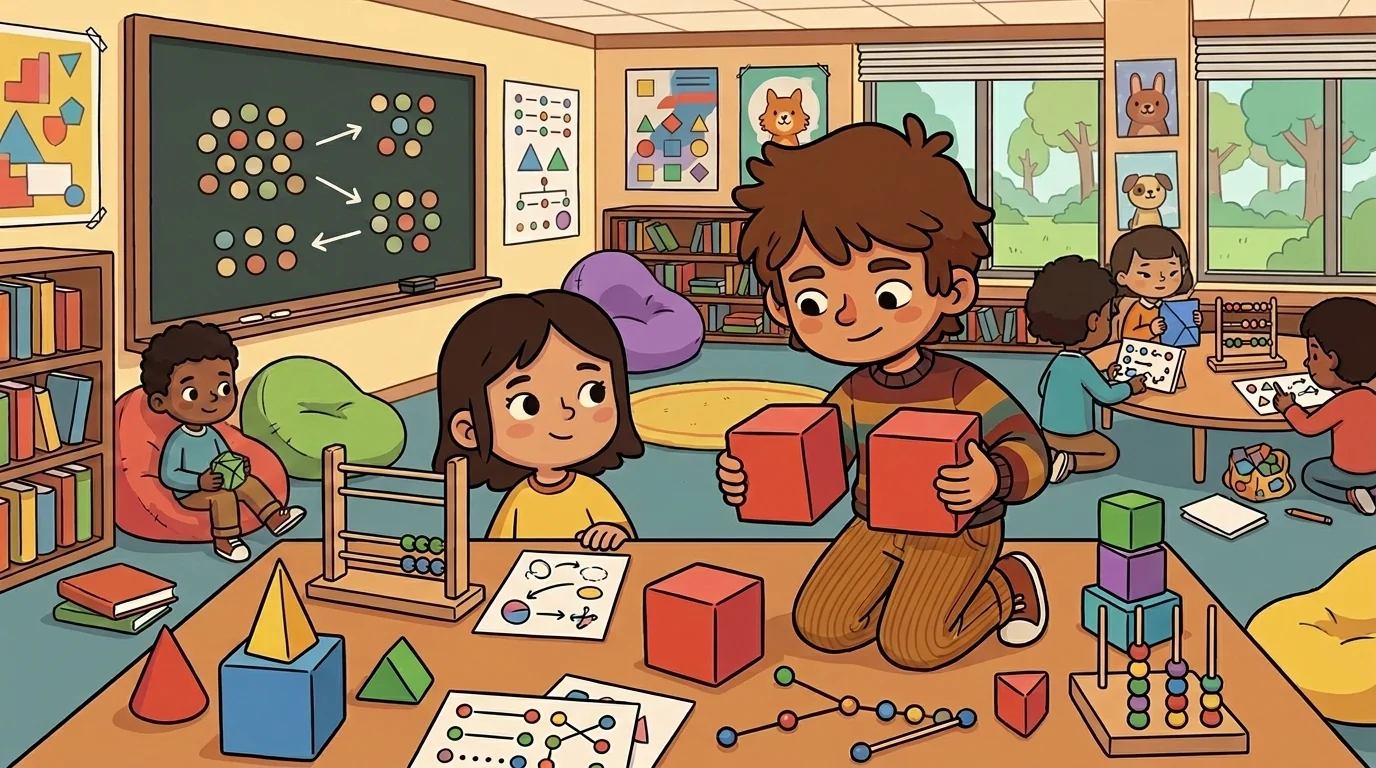
"Thirty-four is just thirty and four," Splitt said, pulling the number into two parts. "So seven times thirty-four is seven times thirty, plus seven times four. Seven times thirty — that's seven times three, twenty-one, with a zero, two hundred ten. Seven times four is twenty-eight. Now add the pieces back: two hundred ten plus twenty-eight — two hundred thirty-eight." Splitt pushed the blocks back together. "Seven times thirty-four is two thirty-eight. I never multiplied by thirty-four. I multiplied by thirty, then by four, then glued the answers together."
"This is the one trick under all the others," Splitt said. "Any number you're scared of, you can split into friendly place-value pieces — tens and ones, hundreds and tens and ones — multiply each piece by itself, and add. It works because multiplying is fair to pieces: a whole times a sum is the same as the whole times each part, added up. So I get to trade one hard multiplication I don't know for two or three easy ones I do know. Twelve times fifteen? Twelve times ten is a hundred twenty, twelve times five is sixty, together a hundred eighty. I'm never stuck, because I can always break the lump smaller until every piece is a fact I own."
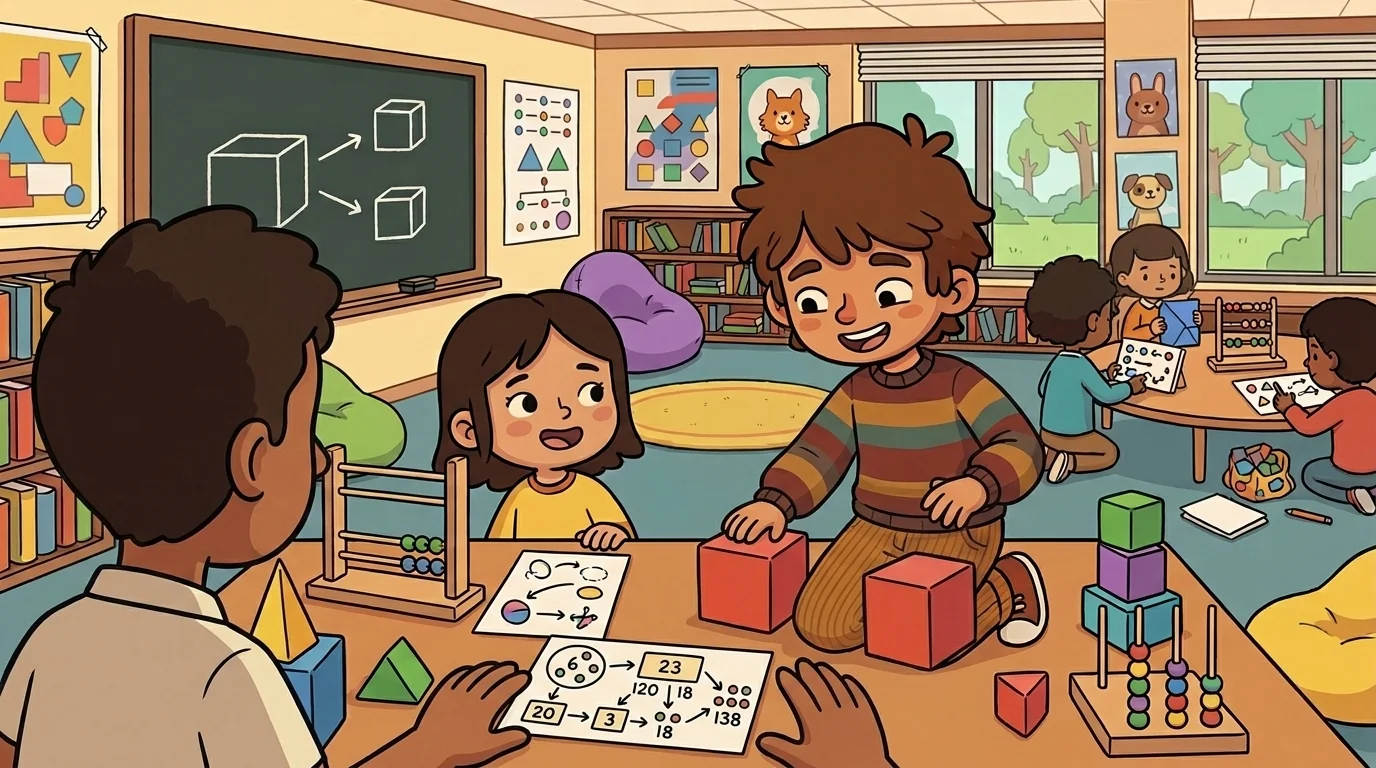
The student tried 6 × 23. "Twenty-three is twenty and three. Six times twenty is a hundred twenty. Six times three is eighteen. Add them — a hundred thirty-eight." They looked up, a little stunned. "Six times twenty-three is a hundred thirty-eight, and I only ever did six-times-twenty and six-times-three. I knew both of those." Splitt grinned. "That's the secret. You already know more than enough small facts to build every big one. You just break the big one down until it's made of the small ones you own."
The student worked through a column of products they'd never memorized, splitting each fat factor into tens and ones, and the frozen-at-the-board feeling — the one that came from meeting a fact they'd never learned — simply stopped happening. Because now there was always a way in: no matter how unfamiliar a number looked, they could crack it into pieces they'd known since they were small. That changed something deeper than speed; it meant they'd never again be truly stuck, only one split away from familiar ground. That resourceful, unstuck feeling — I don't need to have memorized the hard fact; I can build it from easy ones I already own — settled steady and bright into them, and Splitt watched it with real warmth, because teaching the split was really teaching someone that they were never as short of tools as a scary problem made them feel. "Break it into pieces you know, then add them back," Splitt said, and the student was already splitting the next lump without hesitation.
The MentalForge ensemble
Splitt is part of MentalForge's distributed-narrative cast. Each character embodies a different curricular primitive; together they teach the full subject.
-

Lefty
Left-to-right — add the biggest places first, not last
-
Tenna
Make-a-ten — round up to a friendly ten, then adjust back
-

Halvor
Double & halve — double one factor and halve the other
-
Soro
Soroban beads — picture the beads to add and subtract fast
-

Squill
Square near a base — square numbers close to 10, 50, or 100
-
Elva
The ×11 trick — add each pair of neighbouring digits
-

Grandel
Subtract from a round number — take from 100 or 1000 by complements
-
Crisca
Cross-multiply — two 2-digit numbers in one criss-cross
-

Nina
Cast out nines — a quick check that catches most slips
-

Rounda
Estimate first — get close, then check the exact answer looks right
-
Abaca
(Mentor) — the mental-math coach who sets the sprint and reflection