Elva
THE ELEVEN TRICK — *the mental calculator whose recurring act is multiplying by eleven by spreading a number's digits apart and inserting the sum of each neighbouring pair between them.*
Loading audio…
Press play to listen along. The line being read lights up as you go.
Show full transcript
Loading transcript…
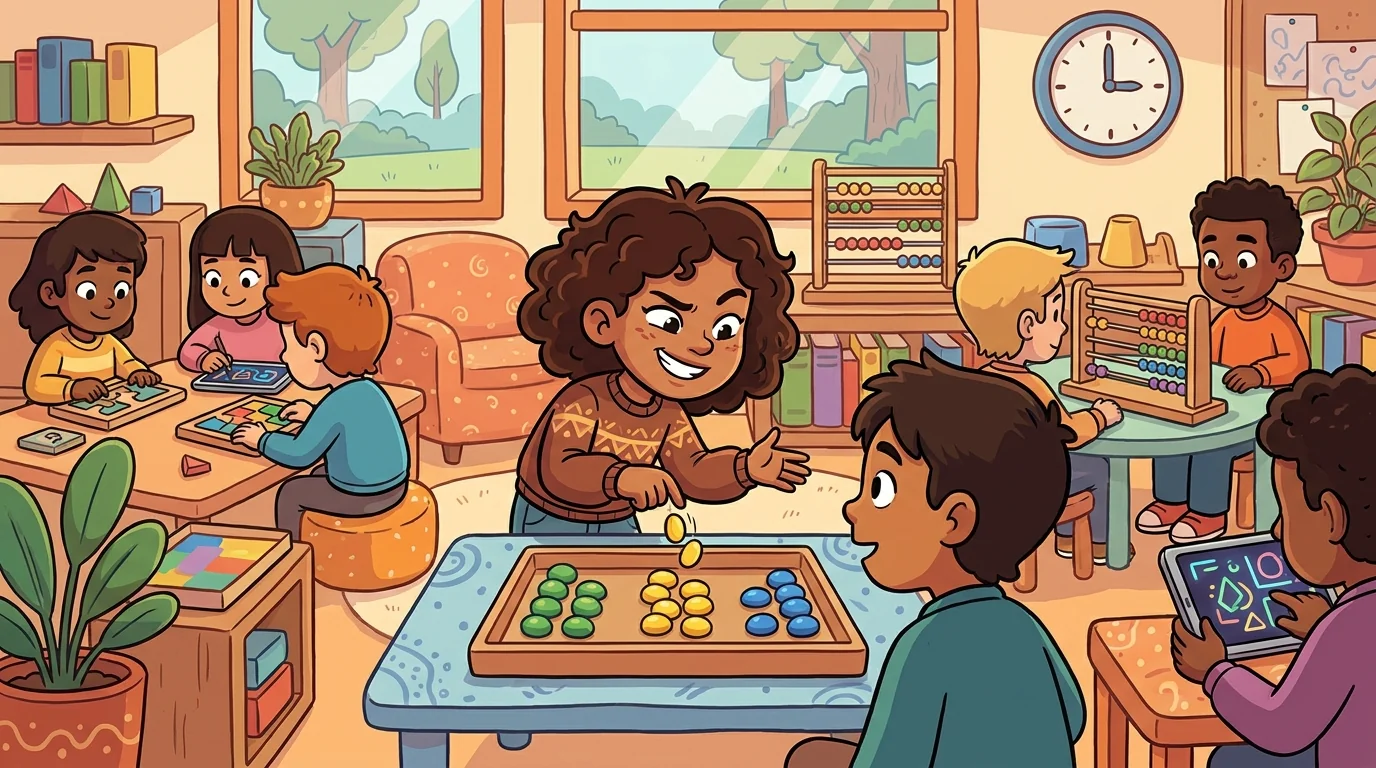
Someone dared a student to work out 11 × 63 in their head, and the student froze — sixty-three elevens, that was a lot of adding. Elva slid over with the grin of someone about to share a secret. "Times eleven looks like work," Elva said, "but it's the laziest trick I know. You barely calculate at all. You just listen to the digits and drop something in the middle."
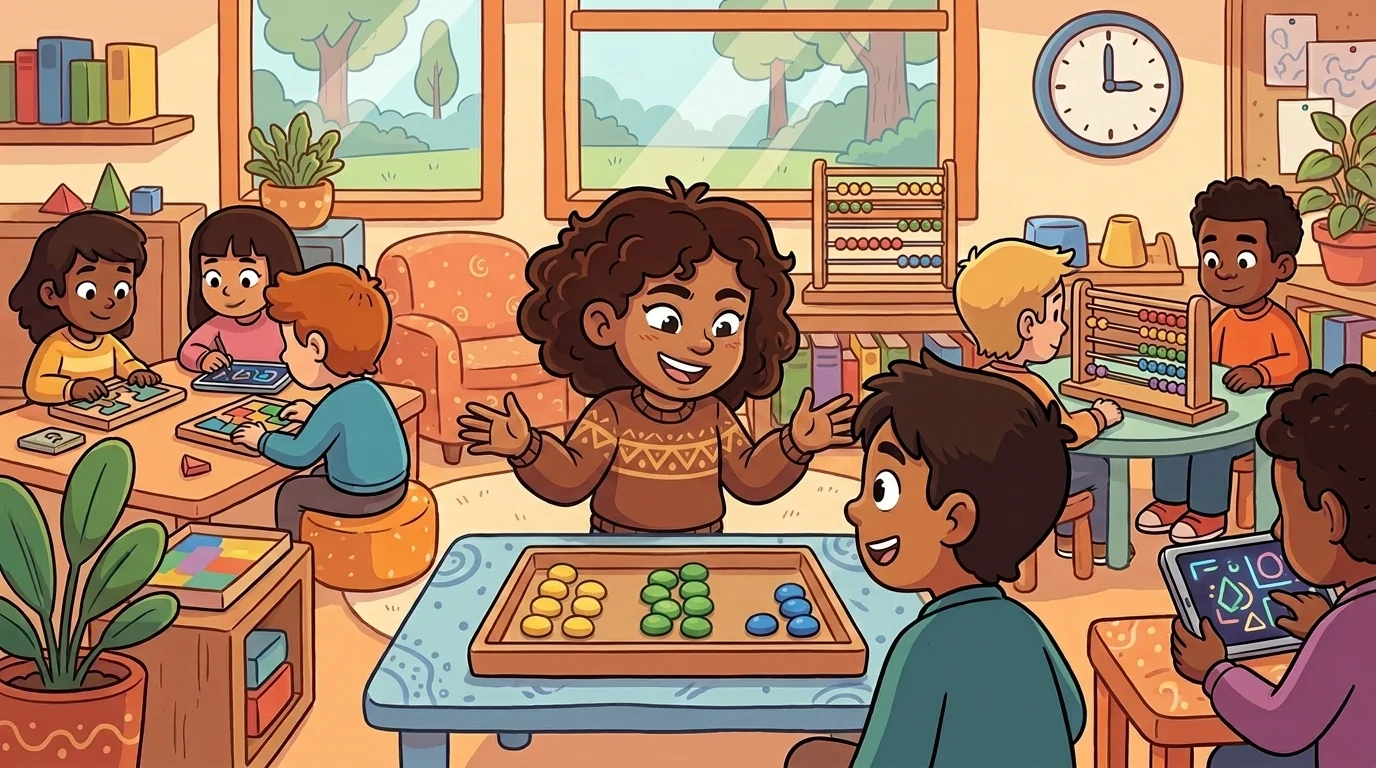
"Take sixty-three," Elva said. "Pull the two digits apart and leave a gap: six... three. Now add the two neighbours — six plus three is nine — and drop that nine into the gap. Six, nine, three. Six hundred ninety-three. That's eleven times sixty-three." Elva spread their hands like a magician showing an empty palm. "The outside digits stay where they are, and their sum moves into the space between them. That's the whole trick."

"It works," Elva said, "because eleven is ten and one. Multiplying by ten shifts a number one place left, and adding one more copy of the number lines up each digit with its neighbour — so every middle digit becomes the sum of the two beside it. You don't have to know why to enjoy it, but that's the reason the neighbours add up. The one thing to watch: if two neighbours add to more than nine, the extra one carries left, like a little overflow. Twenty-eight times eleven — two, then two-plus-eight is ten, so write the zero and carry the one to the two: three, zero, eight. Three hundred eight. Even the carry is gentle."
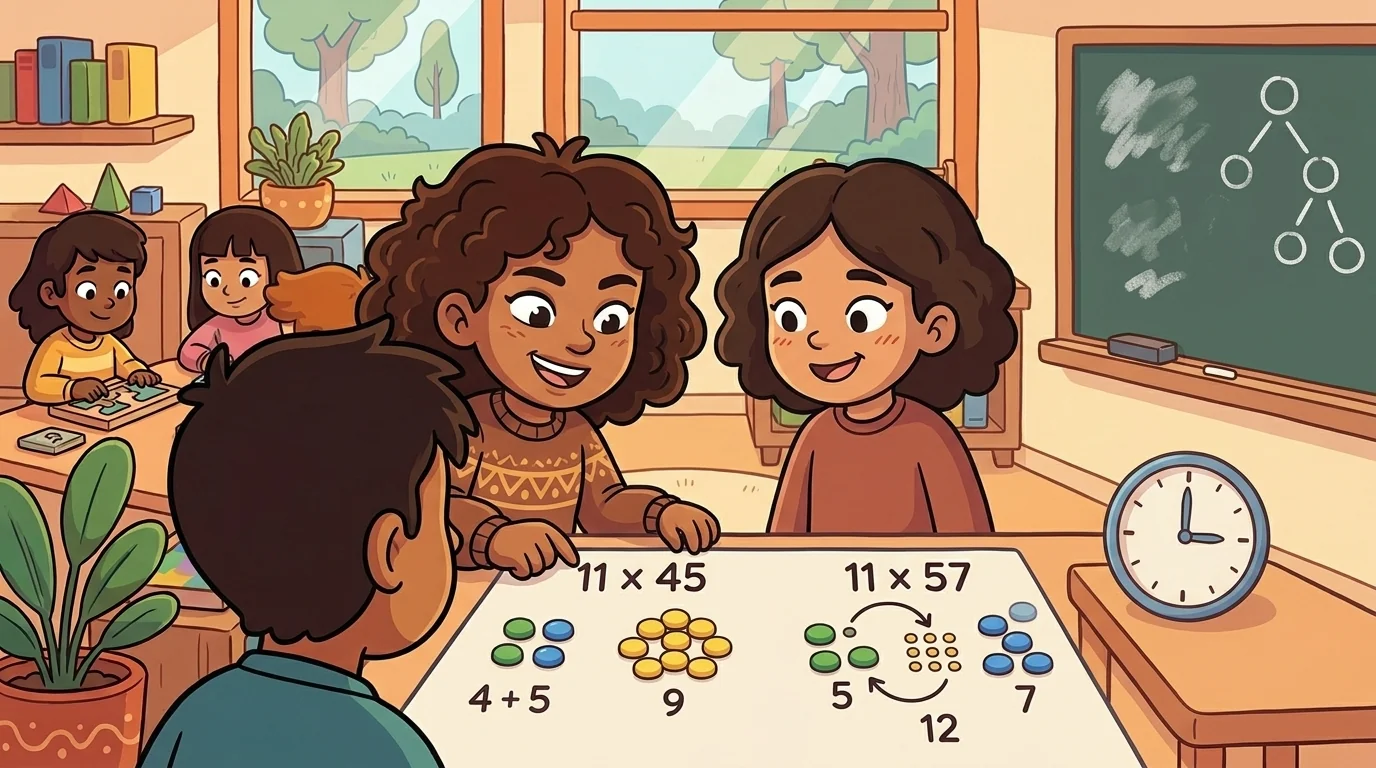
The student tried 11 × 45. "Four... five. Neighbours: four plus five is nine. Drop it in: four, nine, five. Four hundred ninety-five." They laughed out loud. "That's it? I didn't multiply anything!" Elva nodded, delighted. "You added once. Now try one that carries — eleven times fifty-seven. Five and seven, gap between. Five plus seven is twelve — write the two, carry the one to the five: six, two, seven. Six hundred twenty-seven." The student did it and beamed. "Six hundred twenty-seven. The carry just nudged the front digit up. That's almost cheating."
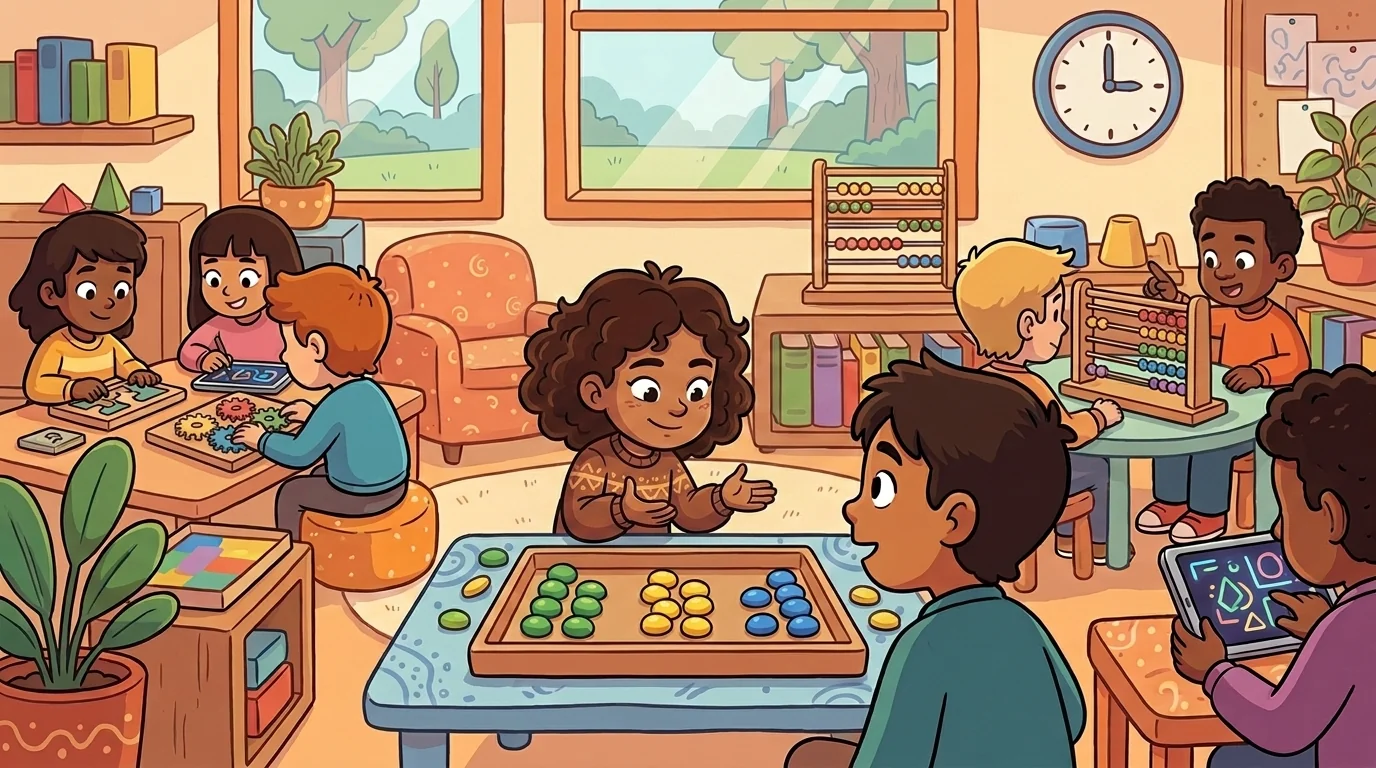
The student went around the gym doing elevens for anyone who'd listen, dropping sums into gaps, watching people's eyebrows jump — and underneath the showing-off was something quieter and better. For the first time, maths felt like a thing they could be playful with, a thing that could make them the person with the cool secret instead of the person sweating at the board. The trick wasn't just fast; it made them feel clever and a little bit magical, and that feeling was the opposite of the small dread they used to carry into arithmetic. That bright, mischievous confidence — I know a shortcut that looks like wizardry and is really just adding neighbours — settled happily into them, and Elva watched it spread with a grin, because handing someone a party trick was really handing them the joy of a subject that could delight instead of intimidate. "Split the digits, drop in their sum," Elva said, and the student was already lining up their next victim.
The MentalForge ensemble
Elva is part of MentalForge's distributed-narrative cast. Each character embodies a different curricular primitive; together they teach the full subject.
-

Lefty
Left-to-right — add the biggest places first, not last
-
Tenna
Make-a-ten — round up to a friendly ten, then adjust back
-
Halvor
Double & halve — double one factor and halve the other
-
Soro
Soroban beads — picture the beads to add and subtract fast
-
Squill
Square near a base — square numbers close to 10, 50, or 100
-

Grandel
Subtract from a round number — take from 100 or 1000 by complements
-
Crisca
Cross-multiply — two 2-digit numbers in one criss-cross
-

Nina
Cast out nines — a quick check that catches most slips
-

Rounda
Estimate first — get close, then check the exact answer looks right
-

Splitt
Break apart — split a hard product into easy distributive pieces
-
Abaca
(Mentor) — the mental-math coach who sets the sprint and reflection