Nina
CASTING OUT NINES — *the mental calculator whose recurring act is reducing each number to its single-digit digit-sum and checking that the operation still holds, catching arithmetic slips.*
Loading audio…
Press play to listen along. The line being read lights up as you go.
Show full transcript
Loading transcript…
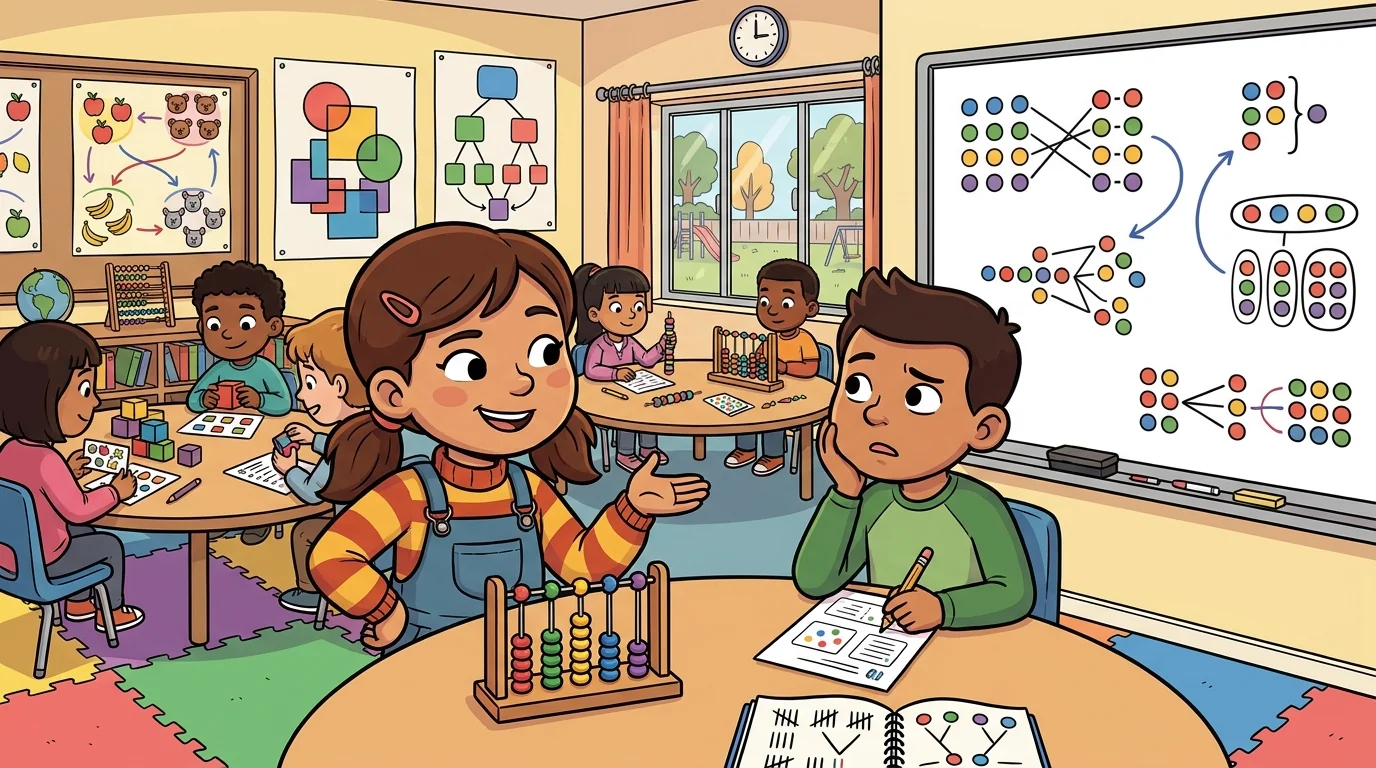
A student had just finished multiplying and written down an answer, but they weren't sure — they never were — and redoing the whole thing felt exhausting. Nina, who kept a small confident smile, said, "You don't have to redo it. There's a quick check that catches most mistakes in about three seconds. It won't prove you're right, but it'll shout at you if you're wrong."
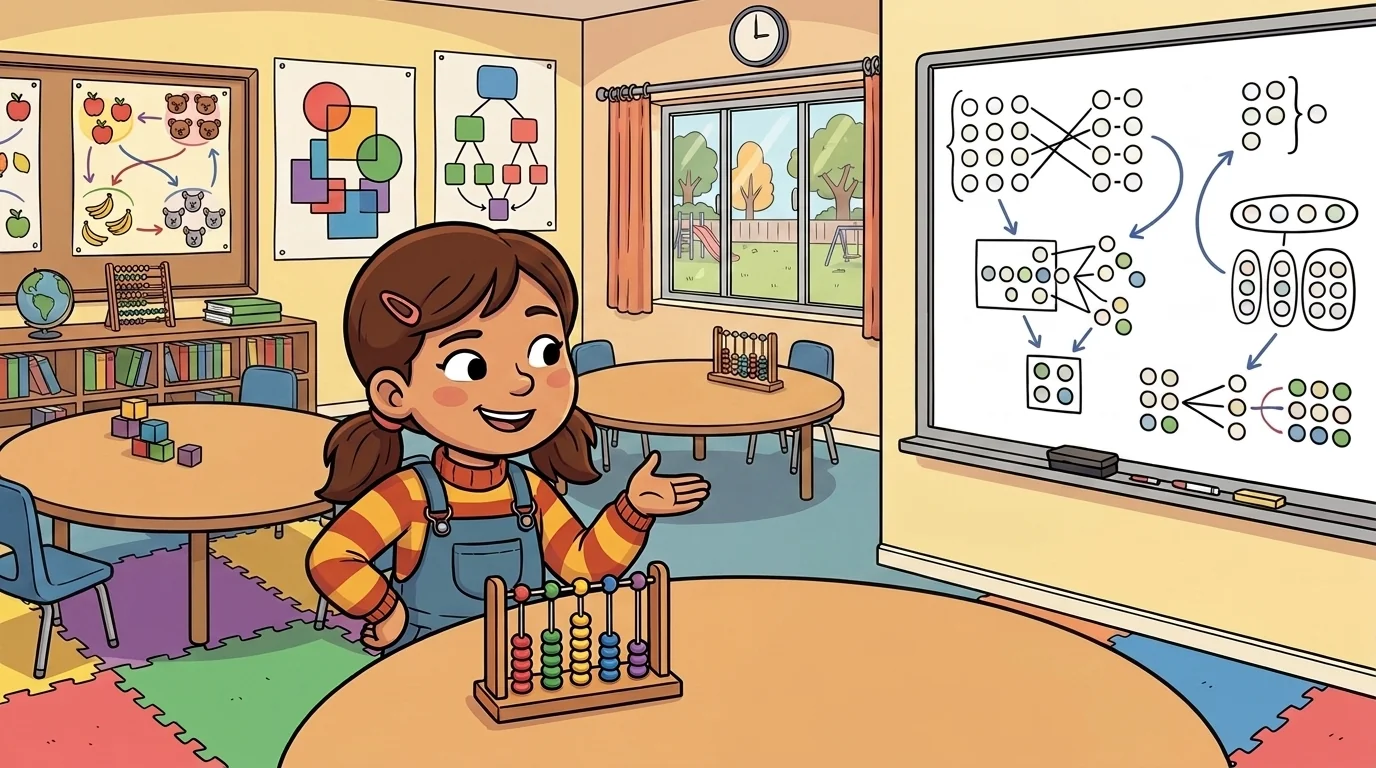
"It's called casting out nines," Nina said. "You take a number and add its digits until only one digit is left. Say your answer was six hundred forty-three: six plus four plus three is thirteen, one plus three is four. So six forty-three's check-digit is four. You do that to the numbers you multiplied too, multiply their check-digits the same way, and reduce that to one digit. If it matches your answer's four, your answer passes the check. If it doesn't match, you definitely made a slip somewhere — go look again."

"Here's the honest part," Nina said, "because I never want to trick you. The check can miss things — if you swap two digits, the digit-sum stays the same and the check waves you through. So passing doesn't prove you're right. But failing absolutely proves you're wrong, and that's worth a lot. Most real mistakes — a wrong times-fact, a dropped carry, a misplaced digit — change the digit-sum and get caught. So I treat it like a smoke alarm: it can't promise the house is fine, but if it goes off, something's burning, and I go check the stove. Three seconds to maybe save myself from handing in a wrong answer."
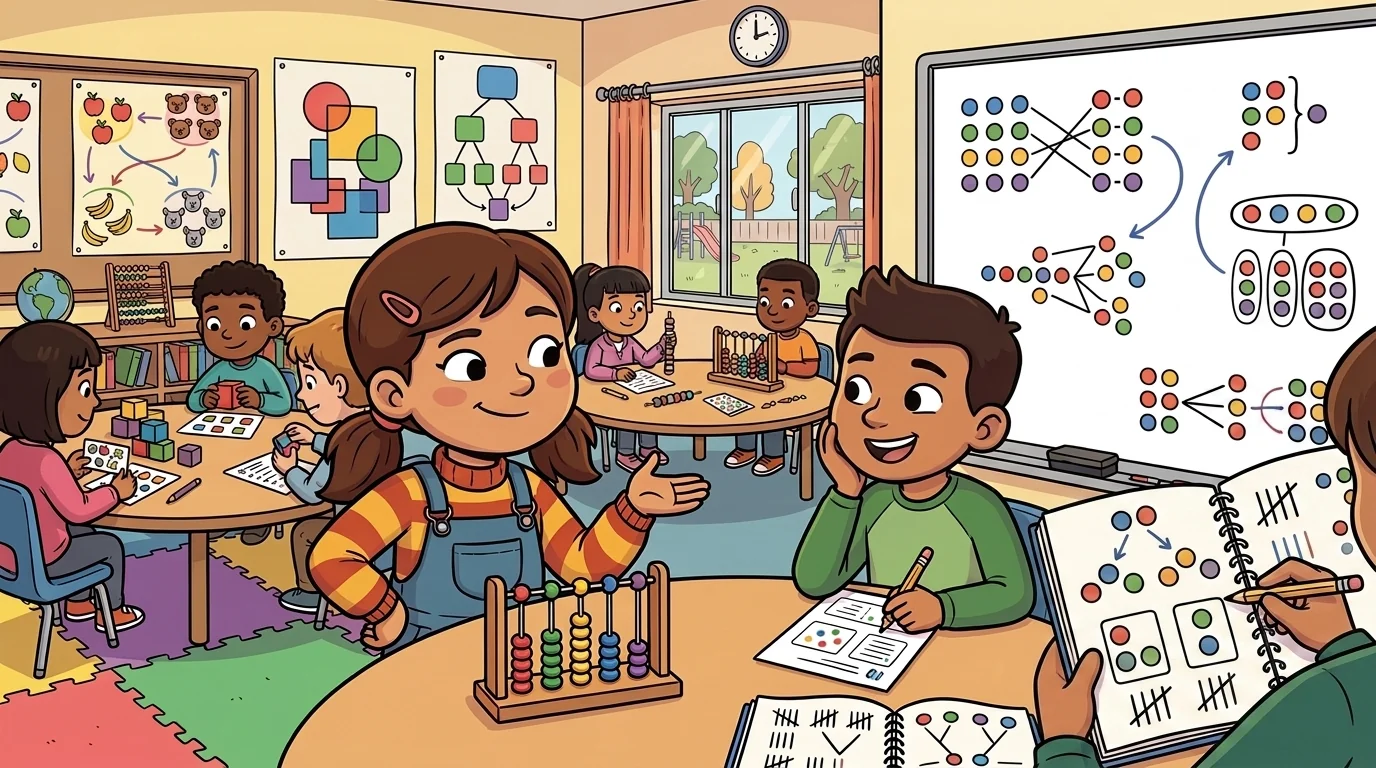
The student multiplied 24 × 3 and got 72. "Let me check. Twenty-four: two plus four, six. Three is three. Six times three is eighteen, one plus eight is nine, which reduces to nine — or zero, nines cast out. Seventy-two: seven plus two is nine. Nine and nine..." they paused. "They match. It passes." Then they deliberately wrote a wrong answer, 62, and checked: "Six plus two is eight. But the multiply gave nine. Eight doesn't match nine — it caught it!" They grinned. "It told me to look again, and it was right to."
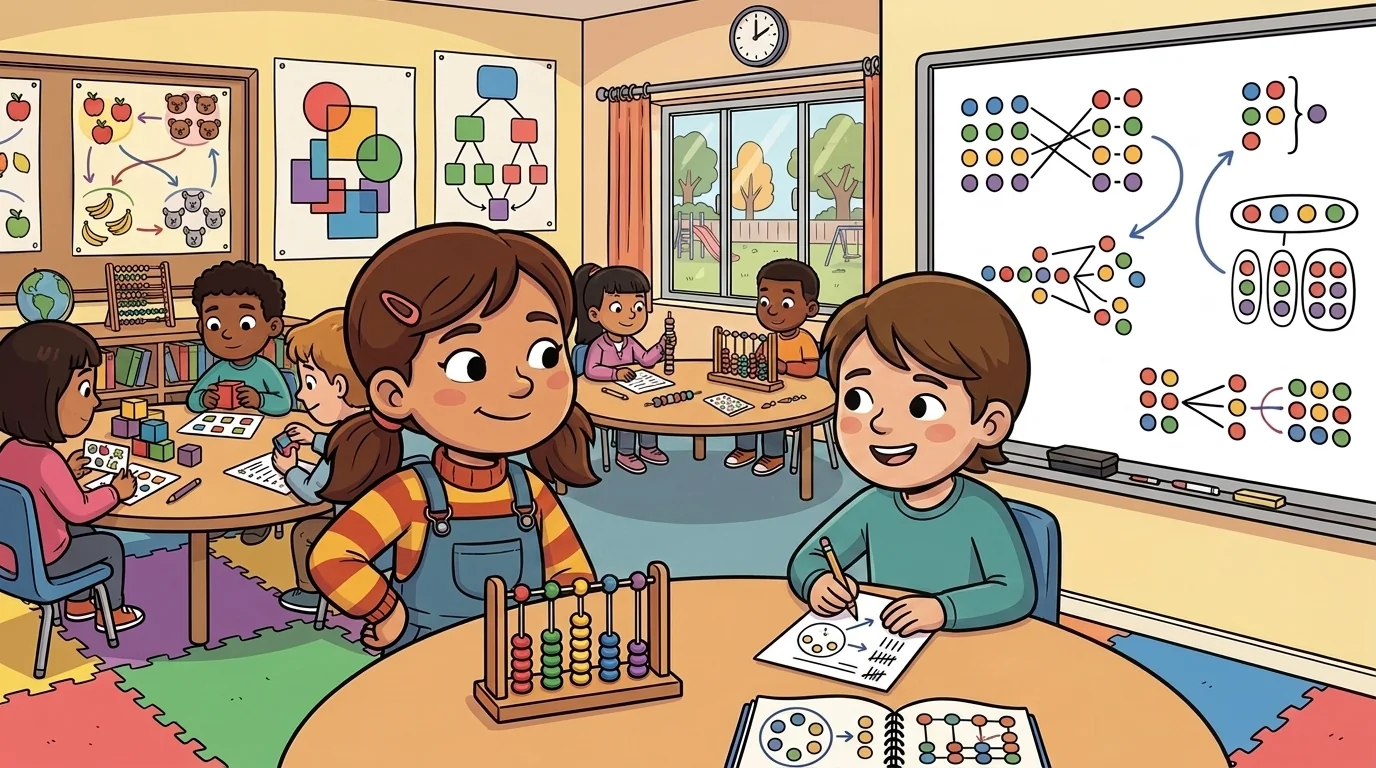
The student started casting out nines on everything, a quick digit-sum whispered after each answer, and something in their whole relationship with mistakes changed. They'd always feared errors as things that happened silently and got found only later, in red pen — but now they had a small alarm they controlled, one that let them catch their own slips before anyone else did. That shifted the feeling from dread to a kind of steady self-trust: not I hope I got it right, but I'll know to double-check if I didn't. And Nina had been careful to say it wouldn't catch everything, so the trust was honest, not brittle. That grounded, self-checking calm — I have a fast way to catch my own mistakes, and I know exactly what it can and can't promise — settled into them, and Nina watched it land with quiet pride, because teaching an honest check was really teaching someone to be their own first, kindest reviewer. "Sum the digits, see if they agree," Nina said, and the student was already checking their next answer before the ink had dried.
The MentalForge ensemble
Nina is part of MentalForge's distributed-narrative cast. Each character embodies a different curricular primitive; together they teach the full subject.
-

Lefty
Left-to-right — add the biggest places first, not last
-

Tenna
Make-a-ten — round up to a friendly ten, then adjust back
-

Halvor
Double & halve — double one factor and halve the other
-
Soro
Soroban beads — picture the beads to add and subtract fast
-

Squill
Square near a base — square numbers close to 10, 50, or 100
-

Elva
The ×11 trick — add each pair of neighbouring digits
-

Grandel
Subtract from a round number — take from 100 or 1000 by complements
-

Crisca
Cross-multiply — two 2-digit numbers in one criss-cross
-

Rounda
Estimate first — get close, then check the exact answer looks right
-

Splitt
Break apart — split a hard product into easy distributive pieces
-
Abaca
(Mentor) — the mental-math coach who sets the sprint and reflection