Abaca
STRATEGY SELECTION & THINK-ALOUD — *the mentor whose recurring act is choosing which mental-math strategy fits the problem in front of her and naming it aloud before calculating, so the reasoning stays visible and deliberate.*
Loading audio…
Press play to listen along. The line being read lights up as you go.
Show full transcript
Loading transcript…
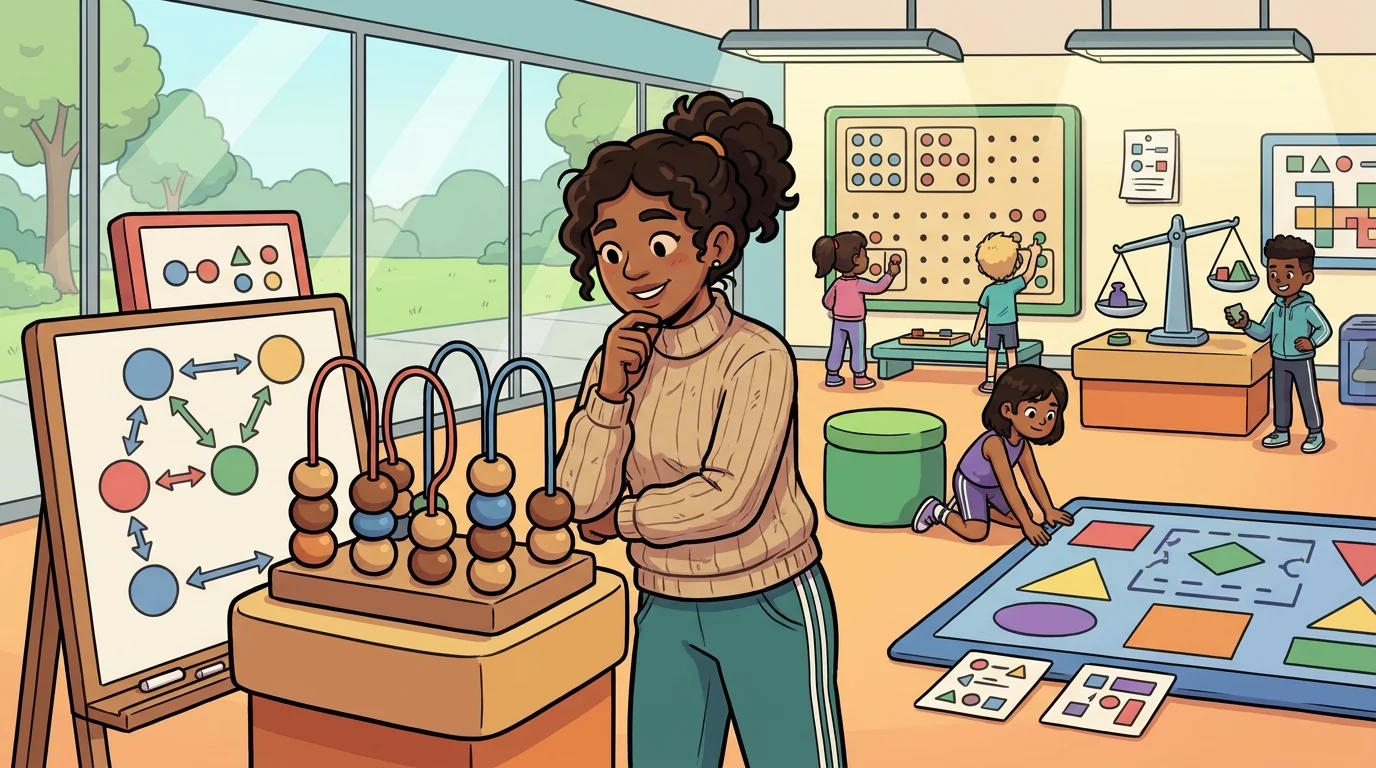
The mental-math gym had a coach named Abaca, and the newer students noticed something odd about her: she was fast, but she never started fast. Every problem, she'd pause a half-second, murmur something to herself, and only then calculate — often faster than anyone. A student finally asked what she was whispering. "The most important thing I do," Abaca said, smiling. "I ask which trick fits this problem. And I say it out loud."
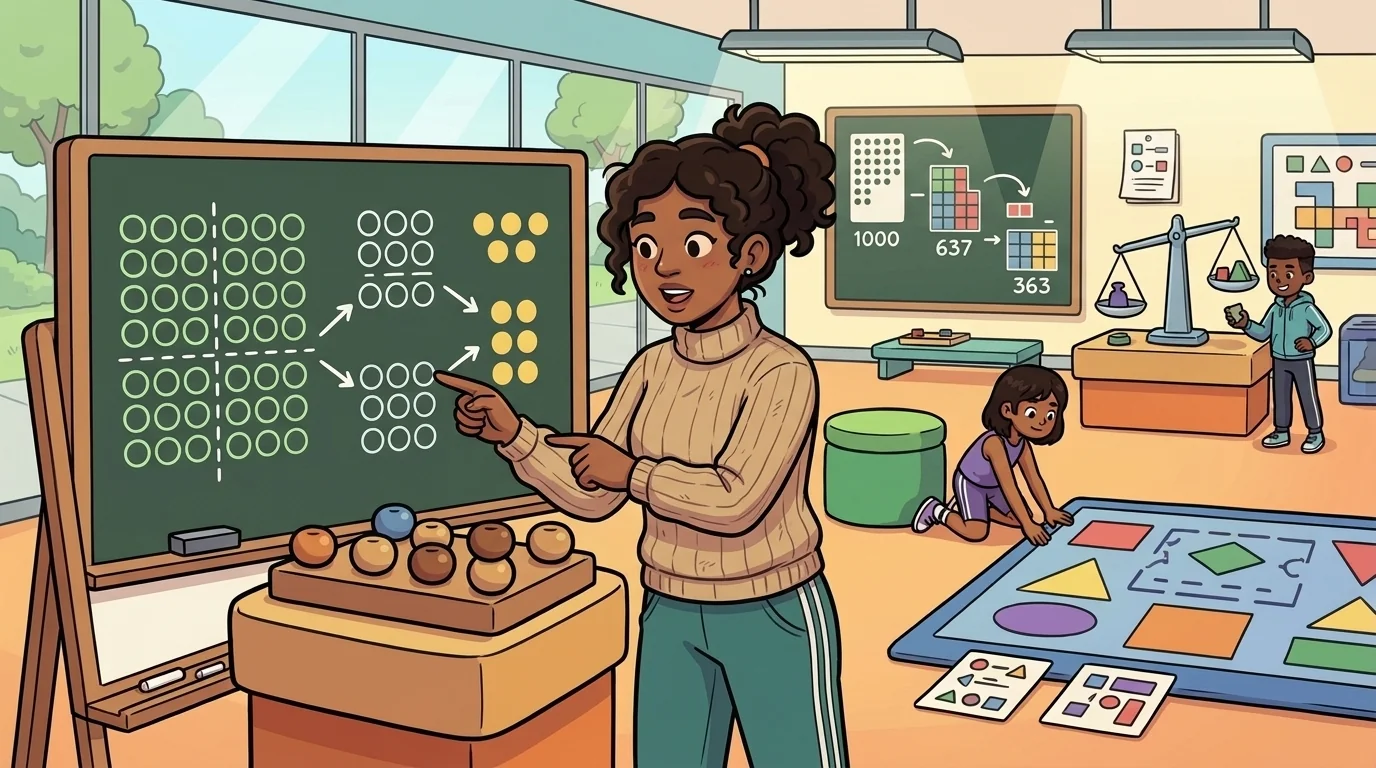
"Watch," Abaca said. She wrote 48 × 5 on the board. "Some of you would just grind it out. But first I ask: what shape is this problem? Forty-eight is even — so I hear Halvor: halve it to twenty-four, double the five to ten, twenty-four times ten, two hundred forty. Done." She wrote 1000 − 637. "New shape. A round number with subtraction — that's Grandel: six from nine, three; three from nine, six; seven from ten, three; three sixty-three." She turned around. "Same me, two different tricks. I didn't pick them at random. I read the problem first, named the tool out loud, and then the calculating was the easy part."
"Here's why I say it aloud," Abaca said, "and it's the thing I most want you to steal from me. When your plan stays silent in your head, it can be lazy or half-formed and you'd never know — you just start pushing numbers and hope. But the moment you have to say 'this is a make-a-ten' or 'this is a break-apart,' your thinking has to actually exist, in words, where you can hear it. If you can't name what you're about to do, that's the signal you don't have a plan yet — and that's the best thing to discover before you calculate, not after. Naming the trick out loud turns a hopeful guess into a real decision."
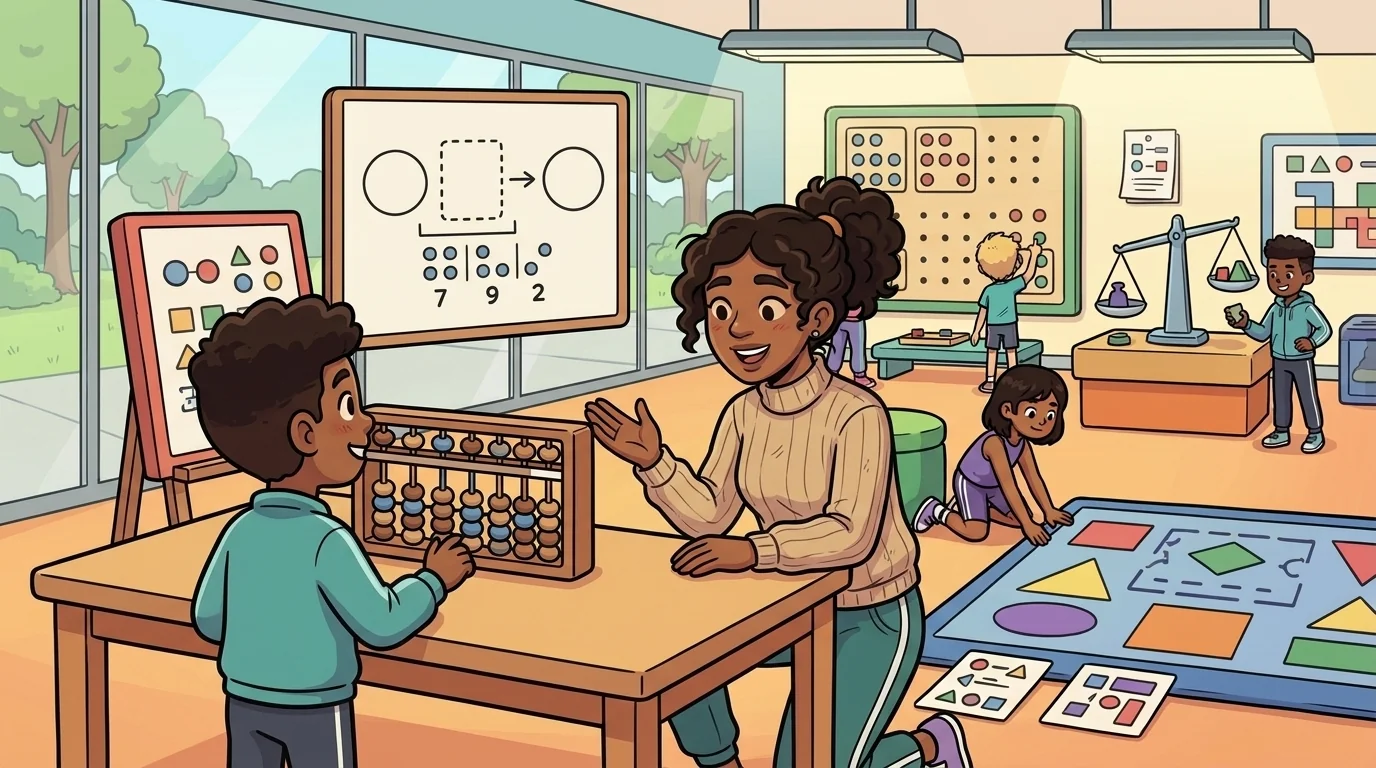
A student tried it on 11 × 72. They paused, the way Abaca did, and made themselves say it: "This is an eleven — that's Elva's trick. Split the digits, seven and two, drop their sum in the gap. Seven plus two is nine. Seven, nine, two. Seven hundred ninety-two." They looked up, a little surprised at themselves. "I picked the tool before I touched the numbers. And saying it made me sure which one it was." Abaca nodded. "You heard your own plan. That's the whole art. The tricks matter, but choosing the right one — and knowing you've chosen it — matters more."
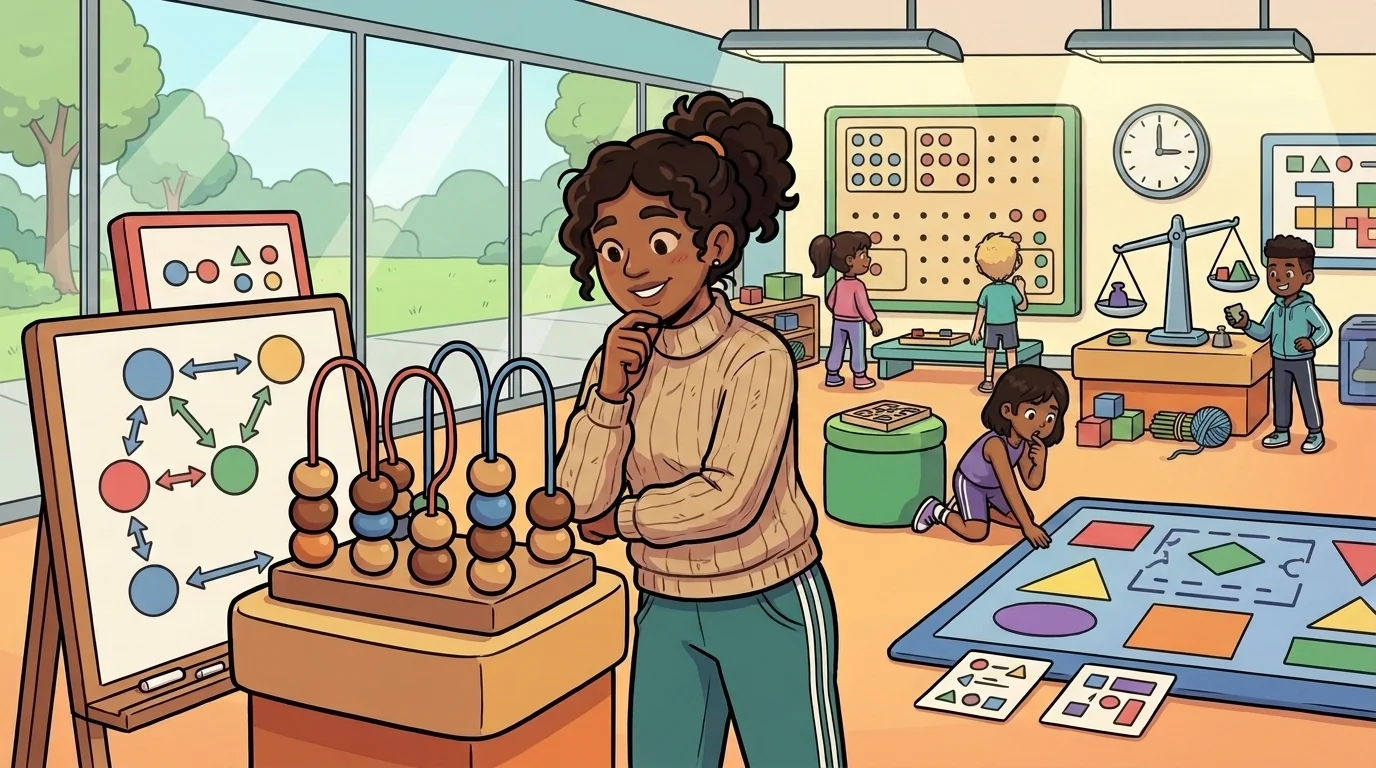
The student went down a mixed page, and for the first time each problem began not with panic but with a small, steady question — what shape is this, and which tool fits? — spoken just loud enough to hear. It felt completely different from before, when every problem had been a scramble to start doing something; now there was a calm half-second of choosing, and then the work almost did itself. What settled into them wasn't just a set of tricks — it was the sense of being a thinker who decides, who can hear their own reasoning and trust it, who is never just guessing in the dark. That quiet authorship — I choose my approach on purpose and say it out loud, so my own thinking is never hidden from me — took root deep and steady, and Abaca watched it with a mentor's full heart, because everything she'd taught the cast came down to this: the answer matters, but the person learning to hear themselves think matters more. "Name the trick before you turn it," Abaca said, and the student, pausing to choose, was already halfway to the answer.
The MentalForge ensemble
Abaca is part of MentalForge's distributed-narrative cast. Each character embodies a different curricular primitive; together they teach the full subject.
-

Lefty
Left-to-right — add the biggest places first, not last
-
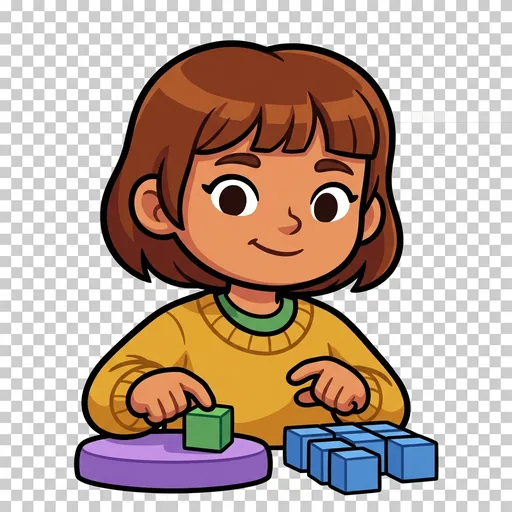
Tenna
Make-a-ten — round up to a friendly ten, then adjust back
-
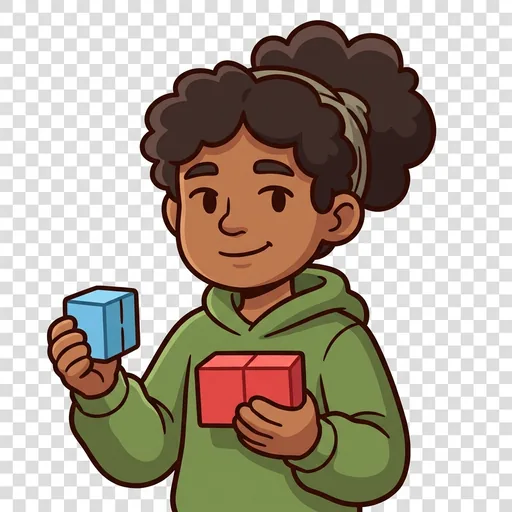
Halvor
Double & halve — double one factor and halve the other
-
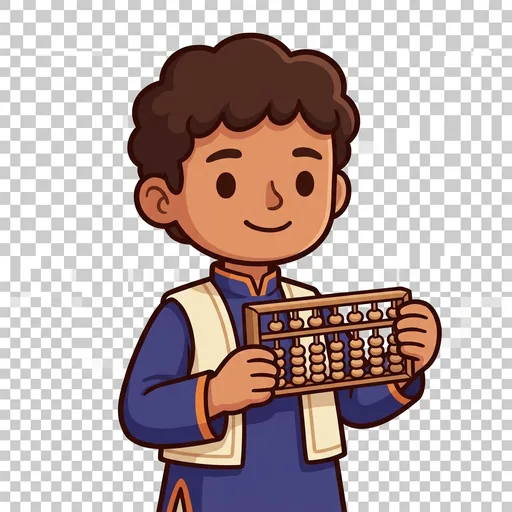
Soro
Soroban beads — picture the beads to add and subtract fast
-
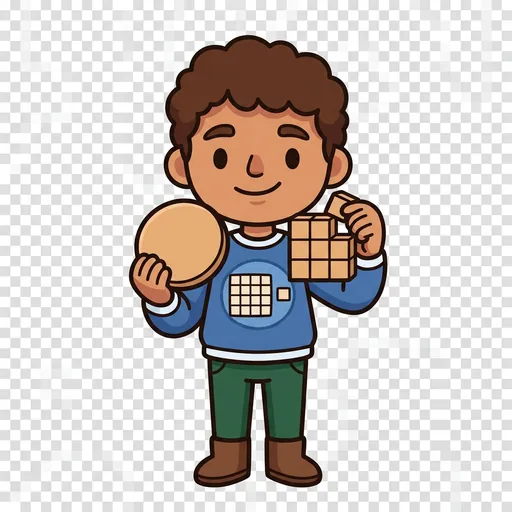
Squill
Square near a base — square numbers close to 10, 50, or 100
-
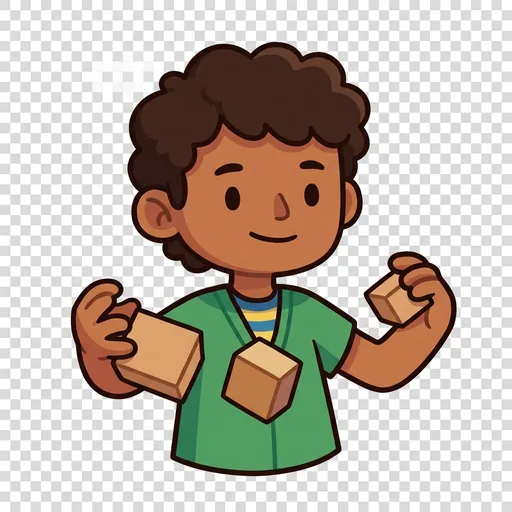
Elva
The ×11 trick — add each pair of neighbouring digits
-

Grandel
Subtract from a round number — take from 100 or 1000 by complements
-
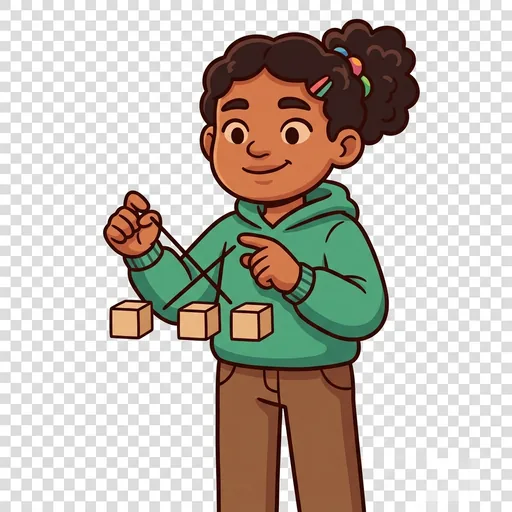
Crisca
Cross-multiply — two 2-digit numbers in one criss-cross
-

Nina
Cast out nines — a quick check that catches most slips
-

Rounda
Estimate first — get close, then check the exact answer looks right
-

Splitt
Break apart — split a hard product into easy distributive pieces