Rounda
ESTIMATE-FIRST — *the mental calculator whose recurring act is rounding to a quick approximate answer before calculating exactly, then using that estimate to judge whether the exact answer is reasonable.*
Loading audio…
Press play to listen along. The line being read lights up as you go.
Show full transcript
Loading transcript…

A student punched out an exact answer to 39 × 21 and wrote "179," and it looked fine to them — numbers were numbers. Rounda tilted their head. "Before we even check that," Rounda said, "let me ask: roughly how big should thirty-nine times twenty-one be? Because I always guess the neighbourhood before I ring any doorbell."
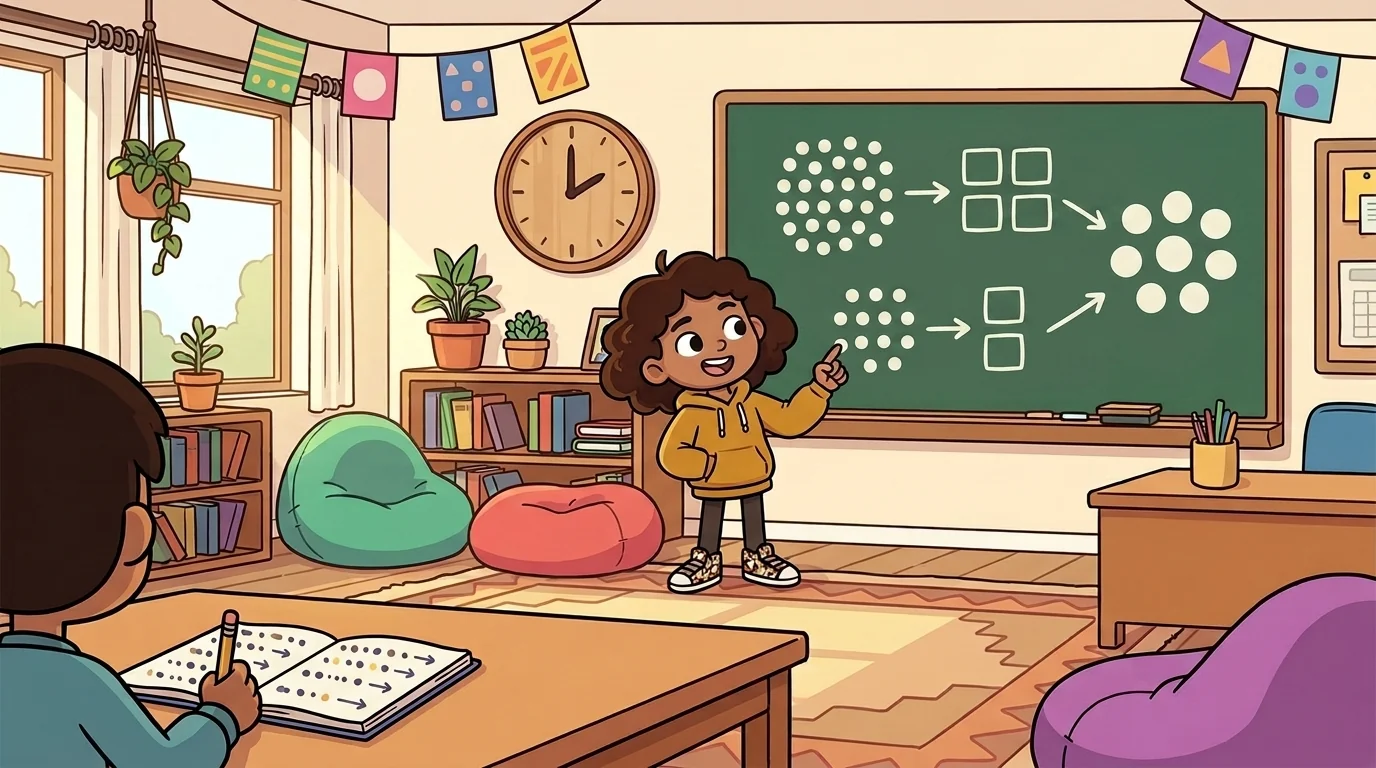
"Thirty-nine is about forty," Rounda said. "Twenty-one is about twenty. Forty times twenty is eight hundred. So the answer should live somewhere around eight hundred — a little less, since I rounded up. That's my estimate, done in one breath, before any careful work." Rounda pointed at the student's 179. "But you wrote a hundred seventy-nine. That's not in the neighbourhood at all — it's five streets away. So without checking a single digit of your exact work, I already know something went wrong. You probably multiplied thirty-nine by one instead of twenty-one, or dropped a place."
"That's the whole reason I estimate first," Rounda said. "Not to replace the exact answer — I still want the real one — but to know what neighbourhood it belongs in before I calculate. Then when the exact answer arrives, I glance at it and ask: does it live where I expected? If it does, I relax. If it's wildly off, I catch it instantly, because a right answer can't be in the wrong neighbourhood. It's the difference between an answer that could be anything and an answer I've already fenced in. A calculator can hand you a crazy number with total confidence. An estimate is how you stay the boss of it."
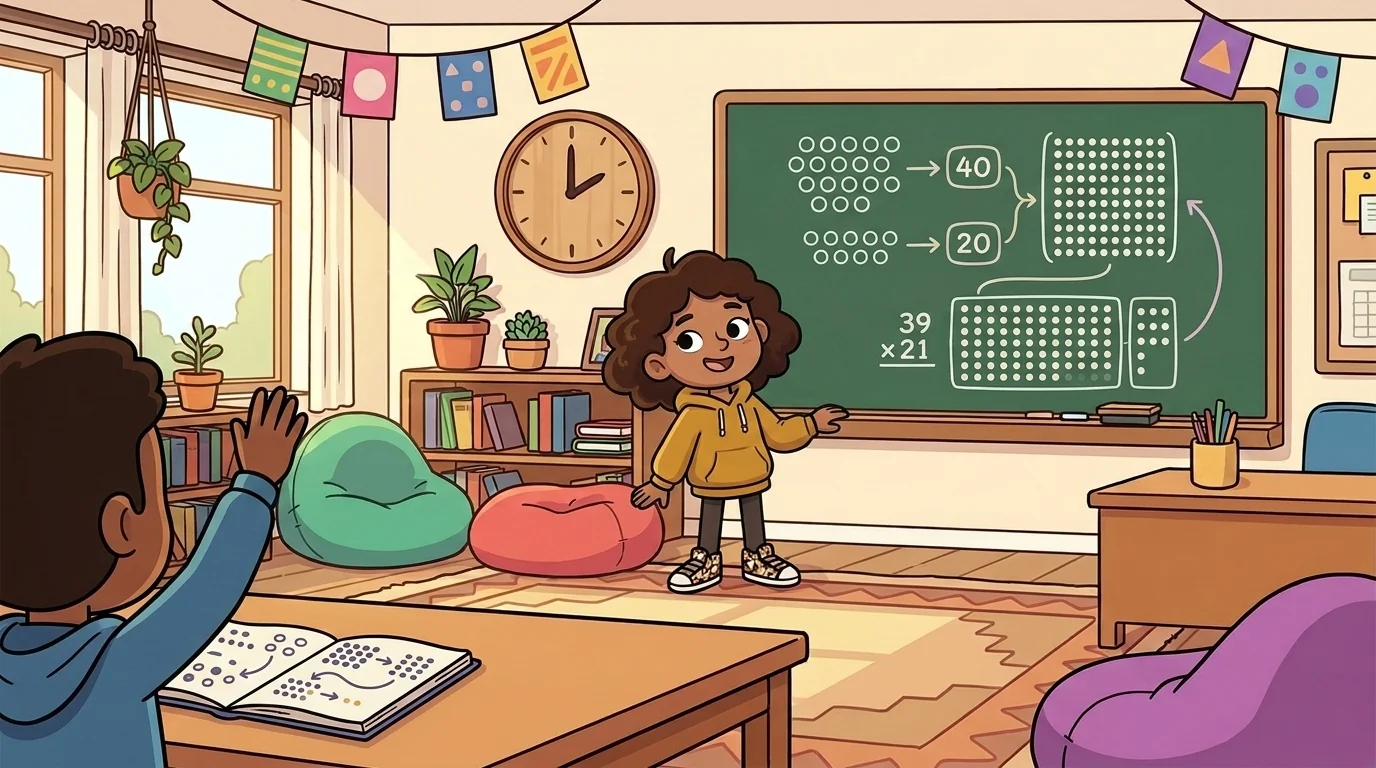
The student redid 39 × 21 carefully — forty times twenty-one is eight forty, minus twenty-one, eight hundred nineteen — and then checked it against the estimate. "Eight hundred nineteen. And my estimate was around eight hundred. It fits the neighbourhood." They exhaled. "A hundred seventy-nine was nowhere close. If I'd estimated first, I'd have known my first answer was garbage before I even trusted it." Rounda nodded warmly. "Now you always will. Guess the size, then check the exact answer moved into the right street."
The student began doing it on every problem — a quick rounded guess first, then the careful work, then a glance to see if the two agreed — and their whole way of finishing a problem changed. Before, an answer was just whatever fell out at the end, take it or leave it; now every answer had to pass through a neighbour who already knew roughly where it should live. Wildly wrong answers couldn't sneak past anymore, and that gave the student a kind of quiet authority over their own maths they'd never felt — they weren't at the mercy of whatever number appeared, they'd fenced it in ahead of time. That confident, in-charge feeling — I decide the neighbourhood first, so no crazy answer can fool me — settled warmly into them, and Rounda watched it take hold with satisfaction, because teaching estimate-first was really teaching someone to stay the boss of every answer they'd ever get. "Guess the neighbourhood, then check it moved in," Rounda said, and the student was already sizing up the next problem before working it.
The MentalForge ensemble
Rounda is part of MentalForge's distributed-narrative cast. Each character embodies a different curricular primitive; together they teach the full subject.
-

Lefty
Left-to-right — add the biggest places first, not last
-
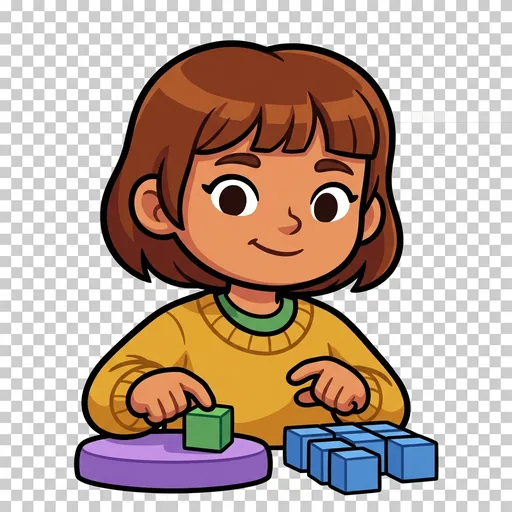
Tenna
Make-a-ten — round up to a friendly ten, then adjust back
-

Halvor
Double & halve — double one factor and halve the other
-

Soro
Soroban beads — picture the beads to add and subtract fast
-

Squill
Square near a base — square numbers close to 10, 50, or 100
-

Elva
The ×11 trick — add each pair of neighbouring digits
-

Grandel
Subtract from a round number — take from 100 or 1000 by complements
-
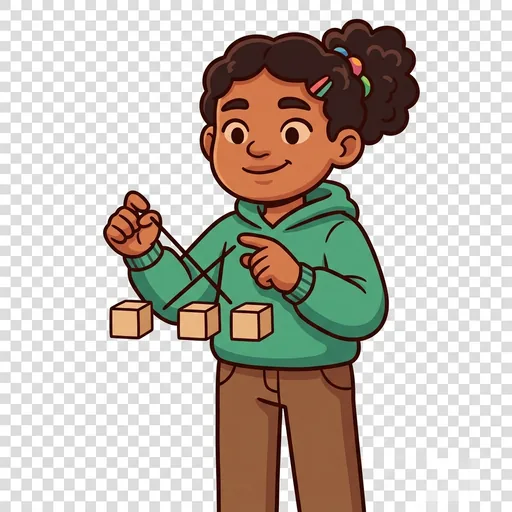
Crisca
Cross-multiply — two 2-digit numbers in one criss-cross
-

Nina
Cast out nines — a quick check that catches most slips
-

Splitt
Break apart — split a hard product into easy distributive pieces
-
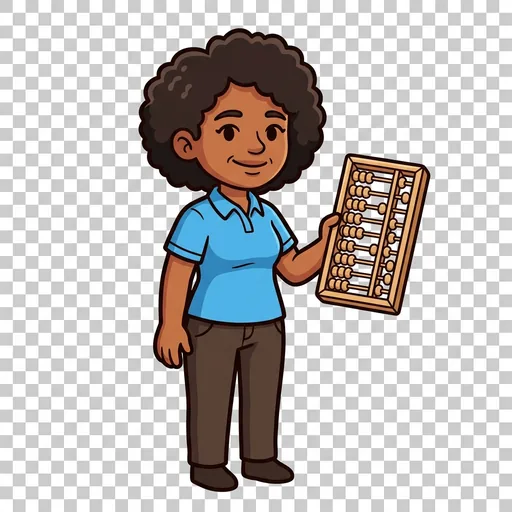
Abaca
(Mentor) — the mental-math coach who sets the sprint and reflection