Halvor
DOUBLE-AND-HALVE — *the mental calculator whose recurring act is halving one factor and doubling the other in a product, keeping the answer identical while making the numbers easier.*
Loading audio…
Press play to listen along. The line being read lights up as you go.
Show full transcript
Loading transcript…
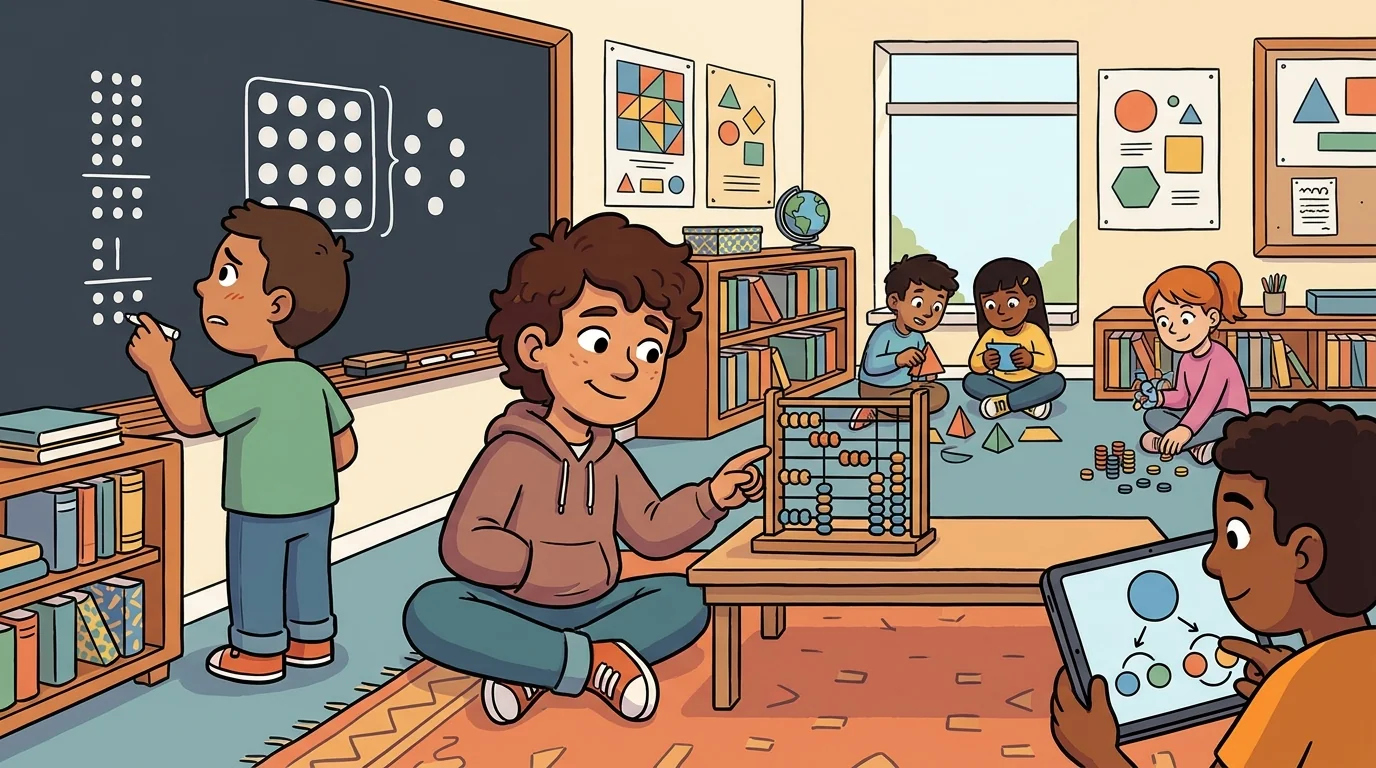
Someone had put 16 × 5 on the board, and a nervous student was trying to stack it up the long way, muttering about carrying. Halvor, sitting cross-legged nearby, tilted their head. "You can multiply that the hard way," Halvor said, "or you can make a trade first — a trade that costs you absolutely nothing."

"Sixteen times five," Halvor said. "Sixteen is even, so I halve it — eight. And whatever I take from one number, I hand to the other, so I double the five — ten. Now I've got eight times ten." Halvor spread their hands as if it were obvious. "Eighty. And eight times ten is a sum a little kid can do. I turned an ugly sixteen-times-five into a friendly eight-times-ten, and the answer didn't budge, because halving one side and doubling the other keep the product exactly the same."
"The reason it works," Halvor explained, "is that multiplying is really about how much stuff you have in a rectangle — so many rows of so many. If I make half as many rows but twice as long, the rectangle holds the same amount. I've just reshaped it. So whenever one number is even and awkward, I halve it toward something friendly and double the other to pay for it. Fourteen times five? Halve to seven, double to ten — seventy. Twelve times fifteen? Halve to six, double to thirty — one hundred eighty. I keep trading until the numbers are kind, and the answer is safe the whole time because the trade is always fair."
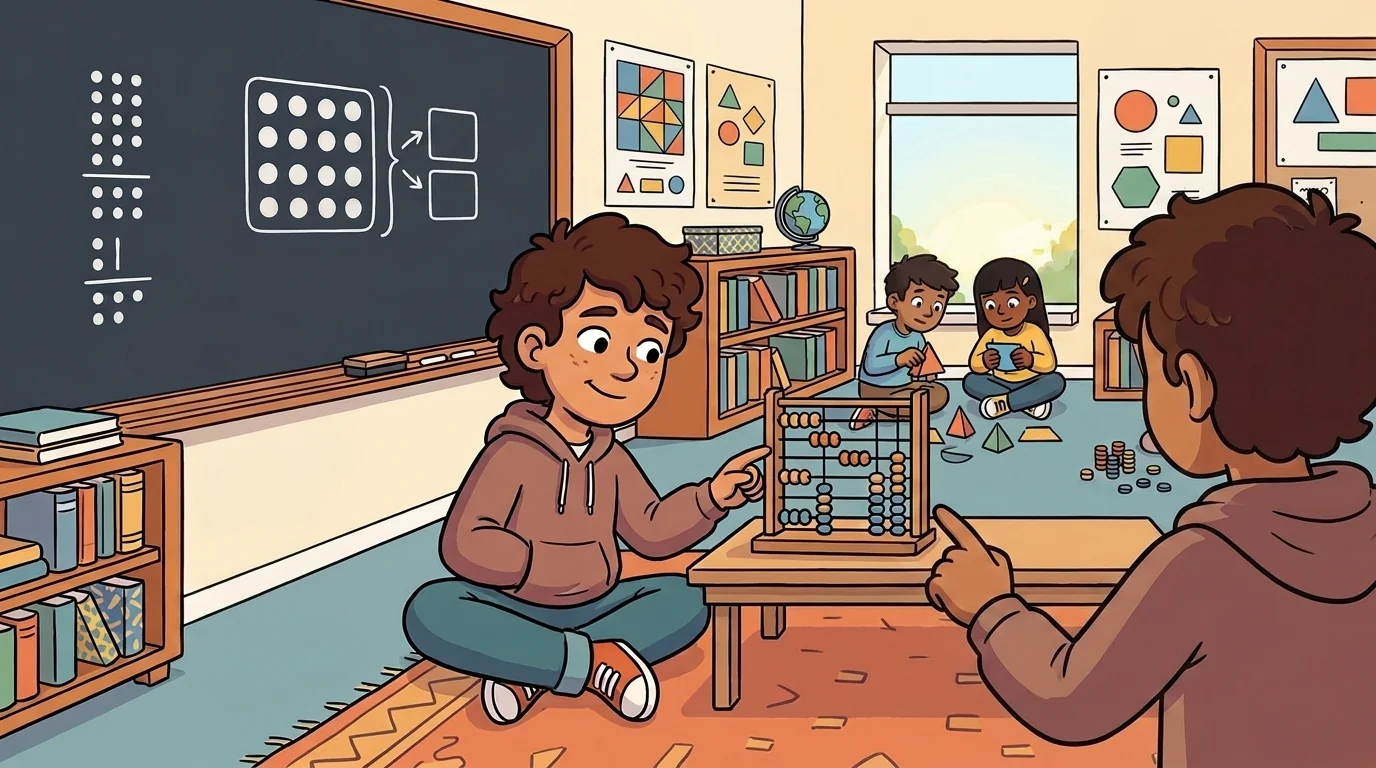
The student tried 18 × 5. "Eighteen is even — halve it, nine. Double the five — ten. Nine times ten... ninety." They stared. "Eighteen times five is ninety? That was nothing." Halvor grinned. "Now push it further when you can. Twenty-four times five — halve, twelve, double, ten — a hundred twenty. Or halve twice: twenty-four to twelve to six, and double five twice, five to ten to twenty — six times twenty, still a hundred twenty. Trade as many times as you like. It never costs anything."

The student worked a whole column that way — halving the fat even number, doubling its partner — and every product that used to look like a wall came out as a gentle little sum instead. What stuck with them wasn't just the answers; it was the strange, pleasant realization that a hard problem and an easy one could be the very same problem in different clothes, and that they got to choose which clothes to work in. There was a kind of power in that, and also a kind of relief — they didn't have to be faster or braver, they just had to reshape the rectangle into one they liked. That quiet confidence — I can trade a hard multiplication for an easy one and lose nothing — settled warmly into them, and Halvor watched it land with satisfaction, because teaching the fair trade was really teaching someone that they had permission to make maths more comfortable for themselves. "Halve one, double the other," Halvor said, and the student was already trading their way down the page.
The MentalForge ensemble
Halvor is part of MentalForge's distributed-narrative cast. Each character embodies a different curricular primitive; together they teach the full subject.
-

Lefty
Left-to-right — add the biggest places first, not last
-

Tenna
Make-a-ten — round up to a friendly ten, then adjust back
-

Soro
Soroban beads — picture the beads to add and subtract fast
-

Squill
Square near a base — square numbers close to 10, 50, or 100
-

Elva
The ×11 trick — add each pair of neighbouring digits
-

Grandel
Subtract from a round number — take from 100 or 1000 by complements
-

Crisca
Cross-multiply — two 2-digit numbers in one criss-cross
-

Nina
Cast out nines — a quick check that catches most slips
-

Rounda
Estimate first — get close, then check the exact answer looks right
-

Splitt
Break apart — split a hard product into easy distributive pieces
-

Abaca
(Mentor) — the mental-math coach who sets the sprint and reflection