
Corner Cato
CORNER POINTS — the twelve angle points that touch only TWO neighbours (the fewest on the board); low mobility, but each still sits on two mill-lines, so a corner is a slow anchor, not a wasted square
Loading audio…
Press play to listen along. The line being read lights up as you go.
Show full transcript
Loading transcript…
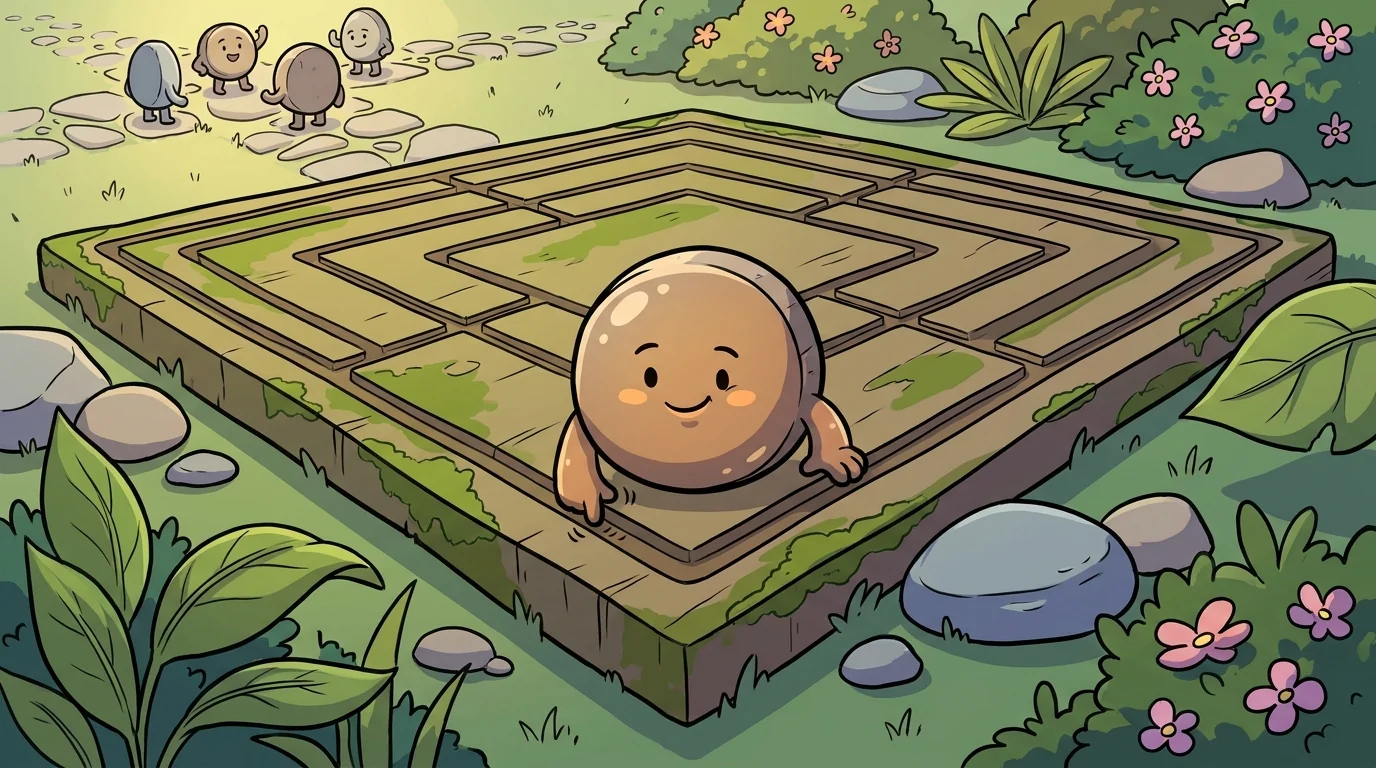
Cato liked to begin his lessons by asking students to count.
"How many neighbours does this point have?" he'd say, tapping one of the twelve angle points — the corners of the three nested squares that make the morris board. Students would trace the lines and find the answer: two. Only two paths lead away from a corner. "Now the cross-points," Cato said, pointing to the middle of an edge where a spoke joins the ring. "Four. Twice as many. So a piece on a cross can slide four ways; a piece in a corner can slide only two." He let that sink in. "In the sliding phase, mobility is life. So a corner looks like the worst place on the board."
Then he smiled his slow corner smile. "Looks like. But count again — this time count mill-lines."
Every point on the morris board, Cato taught, belongs to exactly two mill-lines. The corner was no exception. A corner sits on one line running along the edge and one line running along the side — two chances to be part of a closed mill, the same as almost any other point. "The corner is slow to move," Cato said, "but it is not slow to count. Fill a corner and you have advanced two of your lines at once, even if that piece never takes another step all game."
This was the subtext the older students eventually heard: that a thing can be low in mobility and still high in worth. The corner does not run. It anchors. And a network of mills is built as much on anchors as on runners.

Cato had learned the trap, though, the hard way — by loving corners too much.
"When I first understood that corners were safe and still counted for two lines, I put everything in corners," he admitted. "Nine pieces, one per angle, a tidy fortress. And I got ground to dust, because in the sliding phase my whole army could barely move. My opponent's cross-point pieces flowed around the board opening and closing mills, and my corner pieces sat there being safe and counting for two lines and doing absolutely nothing. Safety that can't act is just a slow surrender."
The right use of a corner, he explained, was as one note in a chord — a stable anchor around which mobile pieces swing. "Put an anchor in a corner. Then put a runner on a cross-point beside it. The anchor holds the line; the runner does the opening and closing. Together they make a mill that stays half-built no matter what — because the corner piece never has to leave."
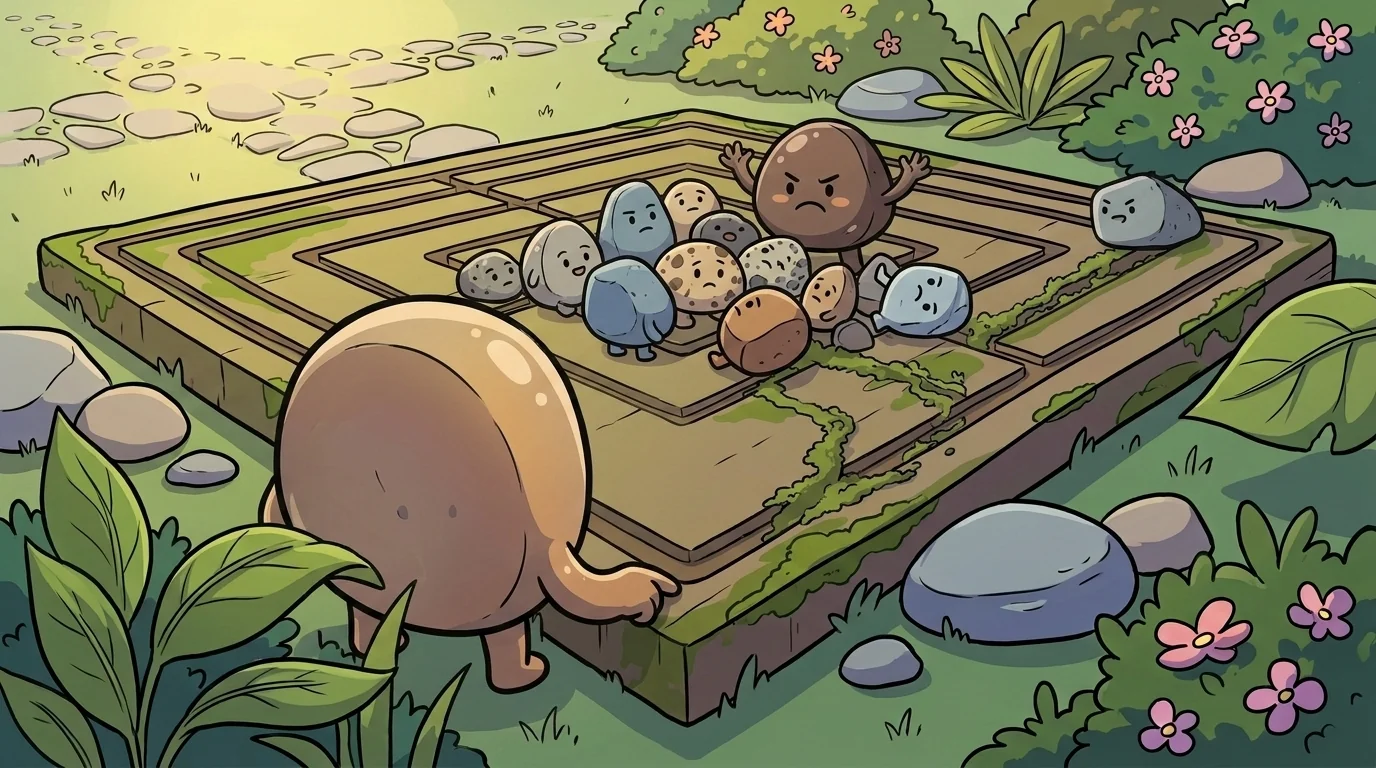
The Elder tested Cato with a placement puzzle: one piece left to place, three empty points open — a corner, an edge-middle, and a cross-point — and asked which served best.
Cato didn't answer at once. "It depends what I already have," he said. "If my other pieces are all runners with no anchor, I take the corner — I need a point that holds two lines and never has to move, or my mills will keep collapsing when I slide. But if I already have anchors and I need reach, I take the cross-point, because a runner that can swing four ways is worth more than another stone that can't move." He placed his piece in the corner. "Here I've got runners and no anchor. So — the quiet spot. The one that counts for two and never flinches."
"You chose the least mobile point on the board," the Elder said.
"I chose the point my position was missing," Cato replied. "A corner isn't good or bad. It's slow and steady. The skill is knowing when slow and steady is exactly what your board needs — and when it's the thing that traps you."
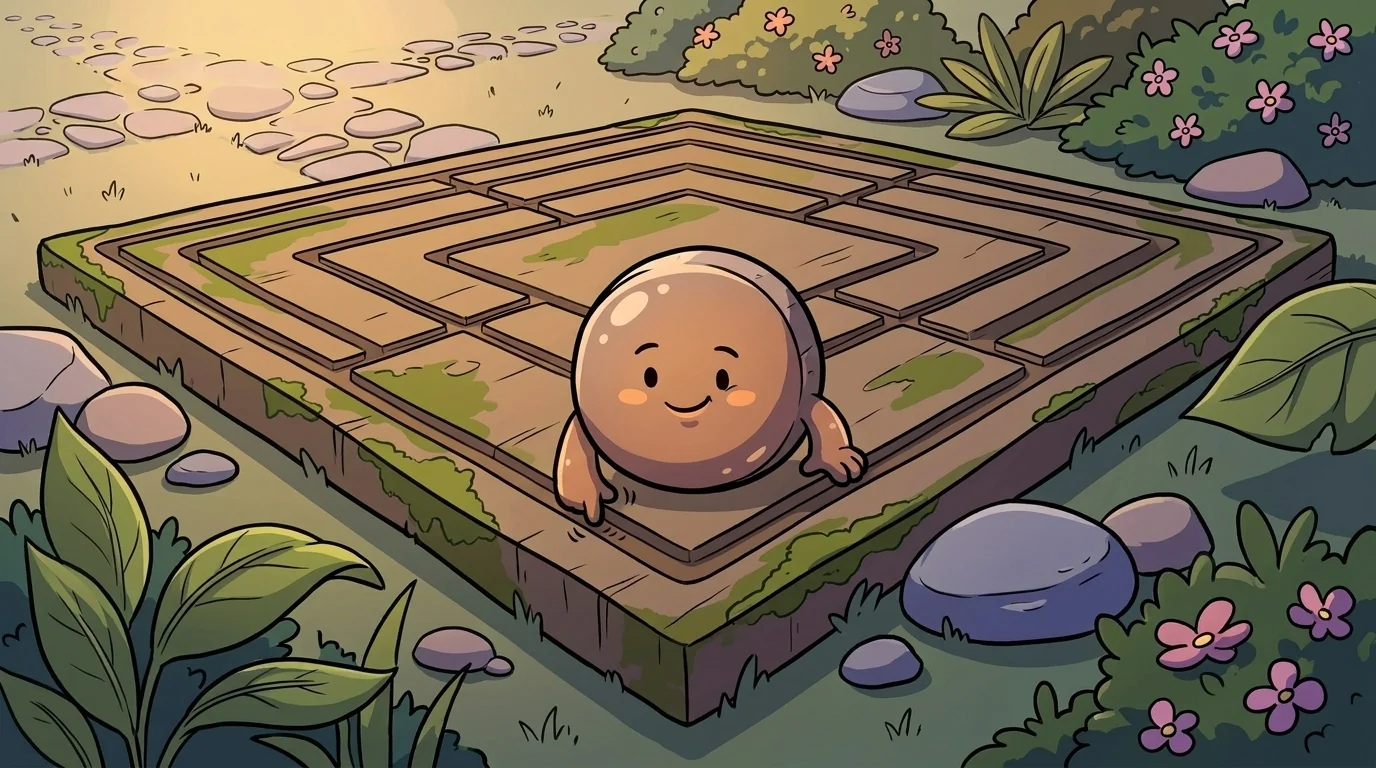
At the end of the lesson, Cato left the students with a small board covered in his favorite shape: an anchor in the corner, a runner on the cross beside it, the two of them holding a mill open and closed between them across a dozen turns.
"Look at the corner piece," he said. "It hasn't moved once. It hasn't captured anything. If you only watched the exciting pieces, you'd never notice it. And yet — take it away, and the whole swinging mill falls apart, because there's nothing left to hold the line while the runner swings." He tapped it once, fondly. "Two neighbours. Two mill-lines. No glory. Absolutely essential. That's a corner — and, if you ask me, that's a lot of the most important work anywhere."
The MillSong ensemble
Corner Cato is part of MillSong's distributed-narrative cast. Each character embodies a different curricular primitive; together they teach the full subject.
-

Miller Mila
The mill: lining up three stones on a line
-

Snatch Nadia
Capture-on-mill: removing a piece the moment a mill closes
-

Guard Gwen
The not-in-a-mill rule: a stone inside a mill is safe
-

Block Bodhi
Blocking: dropping onto the empty point of an almost-mill
-

Spoke Sami
Prime points: the strong spoke midpoints (three mill lines each)
-

Placer Pell
The placement phase: building a mill network with the nine
-

Slide Sile
The movement phase: sliding a stone to an adjacent point
-

Swing Sena
The swinging (running) mill: opening and re-closing to capture again
-

Flyer Faye
The flying phase: hopping anywhere once down to three men
-
Reduce Remy
The endgame: winning by reducing the opponent to two
-

Elder Merel
The mills-puzzle elder (mentor): find-the-mill / which-to-take puzzles