
Corner Cato
CORNER POINTS — the twelve angle points, each touching only TWO neighbours (the fewest on the board); low mobility, but still on two mill-lines like every point, and quietly useful
Loading audio…
Press play to listen along. The line being read lights up as you go.
Show full transcript
Loading transcript…
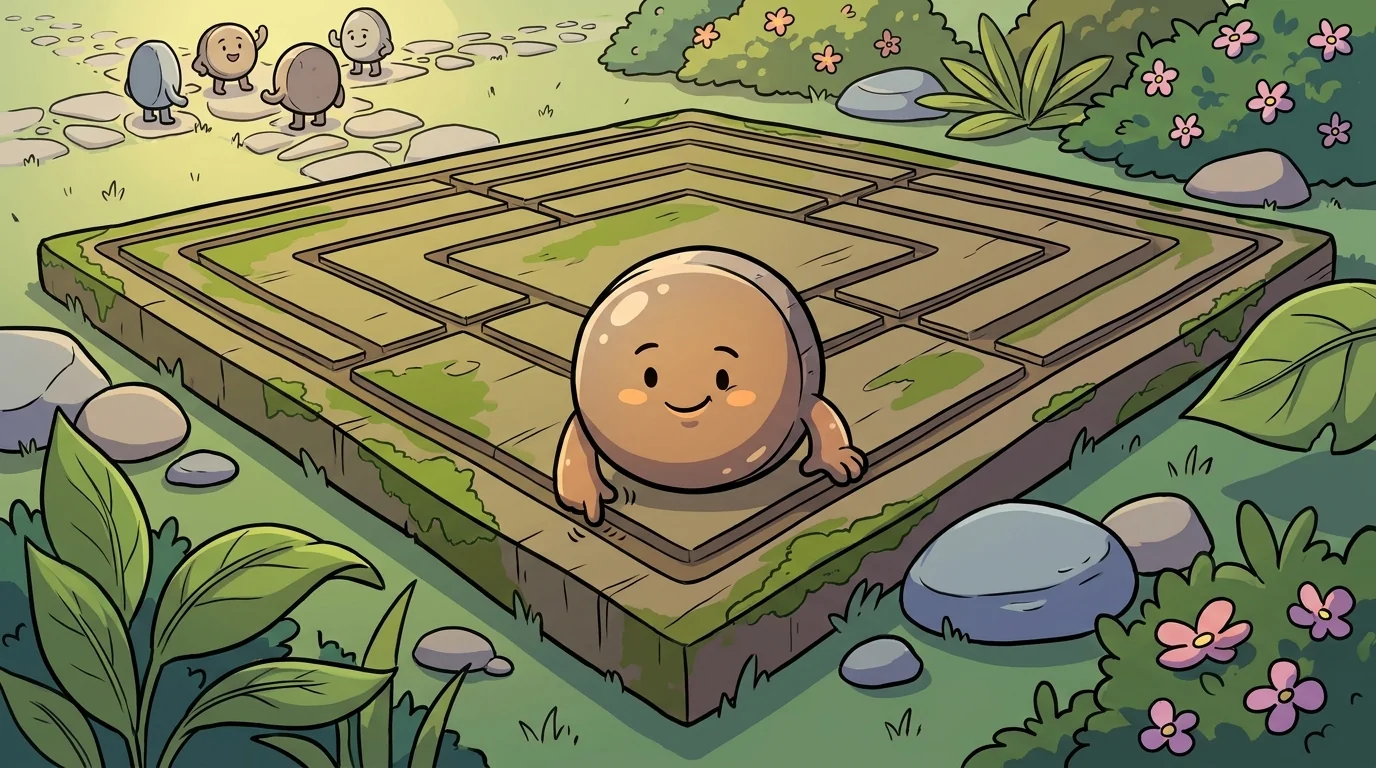
While clever pieces like Sami fought over the busy crossroads, there was a calm, unbothered piece named Cato who liked exactly the spots everyone else ignored: the corners.
The corners were the quiet places. Tucked into the angles of the squares, a corner point had only two neighbours — two roads out, no more. Where Sami's beloved crossroads buzzed with four directions of possibility, a corner offered just two. Everyone agreed the corners were the "weak" points, the low-value squares, the last place a clever piece would choose. And Cato lived there quite happily, to everyone's puzzlement.
"They call my corners weak," Cato said mildly, settling into an angle with two quiet roads out. "And it's true I can't dash about like a crossroad piece — only two ways to go. But mind you—" he tapped the two mill-lines that ran through his corner "—I'm on two mills, same as anyone. Every point on this board is on two mills; the crossroads aren't on more, they just have more roads. So a corner isn't weak because it touches fewer lines. It's just... quiet. Fewer ways in, fewer ways out. And a quiet spot, it turns out, has its own kind of worth — if you know what it's for."
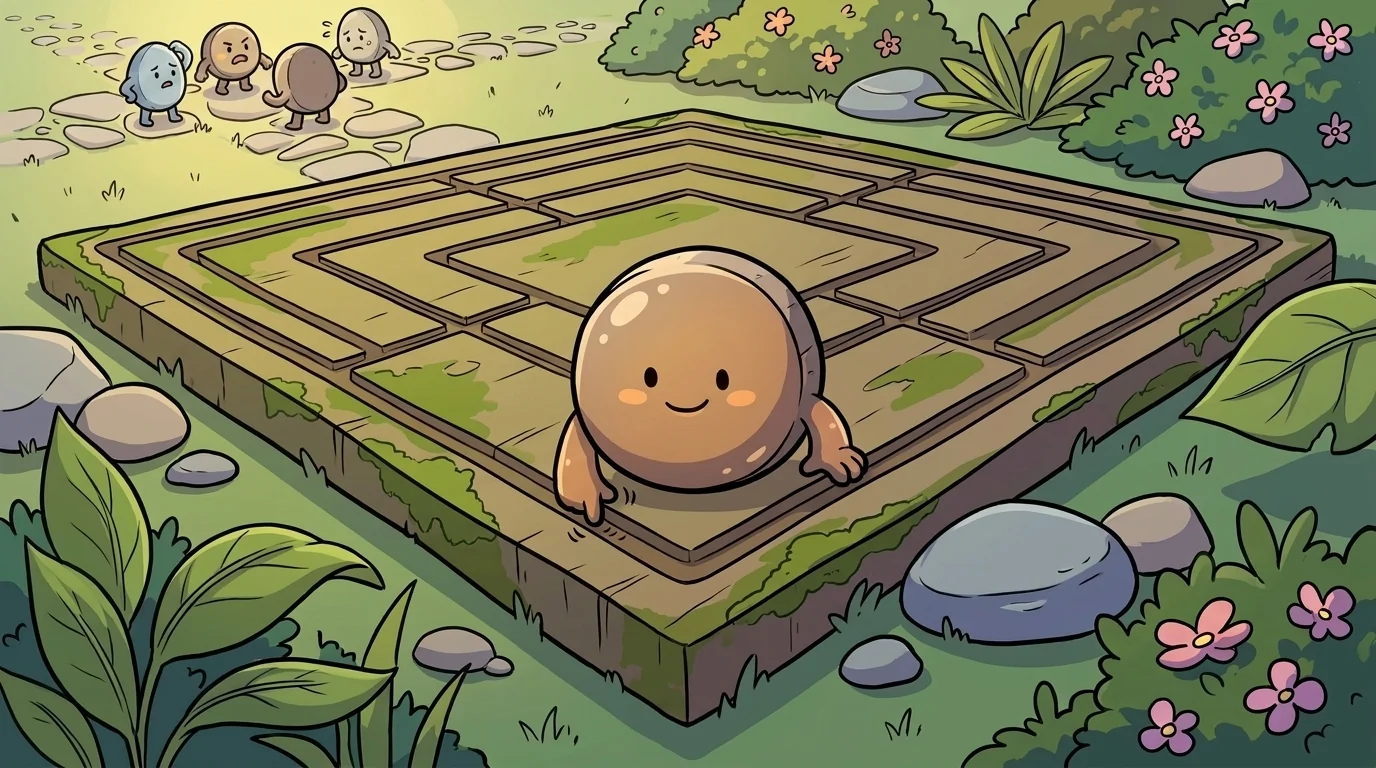
Cato had discovered the worth of his quiet corners on a day the whole board had gone mad chasing the busy squares.
There'd been a game where both sides fought furiously over the crossroads — piling pieces onto the busy junctions, trading and blocking and snatching in the crowded middle, a great noisy scramble. And Cato had simply... stayed in his corner, calm, on his two quiet roads, doing very little, while the others called him timid for it.
But here was the thing. A piece on a busy crossroad, with four roads out, was a piece the enemy could reach four different ways — four angles of attack, four ways to threaten or block it. Cato, in his quiet corner with only two roads, was hard to get at, hard to threaten, hard to shift. While the crossroad pieces were traded and snatched and shuffled in the noisy middle, Cato sat unmoved in his corner, part of two mills, a quiet anchor the storm never reached — and at the end, when the noise died down, his was the steady piece still standing exactly where it had begun, holding its lines.
An old corner-dweller had put it to him once: "The busy square gives you reach, child, but it also gives the enemy reach at you. The quiet corner gives you less reach — but the enemy has less reach at you, too. There's a time to be in the thick of it, and a time to be the quiet anchor nobody can shift. The corners aren't for chasing. They're for holding." Cato had found, over many games, that a plan needs both — the busy pieces that dash and threaten, and the quiet corner pieces that simply, stubbornly, stay.
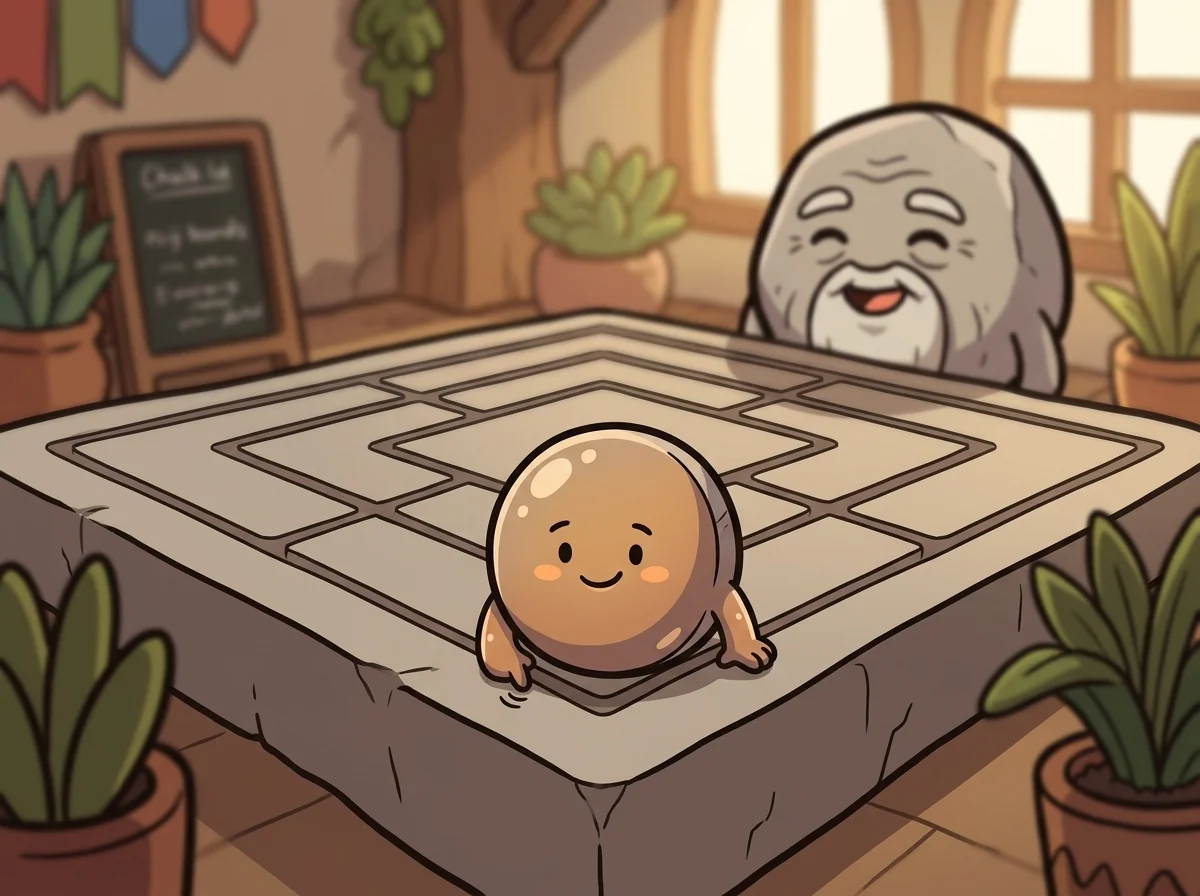
At the House of the Board, Cato ambled in and settled, of course, into a corner, and the Elder chuckled.
"The corner points," the Elder said. "The squares everyone else calls weak. You'll have to teach against the whole board's opinion."
"I'll teach balance," said Cato comfortably. "Your students all rush the crossroads because someone told them the corners are weak — and then they wonder why their whole army is bunched in the noisy middle, trading and getting snatched. I'll teach them that the corners aren't weak, only quiet — same two mills as anywhere, just fewer roads. They're hard to reach, which cuts both ways: I can't dash from a corner, but the enemy can't easily get at me there either. A good plan wants some busy pieces and some quiet anchors. The player who only chases crossroads has no still center to hold onto."
"Teach them the quiet has a use," said the Elder. "Half of them will never believe it till you show them."
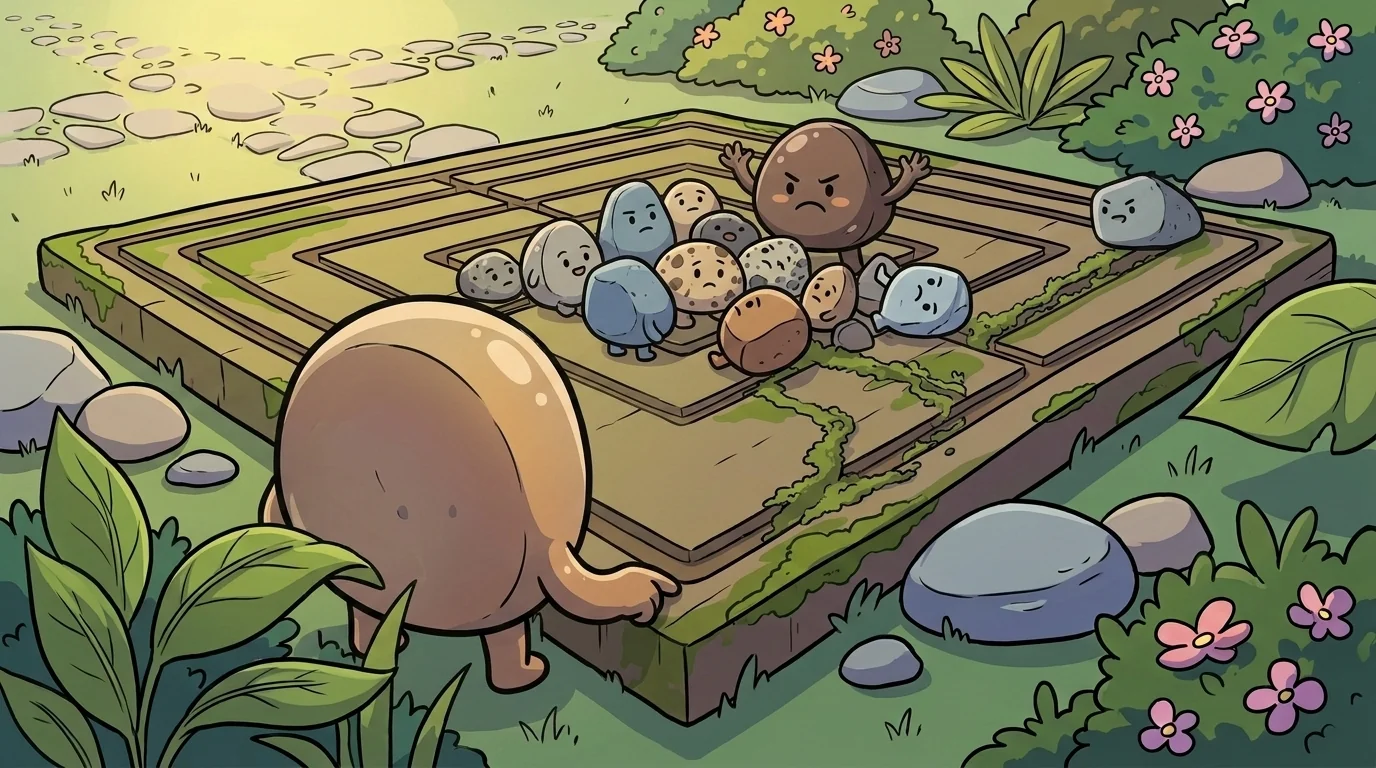
Cato's student was a restless piece named Juna who scorned the corners entirely — flinging every piece toward the busy crossroads, so her whole army was jammed into the noisy middle, endlessly traded and snatched, with nothing steady to anchor any of it.
"Everything you own is in the busy middle," Cato observed. "How's that going?"
"It's exciting," said Juna, "but I keep losing pieces. It's all so... churny."
"That's because every one of your pieces is somewhere the enemy can reach four ways," said Cato. "Watch." He anchored a single stone in a quiet corner — two roads, hard to reach — and left it there, part of two mills, unbothered, while the crossroad storm raged. Turn after turn, the busy pieces traded and shuffled; his corner stone simply held. "That's an anchor. When the noisy middle gets traded down to nothing, my quiet corner is still standing, still holding its lines. You don't want all corners — you'd never move. But a plan with no quiet anchor is a plan the enemy can shake apart. Keep one foot in the still places."
Juna, grumbling, anchored a piece in a corner — and discovered that with one steady stone the enemy couldn't easily reach, her noisy middle-game suddenly had something to fall back on, something that held when everything else churned.
"The quiet spot was doing more than it looked like," Juna admitted.
"The quiet ones usually are," said Cato.
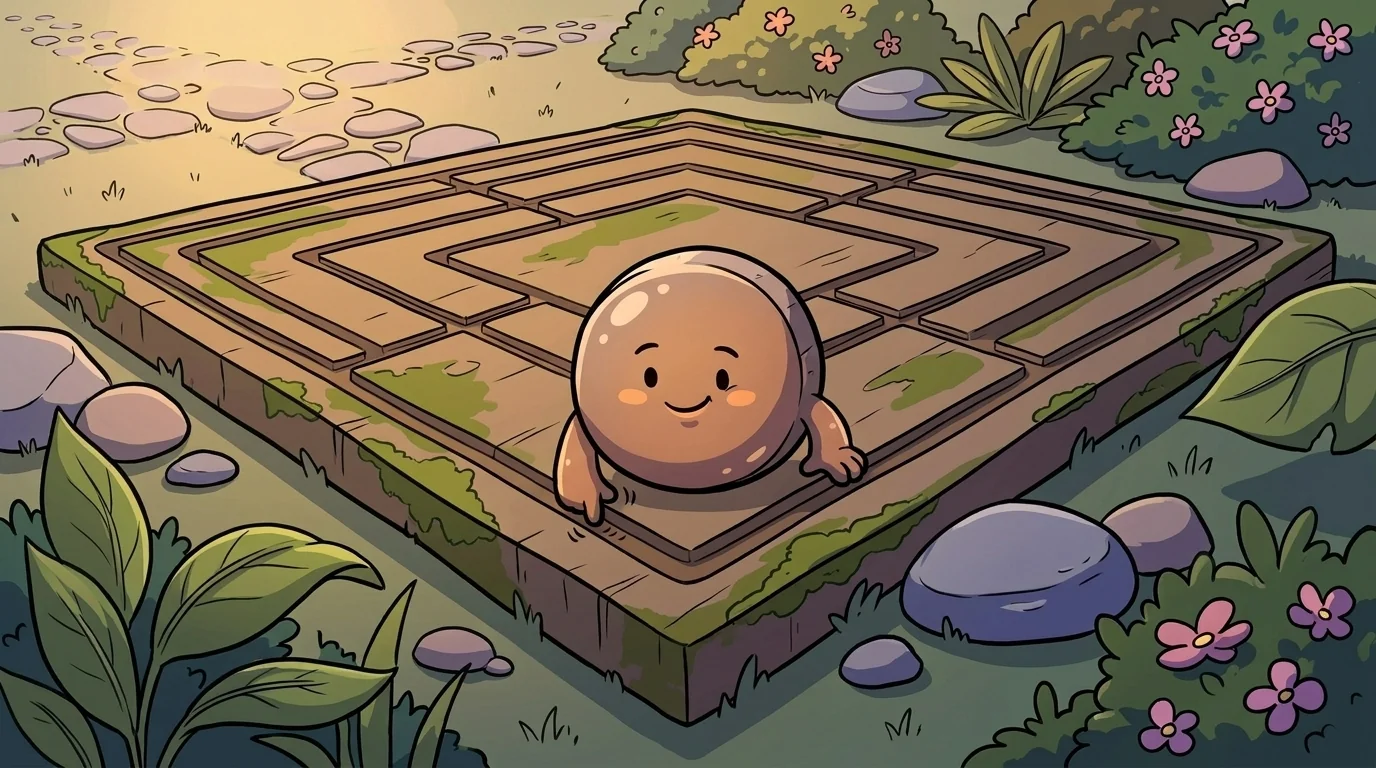
That evening Cato sat in his favourite corner in the empty House, on his two quiet roads, watching the busy crossroads where nobody was fighting now, and felt entirely content.
He thought about all the games he'd been called timid for staying in the corners while the clever pieces scrambled over the junctions, and about the old corner-dweller who'd taught him that a quiet spot the enemy can't reach is worth as much, in its own way, as a busy one that reaches everywhere. He never minded being called weak anymore. He knew what he was. He was the anchor — the still, patient, two-road corner that held its lines while the noisy middle churned itself out.
There was a deep, unshowy peace in being the quiet one — in sitting where nobody thought to look, part of two honest mills, steady while the storm passed. The crossroads had their busy glory, and Cato didn't envy it. He had learned the worth of the still places, and the particular quiet pride of being the piece that was underestimated all game and standing, unmoved, at the end of it — the anchor everyone forgot was holding the whole thing together.
The MillSong ensemble
Corner Cato is part of MillSong's distributed-narrative cast. Each character embodies a different curricular primitive; together they teach the full subject.
-

Miller Mila
The mill: lining up three stones on a line
-

Snatch Nadia
Capture-on-mill: removing a piece the moment a mill closes
-

Guard Gwen
The not-in-a-mill rule: a stone inside a mill is safe
-

Block Bodhi
Blocking: dropping onto the empty point of an almost-mill
-
Spoke Sami
Prime points: the strong spoke midpoints (three mill lines each)
-
Placer Pell
The placement phase: building a mill network with the nine
-

Slide Sile
The movement phase: sliding a stone to an adjacent point
-

Swing Sena
The swinging (running) mill: opening and re-closing to capture again
-

Flyer Faye
The flying phase: hopping anywhere once down to three men
-
Reduce Remy
The endgame: winning by reducing the opponent to two
-

Elder Merel
The mills-puzzle elder (mentor): find-the-mill / which-to-take puzzles
