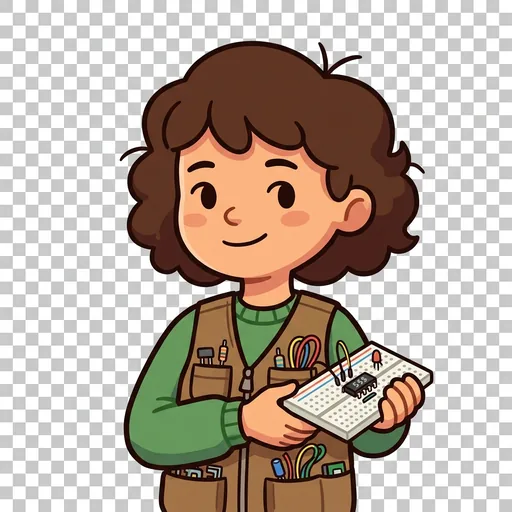
Spoke Sami
PRIME POINTS — the four "cross" points where a connecting spoke meets the middle ring; each touches FOUR neighbours (the most on the board), giving the greatest mobility and the most flexible reach into mills
Loading audio…
Press play to listen along. The line being read lights up as you go.
Show full transcript
Loading transcript…
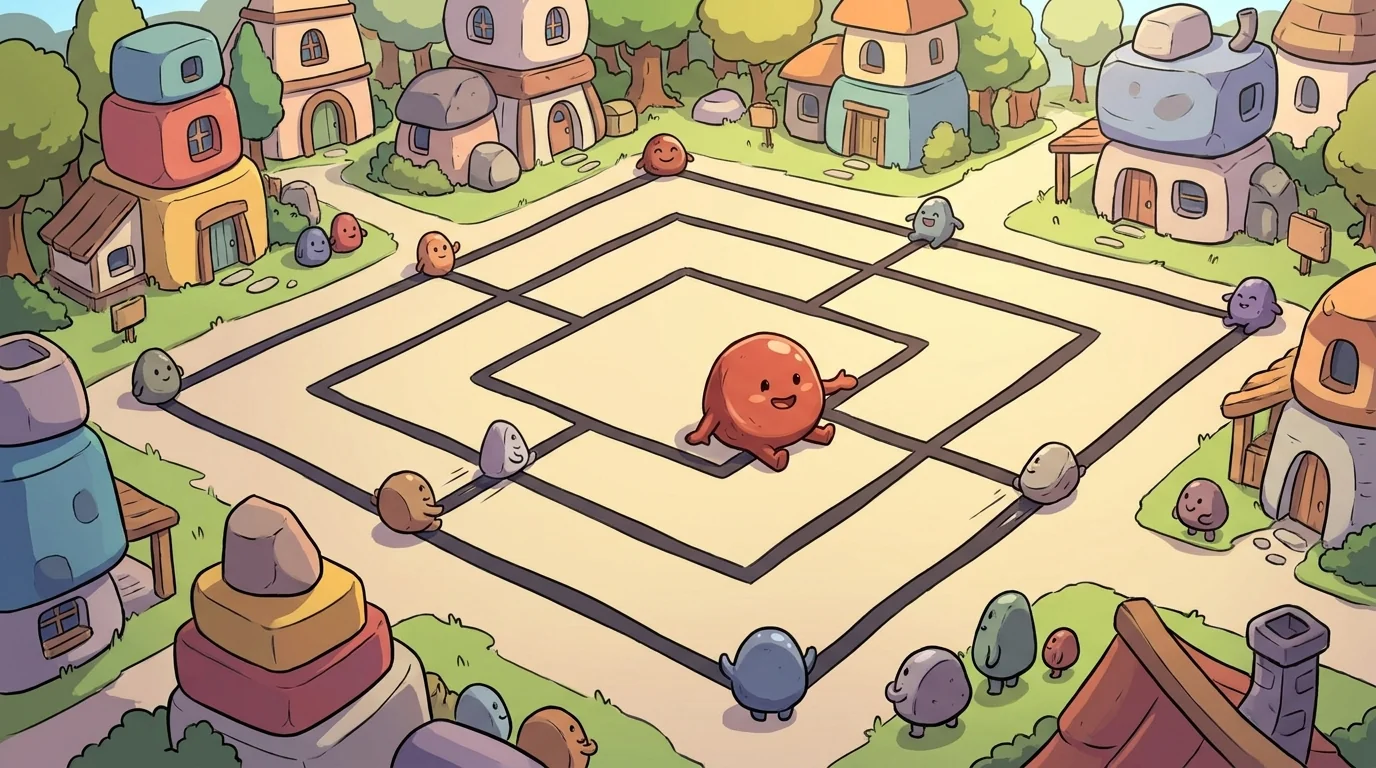
If you watched the village boards long enough, you'd notice that a clever piece named Sami always seemed to end up on the same handful of spots — the busy junction points where the roads crossed — and that from there she seemed to be everywhere at once.
Sami had a gift for finding the strong points on the board. Not the corners, tucked away in the angles. The crossroads — the four points where a connecting spoke ran into the middle ring, the spots where four roads met. A piece standing on a corner had only two neighbours, two directions it could ever slide. A piece on one of Sami's beloved crossroads had four — four roads out, four ways to move, four times the freedom. From a crossroad, Sami could threaten in more directions, slide more places, and slip into more different mills than a corner piece could ever dream of.
"Everyone fusses about which point is on the most mills," Sami would say, settling onto a busy junction with satisfaction. "But here's the funny thing — every point on this whole board sits on exactly two mill-lines. Every single one. The corner tucked in the angle, the crossroad where four roads meet — both on two mills, no more, no less." She tapped the four roads running out from under her. "So it's not about mills. It's about neighbours. A crossroad isn't strong because it touches more lines. It's strong because it touches more roads — because from here I can go four ways, and a corner piece can only go two. Mobility, not mills. That's the real secret of the strong points."
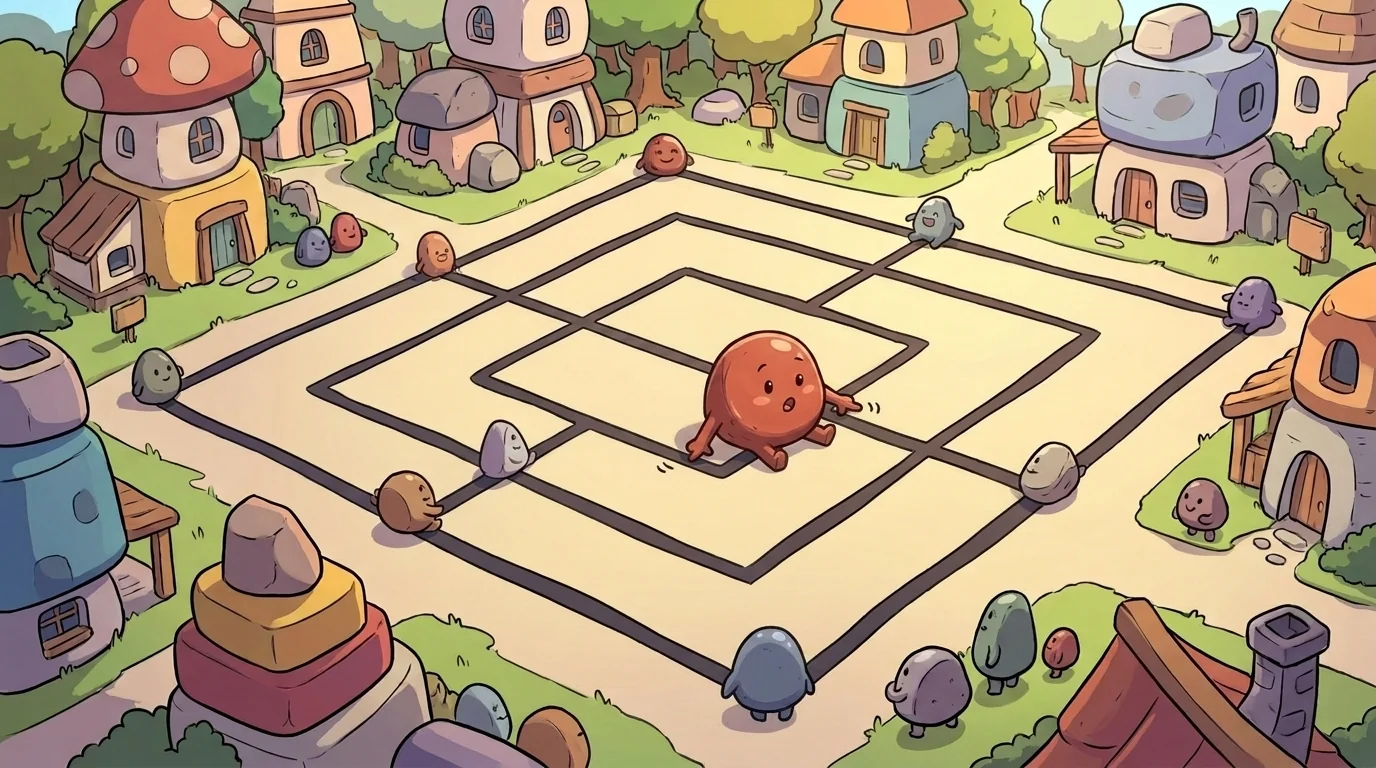
Sami had learned that real secret the hard way — by first believing the wrong reason, out loud, in front of everyone.
When she was young she'd loved the crossroads too, but for a reason she'd never checked. "They're strong because they're on more mills!" she'd declared confidently, planting herself on a junction. And an older piece had simply asked her to count. Sami had counted the mill-lines through her crossroad: two. She'd counted the mill-lines through a lowly corner: also two. Exactly the same. Her whole proud reason had been wrong. The crossroads weren't on more mills at all — every point on the board was on precisely two.
She'd been embarrassed, and then, slowly, fascinated. Because the crossroads were stronger — she could feel it, she won from them — so if it wasn't the mills, what was it? She counted again, differently this time. Roads. Neighbours. Ways out. And there it was: the corner had two, the crossroad had four. "It was never the mills," she said, wonderingly. "It was the mobility. I was right that these squares are strong — I just had the wrong reason. And a right feeling with a wrong reason is a dangerous thing to teach anyone." She made herself a promise then: to understand why a thing was true, not just that it was — because the wrong reason, however confidently held, would eventually lead her astray.
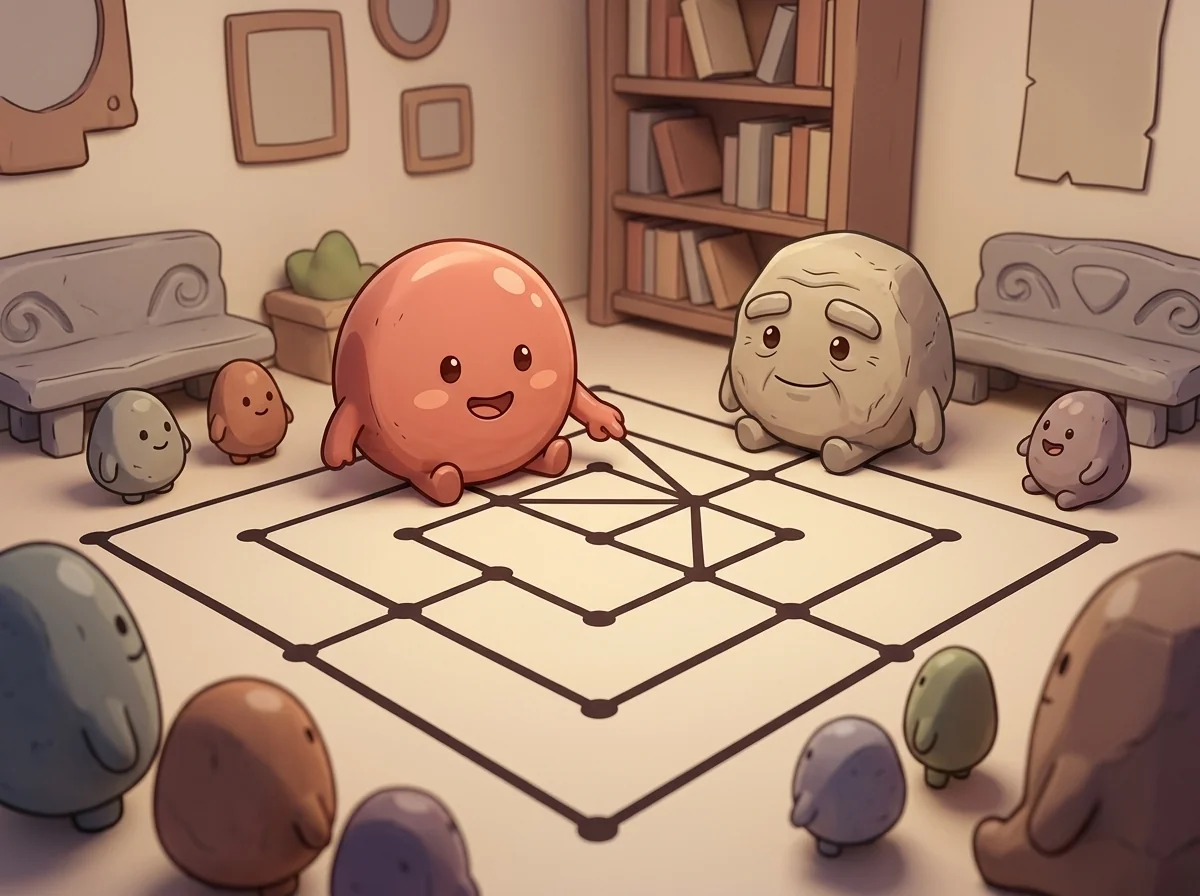
At the House of the Board, Sami claimed a crossroad in the middle of the floor almost without thinking, and the Elder watched her do it.
"The prime points," the Elder said. "You find the strong squares better than anyone. But I've heard young players parrot that they're strong 'because they're on more mills' — which isn't so. Will you teach them the true reason?"
"I'll teach them to count," said Sami. "That's the whole cure. Every point on this board is on two mills — corner, crossroad, all of them, exactly two. So the strong points can't be strong for that. They're strong for neighbours — for how many roads run out of them. Four at a crossroad, two at a corner. I'll teach my students to take the busy junctions not because someone told them to, but because they counted the roads themselves and saw the mobility for what it is. A player who knows the real reason will find the strong squares on a board they've never seen. A player who just memorized 'crossroads good' will be lost the moment the board changes."
"Teach the counting," said the Elder. "A reason understood outlasts a hundred rules memorized."
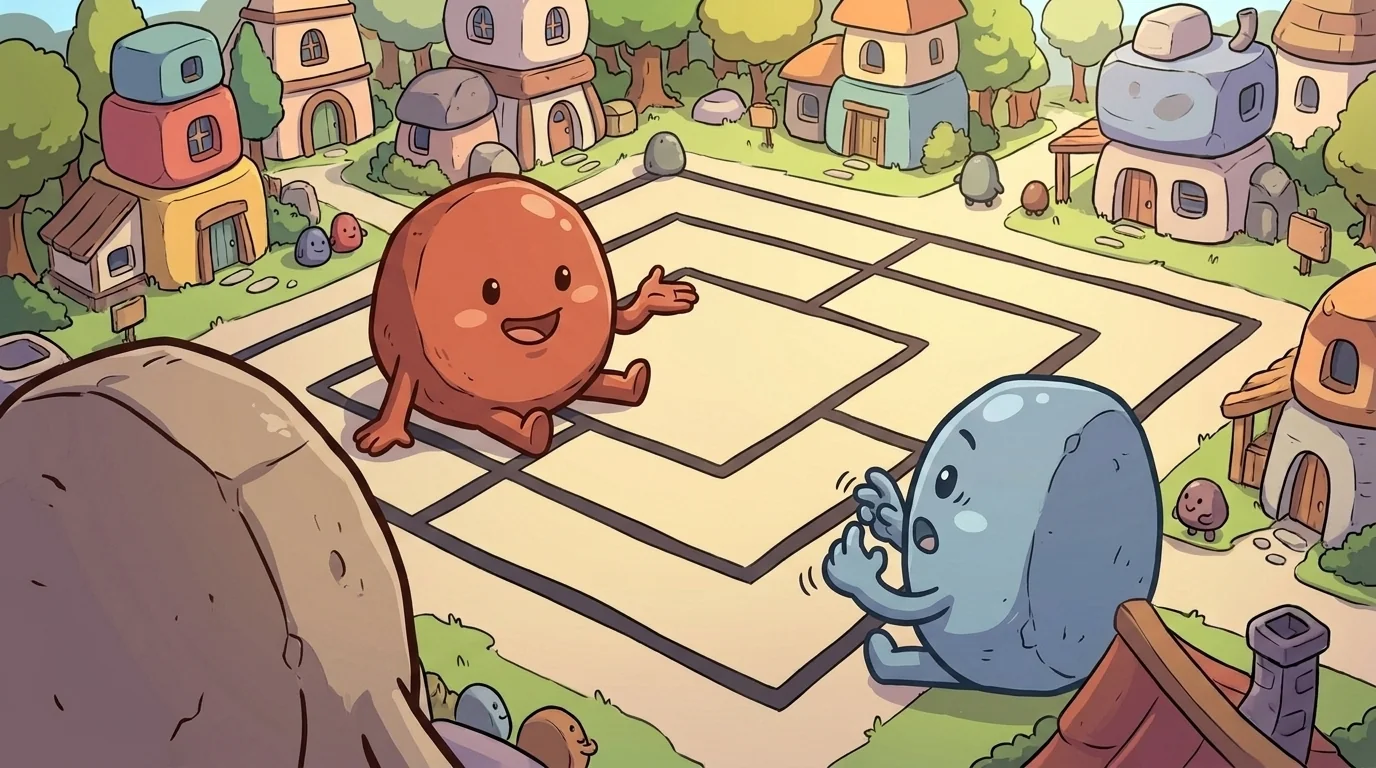
Sami's student was a boy named Deko who'd been told "take the crossroads, they're on more mills" and believed it without ever checking — and got confused and stuck whenever the board didn't match his half-understood rule.
"You keep saying the crossroads are on more mills," Sami said. "Let's count. How many mill-lines run through this crossroad?" Deko counted. "...Two." "And through this corner over here?" He counted, and blinked. "...Also two. They're — they're the same?" "Every point on the board is on two mills," said Sami. "So why is the crossroad worth more? Count something else. Count the roads out of each." Deko counted: four out of the crossroad, two out of the corner. "Oh," he said. "It's not the mills. It's how many ways I can move." "Now you don't need me to tell you which squares are strong," said Sami. "You can find them — on any board, ever — by counting the roads. That's worth more than any rule I could hand you."
Deko stopped parroting the rule he'd been given and started counting — roads, neighbours, ways out. And suddenly the board made sense from the inside: he could feel why the busy junctions were worth fighting for, because he'd measured it himself.
"Knowing why is different from knowing that," Deko said slowly.
"It's everything," said Sami.
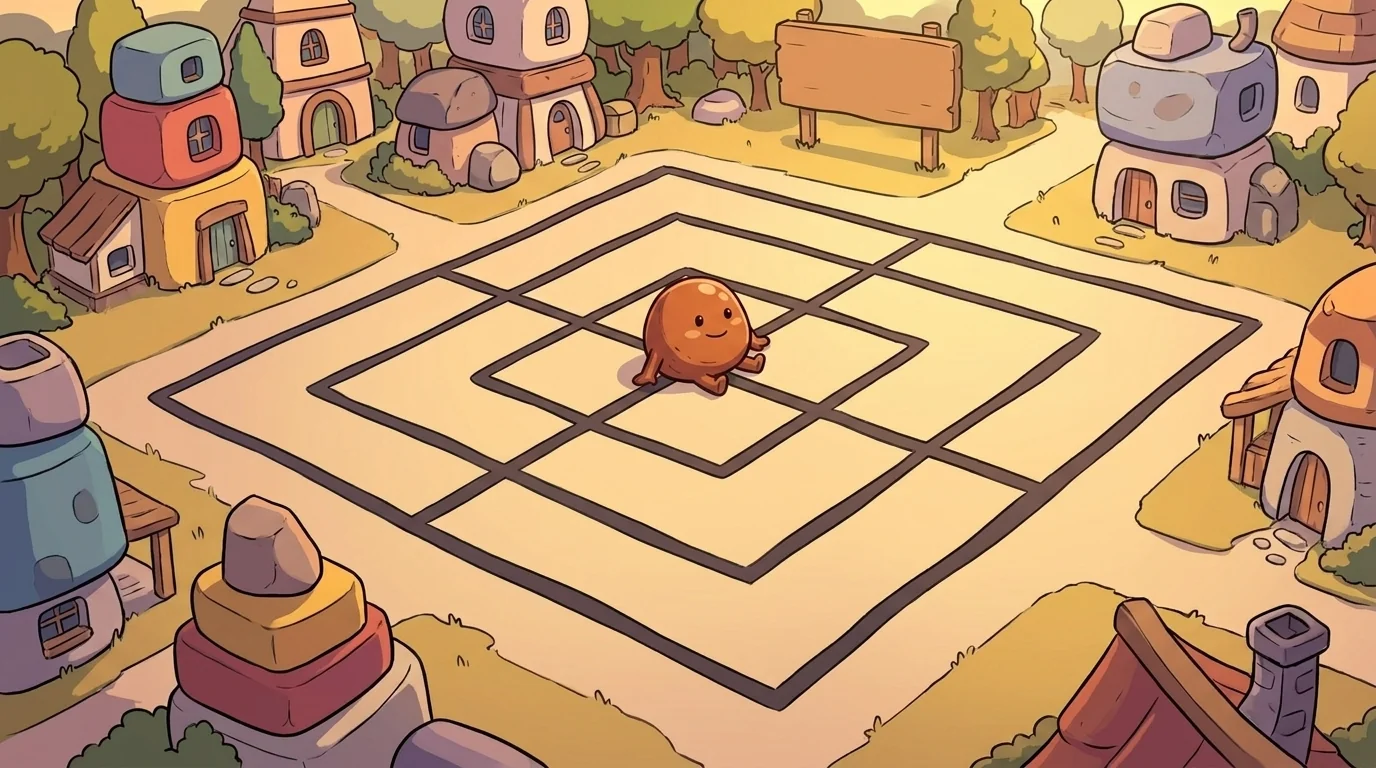
That evening Sami sat on her favourite crossroad in the empty House, feeling the four roads run out around her, and thought about reasons.
She thought about the confident young piece who'd declared the crossroads strong "because they're on more mills," and the older piece who'd simply asked her to count, and the small hot embarrassment of discovering her proud reason was wrong while her feeling was right. She did not trust a rule she hadn't checked anymore. She had learned that the world is full of true feelings wrapped around wrong reasons, and that the wrong reason, however good it feels, will betray you the moment the board changes.
There was a clear, grounded joy in understanding — in sitting on a strong square and knowing exactly, from the roots, why it was strong: not more mills (every point had two), but more roads, more neighbours, more ways to be part of what happened next. She still loved the busy crossroads best of all. But she loved them now for the true reason, counted and confirmed with her own eyes — and there was a solidity in that kind of knowing that no confident guess had ever given her.
The MillSong ensemble
Spoke Sami is part of MillSong's distributed-narrative cast. Each character embodies a different curricular primitive; together they teach the full subject.
-

Miller Mila
The mill: lining up three stones on a line
-

Snatch Nadia
Capture-on-mill: removing a piece the moment a mill closes
-
Guard Gwen
The not-in-a-mill rule: a stone inside a mill is safe
-

Block Bodhi
Blocking: dropping onto the empty point of an almost-mill
-

Corner Cato
Corner points: the low-value corners (two mill lines each)
-
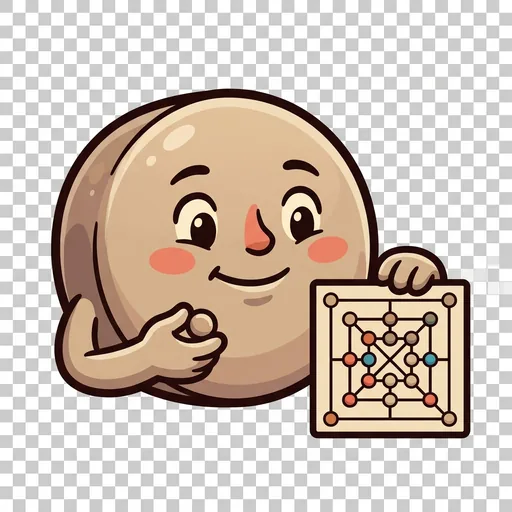
Placer Pell
The placement phase: building a mill network with the nine
-

Slide Sile
The movement phase: sliding a stone to an adjacent point
-

Swing Sena
The swinging (running) mill: opening and re-closing to capture again
-

Flyer Faye
The flying phase: hopping anywhere once down to three men
-
Reduce Remy
The endgame: winning by reducing the opponent to two
-
Elder Merel
The mills-puzzle elder (mentor): find-the-mill / which-to-take puzzles