Placer Pell
THE PLACEMENT PHASE — each player places nine pieces one at a time; the goal is not one mill but a NETWORK of overlapping almost-mills, so that later a single move can threaten several at once
Loading audio…
Press play to listen along. The line being read lights up as you go.
Show full transcript
Loading transcript…
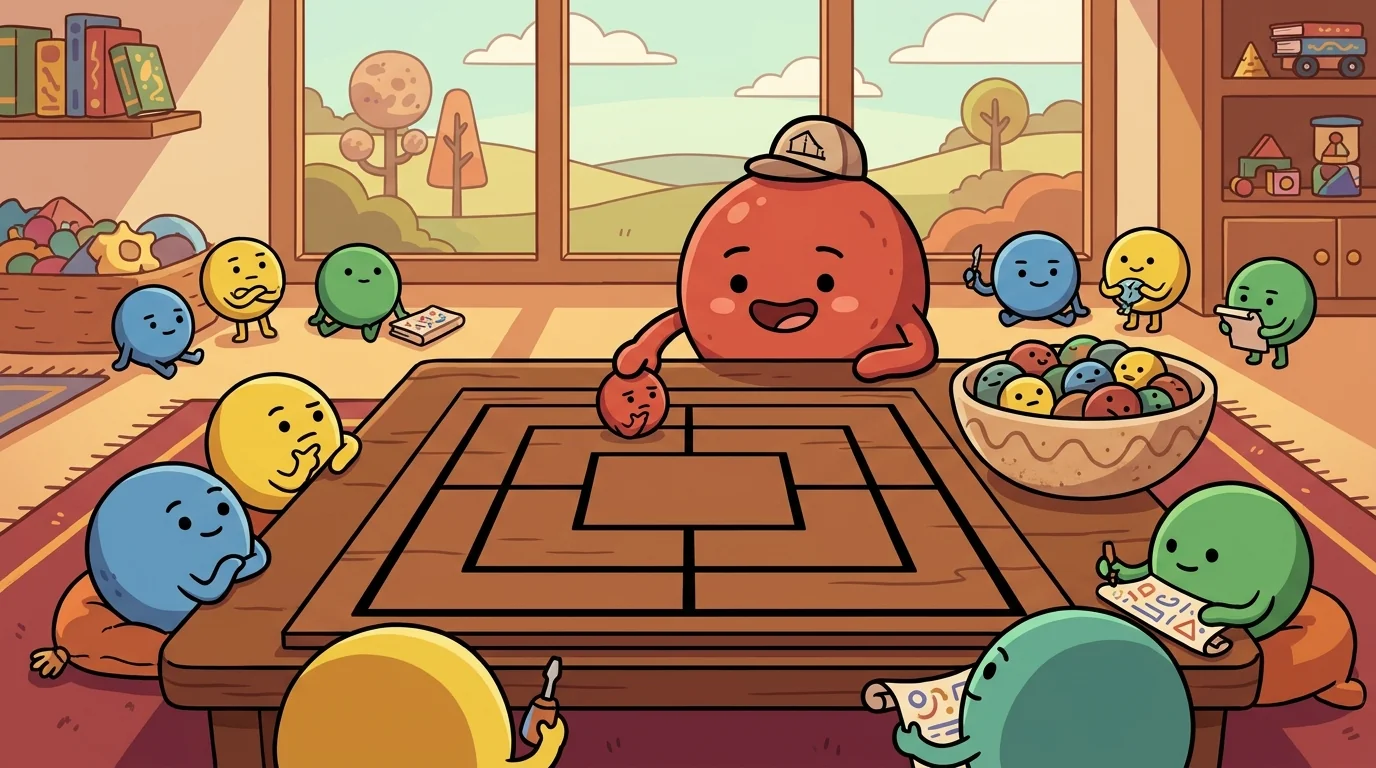
The game had two great phases, and the first — before any piece ever slid a single step — was the placement, where each player set down nine stones one at a time. Most players treated it as a race to the first mill. Not Pell. Pell treated the placement phase as the moment the entire game was quietly decided.
Pell was an architect. Where a hasty player placed each stone to build one mill and then hunted the next, Pell placed each stone so it worked in two or three plans at once — a piece that helped an almost-mill here, and also sat on the line of a different almost-mill there, and also guarded a key point besides. She wasn't building a mill. She was building a web — a network of overlapping half-lines, all sharing pieces, so that later, when the sliding began, a single well-placed move could threaten two or three mills at the same time, and no opponent could block them all.
"Everyone else places to make a mill," she said, setting a stone down thoughtfully on a point where three different half-lines met. "I place to make a web. This one stone is part of three plans. When the moving starts, I won't be threatening one mill they can easily block — I'll be threatening several at once, sharing pieces, and they'll only be able to stop one. The placement phase isn't the warm-up. It's where the game is won, quietly, before anyone's even started fighting."
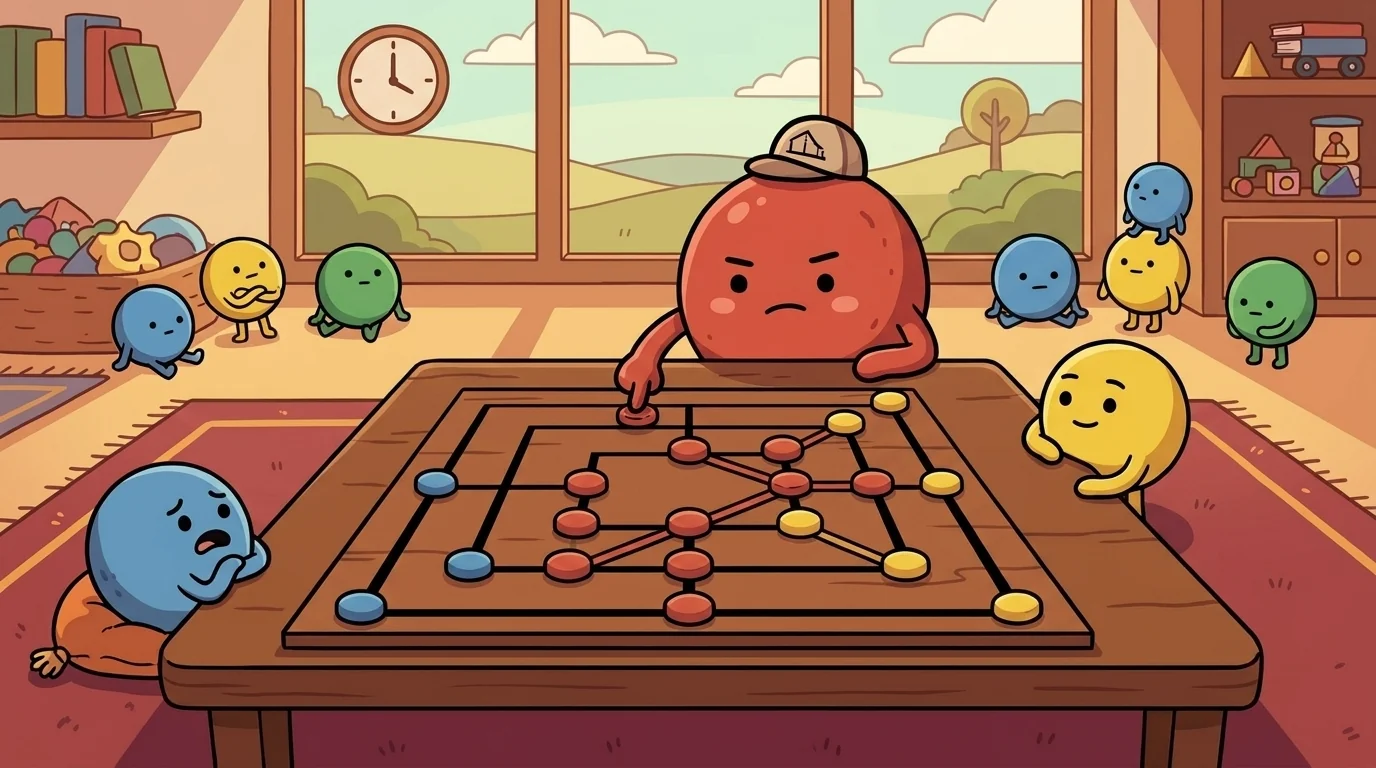
Pell had learned the whole truth of the placement phase on a day she'd rushed it and lost before the real game began.
She'd been young and eager to move, to fight, to close mills — and she'd treated placement as a chore to hurry through, plonking her nine stones down carelessly, each one aimed at a single obvious mill, none of them working together. Then the sliding phase began, the "real game," she'd thought — and she'd discovered, with dawning horror, that her careless placement had already doomed her. Her stones were scattered, each on its own lonely plan; every threat she made was a single mill her opponent blocked with a shrug. Meanwhile her opponent — who'd placed carefully — had a web, and made triple threats she couldn't possibly stop. The game was lost, and it had been lost during the placement she'd rushed through, long before a single stone moved.
She sat with that hard lesson. "I thought the placing was just setting up," she said slowly. "I thought the real game was the moving. But the moving only plays out whatever the placing already decided. If I place a scattered mess, I move a scattered mess. If I place a web, I move a web." She never rushed the placement again. She came to see those first nine quiet stones as the most important moves in the whole game — the groundwork that everything else would stand or fall on.
At the House of the Board, Pell arrived already thinking about where the first stone should go, and the Elder appreciated the care of her.
"The placement phase," the Elder said. "Every young player rushes it, hungry to start moving. What will you teach the impatient?"
"That the game is decided before they move at all," said Pell. "They think placement is the boring setup and the sliding is the real game. I'll teach them the opposite — that a well-built web of overlapping almost-mills, laid down carefully in the placement phase, wins the game before the fighting even starts; and a scattered rush of one-mill stones loses it just as early. I'll teach them to make every single placed stone do double or triple duty — to build the whole web, not one line. The groundwork is the game. The rest is just it playing out."
"Teach them to slow down at the start," said the Elder. "The impatient ones lose there and never know why."

Pell's student was a hasty piece named Kip who tore through the placement phase — nine stones plonked down fast, each aimed at one obvious mill — desperate to get to the "real" moving game.
"You placed all nine in about four heartbeats," Pell observed. "Each one aimed at a single mill. Now start moving and make a threat." Kip slid a piece to complete a mill — and his opponent blocked it with one easy move, because it was a single threat, alone. Kip tried another; blocked again. Every threat was one mill, easily stopped. "See the problem?" said Pell. "You built nine lonely stones, so you can only ever threaten one mill at a time, and one mill is easy to block. Watch how I place." She set nine stones down slowly, each on a point where two or three half-lines crossed, each pulling double duty. Then, when the sliding began, she made a single move that threatened three mills at once. Kip's imagined opponent could block one. The other two closed. "The web won it," she said, "and the web was built during the placing you rushed."
Kip looked at his scattered stones and understood that he'd lost during the part he'd thought didn't matter. Next game, he placed slowly — each stone doing double duty, building overlaps — and found that the "real game" of moving suddenly went his way, because the groundwork had already tilted it.
"The setup was the game all along," Kip said, a little stunned.
"The setup is always the game," said Pell. "People just don't notice until they've lost it."
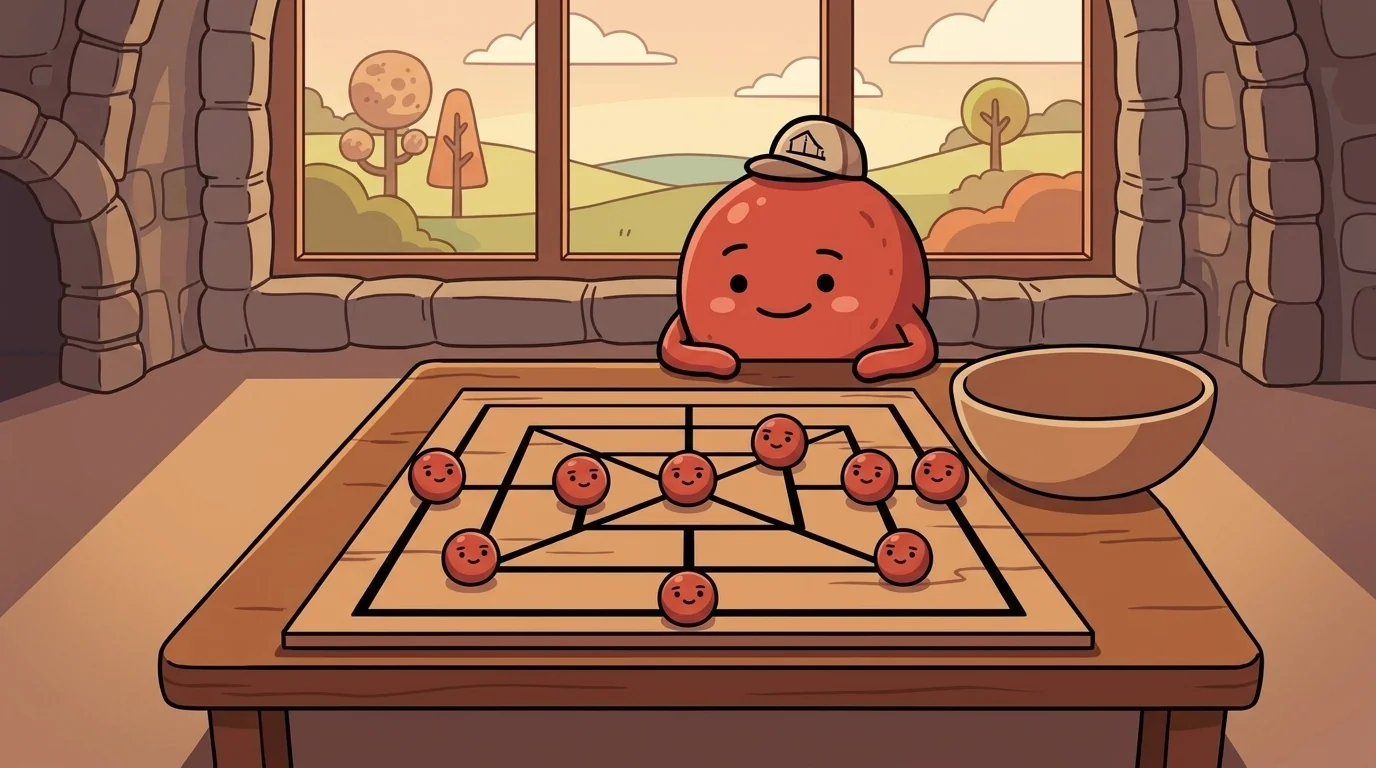
That evening Pell laid out a slow, careful web of nine stones in the empty House — each one part of two or three plans — and admired the quiet network of it, all those shared lines waiting to become threats.
She thought about the impatient young piece who'd rushed her nine stones down and lost the game before it started, and the slow dawning of understanding that the moving phase only ever plays out whatever the placing decided. She never rushed the groundwork anymore. She had learned that the most important moves in any game are often the quiet early ones nobody's paying attention to — the ones that feel like setup, and are actually the whole thing.
There was a deep architect's satisfaction in a well-built web — in looking at nine stones that each did the work of two or three, at a network of overlapping possibilities laid patiently down before a single fight had begun. The flashy players lived for the loud parts. Pell lived for the quiet, careful building that came first — and as she sat there in the hush of the empty House, taking in her patient web, she felt it settle warmly all the way through her: the calm, unhurried gladness of someone who has done the slow groundwork well, and trusts it, and feels no need at all to rush.
The MillSong ensemble
Placer Pell is part of MillSong's distributed-narrative cast. Each character embodies a different curricular primitive; together they teach the full subject.
-

Miller Mila
The mill: lining up three stones on a line
-

Snatch Nadia
Capture-on-mill: removing a piece the moment a mill closes
-

Guard Gwen
The not-in-a-mill rule: a stone inside a mill is safe
-

Block Bodhi
Blocking: dropping onto the empty point of an almost-mill
-

Spoke Sami
Prime points: the strong spoke midpoints (three mill lines each)
-

Corner Cato
Corner points: the low-value corners (two mill lines each)
-

Slide Sile
The movement phase: sliding a stone to an adjacent point
-

Swing Sena
The swinging (running) mill: opening and re-closing to capture again
-

Flyer Faye
The flying phase: hopping anywhere once down to three men
-

Reduce Remy
The endgame: winning by reducing the opponent to two
-

Elder Merel
The mills-puzzle elder (mentor): find-the-mill / which-to-take puzzles