Reduce Remy
THE WIN — a game is won by reducing the opponent to two pieces (too few to ever form a mill), or by leaving them with no legal move at all
Loading audio…
Press play to listen along. The line being read lights up as you go.
Show full transcript
Loading transcript…
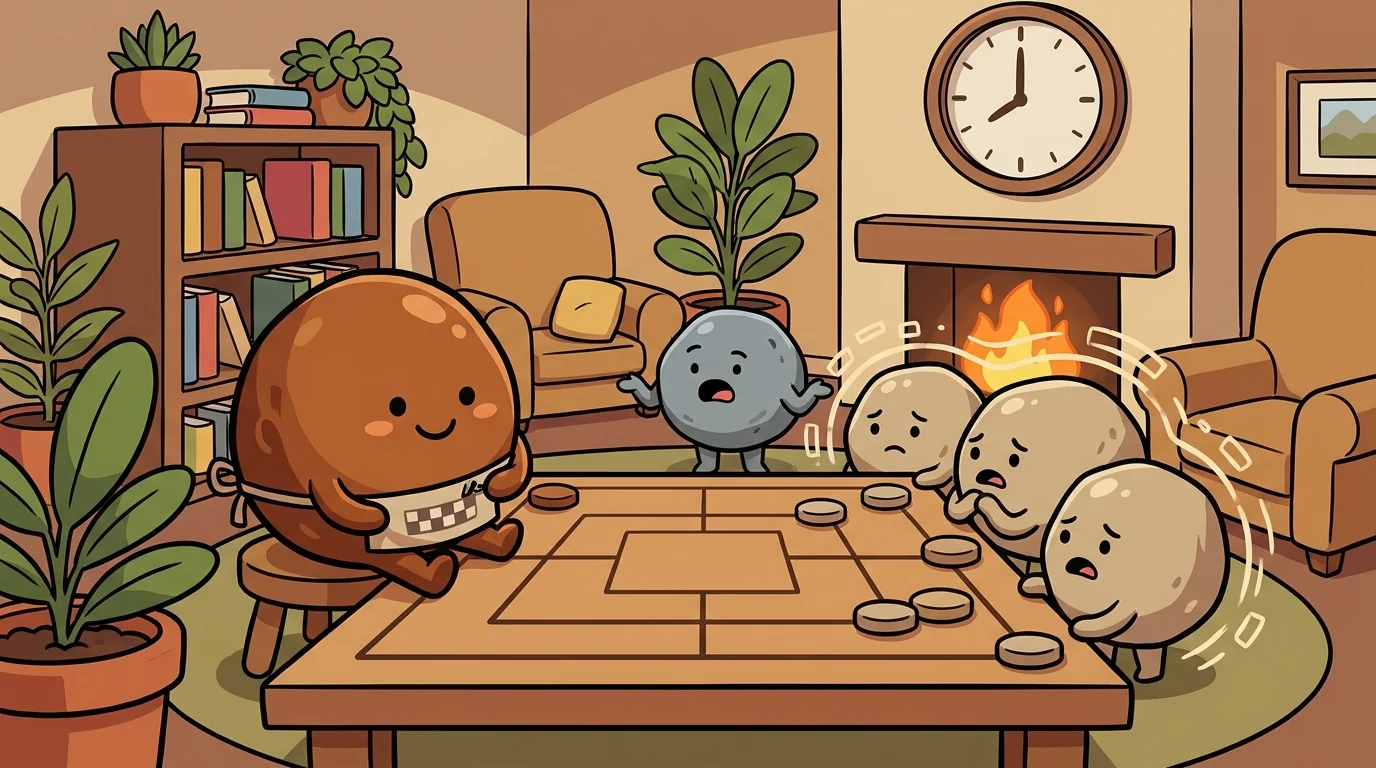
Building mills was exciting. Snatching pieces was satisfying. But somebody had to actually end the game — to turn all that mill-building and piece-snatching into a real, final win — and that somebody was a focused, patient piece named Remy.
Remy was the closer. She knew the two ways a game of the mills could truly be won, and she knew that plenty of players who were winning still managed to not win, by forgetting how to finish. The first way was to reduce the enemy to two pieces: because a mill needs three, an opponent with only two pieces left can never form one again, and so can never fight back — the game is over. The second way, quieter and easier to miss, was to leave the opponent with no legal move at all — every one of their pieces blocked in, nowhere to slide — which also ends the game, no captures required.
"Everyone loves the middle of the game," Remy said, eyeing an enemy down to four pieces. "The mills, the swings, the snatches. But being ahead isn't the same as winning. I've watched a hundred players build a big lead and then let it dribble away because they didn't know how to close. My job is the finish — grinding them down to two, or boxing them in so they can't move. It's less flashy than the middlegame. But it's the only part that actually counts, in the end."
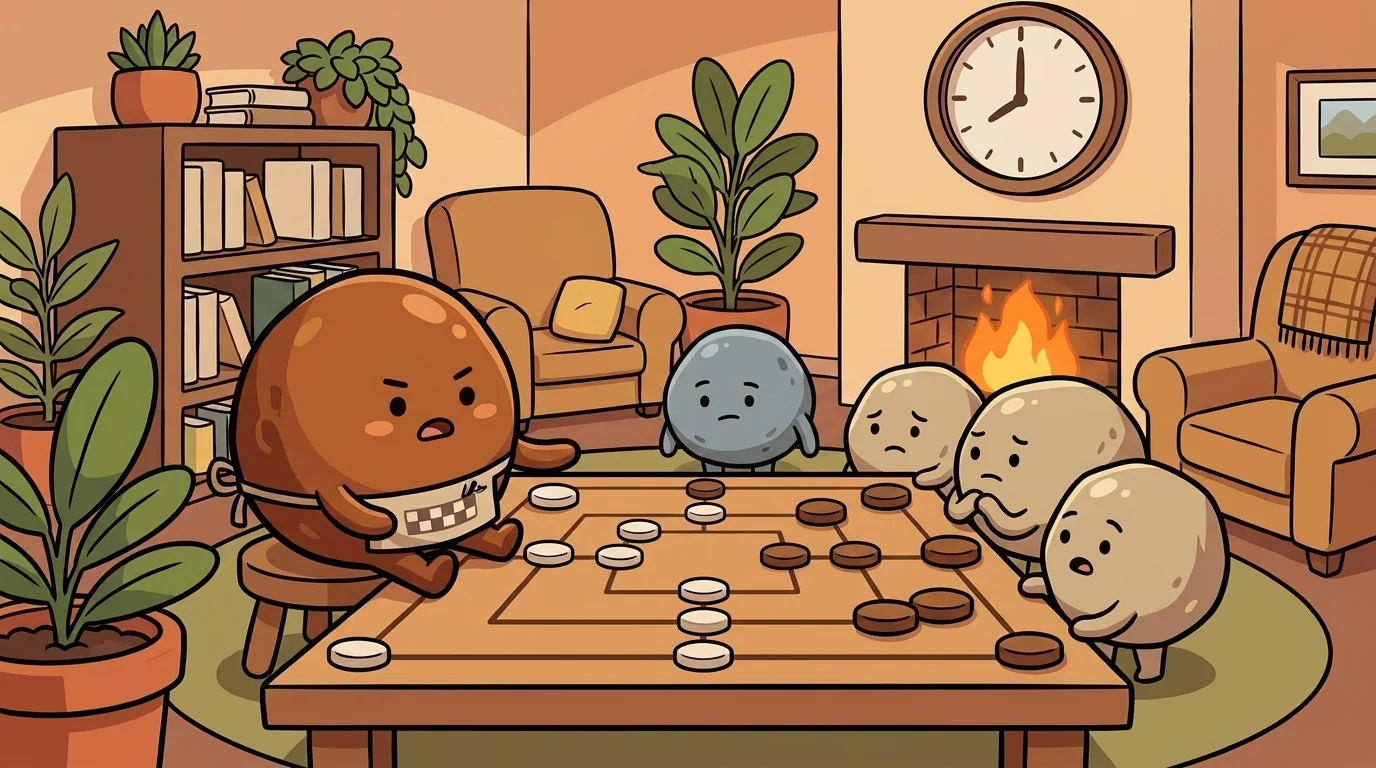
Remy had learned that finishing is its own skill on a day she'd been far ahead and still nearly lost.
She'd built a commanding lead — mills everywhere, the enemy down to five pieces, surely a win. And then she'd... relaxed. Played loosely, sure the game was already won, snatching a piece here and there without a plan to actually finish. And her cornered opponent, with nothing to lose, had fought like fury — flying (once down to three), clawing back, closing a desperate mill — until Remy's "sure win" had shrunk to a knife's edge, and she'd only just scraped home, shaken. Being ahead had lulled her. She'd forgotten that a lead is not a win; a lead is only a chance to win, and a chance you can still fumble.
An old closer sat with her afterward. "You played the middlegame beautifully and the endgame like it didn't exist," she said. "Getting ahead and finishing are two different skills, child. Ahead is exciting; finishing is discipline. You have to keep concentrating exactly when you feel you can relax. And—" she leaned in "—you have to remember there are two doors to the win. Everyone hunts the first: grind them to two pieces. But often the second door is closer — box them in so they've no legal move at all. When the piece-grinding is slow, look for the no-move win instead." Remy took both halves to heart. She never coasted on a lead again. And she learned to always check both doors to the finish — captures, and the quiet win of leaving the enemy nowhere to go.
At the House of the Board, Remy arrived with the calm focus of a piece who liked to finish what she started, and the Elder nodded approvingly.
"The endgame," the Elder said. "The finish. Half my students get a winning position and then let it slip because they don't know how to close. What will you teach?"
"That being ahead is not winning," said Remy. "It's the most important lesson in the endgame and the one they least want to hear. I'll teach them to keep concentrating exactly when they feel they can coast — because a cornered opponent is a dangerous one, and a fumbled lead is a lost game. And I'll teach them both doors to the win: grinding the enemy down to two pieces, and the sneakier one — leaving them with no legal move at all. Half of them only ever look for the first door and miss a win sitting right in front of them at the second."
"Teach the finishing," said the Elder. "Anyone can get ahead. Almost nobody knows how to close."
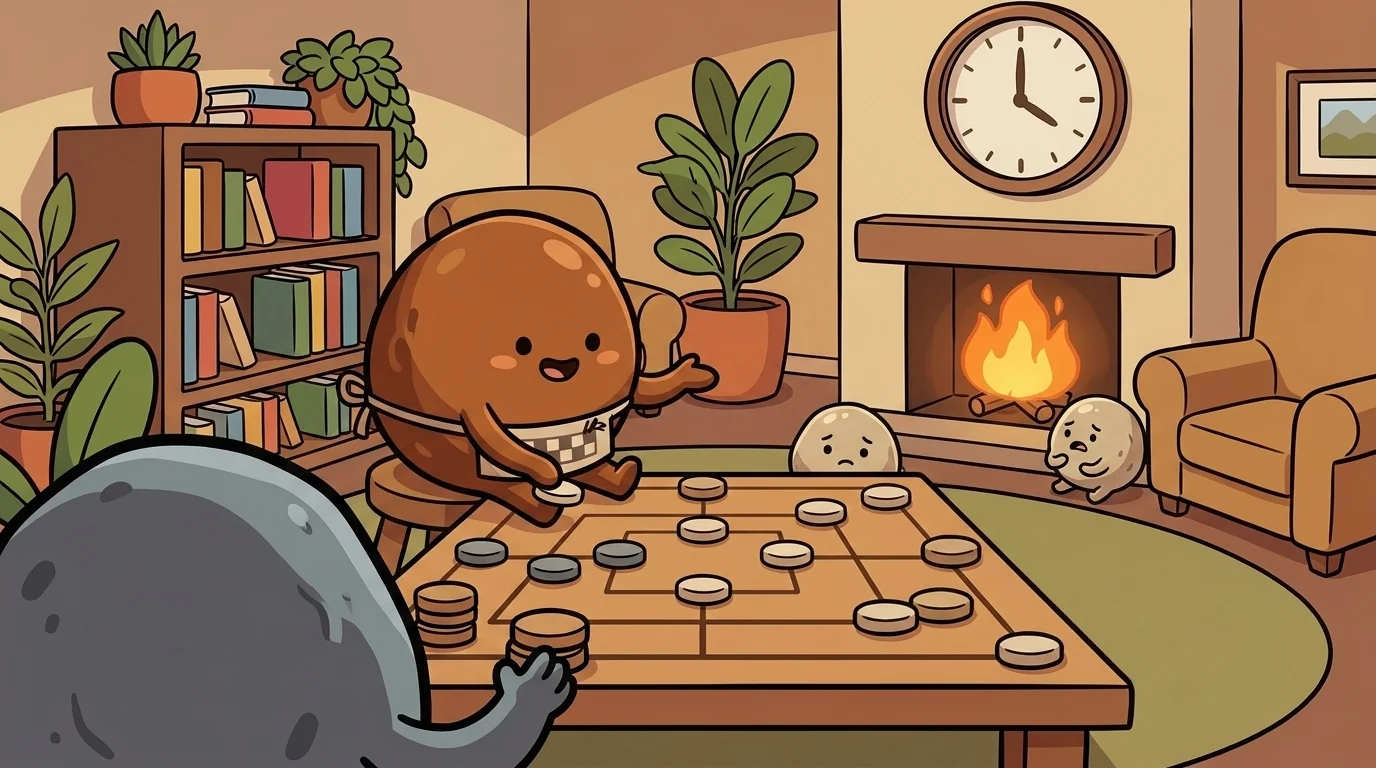
Remy's student was an overconfident piece named Vesh who'd get a big lead and then coast — playing loose, sure of the win, and letting cornered opponents claw agonizingly back.
"You're way ahead," Remy said. "Enemy's down to four. How are you going to finish?" Vesh shrugged. "I'm winning. I'll just... keep taking pieces." "Keep taking them how? With what plan? Watch — because 'I'm ahead' has lost more games than 'I'm behind' ever did." Remy took over the winning position and played it tight: no loose moves, every step aimed at the finish, grinding the enemy methodically toward two pieces. Then she stopped. "And look — this enemy piece here, and this one, are nearly boxed in. I don't even need to grind them to two. One more move and they've got no legal move at all. Second door. Game over, no snatching required." Vesh stared at the win he hadn't even seen. "Being ahead made you lazy," Remy said. "Finishing is where you concentrate hardest."
Vesh stopped coasting on his leads. He learned to keep his focus sharpest exactly when he felt safest, and to check both doors — grind to two, or box them in. His slippery near-losses turned into clean, certain finishes.
"Getting ahead was the easy part," Vesh admitted.
"It always is," said Remy. "Finishing is the part that wins."
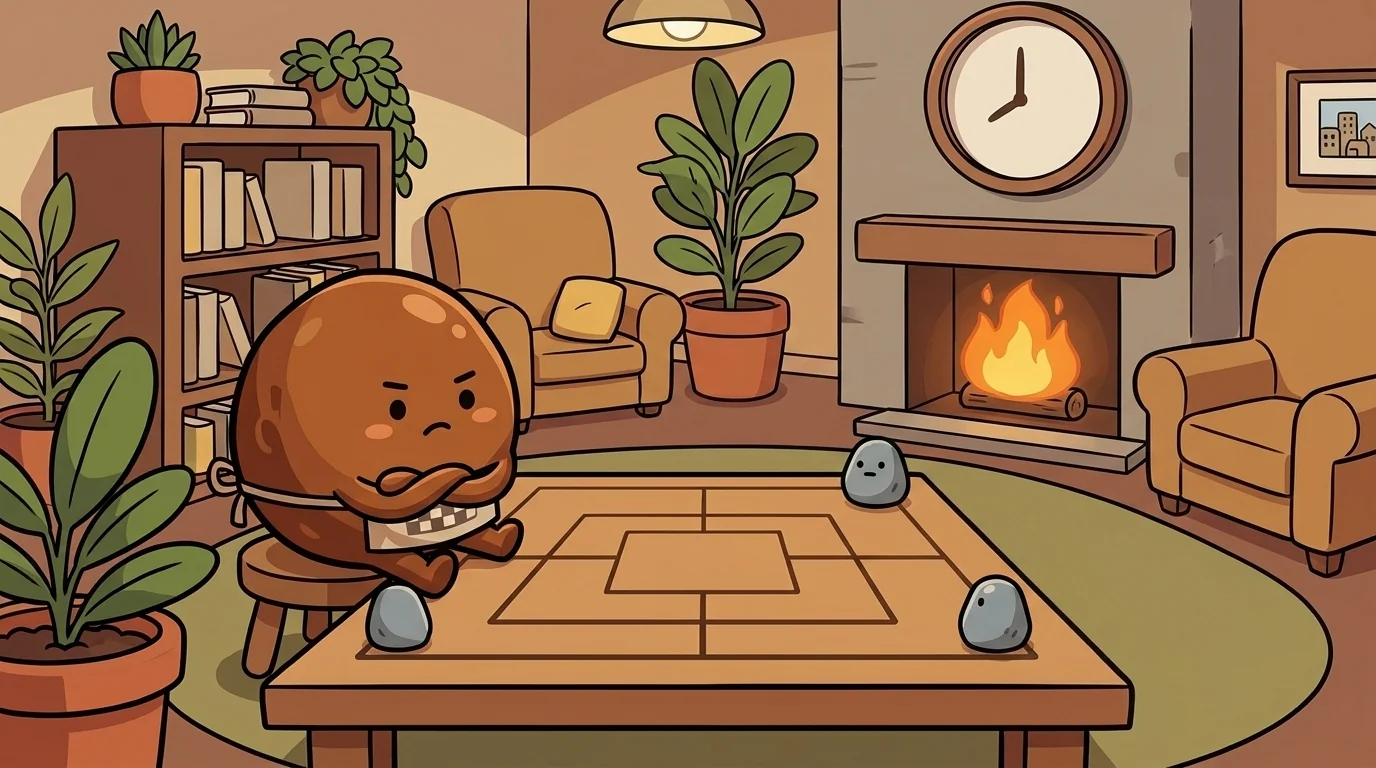
That evening Remy sat in the empty House with a winning position laid out in front of her, and did not coast — she practised the finish, tight and focused, checking both doors as if the game still hung in the balance, because she knew that's exactly how you close one that already doesn't.
She thought about the day she'd been far ahead and nearly thrown it away by relaxing, and the old closer who'd taught her that a lead is only a chance to win, and that there are two doors to every finish. She never coasted on a lead anymore. She had learned that the hardest concentration in the whole game belongs to the moment you feel safest — and that the players who lose winning positions are almost always the ones who stopped paying attention the moment they got ahead.
There was a quiet, disciplined satisfaction in a clean finish that the flashy middlegame could never match — the satisfaction of turning an advantage into an actual win, of concentrating hardest at the end, of finding the second door when the first was slow. Anyone could get ahead. Remy had made herself the one who could close — and there was a deep, grown-up steadiness in being the piece who finished the job, every time, all the way to the end.
The MillSong ensemble
Reduce Remy is part of MillSong's distributed-narrative cast. Each character embodies a different curricular primitive; together they teach the full subject.
-

Miller Mila
The mill: lining up three stones on a line
-

Snatch Nadia
Capture-on-mill: removing a piece the moment a mill closes
-

Guard Gwen
The not-in-a-mill rule: a stone inside a mill is safe
-

Block Bodhi
Blocking: dropping onto the empty point of an almost-mill
-

Spoke Sami
Prime points: the strong spoke midpoints (three mill lines each)
-

Corner Cato
Corner points: the low-value corners (two mill lines each)
-

Placer Pell
The placement phase: building a mill network with the nine
-

Slide Sile
The movement phase: sliding a stone to an adjacent point
-

Swing Sena
The swinging (running) mill: opening and re-closing to capture again
-

Flyer Faye
The flying phase: hopping anywhere once down to three men
-

Elder Merel
The mills-puzzle elder (mentor): find-the-mill / which-to-take puzzles