Elder Merel
THE MILLS PUZZLE — a set position with a single best move (find the mill, block the threat, choose the capture); the discipline of reading a whole board before touching a piece
Loading audio…
Press play to listen along. The line being read lights up as you go.
Show full transcript
Loading transcript…
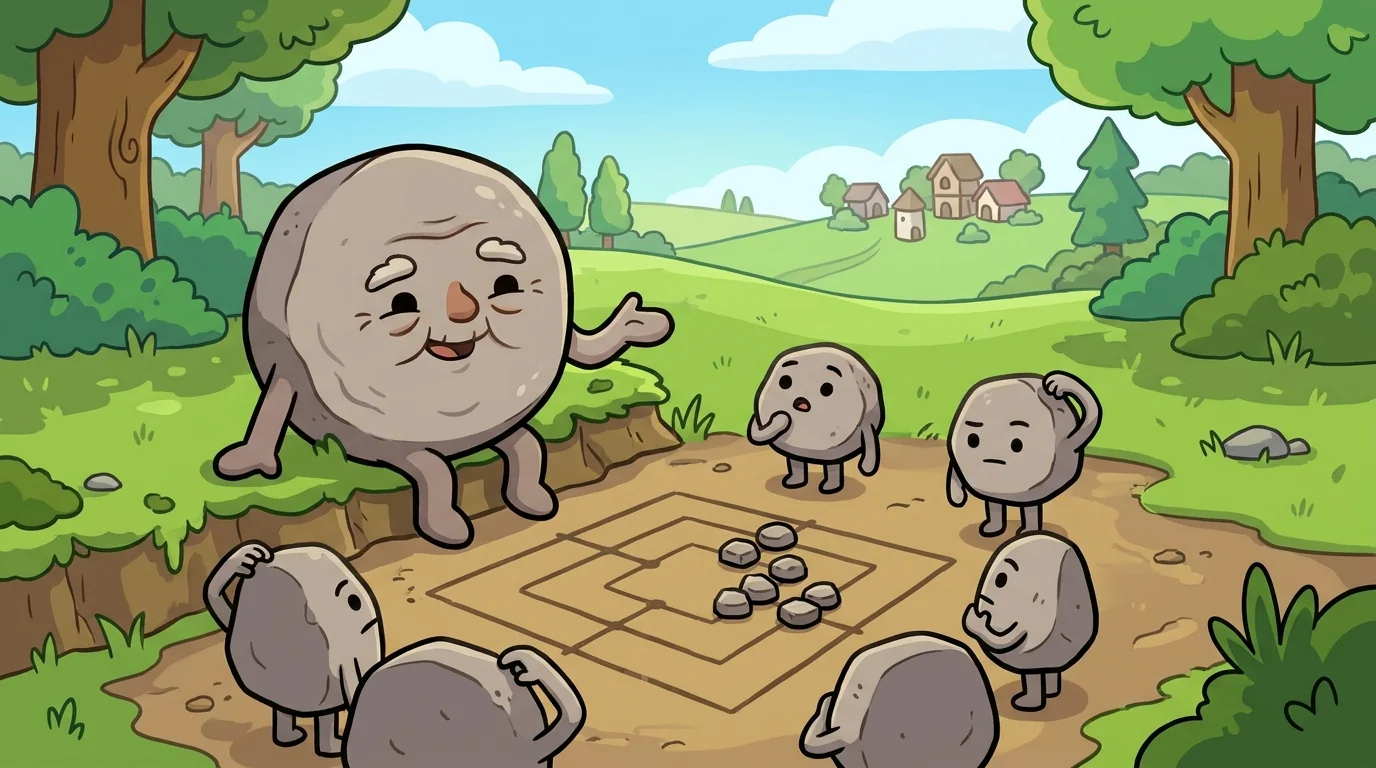
At the edge of every village green where the game was played, there was usually an old, unhurried piece watching — and on the green that mattered most, that piece was Elder Merel, who set the finest puzzles anyone had ever scratched into the dirt, and who almost never told you the answer.
Merel's puzzles were small, perfect things. She'd arrange a handful of stones into a position and pose a single quiet question: Find the mill. Or: Which mill do you block? Or, hardest of all: You can close a mill and take one enemy piece — which one, and why? Each puzzle had a single best answer, buried under a pile of tempting wrong ones, and finding it meant reading the whole board — every line, every almost-mill, every threat both yours and theirs — before you dared touch a single stone.
And when a stuck student begged, "Elder, just tell me the move!" — Merel almost never would. She'd tilt her old head and ask a question back. "What is your opponent about to do?" Or: "If you take that piece, what can they do next — and have you looked?" She asked, and asked, and waited, through long squirming silences, until the student found it themselves. "The answer I give you, you forget by supper," she liked to say. "The answer you find you keep for life."
Merel had not always been so patient. Long ago, as a young teacher, she had been a great giver of answers.
She'd loved to explain. A student would stall on a puzzle, and Merel would sweep in and lay the whole thing out — see, block here, because otherwise they swing the mill there, and then — elegant and complete. The students would nod, dazzled, and copy it down. And the very next puzzle, they'd be just as stuck, because she had done all the reading of the board, every time, and left them nothing to do but admire her cleverness. Bright young pieces stayed helpless year after year, and Merel couldn't understand why, until her own old teacher told her the truth.
"You keep reading the board for them," the old teacher said. "So they never learn to read it themselves. A puzzle you solve in front of a student teaches the student that you are clever. A puzzle the student cracks after a long hard silence teaches the student that they are. Stop giving answers, Merel. Start asking questions and waiting. The waiting is the whole gift." It was hard — agonizing, at first, to watch a student struggle and hold her tongue. But Merel learned to ask one small guiding question and then wait, however long it took, and she watched, astonished, as pieces who cracked a puzzle themselves walked away able to crack the next one alone. She never went back to answer-giving. She became, instead, the patient elder who asked.

The green had grown up around Merel over the years, the way a House grows around its wisest piece. When a new keeper of the green first came to her and asked why she refused to just tell the students the answers, Merel answered as she answered everything — with a question.
"When you solved your first hard mills-puzzle alone," she said, "after a long, frustrating silence — do you remember the move?"
"Every stone of it," the keeper admitted.
"And the puzzles your teachers solved for you?"
The keeper was quiet a while. "...Not one."
"So," said Merel, and asked nothing further, because she had made her whole point by asking rather than telling — which was, of course, exactly the point.
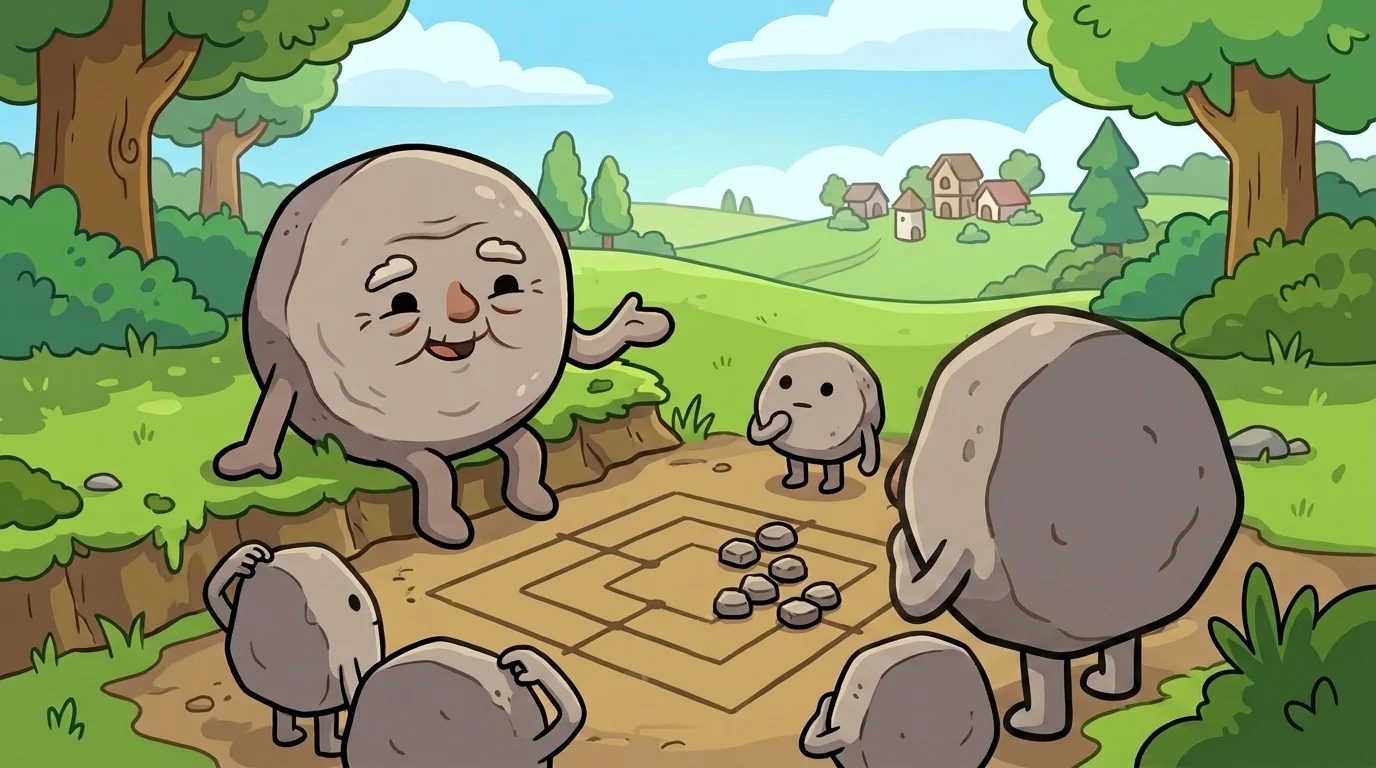
Merel's hardest student was a quick, clever piece named Isla who read half the board brilliantly and then pounced — spotting her own best mill in an instant and grabbing for it without ever checking what the opponent could do back.
Merel set her a puzzle. Isla found a mill in a heartbeat. "This one! I close this mill, don't I? Just tell me I'm right!" Merel did not tell her. "You can close that mill," she agreed. "And when you take your piece — what does your opponent do on their next turn?" Isla looked, impatient. "They... they close their mill. And snatch my—" She stopped. Her lovely quick mill let the enemy close a bigger one right back. "So which piece should you take, to stop that?" Merel asked instead of answering. Isla went quiet — really quiet, reading the whole board now, both sides, all the lines, for the first time. It took her a long squirming while. Then her face changed. "Oh. I don't close my mill first. I take their threatening piece first — break their almost-mill — and then mine is safe—" She found it, the whole answer, herself. "Now," said Merel, with the faintest smile, "you will remember it."
Isla stopped pouncing on the first half of the board she read. She learned to read the whole of it — her threats and the enemy's — before touching a stone. And every answer she found in that patient silence, she kept.
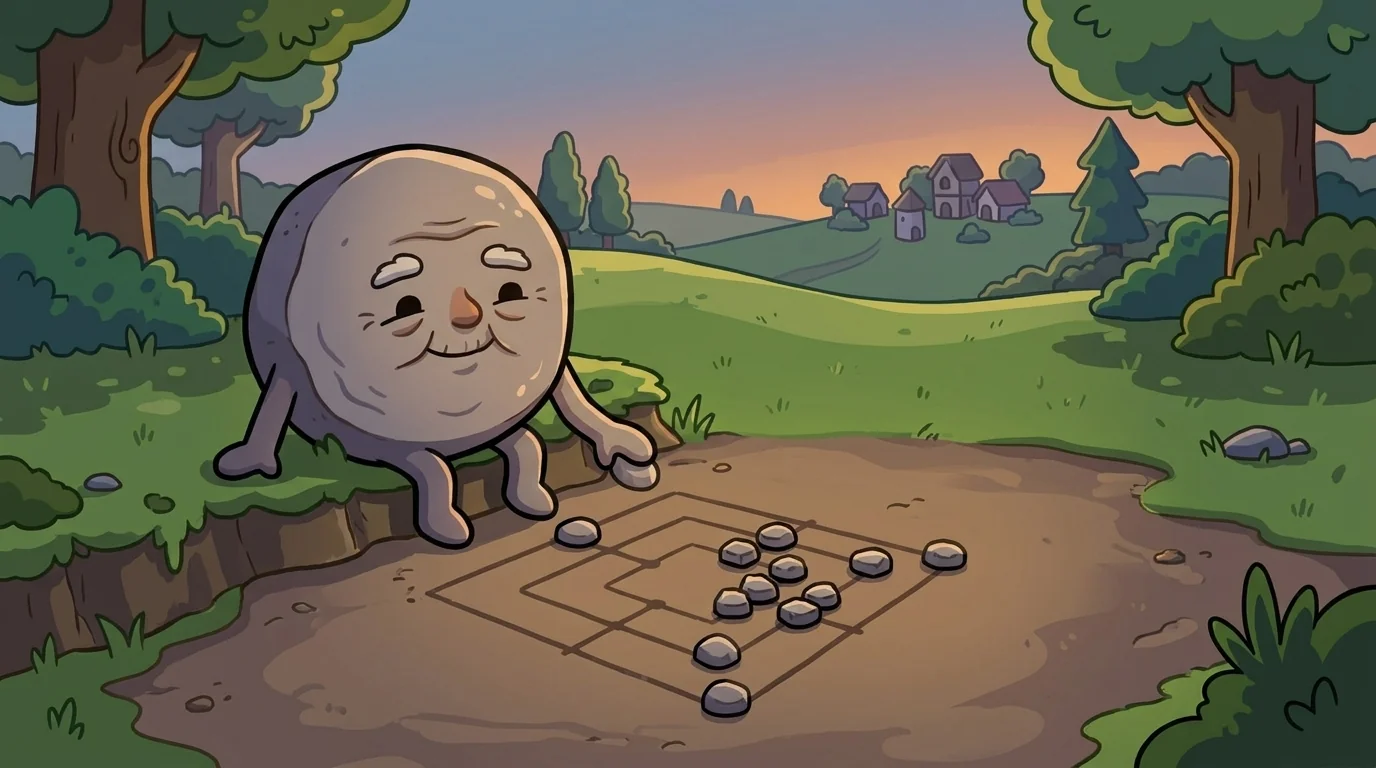
That evening, alone on the quiet green, Elder Merel scratched out a fresh puzzle for the morning and did not, of course, solve it — she only arranged the question and left it waiting for a student's struggle to bring it to life.
She thought about the young teacher she'd been, dazzling and useless, reading every board for her students and leaving them helpless. And she thought about the long patient decades since — the squirming silences she'd learned to endure, the questions she'd handed back instead of answers, the pieces who had walked away from her green able, at last, to read a whole board on their own.
There was a deep, unhurried joy in it that no clever answer had ever given her — the joy of watching a stuck student go suddenly still and bright with a move that was theirs, found in their own head, kept for good because they'd earned it. She would go to her rest one day having told almost no one the answer to anything. And she had come to understand that this — the patience, the waiting, the endless gentle asking — was the kindest, most lasting thing a teacher had to give: not the answer, but the quiet, unshakeable trust that the student could find it themselves.
The MillSong ensemble
Elder Merel is part of MillSong's distributed-narrative cast. Each character embodies a different curricular primitive; together they teach the full subject.
-

Miller Mila
The mill: lining up three stones on a line
-

Snatch Nadia
Capture-on-mill: removing a piece the moment a mill closes
-

Guard Gwen
The not-in-a-mill rule: a stone inside a mill is safe
-

Block Bodhi
Blocking: dropping onto the empty point of an almost-mill
-

Spoke Sami
Prime points: the strong spoke midpoints (three mill lines each)
-

Corner Cato
Corner points: the low-value corners (two mill lines each)
-

Placer Pell
The placement phase: building a mill network with the nine
-

Slide Sile
The movement phase: sliding a stone to an adjacent point
-

Swing Sena
The swinging (running) mill: opening and re-closing to capture again
-

Flyer Faye
The flying phase: hopping anywhere once down to three men
-

Reduce Remy
The endgame: winning by reducing the opponent to two