Flyer Faye
THE FLYING PHASE — when a player is down to their last three pieces, they may "fly" — jump a piece to ANY empty point on the board, not just an adjacent one — a rule that gives the losing side a fighting chance
Loading audio…
Press play to listen along. The line being read lights up as you go.
Show full transcript
Loading transcript…
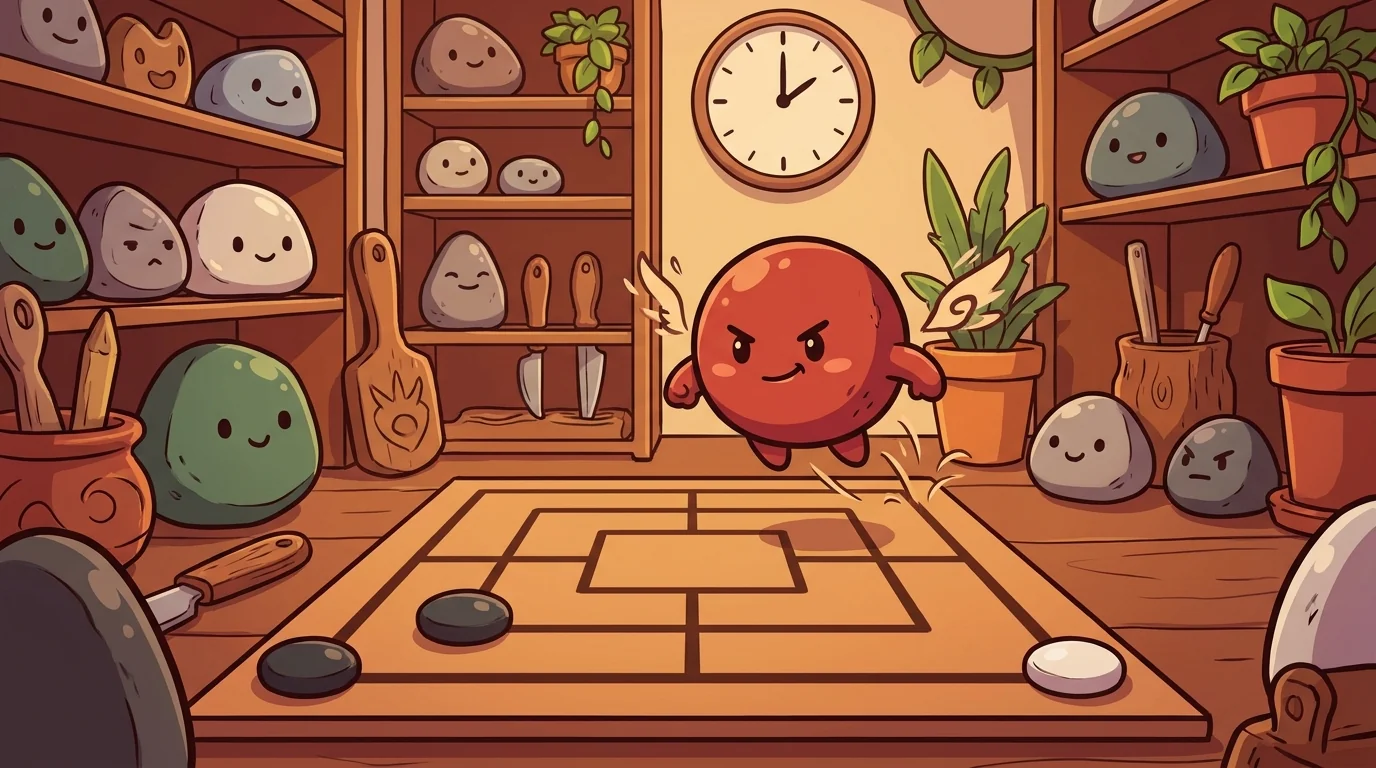
Most pieces on the village boards could only ever shuffle one step at a time, next door, along a line. But there was one piece, named Faye, who had a secret freedom — and the strange, beautiful thing about it was that it only came to her when she was almost beaten.
Here was the rule: a player ground down to their last three pieces earned the right to fly. Instead of sliding one small step to the next point, a flying piece could leap to any empty point on the whole board — clear across, anywhere at all. It was the game's great mercy: the rule that meant being down to three pieces was not the end, but a strange new beginning, where suddenly the cornered, nearly-beaten player became slippery and dangerous and free.
"Everyone dreads getting down to three pieces," Faye said, hovering, ready to leap clear across the board. "They think it means they've lost. But three pieces is when I get my wings. When I've got nine, I can only shuffle a step at a time like everyone else. When I'm down to three — cornered, nearly done — suddenly I can go anywhere." She smiled a fierce little smile. "It's a funny gift. The game only lets you fly once you've lost almost everything. But oh, what you can do with it — a piece that can land anywhere is a piece that can block any mill, complete any line of its own, be a threat the whole board over. Down to three isn't the end. It's the comeback."
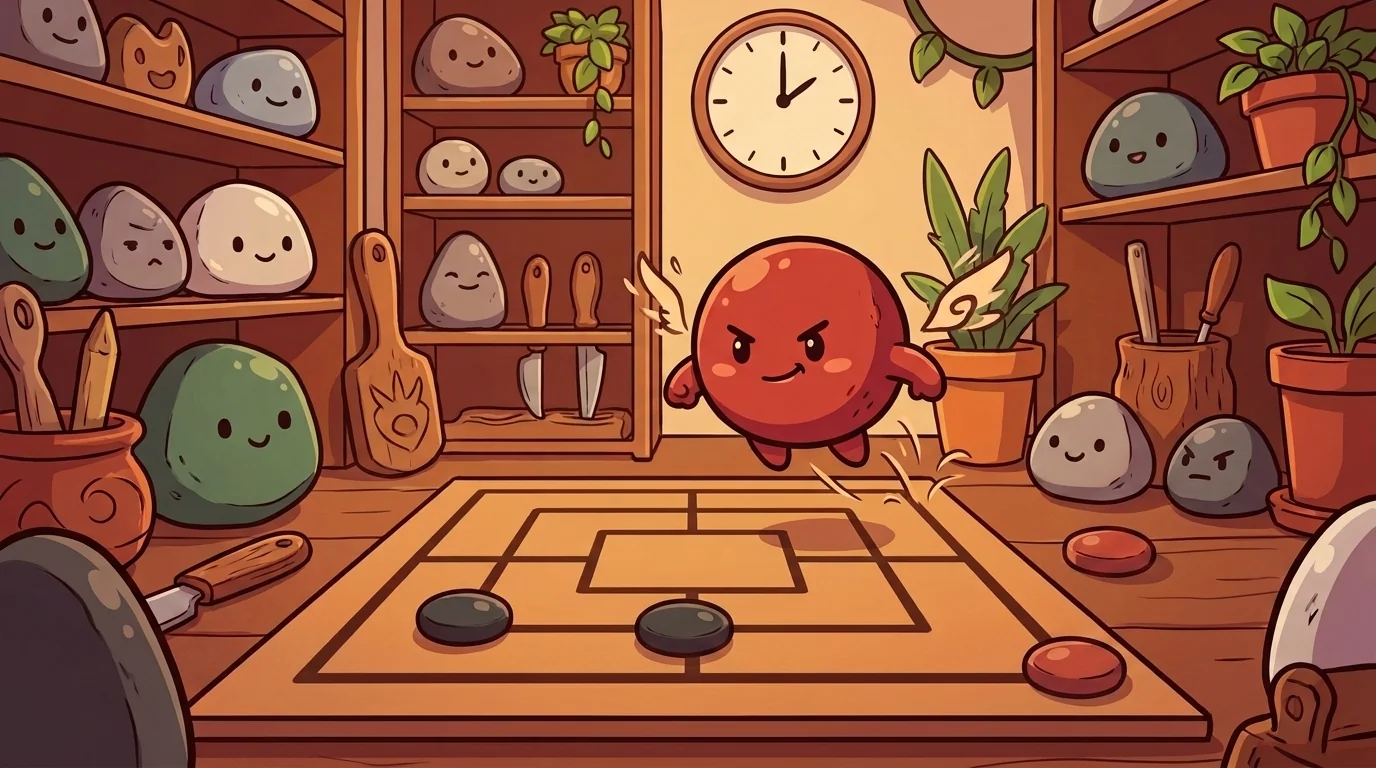
Faye had learned both halves of flying on the day she first earned her wings and nearly wasted them.
She'd been ground down, that game — nine pieces to three, cornered, certain she'd lost. And then she'd realized she could fly, and the sheer joy of it went to her head. She leapt about wildly, gleefully, landing wherever looked fun, drunk on her new freedom — and accomplished nothing, because flying anywhere is only powerful if you fly somewhere that matters. She'd been given a miraculous second chance and spent it swooping around for the thrill of swooping, and lost anyway, three pieces flapping uselessly about a board she could have saved.
An old flyer — a piece who'd come back from three pieces to win more than once — sat with her. "Flying isn't a magic escape, child," she said gently. "It's a fighting chance. The rule doesn't win the game for you; it just stops you from being helpless. You still have to fly well — land where it counts: block the mill that would finish you, complete the line that saves you, threaten from across the board. You got your wings and used them to play. Next time, get your wings and use them to fight." Faye never forgot it. She learned that the flying rule was not a rescue but an opportunity — and that an opportunity means nothing unless you're wise enough to use it. Down to three, she stopped swooping for joy and started flying with purpose, and discovered that a well-flown comeback was the sweetest game there was.
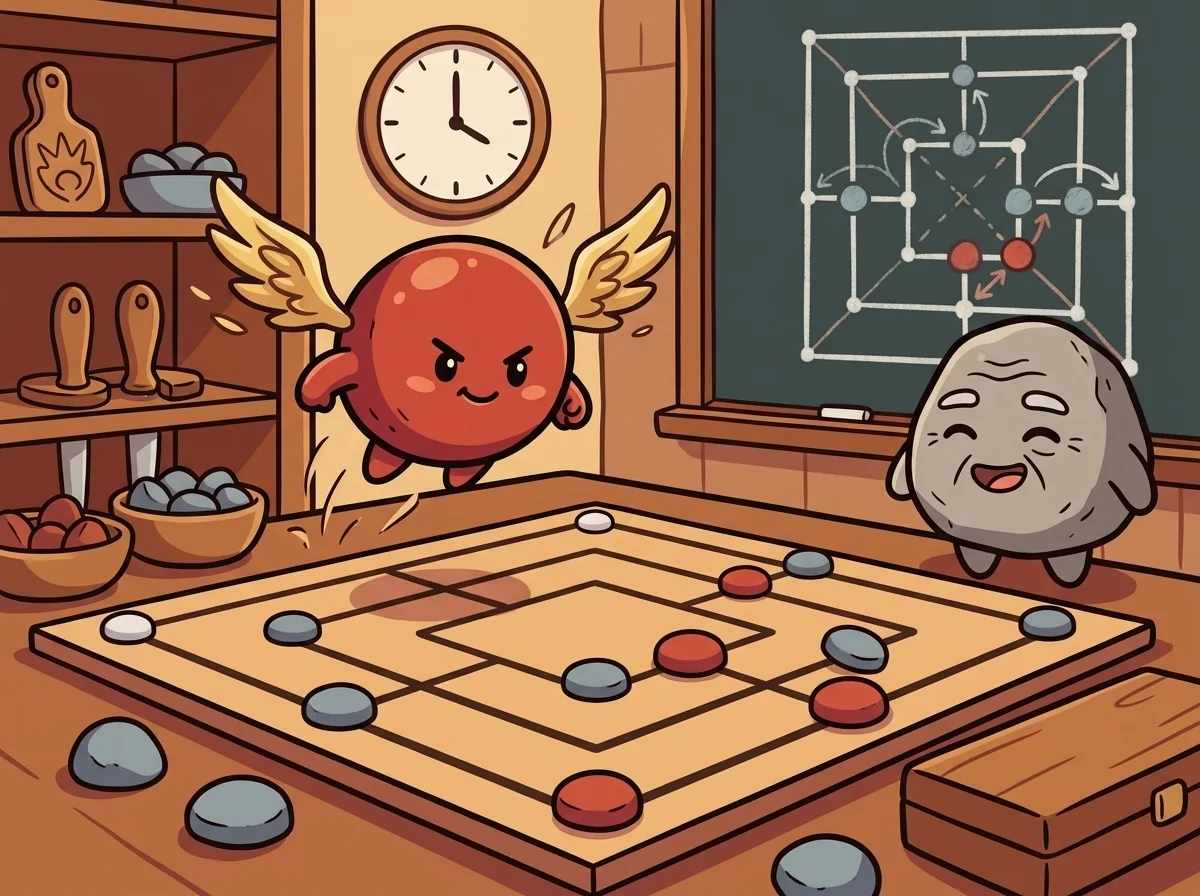
At the House of the Board, Faye arrived by leaping the last stretch of the path — she did enjoy an entrance — and the Elder laughed.
"The flying phase," the Elder said. "The mercy rule. Your students will meet it two ways — despairing when they're ground down to three, or flapping about wildly the moment they earn their wings. What will you teach?"
"Hope, and then discipline," said Faye. "First: down to three pieces is not the end — it's when you get your wings, and a flying piece can turn a lost game around. I want my students to stop despairing the moment they're cornered. But then the discipline: flying is a chance, not a win. I'll teach them to fly with purpose — to land where it saves them, blocks the enemy, threatens across the board — not just to swoop about because they finally can. The rule gives you a fighting chance. What you do with it is still up to you."
"Teach both," said the Elder. "The hope keeps them in the game; the discipline lets them win it."
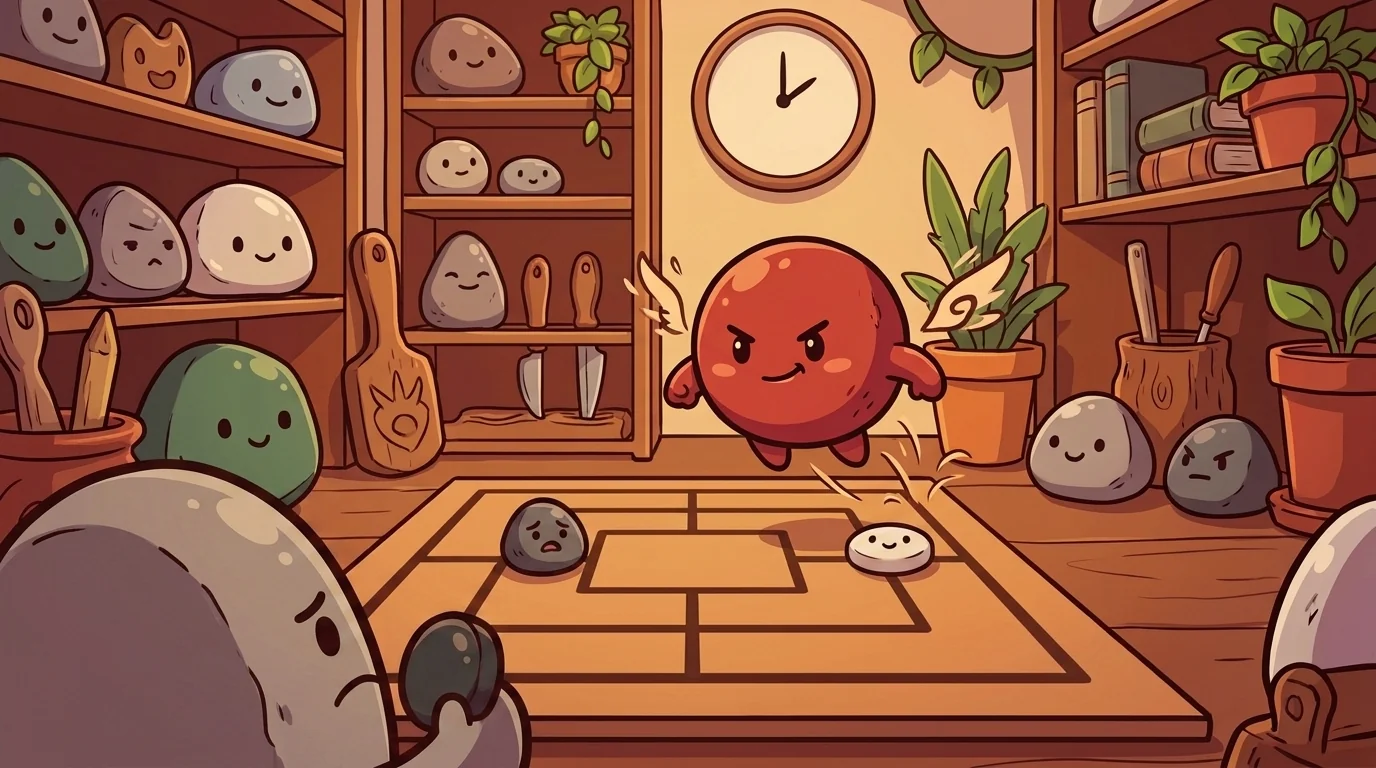
Faye's student was a piece named Lio who did both wrong things at different times. When ground down to three, he first despaired — I've lost — and gave up; and on the rare game he remembered he could fly, he'd swoop about wildly, landing anywhere, wasting the miracle.
"You're down to three pieces," Faye said. "How do you feel?" "Beaten," said Lio glumly. "You're not beaten. You just got your wings. Watch." Faye, down to three, did not despair and did not swoop for fun — she flew one piece clear across the board to block the exact mill that would have finished her, then flew another to complete a line of her own, threatening a snatch. Suddenly the "beaten" side was dangerous. "Flying isn't the end and it isn't a party," she told him. "It's a fighting chance, and you have to fly well. Land where it matters. Block what would kill you. Threaten from anywhere. Down to three, played with purpose, you can claw a whole game back."
Lio stopped despairing at three pieces and stopped swooping aimlessly. He flew with purpose — blocking, threatening, landing where it counted — and clawed back a game he'd been certain he'd lost, and the fierce joy of that comeback lit him up.
"Being nearly beaten was when I got strongest," Lio marveled.
"If you use it well," said Faye. "That's always the catch."
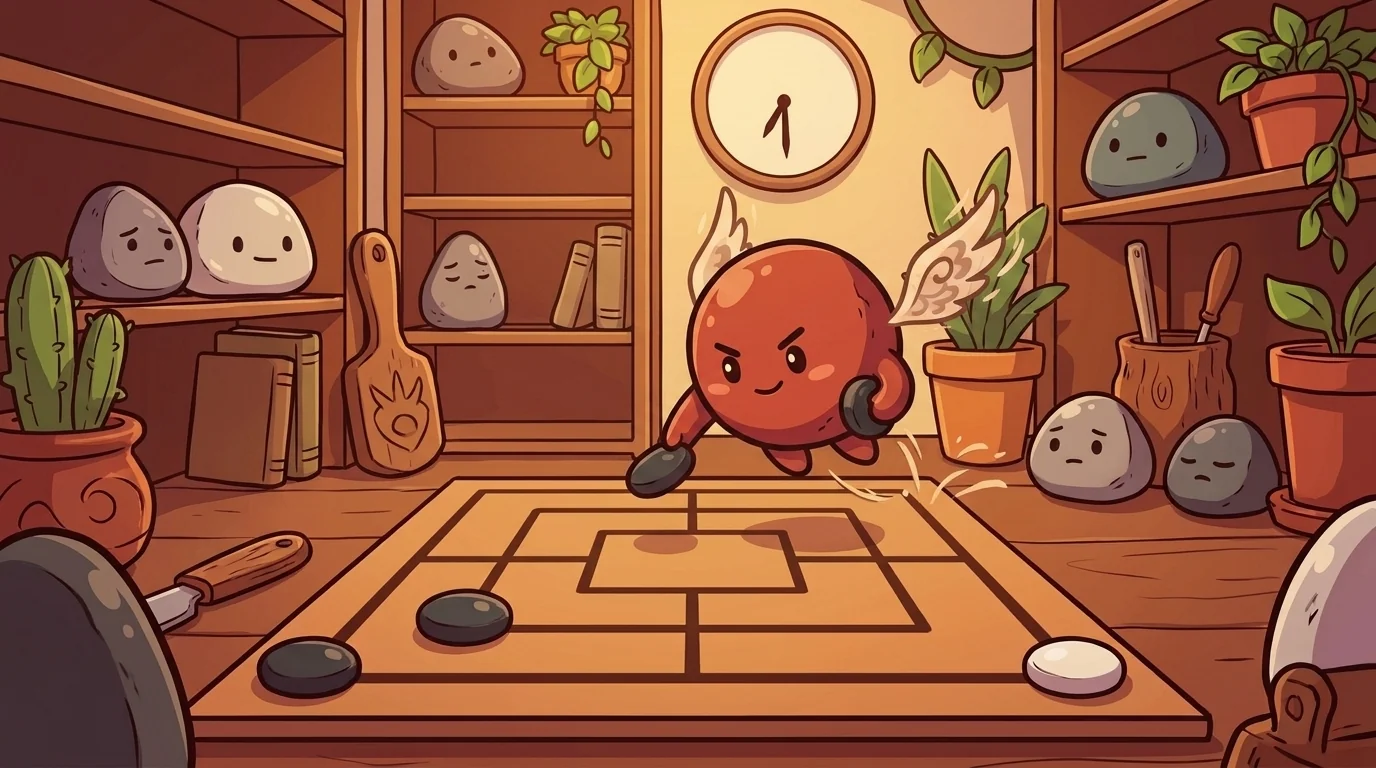
That evening Faye leapt slowly around the empty House — clear across, anywhere she liked — savouring the freedom that only ever came to her when the game had nearly taken everything else away.
She thought about the giddy young flyer who'd earned her wings and wasted them swooping for joy, and the old flyer who'd taught her that flying is a fighting chance and not a magic escape. She never despaired at three pieces anymore — and she never wasted her wings on aimless joy-flights either. She had learned to hold both truths at once: that being cornered could be the start of the best comeback of the game, and that a second chance only matters if you have the discipline to use it well.
There was a fierce, hopeful gladness in her that the comfortable nine-piece players would never know — the particular strength of someone who had been nearly beaten, again and again, and learned to find her wings exactly there, at the bottom, when everything else was gone. Down to three was not the end of Faye's story. It was, every time, where her story got interesting — and she had learned to meet that low, winged moment not with despair and not with giddiness, but with a steady, purposeful, high-flying resolve to turn the whole thing around.
The MillSong ensemble
Flyer Faye is part of MillSong's distributed-narrative cast. Each character embodies a different curricular primitive; together they teach the full subject.
-

Miller Mila
The mill: lining up three stones on a line
-

Snatch Nadia
Capture-on-mill: removing a piece the moment a mill closes
-

Guard Gwen
The not-in-a-mill rule: a stone inside a mill is safe
-

Block Bodhi
Blocking: dropping onto the empty point of an almost-mill
-

Spoke Sami
Prime points: the strong spoke midpoints (three mill lines each)
-

Corner Cato
Corner points: the low-value corners (two mill lines each)
-

Placer Pell
The placement phase: building a mill network with the nine
-

Slide Sile
The movement phase: sliding a stone to an adjacent point
-

Swing Sena
The swinging (running) mill: opening and re-closing to capture again
-

Reduce Remy
The endgame: winning by reducing the opponent to two
-

Elder Merel
The mills-puzzle elder (mentor): find-the-mill / which-to-take puzzles