Miller Mila
The MILL — three of your pieces in a line along one of the board's sixteen mill-lines; forming it is the heart of the whole game
Loading audio…
Press play to listen along. The line being read lights up as you go.
Show full transcript
Loading transcript…
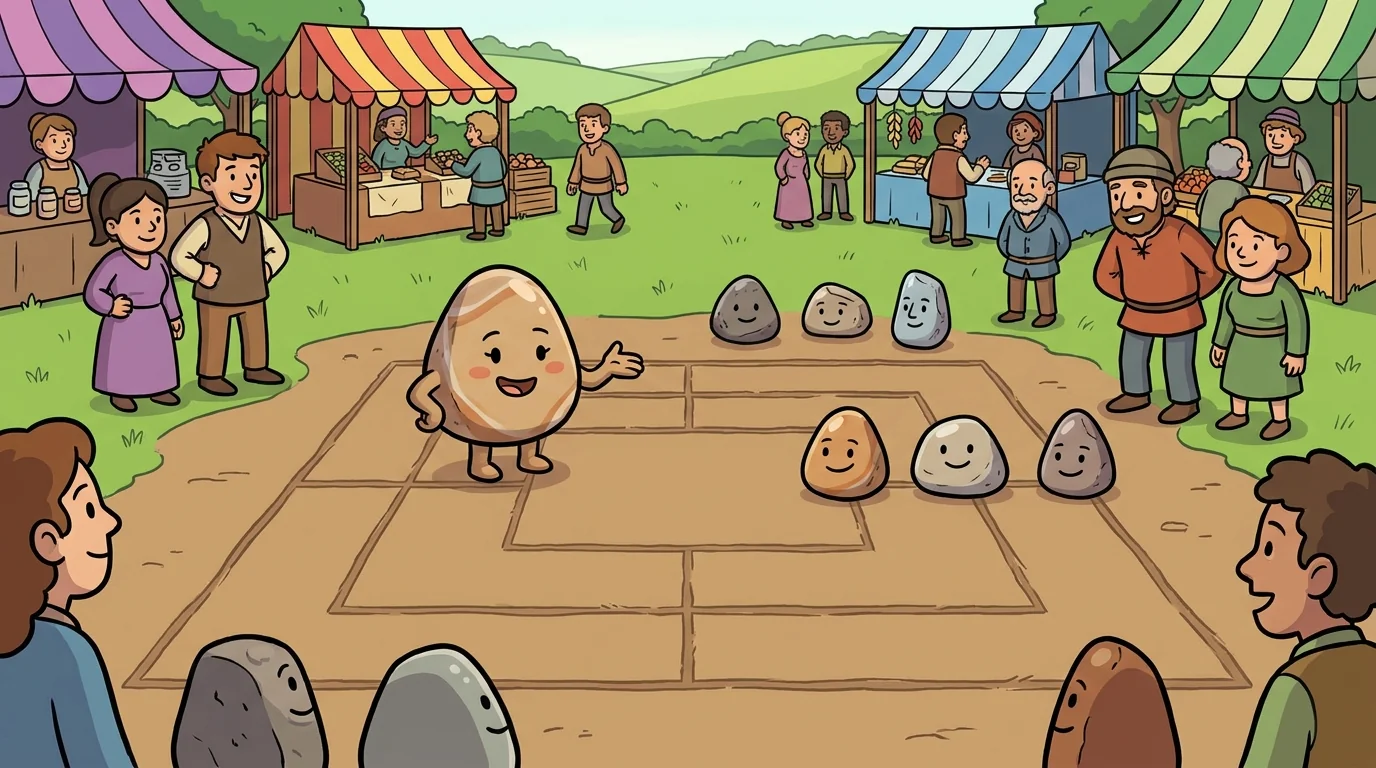
On village greens and market squares the world over, wherever people scratched three squares inside each other into the dirt and gathered to play, there was a pattern everyone was hunting — and the keeper of that pattern was a bright, patient piece named Mila.
Mila's whole art was the mill: three pieces in a straight line, all yours, sitting in a row along one of the board's lines. It sounds simple. It is the entire soul of the game. A mill was not three pieces near each other, or three pieces that happened to be friends — it was three pieces lined up, exactly, along one of the sixteen paths the board allowed, so that three separate stones became one shining, powerful whole.
"People think I just put stones in a row," Mila would say, laying her pieces down one at a time. "But a mill isn't three stones. It's three stones that have agreed — that point the same way, hold the same line. Three stones scattered about are nothing. Three stones in a mill can change the whole game." She had a way of tilting her head at an almost-finished row, seeing the pattern before it was there. "The line comes first, in your mind. Then you spend three quiet turns making the board catch up to what you already saw."
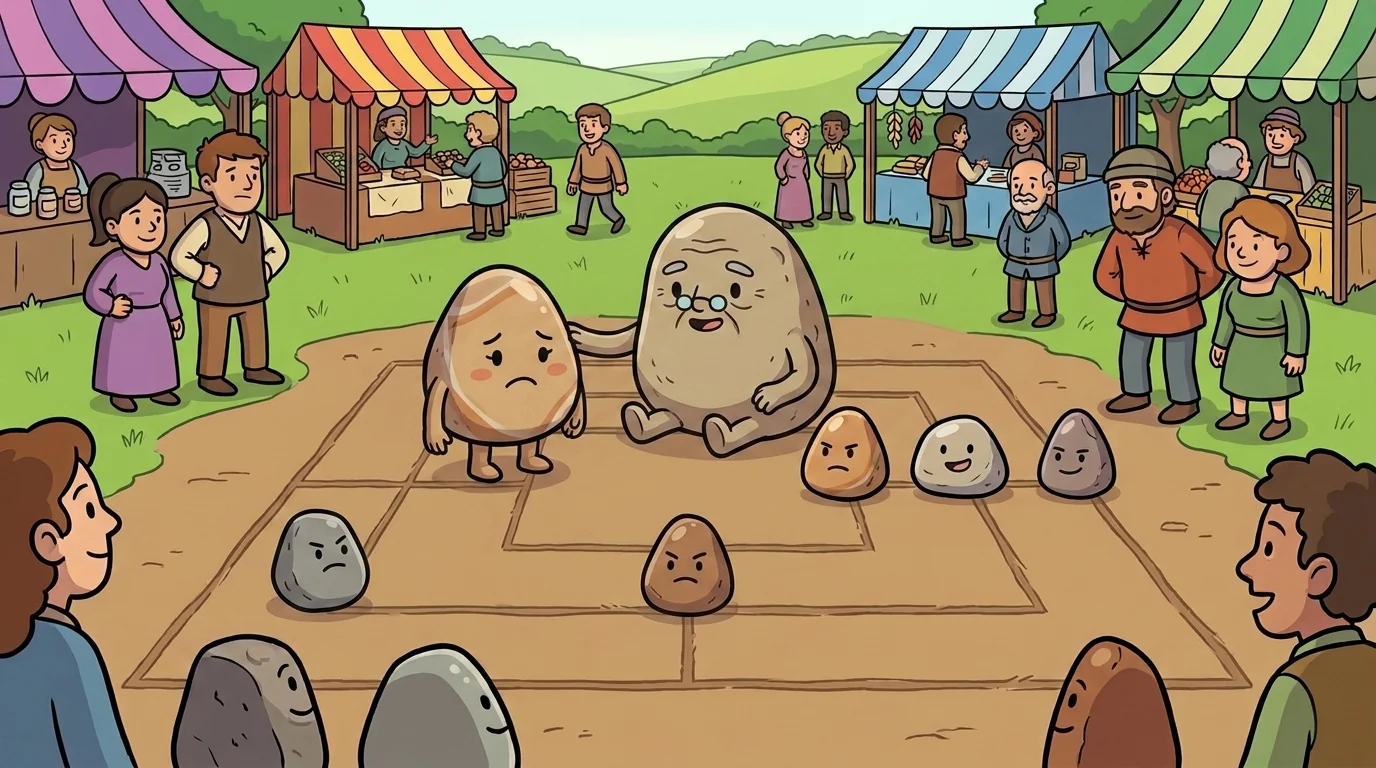
Mila had learned the deep patience of the mill on a day she'd tried to build one too fast, all at once, in a panic.
She'd been young and greedy for mills. She'd seen a line she wanted and lunged for it — grabbing at the third point before she'd properly secured the first two, so desperate to close the mill that she left her early pieces undefended and scattered. And her clever opponent had simply taken one of the two she'd rushed to place, breaking her half-built line before it was ever whole. Mila had reached for the pattern before she'd earned it, and gotten nothing but two lonely stones and a gap where a mill should have been.
She sat with her broken half-line, cross and embarrassed, and an old miller — a piece who'd closed a thousand mills — sat beside her. "A mill is three turns of faith," the old piece said. "You placed the first stone and immediately wanted the reward. But a mill is built, child, not grabbed. First stone: a promise. Second stone: the line becomes possible, and now you must protect it. Third stone: only now, and only if the first two survived, does the pattern close. You keep trying to skip to the third turn. You can't. You have to hold the line while it's still just a line."
Mila never forgot it. A mill was not a move. It was three patient turns of believing in a pattern before it existed — and guarding it while it was still too weak to guard itself.
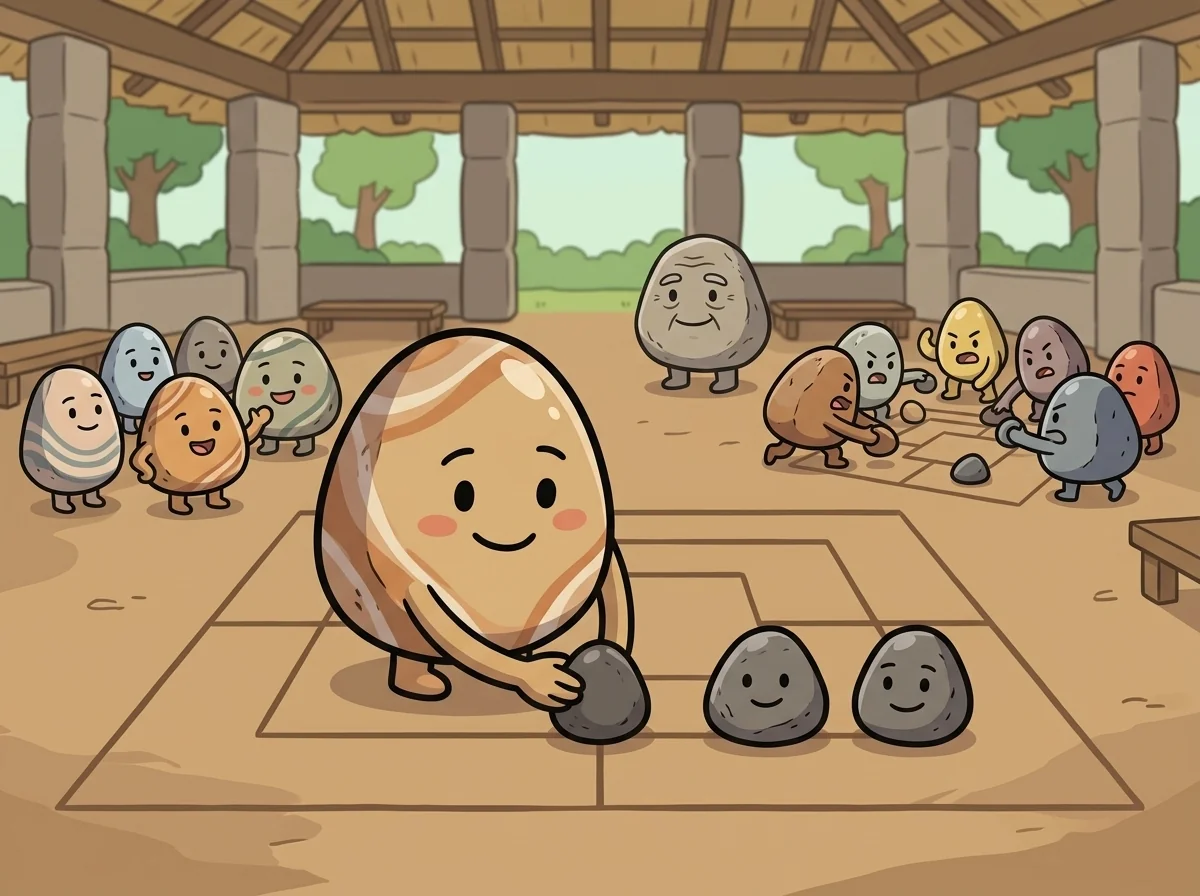
When Mila came to the House of the Board, the Elder who kept it watched her lay down a slow, sure row and nodded.
"The mill," the Elder said. "The whole game bends around you. But every young player who admires you is greedy for mills — they grab, they rush, they scatter stones hunting a line and never actually close one. What will you teach that they don't already want?"
"Patience," said Mila simply. "They all want the mill. None of them want the three quiet turns it takes to earn one. I can teach them to see the line first — in their head, before it's real — and then to place one stone at a time and protect what they've started, instead of lunging for the finish and losing the beginning. A mill isn't a grab. It's a promise you keep for three turns running."
"Then teach them the keeping," said the Elder, "for the grabbing they already know too well."
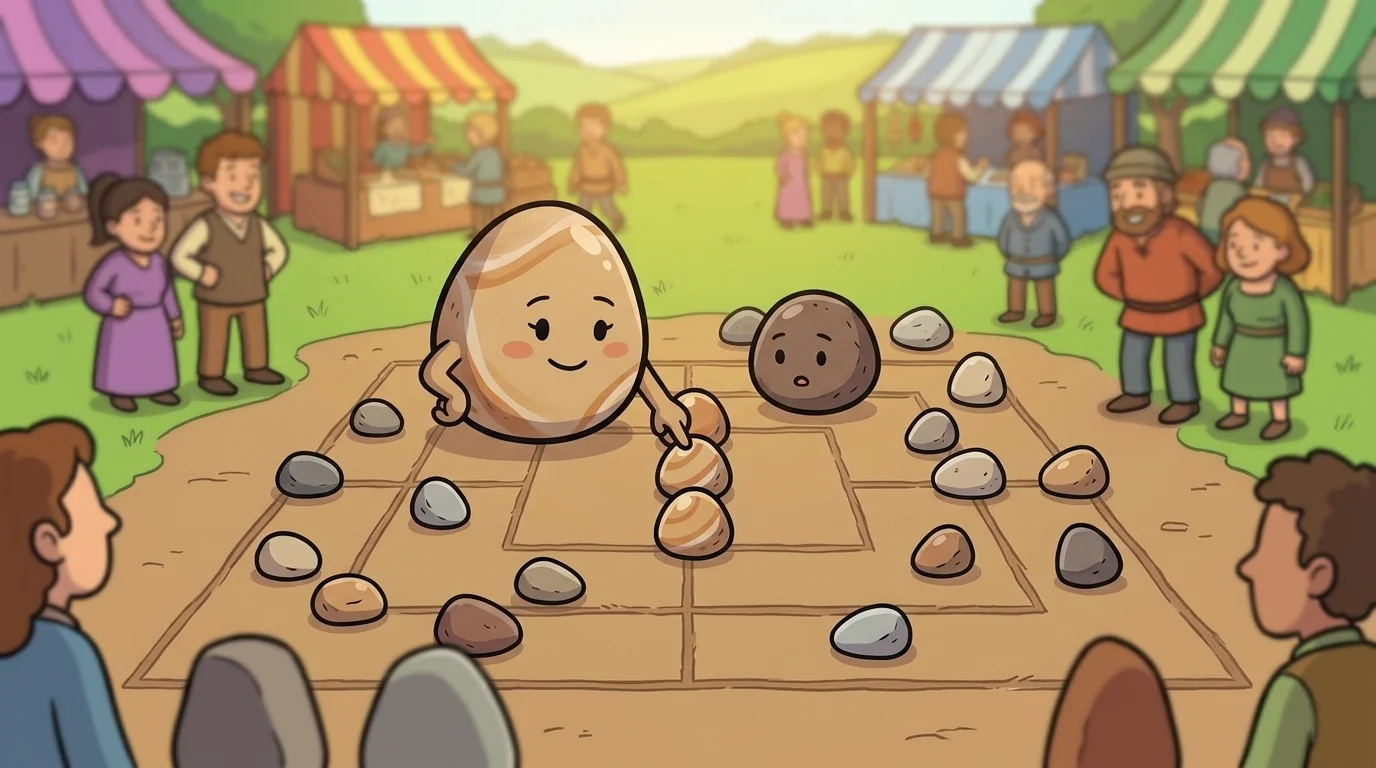
Mila's student was an impatient boy named Ori who scattered stones all over the board hunting mills and never finished a single one. He'd start a line here, get distracted and start another there, and end up with a dozen half-lines and no whole ones.
"You've got six almost-mills," Mila told him, "and that's the same as zero mills. Watch what one finished line is worth." She chose a single mill-path and committed to it — first stone, a promise; second stone, and now she guarded it, refusing to be lured off to a shinier half-line elsewhere; third stone, patiently, only when the first two were safe — click, a whole mill, gleaming. "One finished mill beats six started ones. You keep falling in love with new lines and abandoning your old ones. Pick a line. Believe in it. Place, protect, close — in that order — and don't wander off before it's whole."
Ori looked at his scattered half-lines and, for the first time, chose one. He placed. He protected — turning down two tempting new half-lines to keep the one he'd started safe. And on the third turn, the line closed with a click he felt in his chest.
"It's better to finish one than to start ten," he said, wonderingly.
"That," said Mila, "is the whole art of the mill."

That evening Mila laid out a single slow mill in the empty House, one stone at a time, just to feel the pattern come together — promise, then guarding, then the quiet click of the whole.
She thought about the greedy young piece who'd lunged for a line and gotten two lonely stones, and the old miller who'd taught her that a mill is three turns of faith. She did not grab at patterns anymore. She had learned to see the line in her mind, plain and certain, and then to wait — to spend three unglamorous turns letting the board slowly become what she'd already pictured, guarding the half-built thing when it was weakest.
There was a deep, settling gladness in that final click — the moment three separate stones stopped being separate and became one whole line, one true mill, greater than the sum of them. It never got old. She had felt it a thousand times and it still warmed her every time: the small, patient joy of things finally lining up — of a pattern she'd believed in before anyone else could see it, kept faith with through three quiet turns, coming true at last under her waiting hand.
The MillSong ensemble
Miller Mila is part of MillSong's distributed-narrative cast. Each character embodies a different curricular primitive; together they teach the full subject.
-

Snatch Nadia
Capture-on-mill: removing a piece the moment a mill closes
-

Guard Gwen
The not-in-a-mill rule: a stone inside a mill is safe
-

Block Bodhi
Blocking: dropping onto the empty point of an almost-mill
-

Spoke Sami
Prime points: the strong spoke midpoints (three mill lines each)
-

Corner Cato
Corner points: the low-value corners (two mill lines each)
-
Placer Pell
The placement phase: building a mill network with the nine
-

Slide Sile
The movement phase: sliding a stone to an adjacent point
-

Swing Sena
The swinging (running) mill: opening and re-closing to capture again
-

Flyer Faye
The flying phase: hopping anywhere once down to three men
-
Reduce Remy
The endgame: winning by reducing the opponent to two
-

Elder Merel
The mills-puzzle elder (mentor): find-the-mill / which-to-take puzzles