Snatch Nadia
CAPTURE ON MILL — the instant you close a mill, you remove one of the opponent's pieces from the board
Loading audio…
Press play to listen along. The line being read lights up as you go.
Show full transcript
Loading transcript…
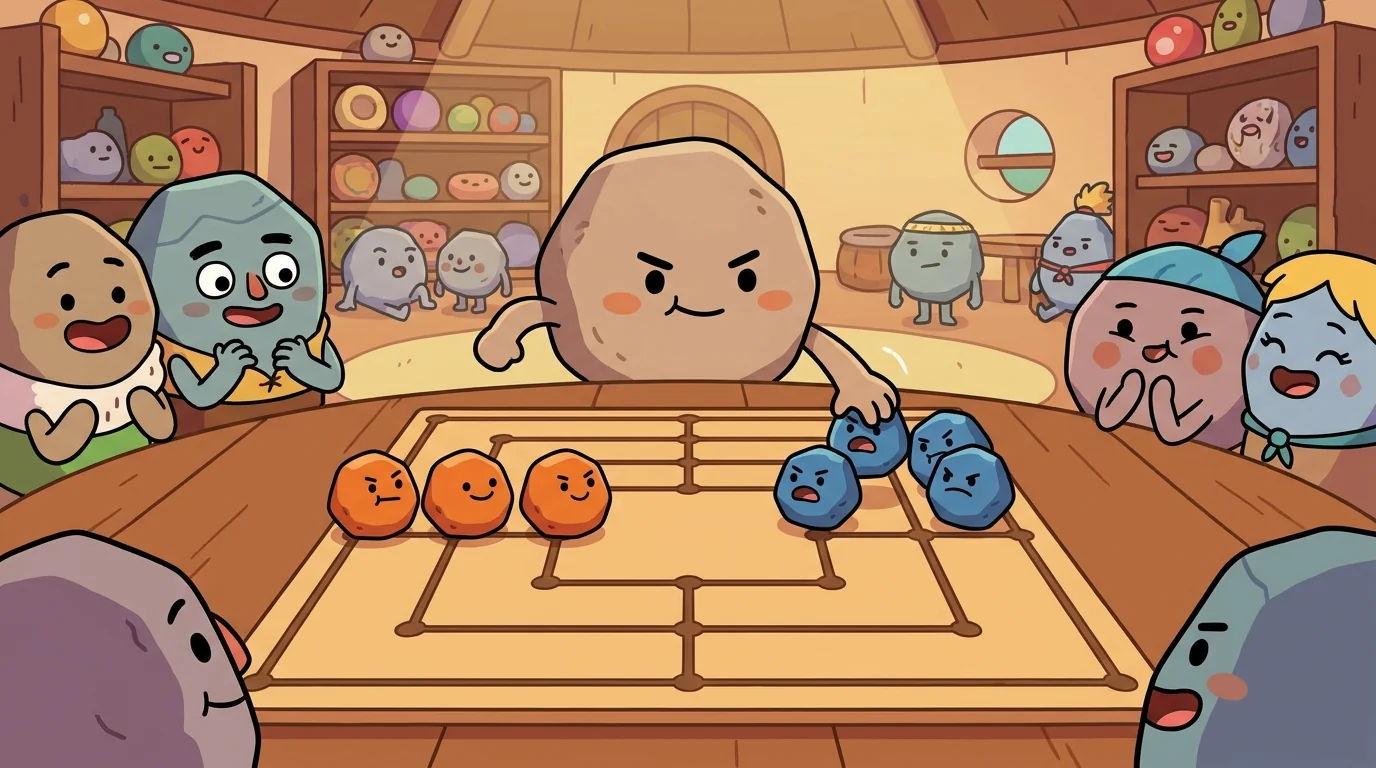
Whenever a line clicked shut on the village boards — whenever three pieces snapped into a mill — a piece named Nadia got to do the thing everyone in the game secretly played for: she got to reach across and take an enemy piece clean off the board.
Nadia was the reward at the end of Mila's patient work. Mila built the mill; Nadia collected the prize. The moment a mill closed, one enemy stone was hers to remove — plucked off the board, gone for good. It was the sharpest, most satisfying moment in the whole game, the little snatch that turned a patient pattern into an actual advantage.
But — and Nadia was very clear about this — she only got one. One mill, one capture, one piece removed, and then the moment was over. "People think the exciting part is the taking," she said, weighing an enemy piece in her hand before deciding its fate. "The exciting part is the choosing. I close a mill, and for one heartbeat the whole enemy board is mine to pick from. One piece. Choose it well, and I've crippled them. Choose it lazily, and I've wasted the best moment in the game."
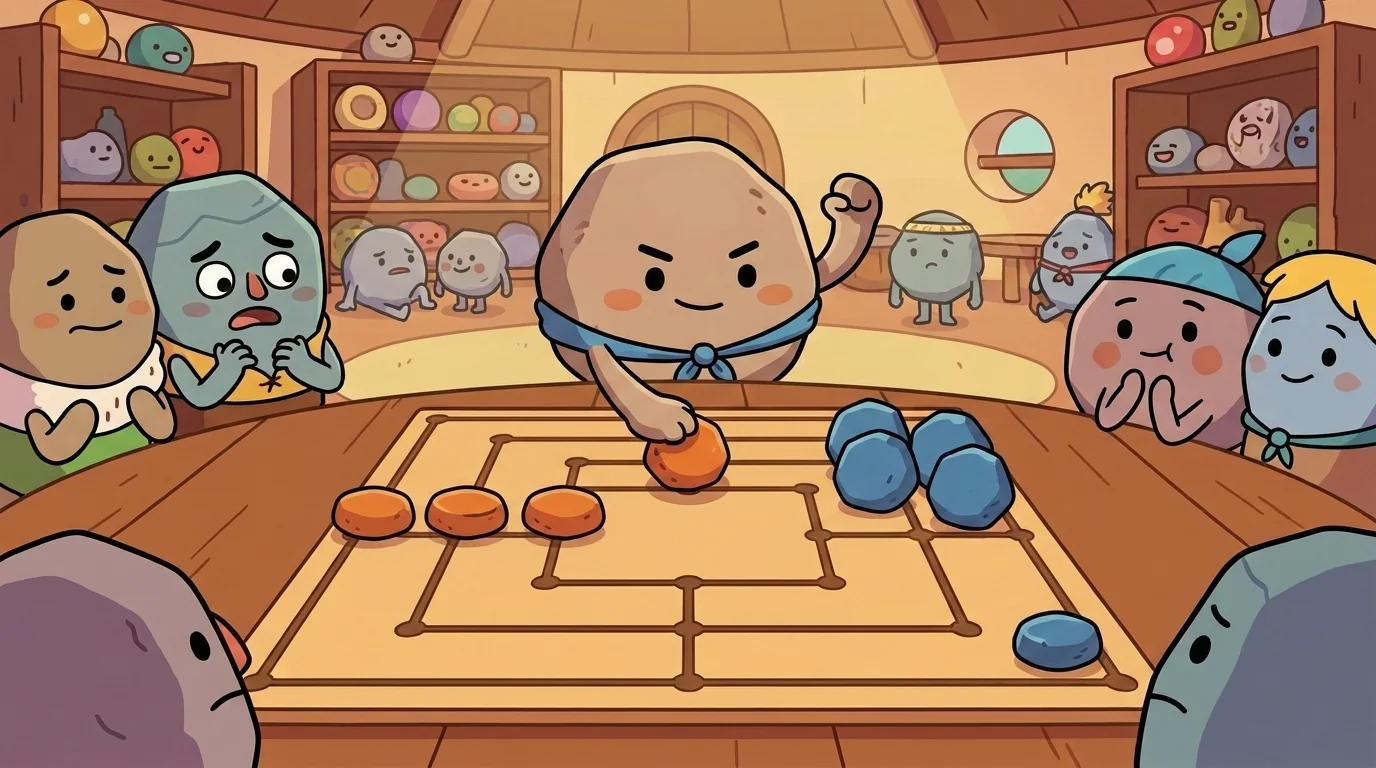
Nadia had learned the cost of a lazy snatch on a day she'd taken the nearest, easiest piece and lost the game for it.
Her mill had clicked shut, glorious, and there — right beside her hand — sat an enemy corner piece, alone, harmless, easy. She'd taken it without a thought, because it was right there. And across the board, ignored, sat the enemy's dangerous piece, the one sitting on a busy crossroads with four roads running out of it, the one that was two turns from closing a mill of its own. Nadia had taken the harmless stone and left the dangerous one, and three turns later that dangerous stone closed its mill and snatched her piece right back, and went on to win.
She sat afterward, furious with herself. She'd had the enemy's whole board to choose from and she'd picked the piece that mattered least. "The snatch was never the point," she said slowly, understanding at last. "Any fool can take a stone. The skill is knowing which stone hurts them most to lose — the one on the crossroads, the one about to build a mill, the one that's holding their whole plan together. I had a free choice and I threw it away on the easy one." She promised herself she'd never again let convenient stand in for right.
After that, whenever a mill clicked shut, Nadia made herself pause — one deliberate heartbeat — and look at the whole enemy board, and ask not which is easiest? but which one, gone, would hurt them most?
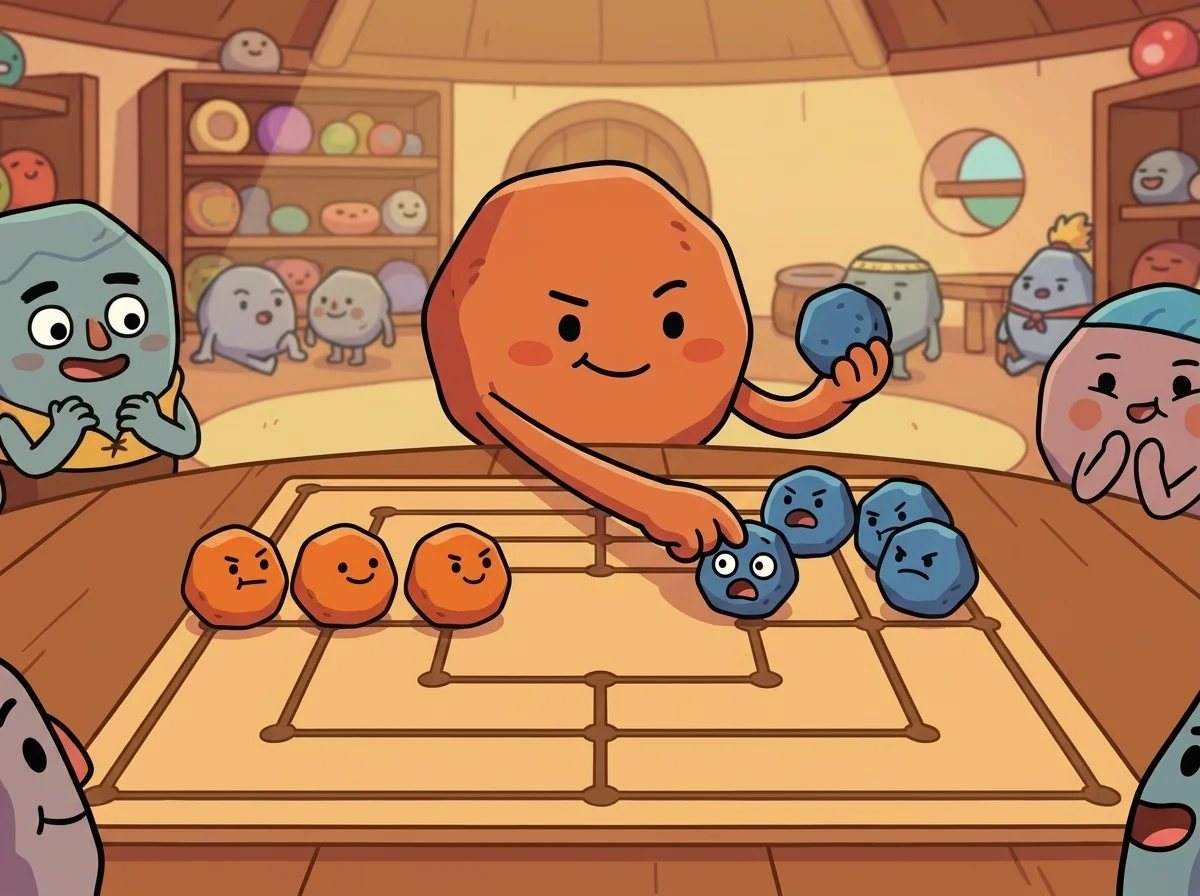
At the House of the Board, Nadia arrived with the brisk confidence of a piece who got to make the best choice in the game, and the Elder studied her.
"The capture-on-mill," the Elder said. "The reward everyone plays for. And the reward everyone wastes — snatching the nearest piece and calling it a turn well spent."
"That's exactly what I've come to fix," said Nadia. "Your students work so hard to build a mill, and then they throw away the prize by grabbing whatever's closest. I can teach them the real skill — that closing the mill only earns the choice; it doesn't make it. When my line clicks shut, I stop, I look at the whole enemy board, and I take the piece they can least afford to lose. The crossroads stone. The half-built-mill stone. The keystone. Not the easy corner." She smiled. "A well-chosen snatch is worth three lazy ones."
"Teach the choosing," said the Elder, "since the taking teaches itself."
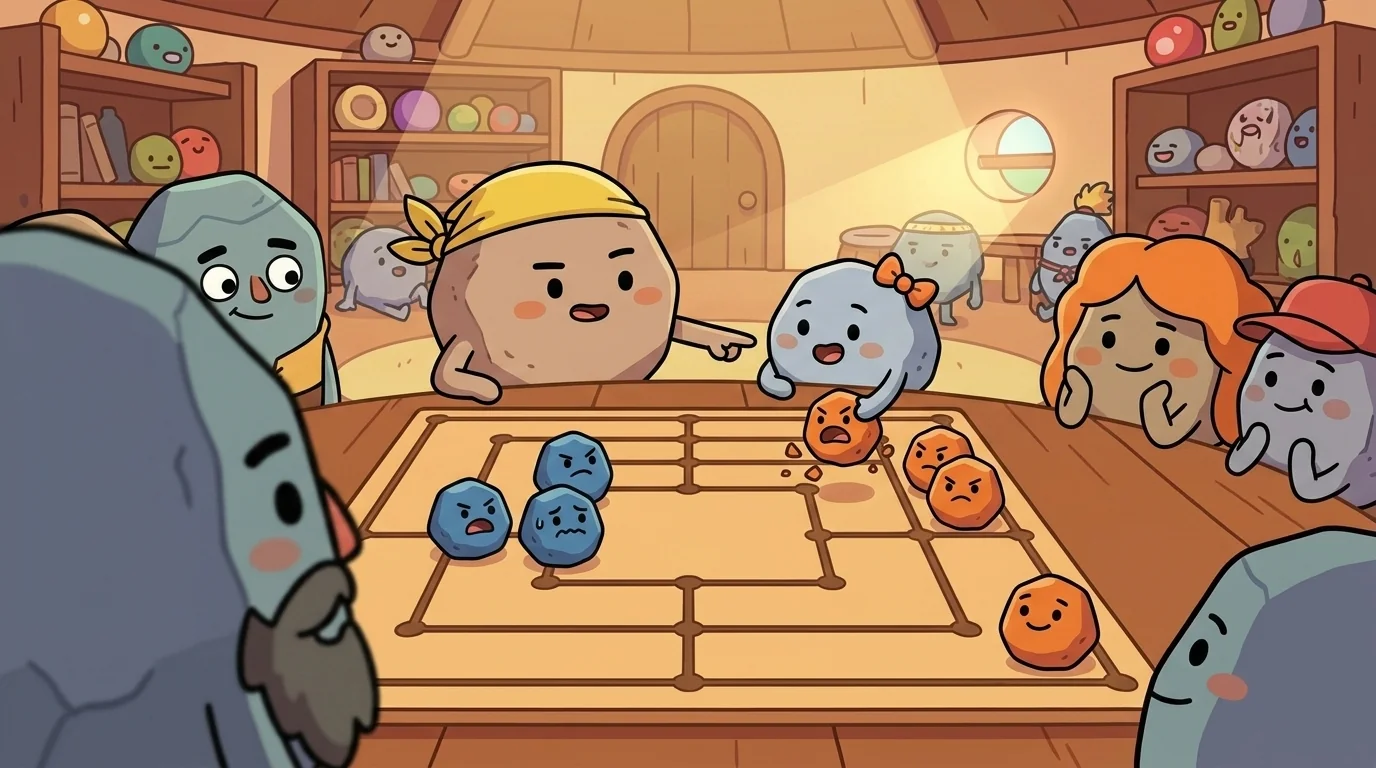
Nadia's student was an eager girl named Priya who built mills well and then snatched terribly — always the nearest, safest, most convenient enemy piece, every time, on reflex.
"You just closed a beautiful mill," Nadia told her. "Now — before you grab that corner stone by your hand — look up. What's the most dangerous piece the enemy has?" Priya looked, reluctantly, across the whole board. "...That one. On the busy junction. It's about to make its own mill." "So which one should you take?" Priya's hand hovered over the easy corner, then moved — across the board — to the dangerous junction piece, and plucked it off. The enemy's half-built mill collapsed. Their whole plan sagged. "That's a snatch," said Nadia. "Same mill. Same one capture. But you spent it on the piece that mattered, instead of the piece that was handy. That's the difference between a turn and a win."
Priya looked at the wreckage of the enemy's plan, undone by one well-chosen capture, and never grabbed the easy corner again.
"Building the mill was only half the work," she realized.
"The choosing," said Nadia, "was always the other half."
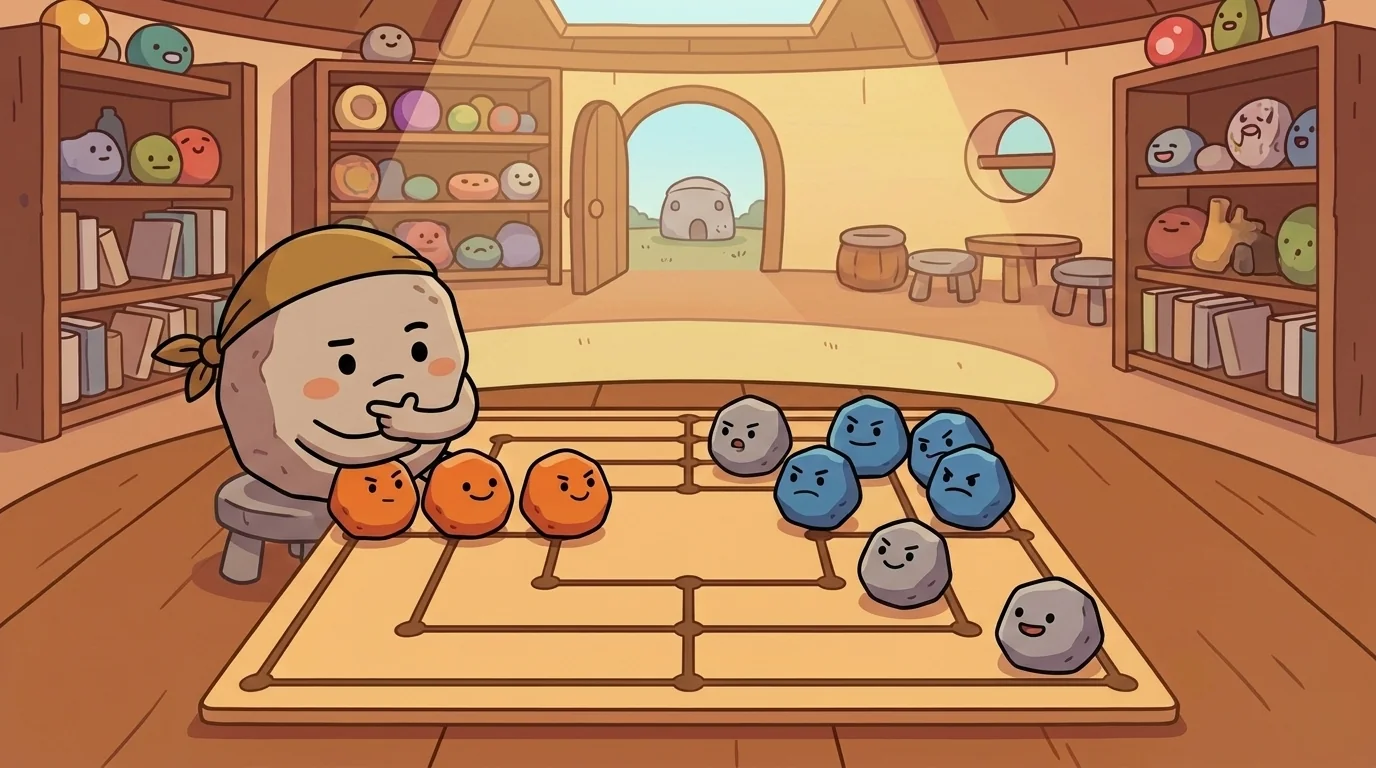
That evening Nadia sat alone in the House with a single closed mill in front of her and the whole imagined enemy board spread out beyond it, practising the pause — the one deliberate heartbeat between the line clicks and the piece is taken.
She thought about the lazy snatch that had lost her a whole game, the harmless corner she'd grabbed while the dangerous crossroads stone sat ignored, and the fury of realizing she'd been handed the best choice in the game and wasted it on the easiest thing in reach. She never let convenient choose for her anymore. She'd learned that the taking was nothing — the taking was easy — and that all the real skill, all the real game, lived in the quiet heartbeat where she looked at the whole board and chose.
There was a clean, considered satisfaction in a well-chosen capture that a lazy grab could never give — the satisfaction of a piece who had earned a choice and made it well, who had looked past the easy thing to find the right one. The click of the mill was Mila's joy. But the pause after it — the looking, the weighing, the choosing of exactly the stone that mattered most — that quiet, careful heartbeat was Nadia's, and she had come to love it more than the snatch itself.
The MillSong ensemble
Snatch Nadia is part of MillSong's distributed-narrative cast. Each character embodies a different curricular primitive; together they teach the full subject.
-

Miller Mila
The mill: lining up three stones on a line
-

Guard Gwen
The not-in-a-mill rule: a stone inside a mill is safe
-

Block Bodhi
Blocking: dropping onto the empty point of an almost-mill
-

Spoke Sami
Prime points: the strong spoke midpoints (three mill lines each)
-

Corner Cato
Corner points: the low-value corners (two mill lines each)
-
Placer Pell
The placement phase: building a mill network with the nine
-

Slide Sile
The movement phase: sliding a stone to an adjacent point
-

Swing Sena
The swinging (running) mill: opening and re-closing to capture again
-

Flyer Faye
The flying phase: hopping anywhere once down to three men
-
Reduce Remy
The endgame: winning by reducing the opponent to two
-

Elder Merel
The mills-puzzle elder (mentor): find-the-mill / which-to-take puzzles