
Elder Merel
THE MILLS PUZZLE — a set position with a single best move (find the mill, block the threat, choose the capture); the discipline of reading the WHOLE board before touching a piece
Loading audio…
Press play to listen along. The line being read lights up as you go.
Show full transcript
Loading transcript…
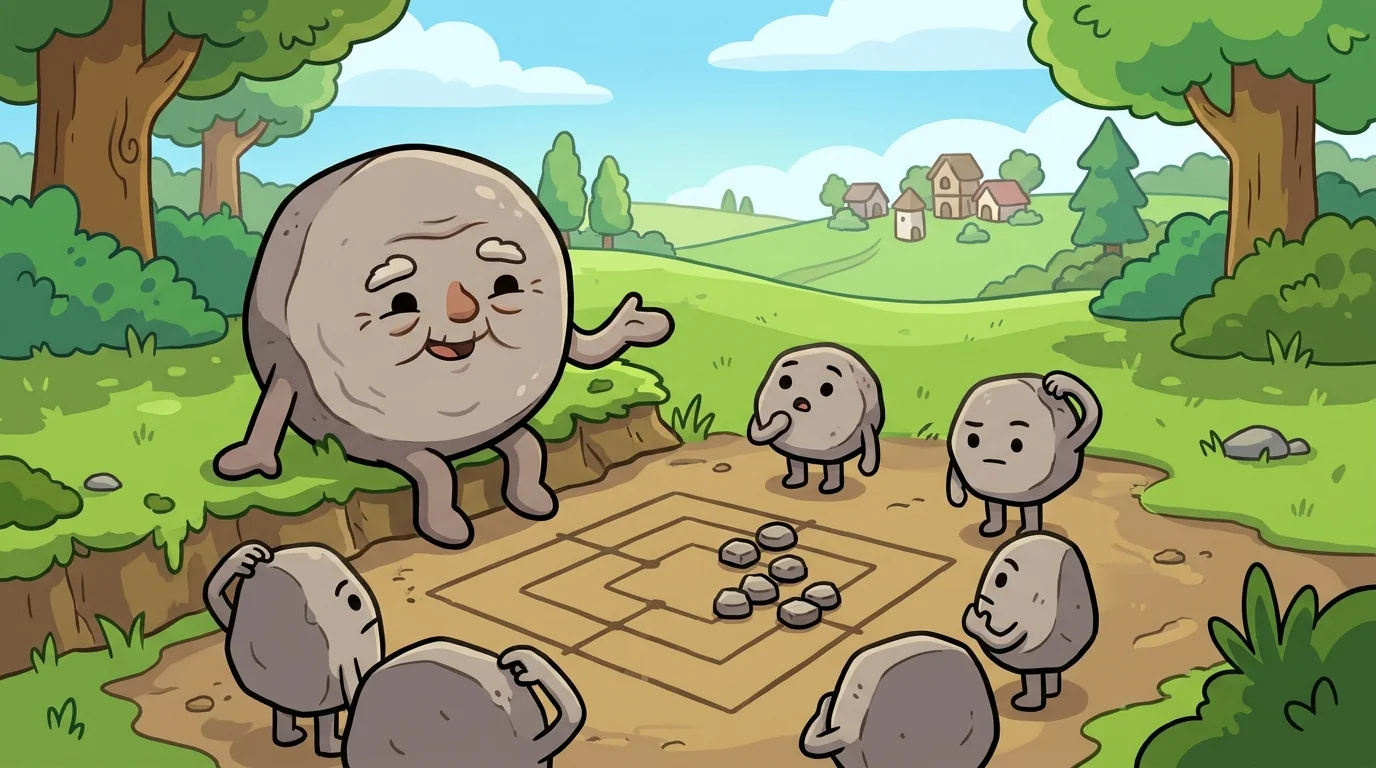
Elder Merel never told a student the answer first. She set a position, folded her hands, and asked the same infuriating question: "What do you see?"
Today she'd set a hard one — nine pieces a side, mid-slide, four mill-lines live with tension. A young student reached instantly for an obvious move, a slide that closed a mill on the top edge.
"Stop," Merel said, not unkindly. "You saw one mill and your hand moved. That's the whole disease of this game — playing the first mill you notice instead of the best move on the board. Put your hand in your lap. Now read."
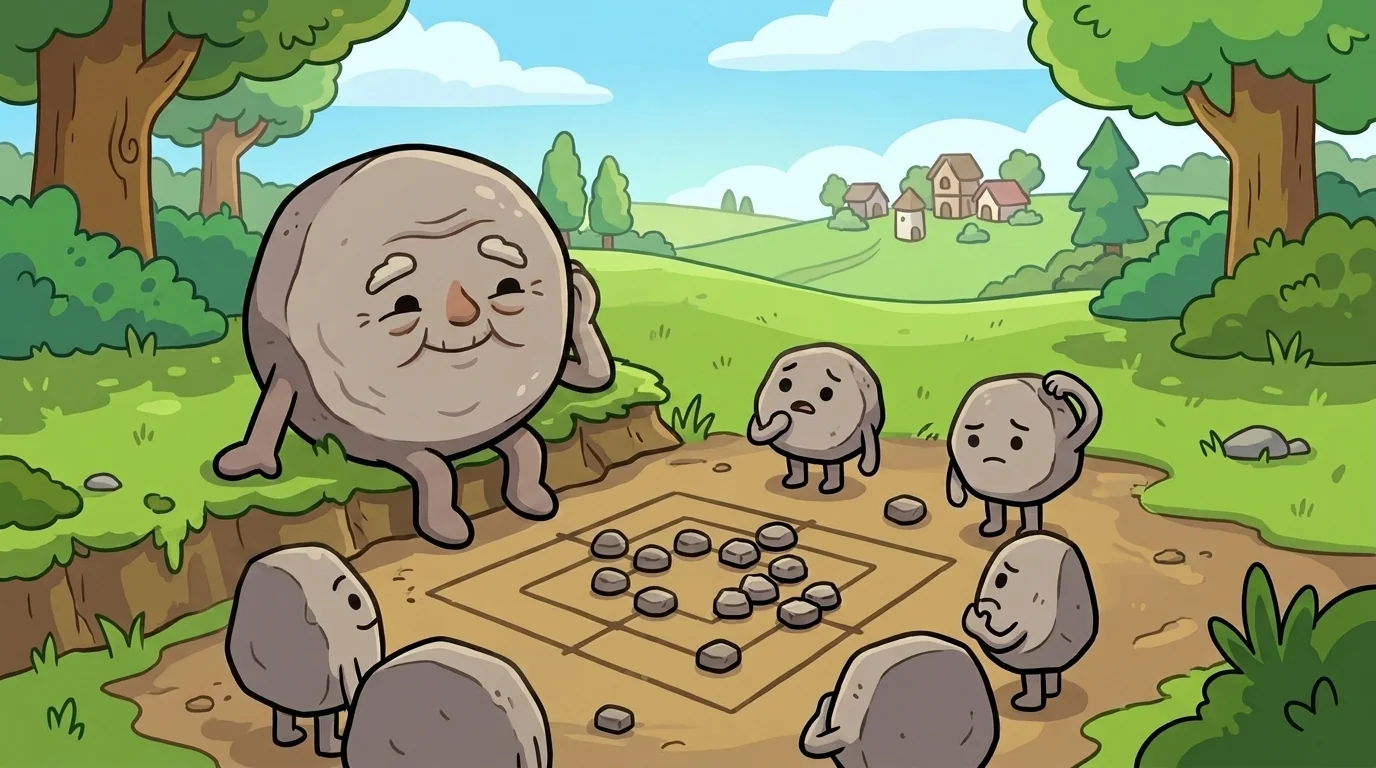
Reading, Merel taught, was a fixed order — the same three passes every time, before a single piece moved.
"First pass: find every mill YOU can close this turn. Not eventually. This turn. There may be one, there may be three, there may be none. Second pass: find every mill your OPPONENT can close on their next turn — their almost-mills that can truly slide shut. Third pass: only now, holding both lists in your head, ask which of your moves does the most — closes a mill, or blocks their best threat, or, best of all, does both at once." She tapped the board. "You did none of that. You saw a mill and grabbed it."
The student looked again, slower this time, and went pale. "If I close the top mill... they close the mill on the left spoke next turn, and it captures my keystone. But if I block the left spoke instead — I don't close any mill this turn, but they can't either, and next turn I close two."
"Now you're reading," Merel said.

She explained the reward of the discipline in a way the older ones understood ran deeper than morris.
"The board holds all its information in the open. Nothing is hidden. Every mill, every threat, every capture is right there to be counted — if you'll only look before you move. Losing at this game is almost never about not knowing the rules. It's about not reading — about letting your hand answer before your eyes have finished. The player who reads the whole board slowly beats the player who reacts to it quickly, nearly every time."
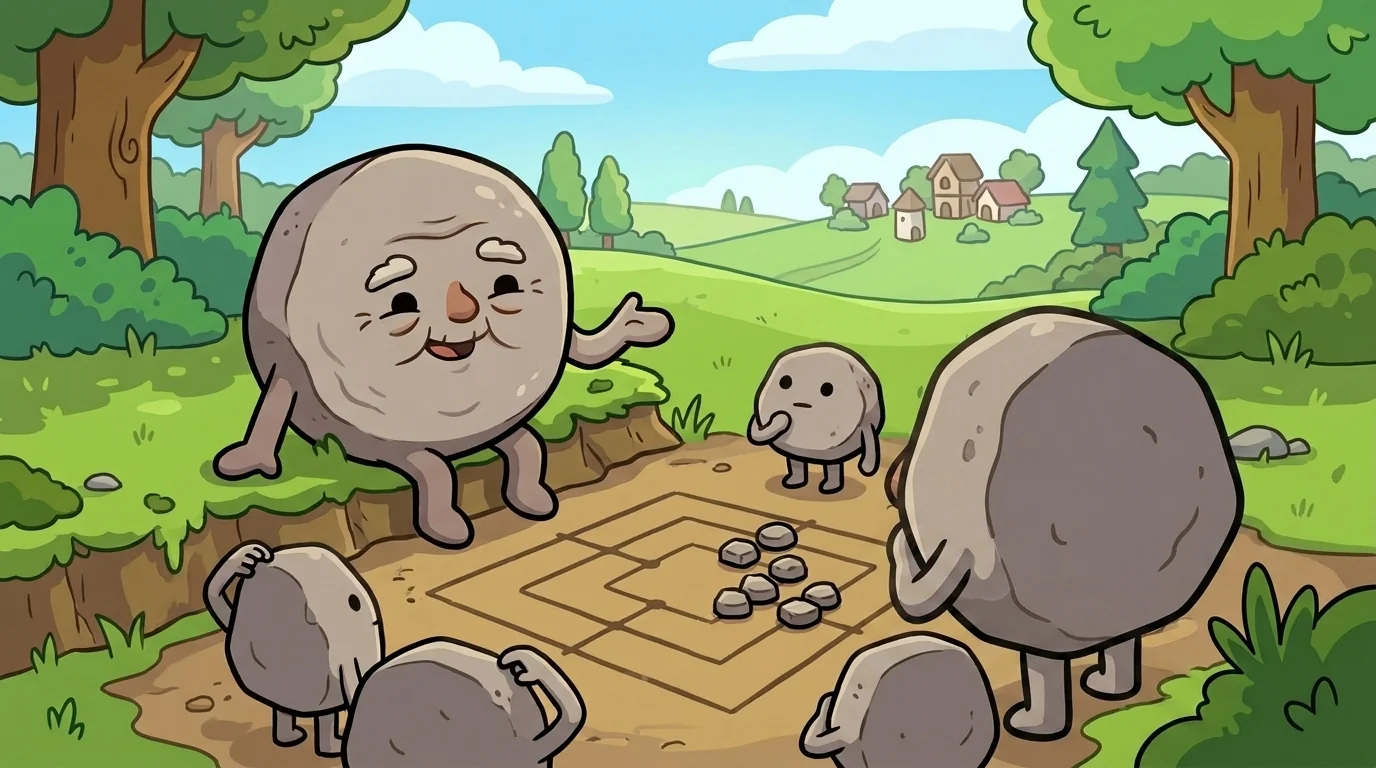
Merel's puzzles came in three kinds, and she named them so students could feel which muscle each worked.
"Find-the-mill: a position where you can close a mill this turn, but only one slide does it cleanly — the others open you to a capture. Block-it: a position where you can't build, so the whole task is choosing which of the enemy's threats to deny. Which-to-take: a position where you've just closed a mill and now must choose which enemy piece to capture." She set the last kind. "This is the one students get wrong most. You closed a mill — now you may take a piece. Which?"
The student pointed to a piece sitting alone in a corner. "That one. It's easy to reach."
"Wrong muscle," Merel said. "Never take the easy piece. Take the piece that hurts them most — the keystone that holds three of their lines, or the runner in their swinging mill. A capture is a whole turn's reward; spend it on the piece whose absence breaks their plan, not the pebble that was doing nothing anyway."
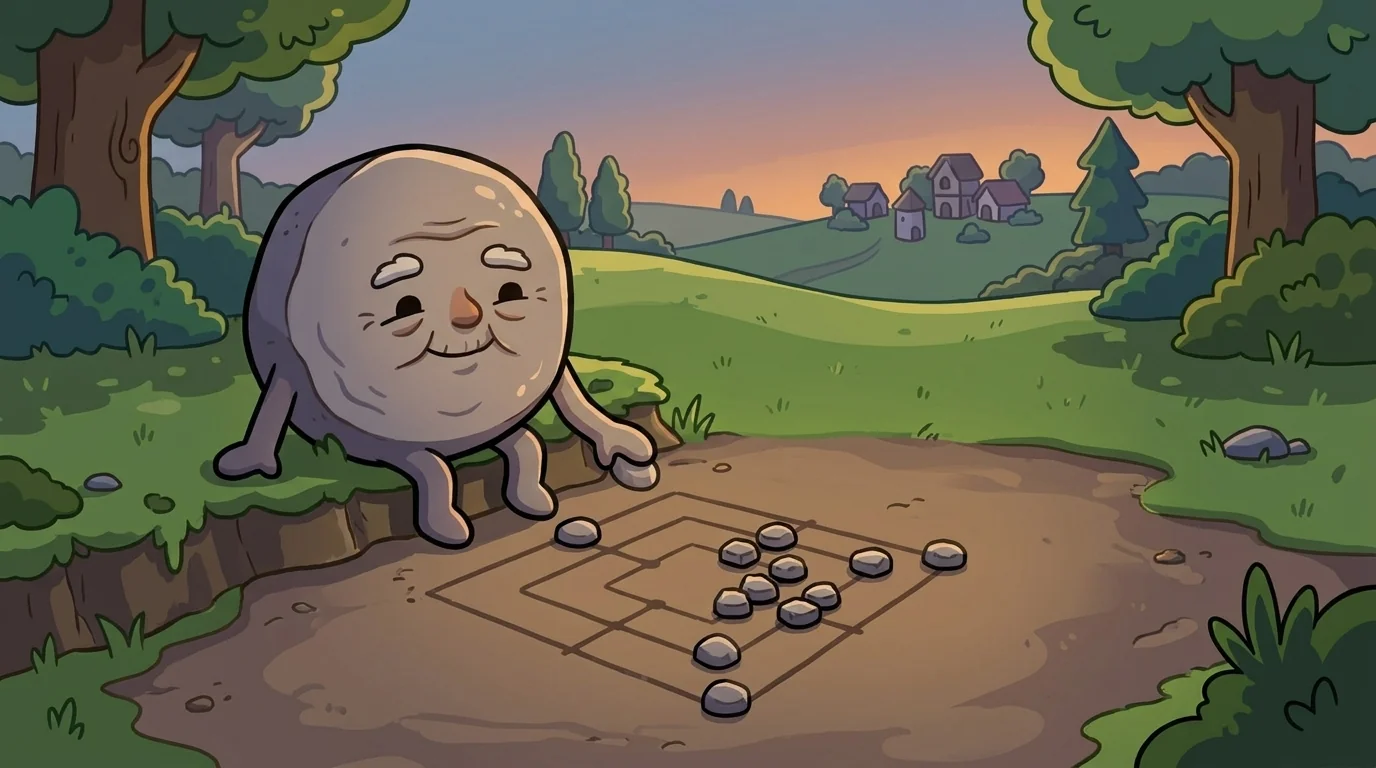
At the lesson's end the student solved a full position unaided — read all three passes, found that the best move was a block and not a mill, and named the capture she'd take two turns later when her own mill finally closed.
"You didn't touch a piece for a full minute," Merel observed.
"You taught me that," the student said. "The board isn't going anywhere. It waits while I read. And the move I'd have made in the first second was the wrong one."
Merel almost smiled. "That," she said, "is the entire secret, and it took me forty years to trust it. Everything you need is on the board, in the open, waiting. The only thing that ever beats you is your own hurry."
The MillSong ensemble
Elder Merel is part of MillSong's distributed-narrative cast. Each character embodies a different curricular primitive; together they teach the full subject.
-

Miller Mila
The mill: lining up three stones on a line
-

Snatch Nadia
Capture-on-mill: removing a piece the moment a mill closes
-

Guard Gwen
The not-in-a-mill rule: a stone inside a mill is safe
-

Block Bodhi
Blocking: dropping onto the empty point of an almost-mill
-

Spoke Sami
Prime points: the strong spoke midpoints (three mill lines each)
-

Corner Cato
Corner points: the low-value corners (two mill lines each)
-
Placer Pell
The placement phase: building a mill network with the nine
-

Slide Sile
The movement phase: sliding a stone to an adjacent point
-

Swing Sena
The swinging (running) mill: opening and re-closing to capture again
-

Flyer Faye
The flying phase: hopping anywhere once down to three men
-

Reduce Remy
The endgame: winning by reducing the opponent to two