
Guard Gwen
THE PROTECTION RULE — a piece standing inside a closed mill cannot be captured, UNLESS every one of the opponent's pieces is inside a mill (then any may be taken); so mills defend as well as attack
Loading audio…
Press play to listen along. The line being read lights up as you go.
Show full transcript
Loading transcript…
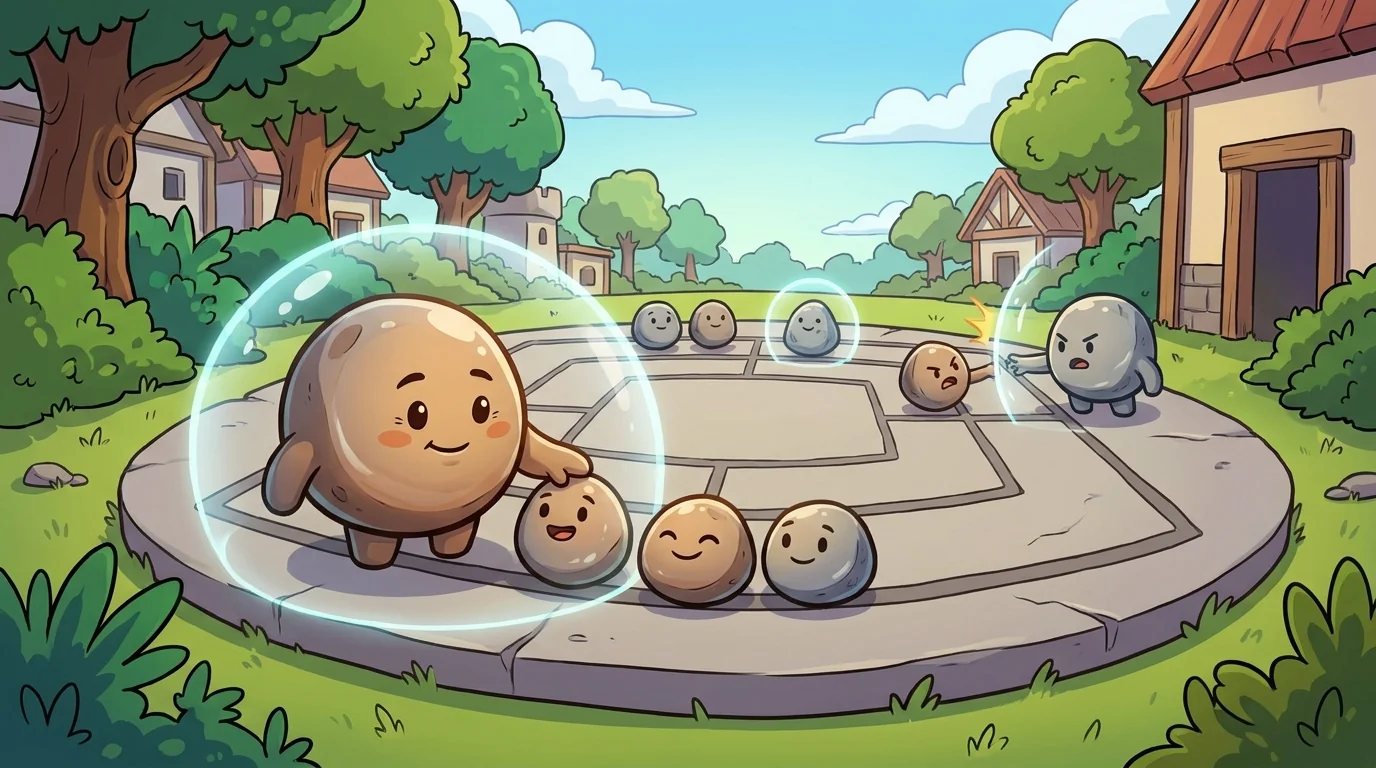
Gwen taught the rule that turned every mill into two things at once.
"You already know a mill captures," she said. "Close three in a line and you take an enemy piece — that's the spear. But here's the half that wins quiet games: a piece that STANDS inside a closed mill cannot be captured. It's protected. The very formation that reaches out and takes is also the wall that shelters. Same three stones. Attack and defense in one shape."

She made students feel the consequence in the sliding phase.
"Say your opponent has just closed a mill and it's their turn to capture. They look across your board for a piece to take — and they find that half your pieces are tucked inside mills of your own, untouchable. They can only take a piece that is NOT in a mill. So the pieces you leave exposed — the runners, the loose stones between formations — those are the ones that bleed. The lesson: when you know a capture is coming, tuck the pieces that matter inside mills, and leave only the pieces you can spare standing in the open."
The subtext, older students caught, was about where you place what you can't afford to lose — that the same structure that lets you act can be the thing that keeps you safe.

But Gwen was scrupulous about the exception, because it had cost her a game once.
"There's an 'unless,'" she said. "A piece in a mill can't be captured — unless every single one of your opponent's pieces is also in a mill. Then the rule lifts, and any piece may be taken. Because otherwise a player could wall up all nine pieces into overlapping mills and become completely uncapturable — the game would freeze forever. The loophole exists to stop the perfect turtle. If you've hidden everything inside mills, you've hidden nothing — the protection turns off precisely when you'd need it most."
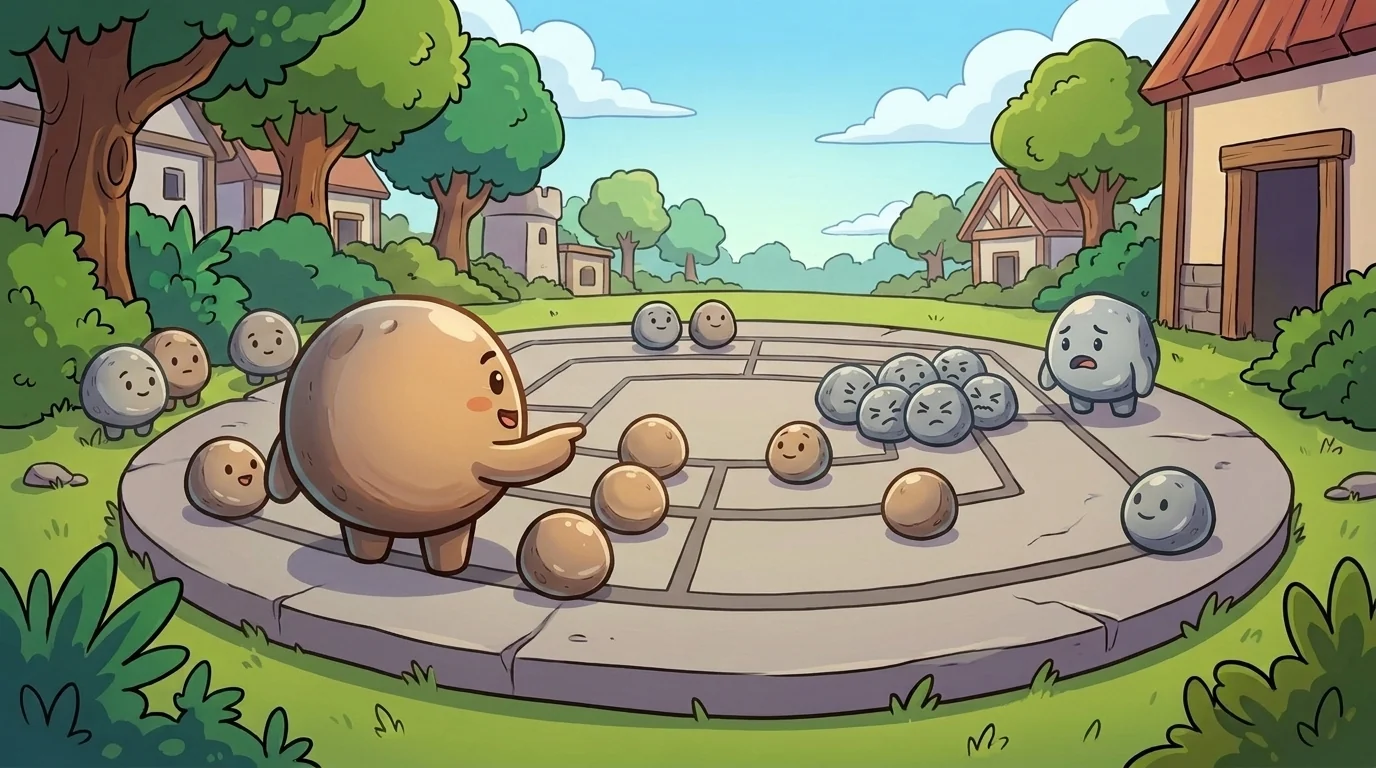
She drilled the practical judgment with a position: the student, about to be captured, had two pieces exposed and had to decide which to shelter.
"Both are outside mills right now," Gwen said. "You have one slide before their capture. You can move one piece into a mill and protect it, but not both. Which do you save?"
The student studied it. "This one," she said, "the keystone — it's on two of my almost-mills. If I lose it, both collapse. The other exposed piece is just a spare runner; losing it costs me a step, not a plan. So I slide the keystone into the mill and shelter it, and let them take the runner."
"Good," Gwen said. "You didn't try to save everything. You can't. You saved the one whose loss would break you, and you paid the small bill on the one you could spare. Protection is a scarce resource — spend it on what matters."
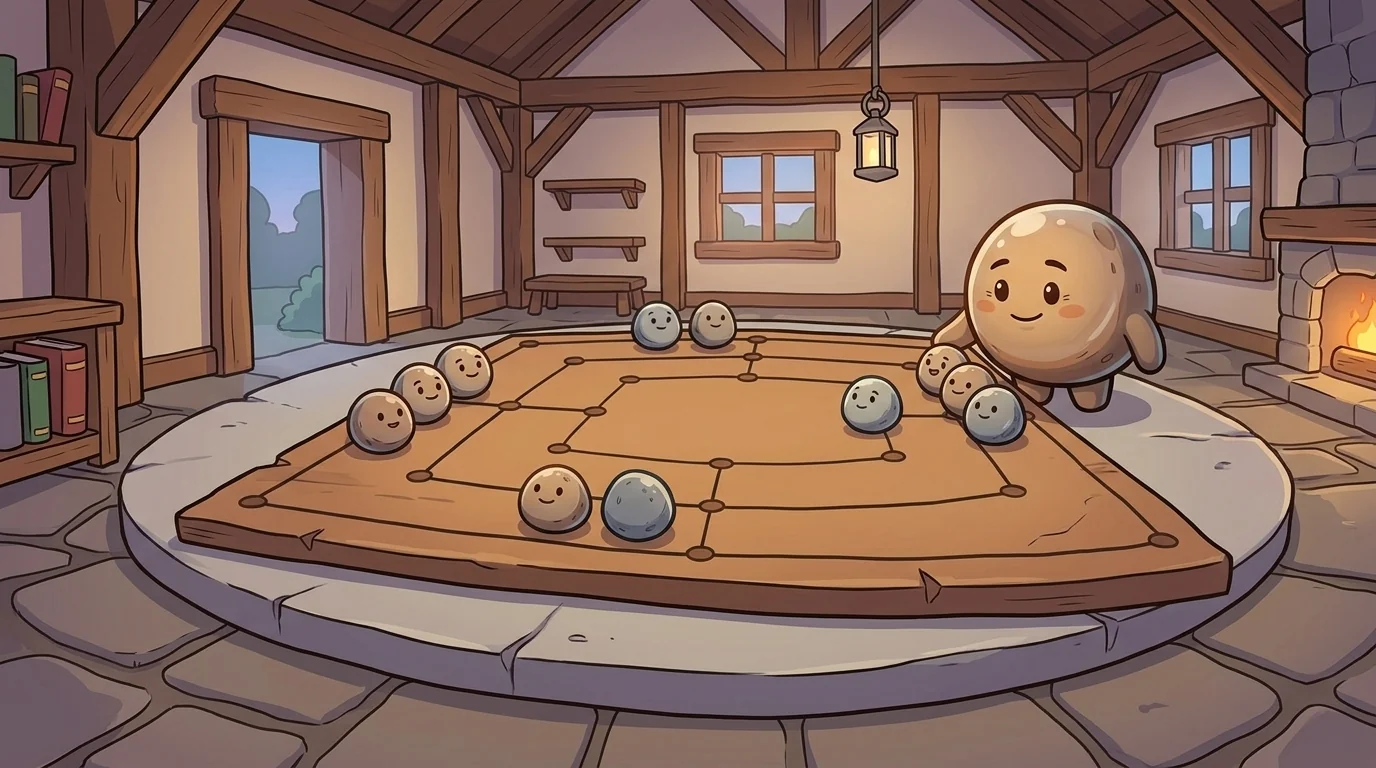
At the end Gwen showed them her favourite shape: two overlapping mills sharing a corner, the shared piece protected by both, a single stone that could never be taken while the structure held — and, beside it, one lonely runner left deliberately in the open.
"See the runner?" she said. "I left it exposed on purpose. It's bait — a piece I don't mind losing, sitting where it's the only thing they can take. Every capture they spend on my throwaway runner is a capture they didn't spend on anything that matters, because everything that matters is behind the wall." She tapped the sheltered keystone. "A mill is a spear when you close it and a wall when you stand in it. The masters use both edges in the same move. That's the whole quiet art of not-losing: decide what must be safe, wall it in, and leave only what you can afford to lose out in the weather."
The MillSong ensemble
Guard Gwen is part of MillSong's distributed-narrative cast. Each character embodies a different curricular primitive; together they teach the full subject.
-

Miller Mila
The mill: lining up three stones on a line
-

Snatch Nadia
Capture-on-mill: removing a piece the moment a mill closes
-

Block Bodhi
Blocking: dropping onto the empty point of an almost-mill
-

Spoke Sami
Prime points: the strong spoke midpoints (three mill lines each)
-

Corner Cato
Corner points: the low-value corners (two mill lines each)
-
Placer Pell
The placement phase: building a mill network with the nine
-

Slide Sile
The movement phase: sliding a stone to an adjacent point
-

Swing Sena
The swinging (running) mill: opening and re-closing to capture again
-

Flyer Faye
The flying phase: hopping anywhere once down to three men
-
Reduce Remy
The endgame: winning by reducing the opponent to two
-
Elder Merel
The mills-puzzle elder (mentor): find-the-mill / which-to-take puzzles