
Miller Mila
THE MILL — three of your pieces in a line along one of the board's sixteen mill-lines; forming it is the heart of the whole game, and each capture is a whole turn's reward
Loading audio…
Press play to listen along. The line being read lights up as you go.
Show full transcript
Loading transcript…
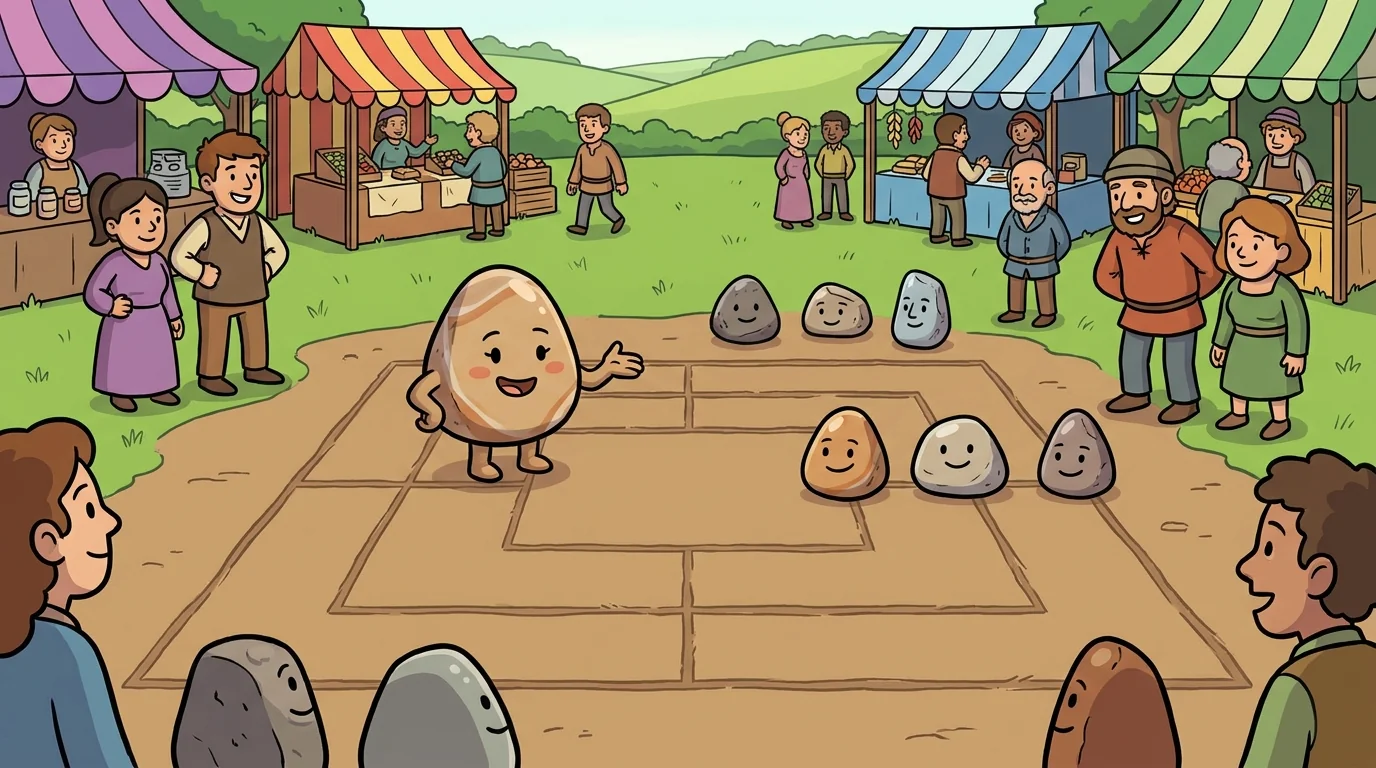
Mila taught the first thing and the deepest thing, because in morris they are the same thing: the mill.
"Everything in this game orbits one shape," she told the newest students. "Three of your pieces on a single mill-line — one of the sixteen straight lines the board draws for you. Not three pieces near each other. Not three in an L. Three on one of the lines the board actually connects. Close that, and you capture. Fail to see the lines, and you'll never build one on purpose."
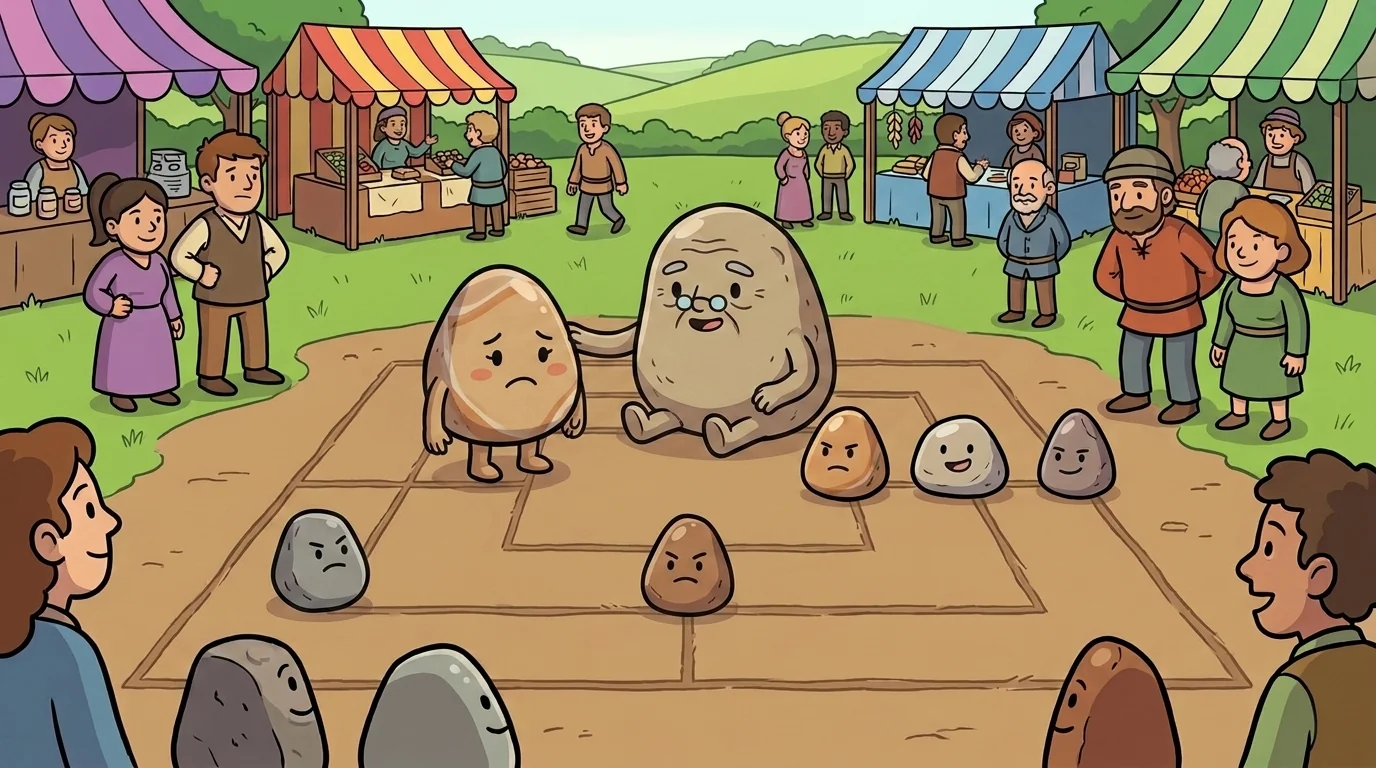
She insisted students learn the board's lines before its tactics.
"Count them: the outer square gives four lines, the middle square four, the inner square four, and the four spokes that join the squares give four more. Sixteen mill-lines. Every point sits on exactly two of them. That's the hidden geometry — memorize it, and an 'almost-mill' stops being luck and starts being something you can plan toward." She drew a line with her finger. "A mill isn't three pieces that happened to end up together. It's three pieces you walked onto a line you chose ten moves ago."
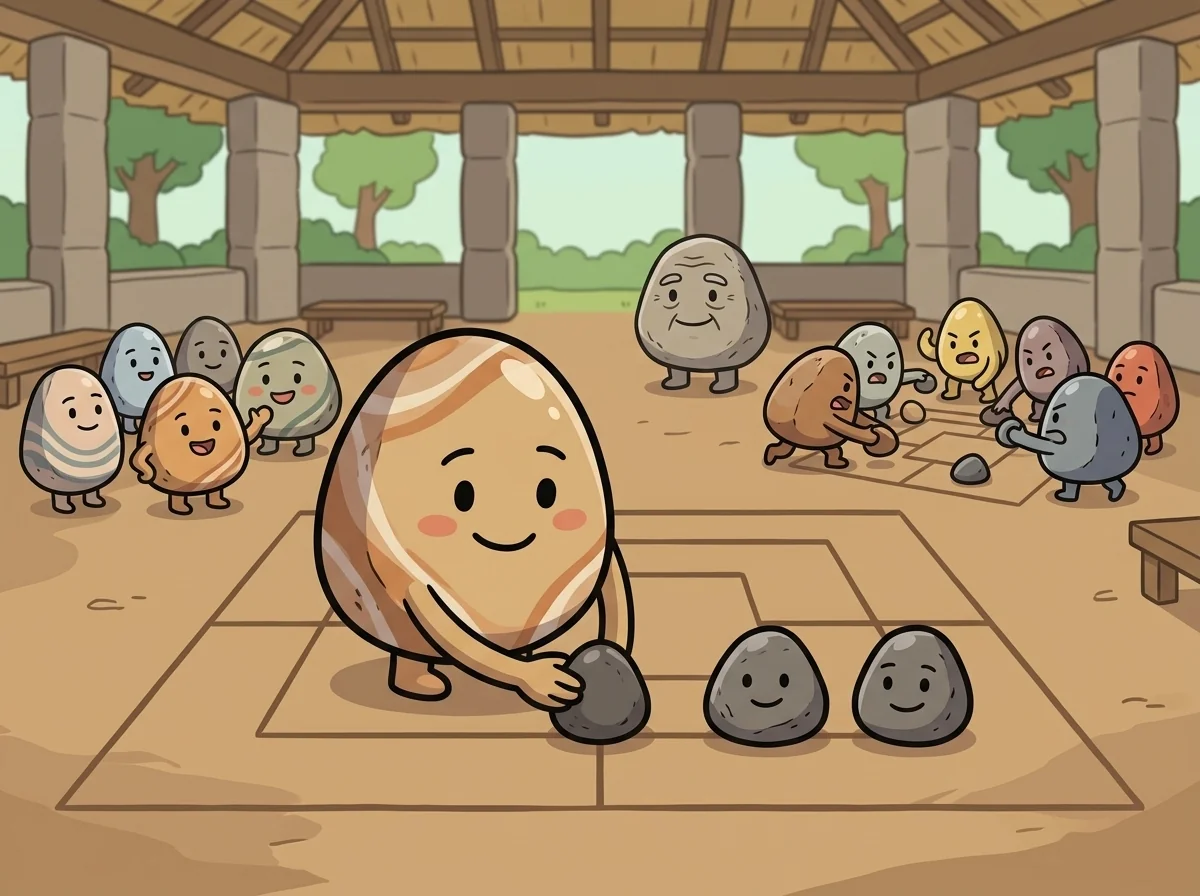
The patient part was the part Mila had to defend, because students wanted mills instantly.
"You can't slam a mill down," she said. "In the placement phase you set your nine pieces one at a time, and your opponent blocks the obvious lines the moment they see two of yours aligned. So you don't build one mill in the open — you build overlap. Two pieces here, two there, sharing points, so that several lines are half-finished at once. Then a single placement threatens two mills, and they can only block one." She smiled. "The mill you actually close is almost never the one you seemed to be building. It's the second threat, the one they couldn't reach in time."
The older students heard it: that patient, overlapping preparation beats one loud obvious plan — that the thing you build quietly, in more than one direction, is the thing that finally pays.
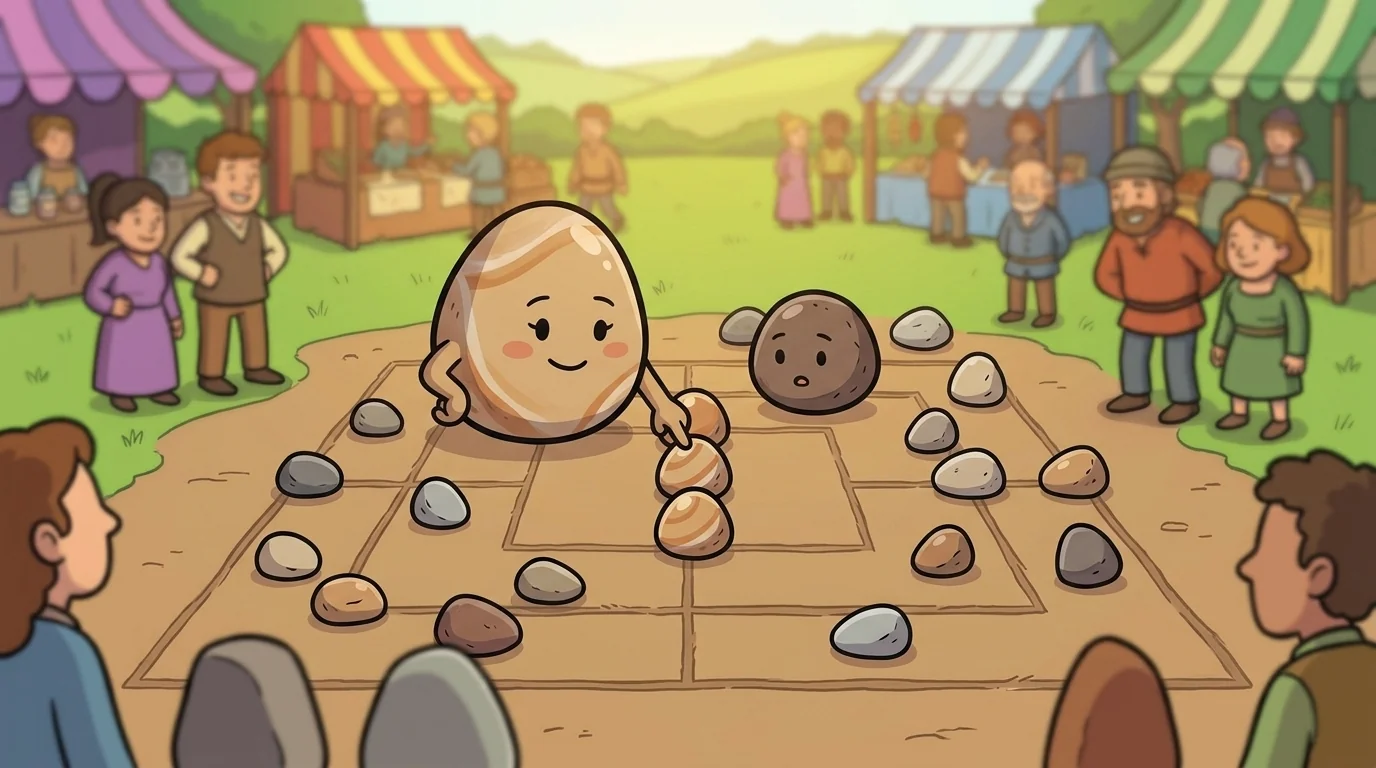
The Elder tested Mila's teaching with a placement puzzle: two pieces to place, and the question of where.
The student placed the first to complete an obvious two-in-a-line. "No," Mila said gently. "Look what happens — they block the third point, and you've spent a piece announcing a plan you can't finish. Place instead at the crossing — the point that sits on two almost-mills at once. Now your next placement threatens both lines. They block one; you close the other."
The student moved the piece to the shared point, and suddenly two mill-lines were live at once. "Now I have two threats and they have one block," she said slowly. "The mill builds itself out of the overlap."
"That's the mill," Mila said. "Not the line you show them. The line you leave them no time to stop."
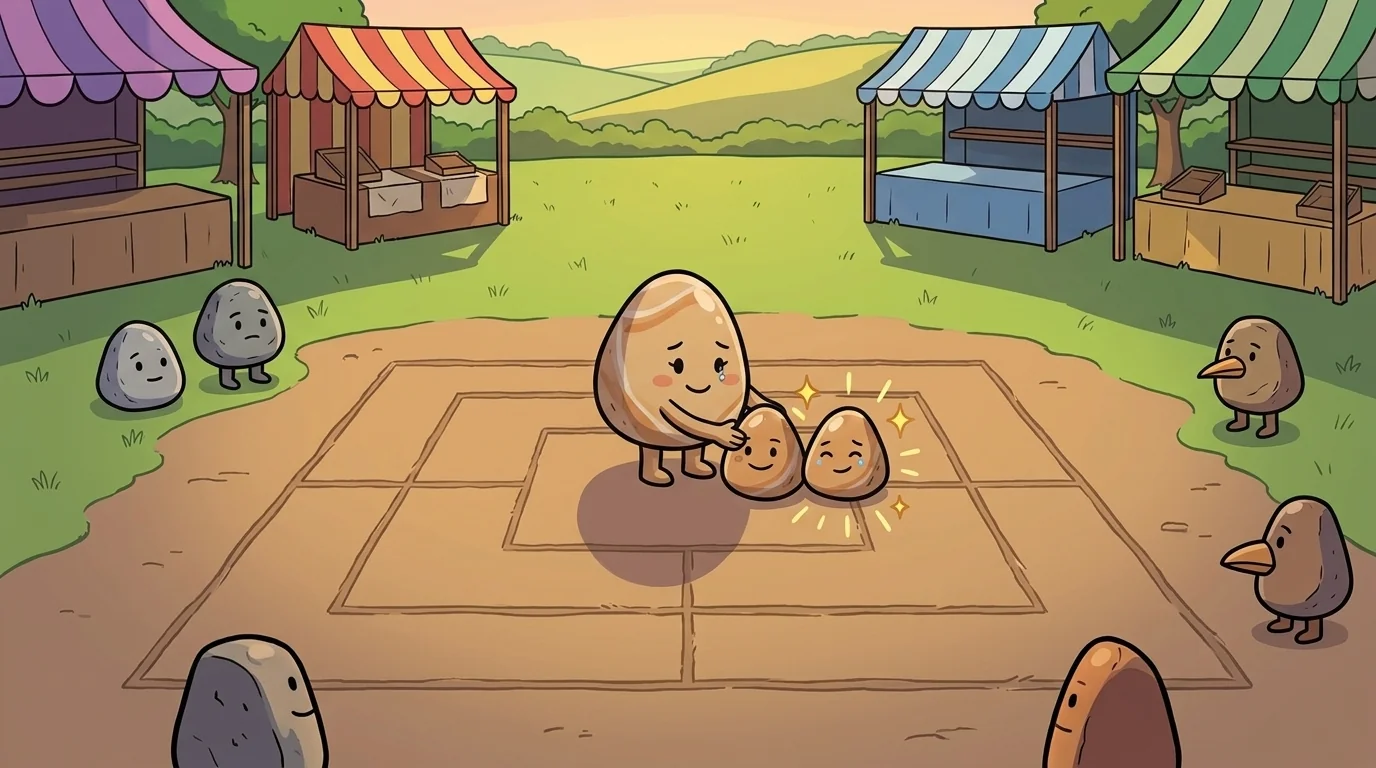
At the end Mila set a full board and traced, out loud, the ten quiet moves that had built a single mill — an anchor placed early in a corner, a runner brought to a cross-point, an overlap seeded at a crossing, a second threat opened, the block forced, the mill finally closed and the capture taken.
"Ten moves for one capture," she said. "Beginners think that's slow. It isn't slow — it's the honest work, the kind nobody claps for. The mill is the whole game because everything else — blocking, swinging, protecting, flying — is just about mills you're trying to close or mills you're trying to stop. Learn the sixteen lines. Build in overlap. Be patient. Then, when the shape finally clicks into place, take the piece that hurts them most, and start the next one."
The MillSong ensemble
Miller Mila is part of MillSong's distributed-narrative cast. Each character embodies a different curricular primitive; together they teach the full subject.
-

Snatch Nadia
Capture-on-mill: removing a piece the moment a mill closes
-

Guard Gwen
The not-in-a-mill rule: a stone inside a mill is safe
-

Block Bodhi
Blocking: dropping onto the empty point of an almost-mill
-

Spoke Sami
Prime points: the strong spoke midpoints (three mill lines each)
-

Corner Cato
Corner points: the low-value corners (two mill lines each)
-
Placer Pell
The placement phase: building a mill network with the nine
-

Slide Sile
The movement phase: sliding a stone to an adjacent point
-

Swing Sena
The swinging (running) mill: opening and re-closing to capture again
-

Flyer Faye
The flying phase: hopping anywhere once down to three men
-
Reduce Remy
The endgame: winning by reducing the opponent to two
-

Elder Merel
The mills-puzzle elder (mentor): find-the-mill / which-to-take puzzles