
Placer Pell
THE PLACEMENT PHASE — each player places nine pieces one at a time; the aim is not one mill but a NETWORK of overlapping almost-mills, so a single later move can threaten several lines at once
Loading audio…
Press play to listen along. The line being read lights up as you go.
Show full transcript
Loading transcript…
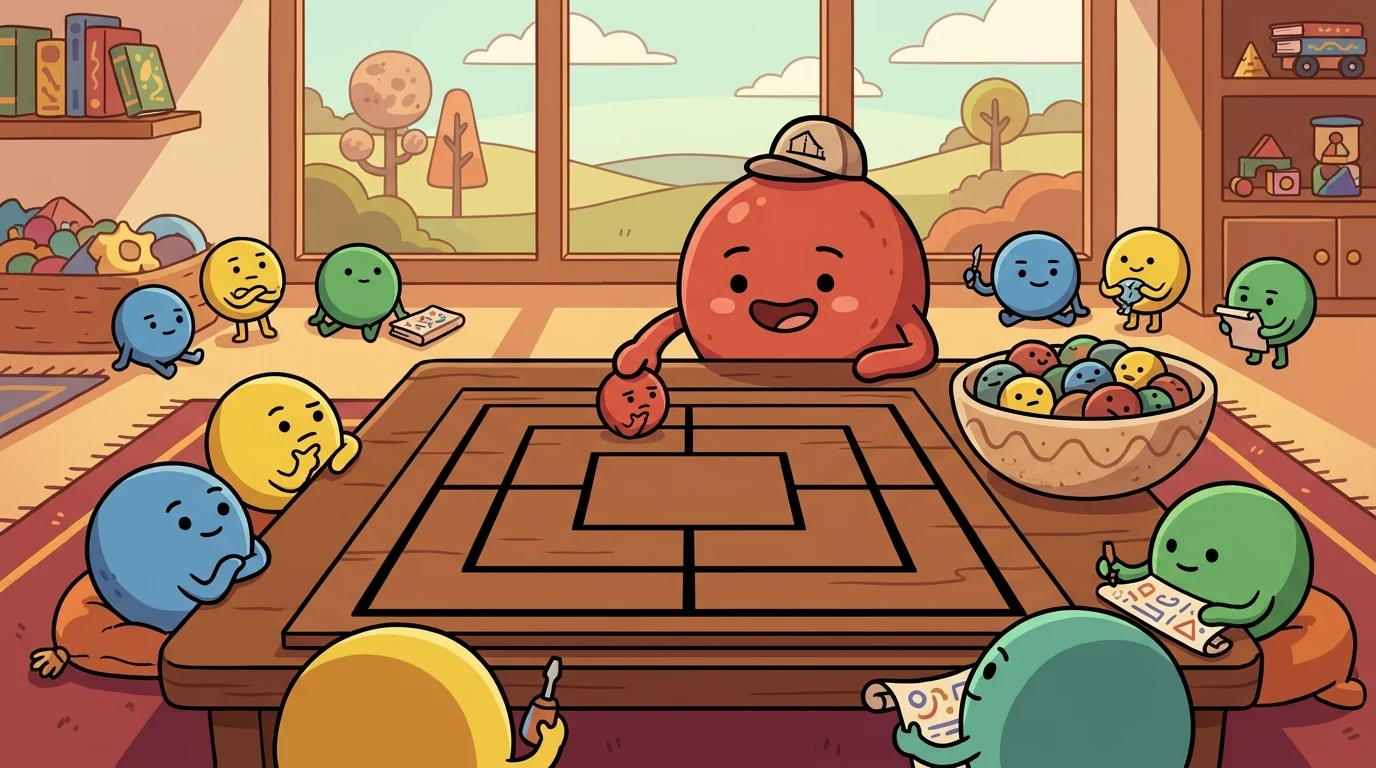
Pell taught the phase that decides the game before the game seems to start.
"You each place nine pieces, one at a time, onto empty points, before anyone slides," he said. "Beginners treat placement like grabbing seats — plop, plop, wherever looks open. But every one of those nine placements is a choice that echoes for the whole game. The player who places a network beats the player who places nine seats, every single time."
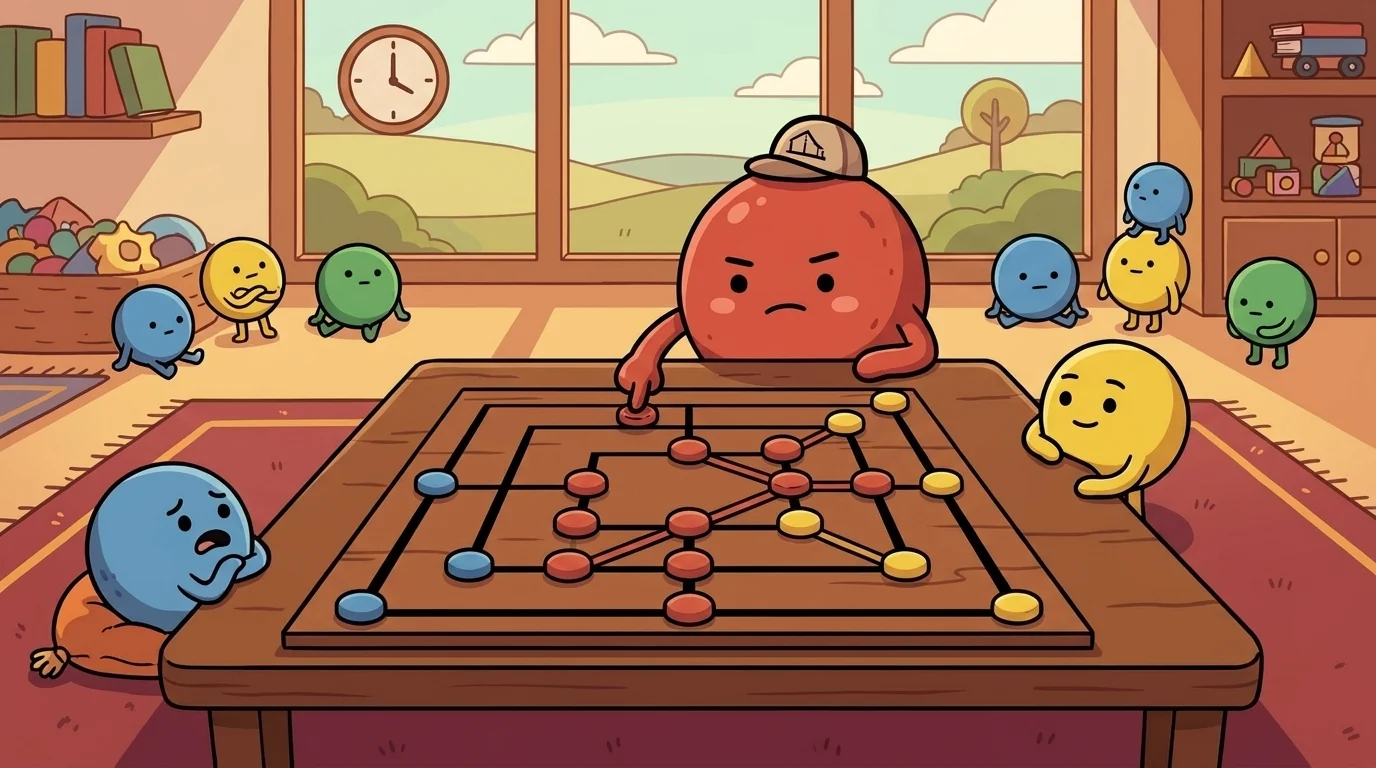
He drew the distinction sharply, because it was the whole lesson.
"A beginner tries to place a mill — two on a line, then a third. And of course it gets blocked: the moment your opponent sees two of yours aligned, they drop a piece on the third point and your mill is dead before it lived. So the skill isn't building a mill during placement. It's building overlap — placing pieces on the crossing points where two mill-lines meet, so that each piece is halfway to two mills at once. You never quite threaten anything... until suddenly one placement completes the second threat, and they can only block one."
The subtext the older students heard was patience with indirect setup — that laying groundwork in several directions, none of it yet paying off, is stronger than one obvious plan that invites the obvious block.
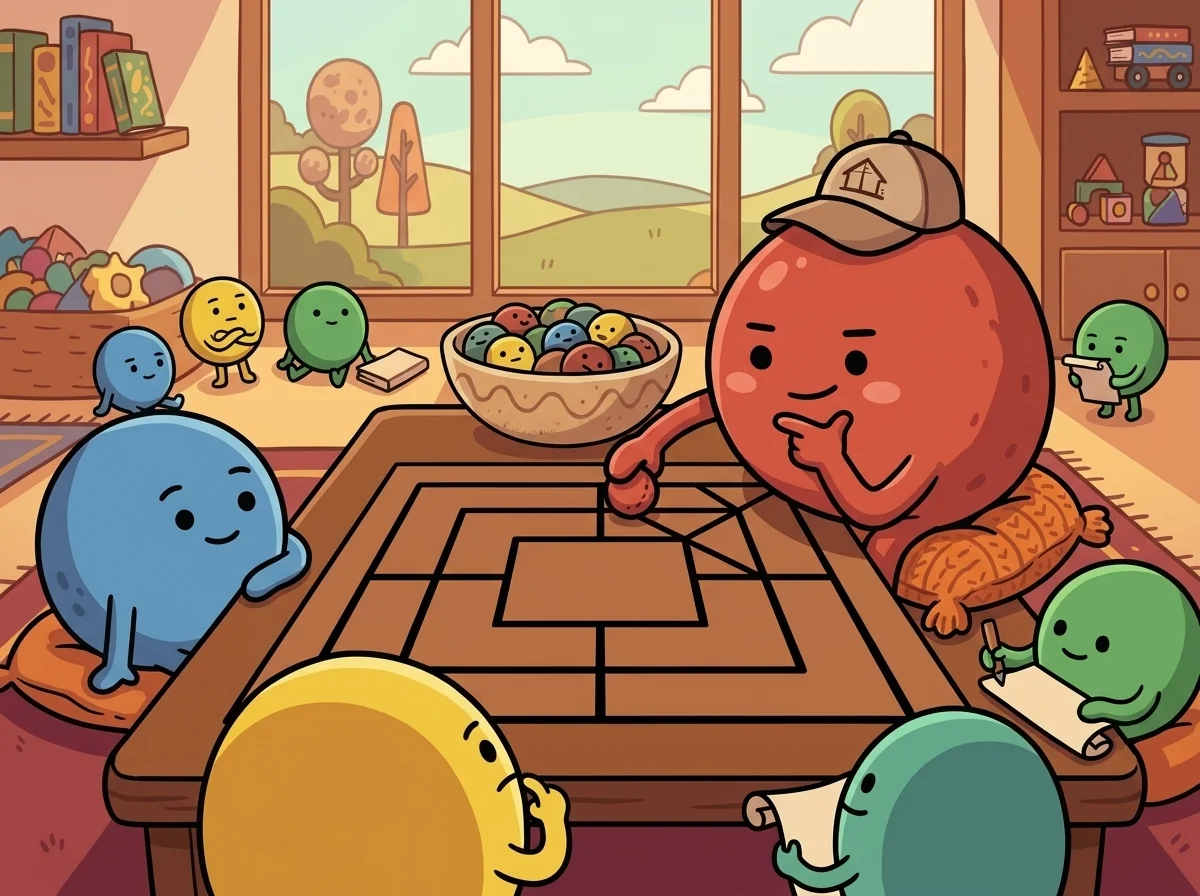
Pell had learned it by losing to a quiet opponent who never seemed to threaten anything.
"She placed her nine pieces and I thought she was aimless — a stone here, a stone there, nothing lined up, no mill in sight. I'd built two neat almost-mills and felt clever. Then the sliding phase started, and in three moves she closed a mill I never saw coming, because her scattered-looking placement was actually a web — half a dozen lines each one piece short, all sharing points, ready to snap shut the instant she could slide. My two neat threats got blocked. Her invisible web ate me alive."

The Elder tested Pell with the very first placement of a game — one piece, an empty board.
"Where's the strongest first placement?" the Elder asked.
Pell didn't hesitate, but he explained instead of just moving. "A cross-point — where a spoke meets the middle ring. Not because it threatens anything yet; nothing does on move one. Because it touches four neighbours and sits on two mill-lines, so it's the point that keeps the most futures open. Early placement isn't about threats. It's about reach — claiming the points that will let me build overlap later, on the most lines, with the most mobility." He set his piece on the cross. "You place for the game you'll want in twenty moves, not the mill you want right now."
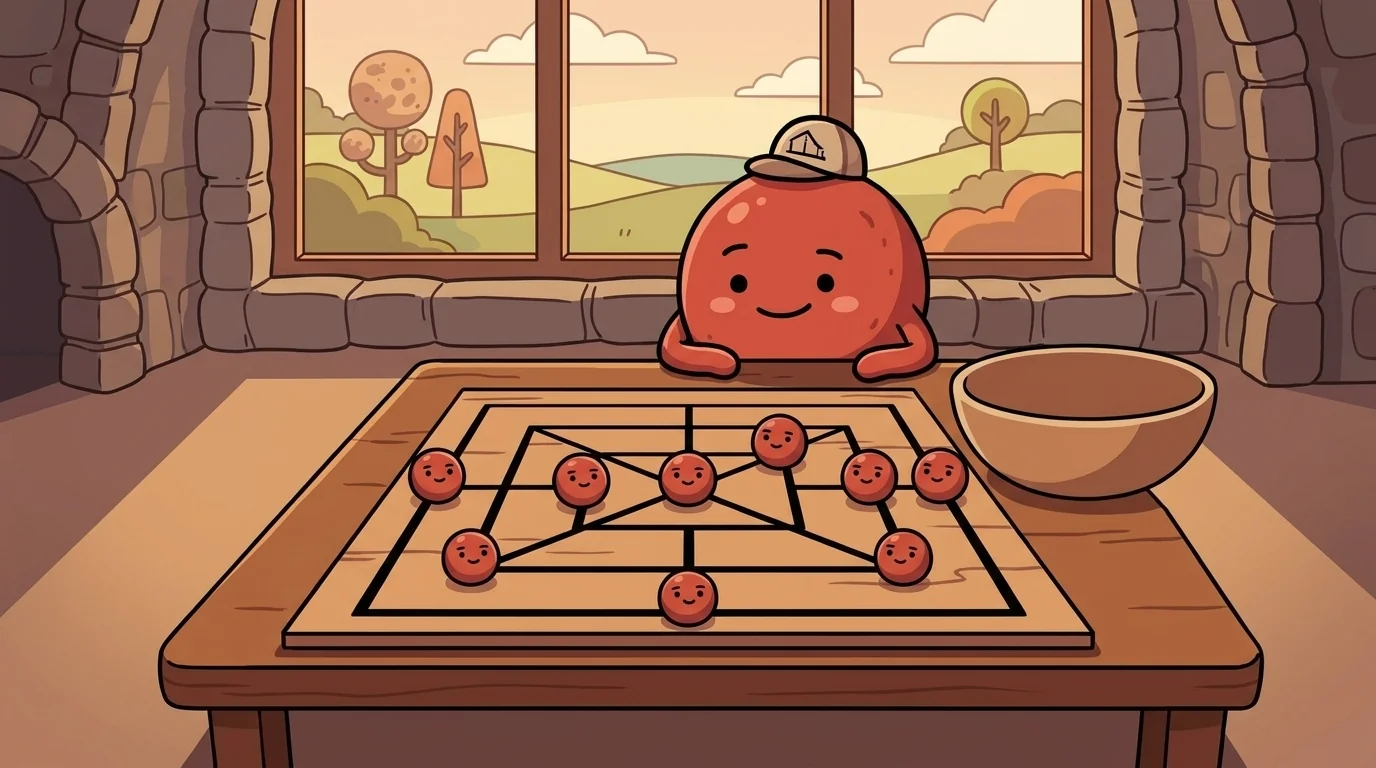
At the lesson's close Pell walked the students through nine placements narrated as one plan — cross-points and crossings first for reach and overlap, corners saved for late anchors, every piece chosen to sit on two live lines, so that by the end of placement six mill-lines were each one piece short and no single block could stop them all.
"Look at the board," he said. "Not one mill. Not one threat, if you're only counting finished things. And it's already winning — because the sliding phase is about to turn six almost-mills into more captures than they can block. Placement is nine quiet choices that look like nothing and decide everything. Place the web. Be patient. Let the payoff wait. The player who builds in the dark wins in the light."
The MillSong ensemble
Placer Pell is part of MillSong's distributed-narrative cast. Each character embodies a different curricular primitive; together they teach the full subject.
-

Miller Mila
The mill: lining up three stones on a line
-

Snatch Nadia
Capture-on-mill: removing a piece the moment a mill closes
-

Guard Gwen
The not-in-a-mill rule: a stone inside a mill is safe
-

Block Bodhi
Blocking: dropping onto the empty point of an almost-mill
-

Spoke Sami
Prime points: the strong spoke midpoints (three mill lines each)
-

Corner Cato
Corner points: the low-value corners (two mill lines each)
-

Slide Sile
The movement phase: sliding a stone to an adjacent point
-

Swing Sena
The swinging (running) mill: opening and re-closing to capture again
-

Flyer Faye
The flying phase: hopping anywhere once down to three men
-
Reduce Remy
The endgame: winning by reducing the opponent to two
-

Elder Merel
The mills-puzzle elder (mentor): find-the-mill / which-to-take puzzles