
Slide Sile
THE MOVEMENT PHASE — once all nine pieces are placed, a turn is sliding one piece one step to an adjacent empty point; small moves, but each one can open or close a mill
Loading audio…
Press play to listen along. The line being read lights up as you go.
Show full transcript
Loading transcript…
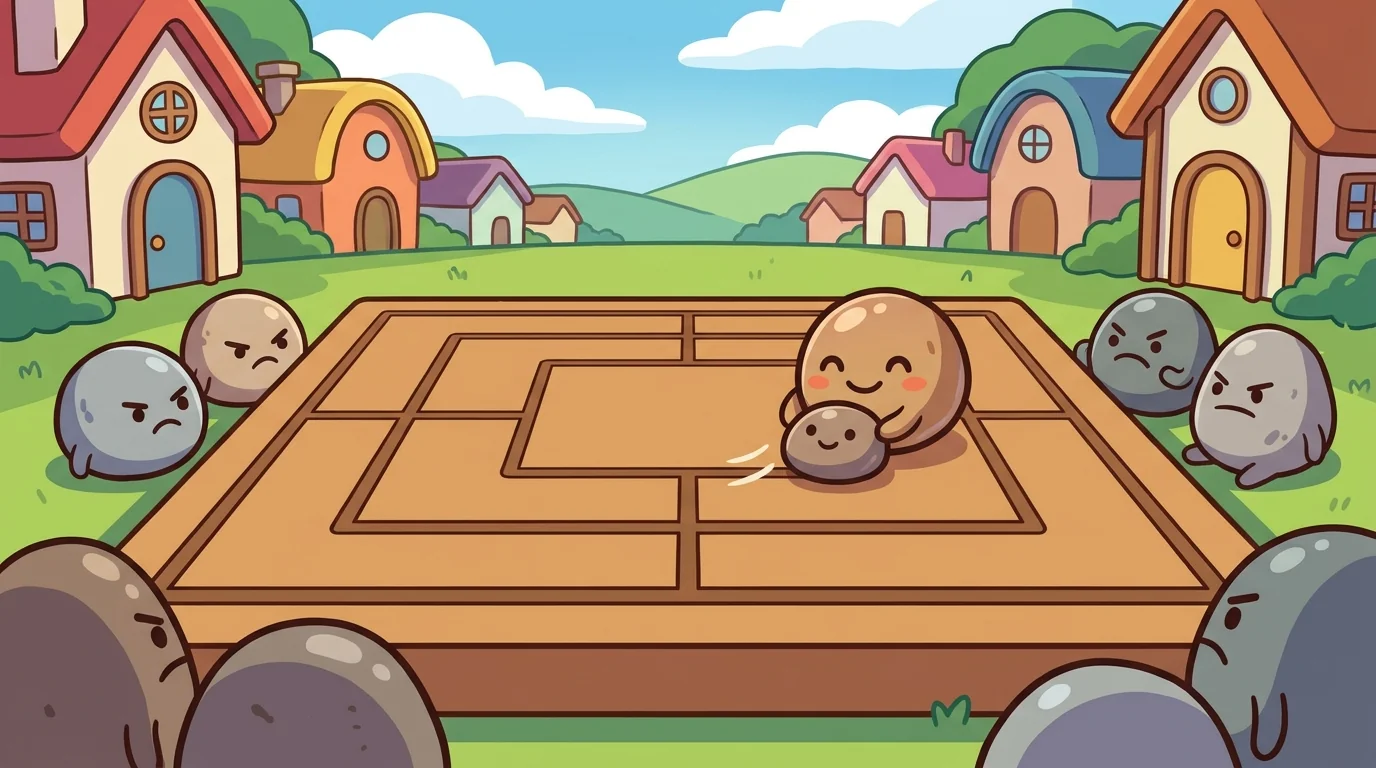
Sile taught the phase where the game slows down and gets harder.
"In placement you had a piece to spend every turn — nine fresh stones to put down," she said. "That's over now. All nine are on the board. From here, a turn is one thing: pick up a single piece and slide it one step, to an adjacent empty point. That's it. No new pieces. No leaps. One step. And beginners suddenly feel poor — where placement felt generous, sliding feels cramped." She smiled. "It isn't poverty. It's precision. When you can only move one step, every step has to earn its keep."

She taught the two things a slide can do, and why they're the same thing.
"A slide can close a mill — step a piece onto the point that completes a line, and capture. But a slide can also open a mill — step a piece OFF a completed line, breaking your own mill on purpose. Why break your own mill? Because a broken mill can be re-closed next turn — and re-closing captures again. This is the seed of the swinging mill, and it starts here, in the humble one-step slide: the realization that moving a piece out of a mill isn't losing the mill, it's reloading it."
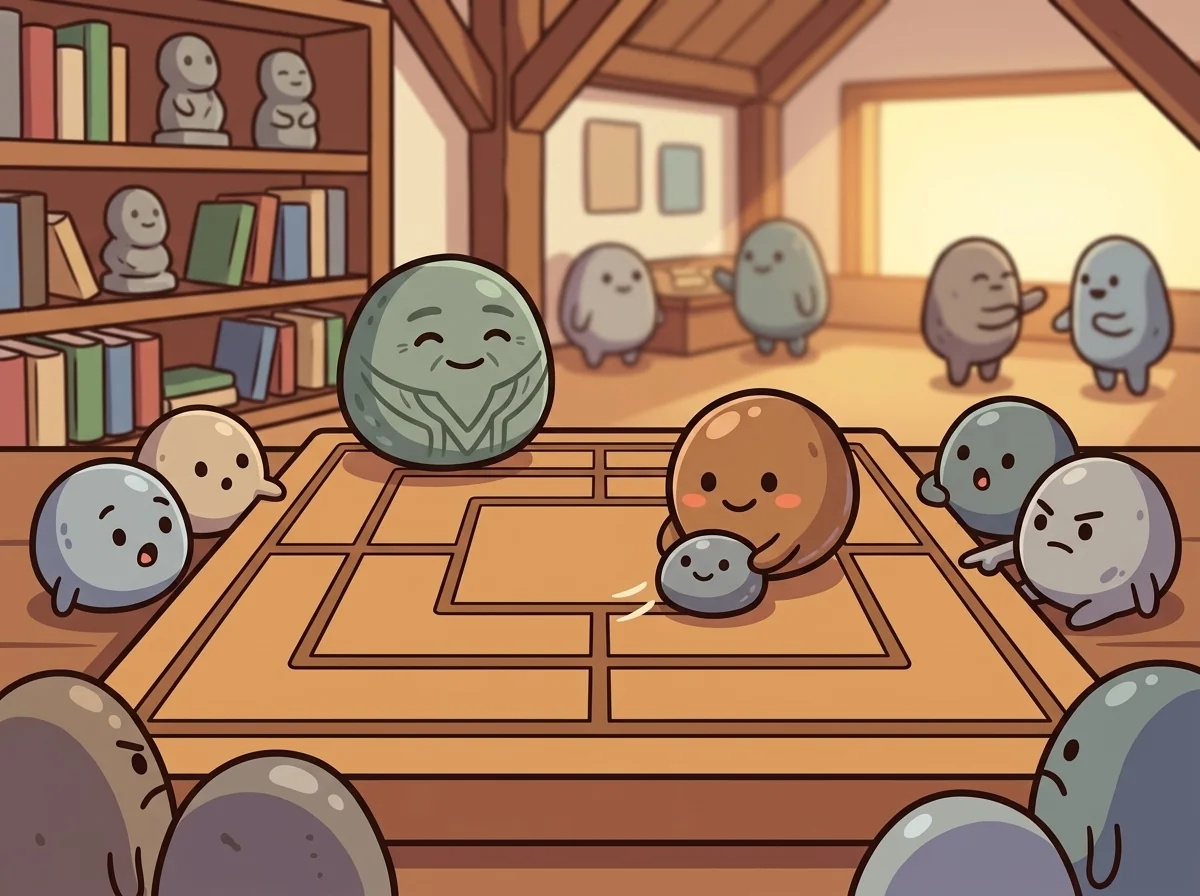
The hard part, Sile admitted, was that in the sliding phase every move costs as much as it gives.
"On a crowded board, sliding a piece to help one line almost always pulls it off another. Step this stone onto the point that closes your top mill — and you've just vacated a point that was blocking the enemy's left mill. You closed one line and opened a hole in your defense in the same move. So a slide is never simple arithmetic. It's net arithmetic: what do I gain, what do I give up, and is the trade good?"
The older students heard the subtext plainly — that in a tight situation there are rarely pure gains, only trades, and wisdom is judging the whole balance of a move, not just its bright side.

The Elder set a mid-slide position and asked for the best single step.
The student found a slide that closed a mill and reached for it. "Wait," Sile said. "You saw the capture. Now see the cost. That piece is currently blocking their almost-mill on the spoke. Slide it away to close yours, and next turn they close theirs and capture back. You'd trade one for one — and they'd get the better piece." She pointed to a quieter move. "This slide doesn't close a mill. It steps a spare piece into the gap that keeps their spoke blocked AND lines up a double threat for next turn. No capture now. A stronger board after."
The student saw it. "So the flashy step trades even, and the quiet step gets ahead."
"Most of the time," Sile said, "yes. The one-step slide punishes greedy eyes. Count what leaves when something arrives."
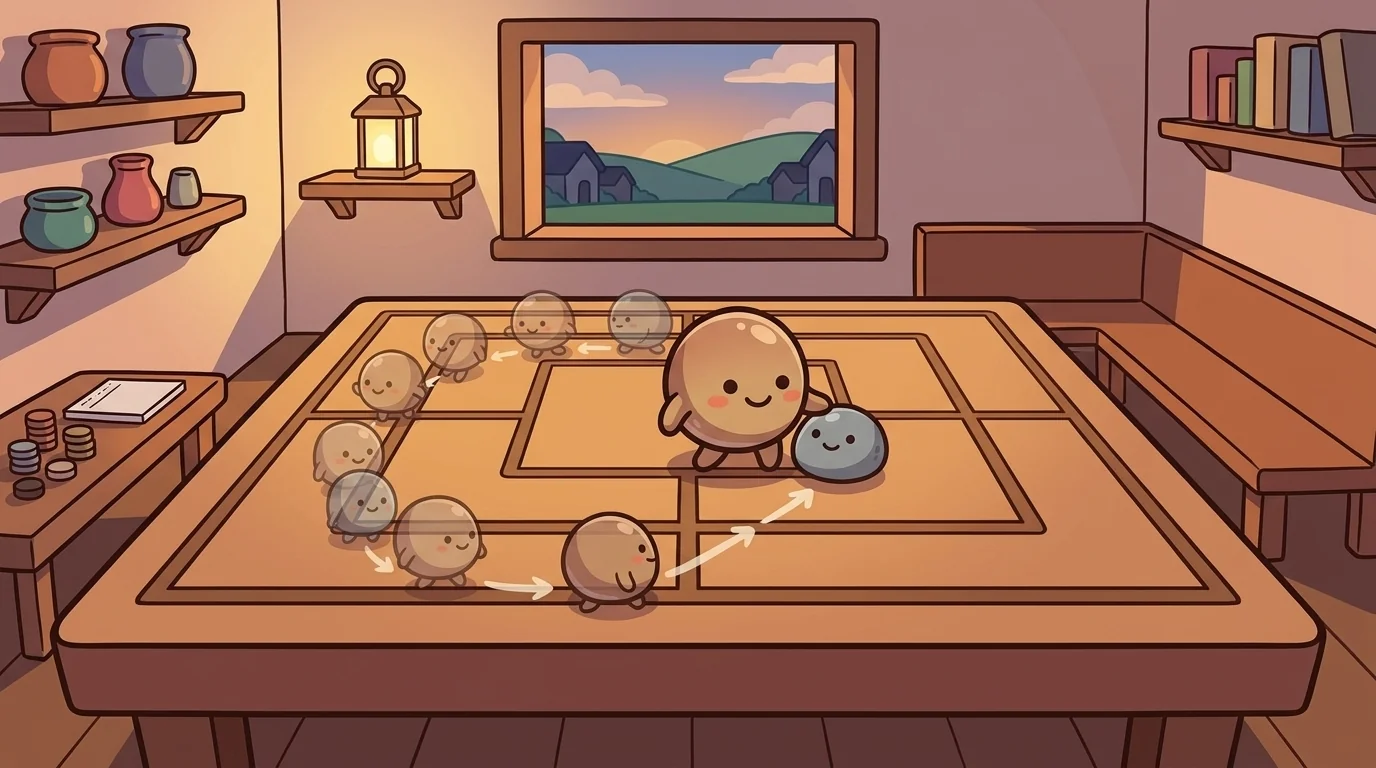
At the end Sile ran a short sequence out loud — a slide that opened her own mill (a move that looked like a blunder), a slide that dodged the enemy's answer, and a slide that re-closed the mill for a second capture off the same three pieces.
"Three steps," she said. "One tiny move each. The first looked like I was breaking my own mill — a beginner would never do it. But watch the whole arc: open, hold, re-close, capture again. In placement you think in pieces. In sliding you think in sequences — where this step leaves you for the next one, and the one after that. Small moves, long thoughts. One step at a time is not a limit. It's the discipline that turns a board into a plan."
The MillSong ensemble
Slide Sile is part of MillSong's distributed-narrative cast. Each character embodies a different curricular primitive; together they teach the full subject.
-

Miller Mila
The mill: lining up three stones on a line
-

Snatch Nadia
Capture-on-mill: removing a piece the moment a mill closes
-

Guard Gwen
The not-in-a-mill rule: a stone inside a mill is safe
-

Block Bodhi
Blocking: dropping onto the empty point of an almost-mill
-

Spoke Sami
Prime points: the strong spoke midpoints (three mill lines each)
-

Corner Cato
Corner points: the low-value corners (two mill lines each)
-
Placer Pell
The placement phase: building a mill network with the nine
-

Swing Sena
The swinging (running) mill: opening and re-closing to capture again
-

Flyer Faye
The flying phase: hopping anywhere once down to three men
-
Reduce Remy
The endgame: winning by reducing the opponent to two
-

Elder Merel
The mills-puzzle elder (mentor): find-the-mill / which-to-take puzzles