
Snatch Nadia
CAPTURE ON MILL — the instant you close a mill you remove one enemy piece; the skill is choosing WHICH piece, because a capture is a whole turn's reward and must be spent where it hurts them most
Loading audio…
Press play to listen along. The line being read lights up as you go.
Show full transcript
Loading transcript…
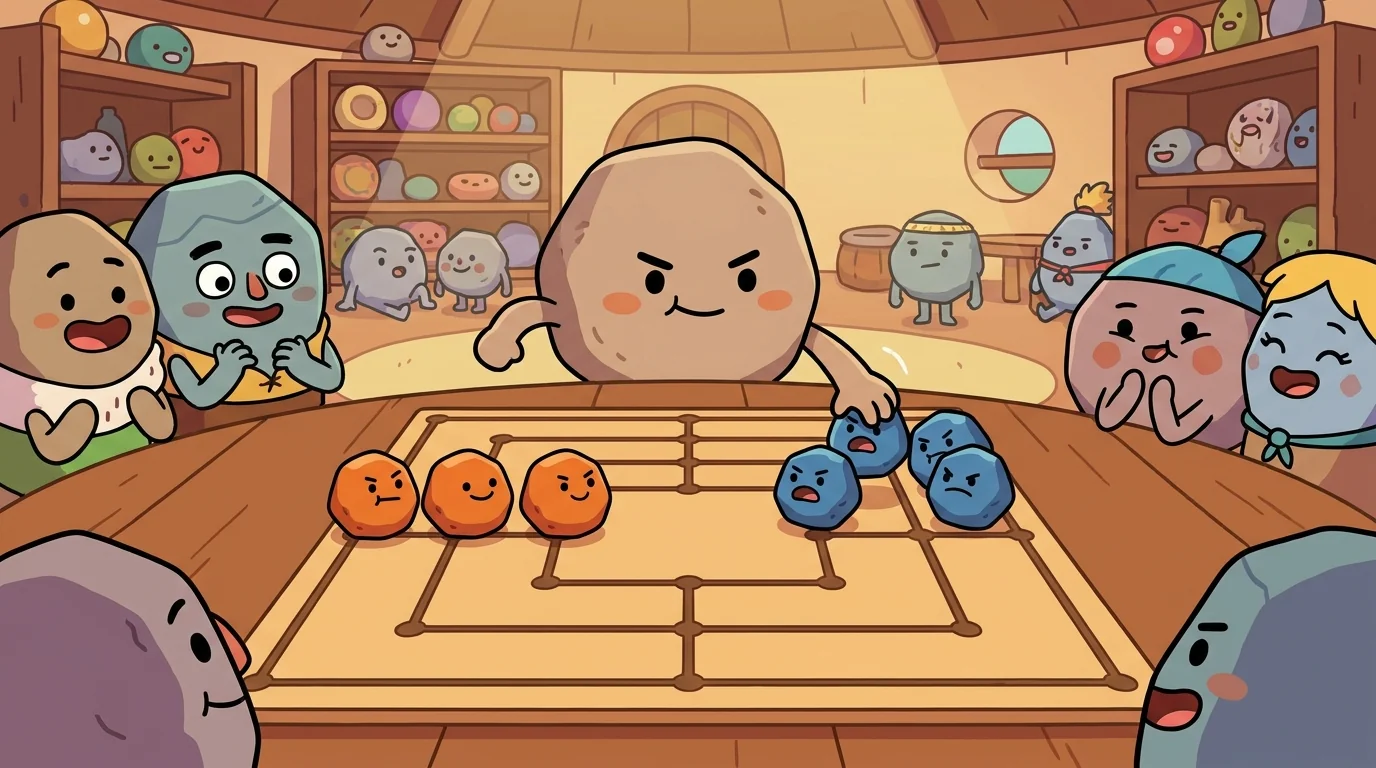
Nadia lived for the instant a mill snapped shut — but she taught that the instant after was the one that mattered.
"Close a mill and you capture," she said. "Everyone knows that part; that's the reward. But here's what beginners waste: when you capture, YOU choose which enemy piece to remove. Any of theirs that isn't sheltered in a mill. A whole board of choices, and you get to pick. That choice is worth more than the mill itself — and most players throw it away by grabbing whatever's nearest."
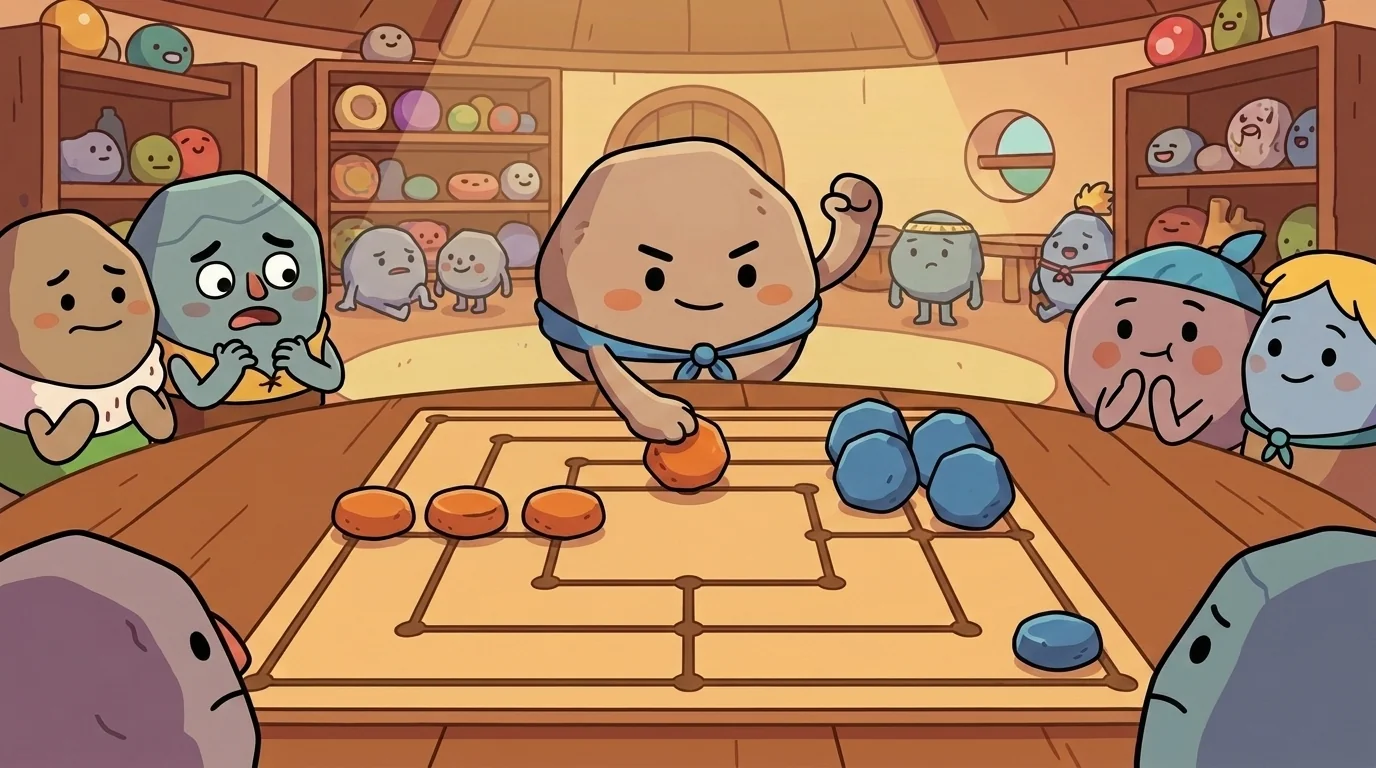
She drilled the difference between an easy capture and a good one.
"The easy piece is the loose stone off in a corner, doing nothing, going nowhere. It's right there. And it's almost always the wrong take, because a piece that was already doing nothing costs your opponent nothing when it's gone. You spent a whole mill's worth of reward to remove a piece that wasn't hurting you." She swept a hand across an imagined board. "The good piece is the one whose absence breaks something: the keystone that anchors two of their almost-mills, the runner in their swinging setup, the blocker that's the only thing stopping YOUR mill. Take the piece the enemy would least want to lose. Make your capture cost them a plan, not a pebble."
The older students heard it — that a hard-won chance is squandered on the obvious grab, and made to count by asking what actually matters to the other side.
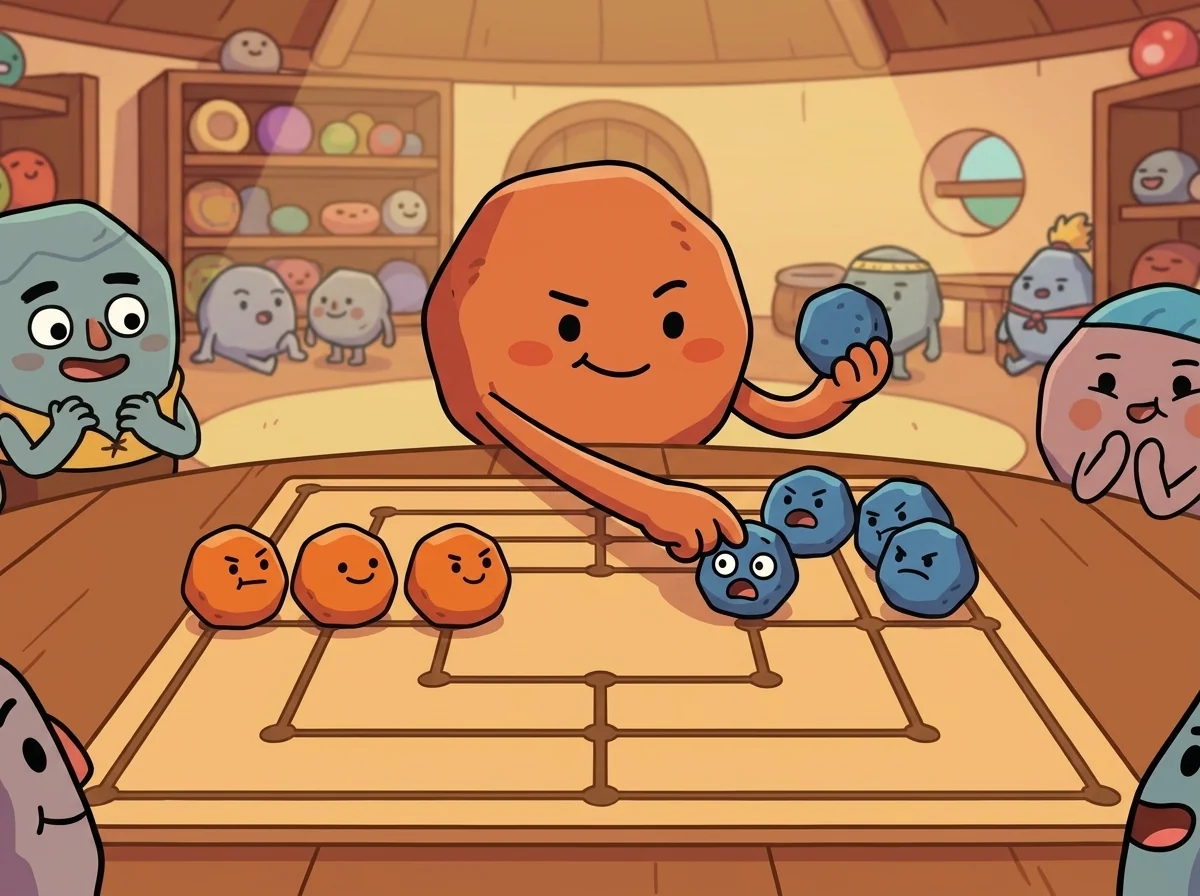
Nadia was strict about one temptation especially: revenge captures.
"When someone takes a piece you loved, the blood rushes and you want to take one back the instant you can — the biggest, meanest-looking piece they have, just to feel even. Don't," she said. "Feeling even isn't winning. The right capture is the one that helps your next move, not the one that soothes your last hurt. Cold eyes take better pieces than hot ones."
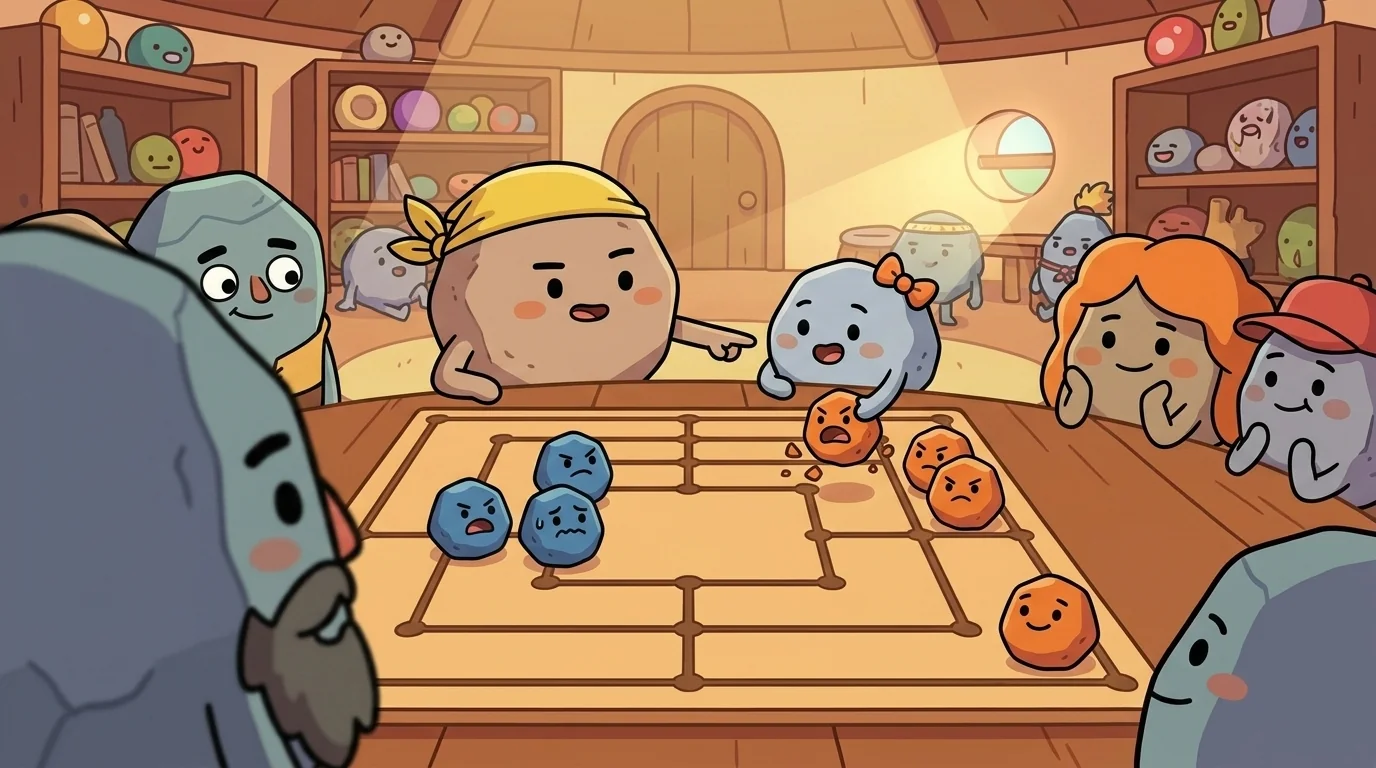
The Elder tested her with a capture-choice puzzle: mill closed, four enemy pieces takeable.
Nadia looked past the tempting ones. "Not their exposed runner in the middle — flashy, but it's not doing much yet. Not the corner spare — it's asleep. I take this one," she said, lifting a modest-looking piece on a cross-point, "because it sits on two of their live almost-mills at once. Take it and both their threats die. One capture, two plans broken. The others would've taken one piece off the count; this one takes the heart out of their board."
"You took the quiet piece over the obvious one," the Elder said.
"I took the piece that was doing the most work for them," Nadia said. "That's the whole art of the capture: not what's easy to reach, not what feels good to grab — what hurts them most to lose. Find that piece, and every mill you close counts double."
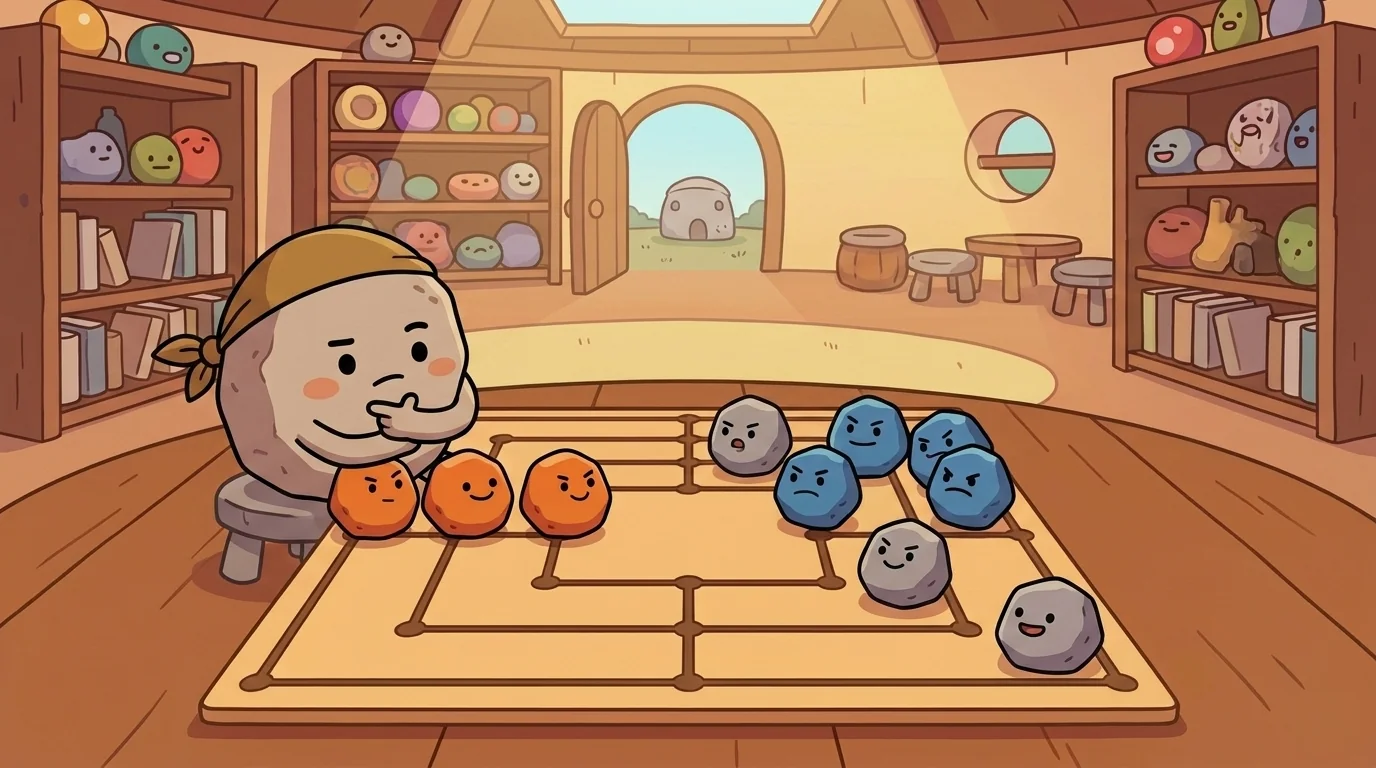
At the end Nadia set up a position where the same closed mill offered a lazy capture and a surgical one, and let the students feel both futures.
"Take the corner spare," she said, playing it out, "and three moves later they've rebuilt and you're even. Now rewind." She reset it and took the keystone instead. "Take the piece holding their two threats, and three moves later their whole side of the board has fallen apart, because you didn't just shrink their army — you unplugged their plan." She dropped the captured stone into the bowl with satisfaction. "Closing the mill is the reward. Choosing well is what you do with it. Earn the choice, then spend it like it's the only one you'll get — because sometimes it is."
The MillSong ensemble
Snatch Nadia is part of MillSong's distributed-narrative cast. Each character embodies a different curricular primitive; together they teach the full subject.
-

Miller Mila
The mill: lining up three stones on a line
-

Guard Gwen
The not-in-a-mill rule: a stone inside a mill is safe
-

Block Bodhi
Blocking: dropping onto the empty point of an almost-mill
-

Spoke Sami
Prime points: the strong spoke midpoints (three mill lines each)
-

Corner Cato
Corner points: the low-value corners (two mill lines each)
-
Placer Pell
The placement phase: building a mill network with the nine
-

Slide Sile
The movement phase: sliding a stone to an adjacent point
-

Swing Sena
The swinging (running) mill: opening and re-closing to capture again
-

Flyer Faye
The flying phase: hopping anywhere once down to three men
-
Reduce Remy
The endgame: winning by reducing the opponent to two
-

Elder Merel
The mills-puzzle elder (mentor): find-the-mill / which-to-take puzzles