
Spoke Sami
PRIME POINTS — the four cross points where a connecting spoke meets the middle ring; each touches FOUR neighbours (the most on the board), giving the greatest mobility and the most flexible reach into mills
Loading audio…
Press play to listen along. The line being read lights up as you go.
Show full transcript
Loading transcript…
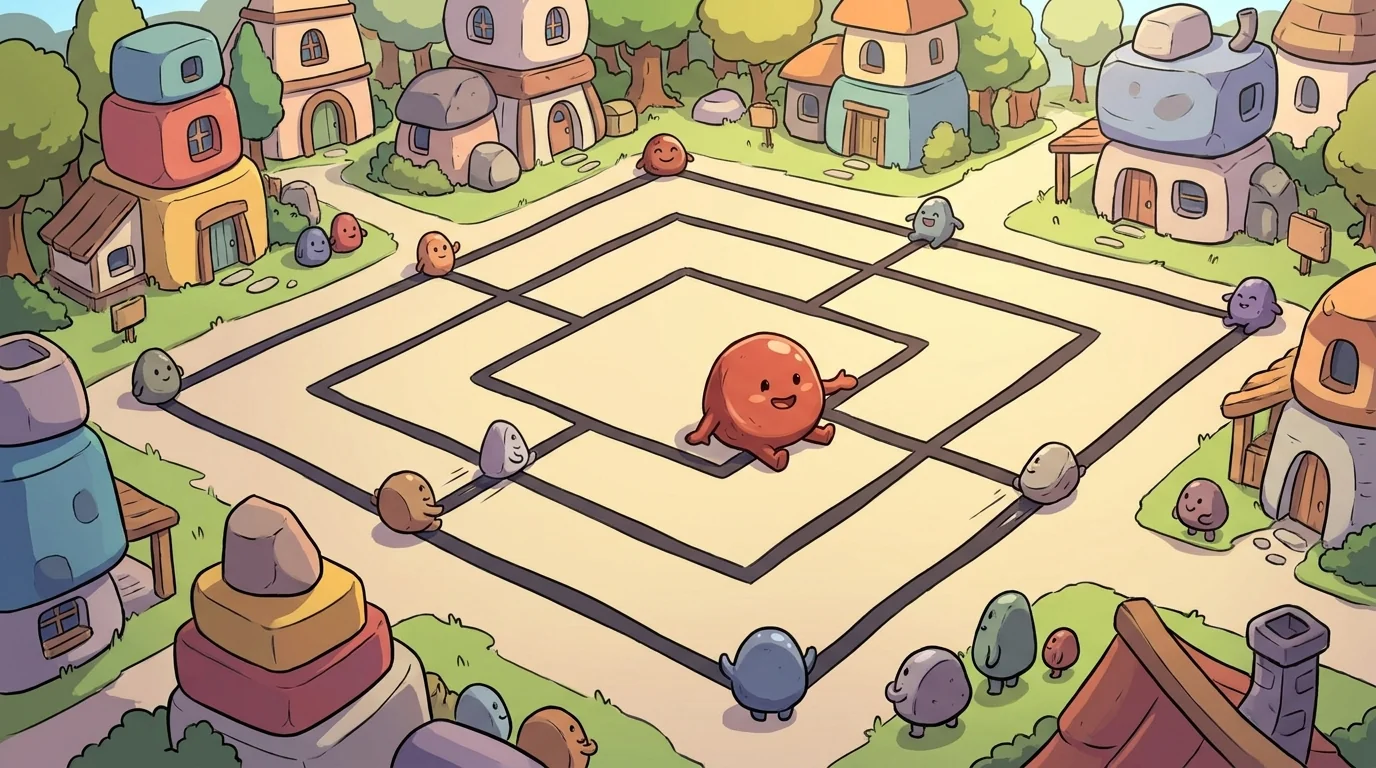
Sami taught geography before tactics, because on a morris board where is most of what.
"Look at the middle ring," he said, "at the four points where a spoke — a connecting line — joins it. Count their neighbours." Students traced them: four each. "Four. Every other point has two or three neighbours; these four have the most. They're the crossroads of the board. From a crossroad you can slide four ways, and you sit where the most mill-lines pass. Hold the crossroads and you hold the board's reach."
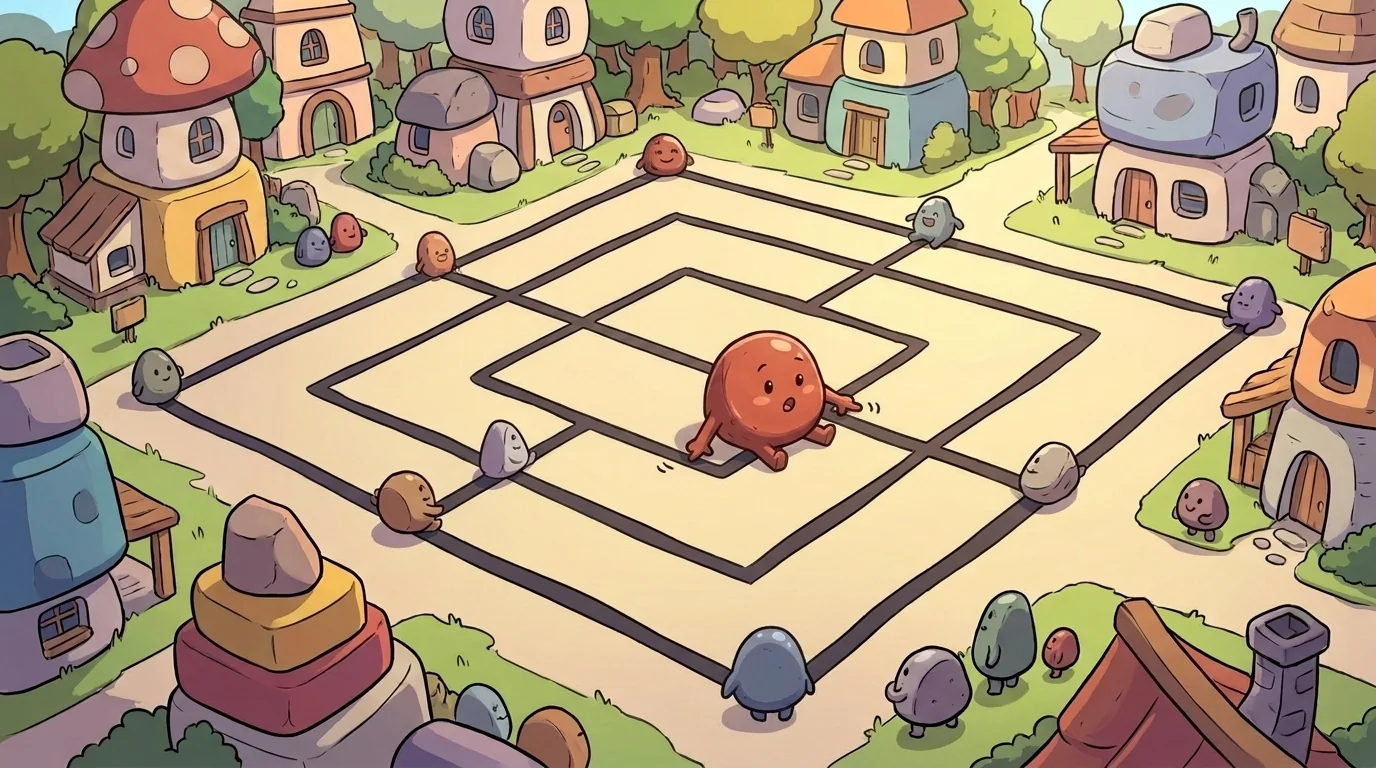
He made the mobility concrete, because beginners under-valued it.
"A piece on a corner can go two places; a piece on a prime point can go four. That means a prime piece can join more mills, dodge more traps, and swing more freely. In the sliding phase, when every turn is one small step, having twice the directions is enormous — it's the difference between a piece that's always useful and a piece that's usually stuck. Take the prime points early in placement, before your opponent does, because there are only four of them and they never come back."

Sami had learned their worth by giving them away once.
"When I was new I placed my first pieces on corners — they felt safe, tucked away. And I handed my opponent all four prime points without a fight. By the sliding phase her pieces flowed everywhere, opening and closing mills at will, while mine shuffled in their little two-neighbour corners like they were stuck in mud. I hadn't lost a piece. I'd lost the map. She owned every crossroads, so she owned every route."
The older students heard the subtext: that the most valuable positions are the ones connected to the most others — and that giving them up early, for the comfort of a safe corner, can quietly cost you the whole game.
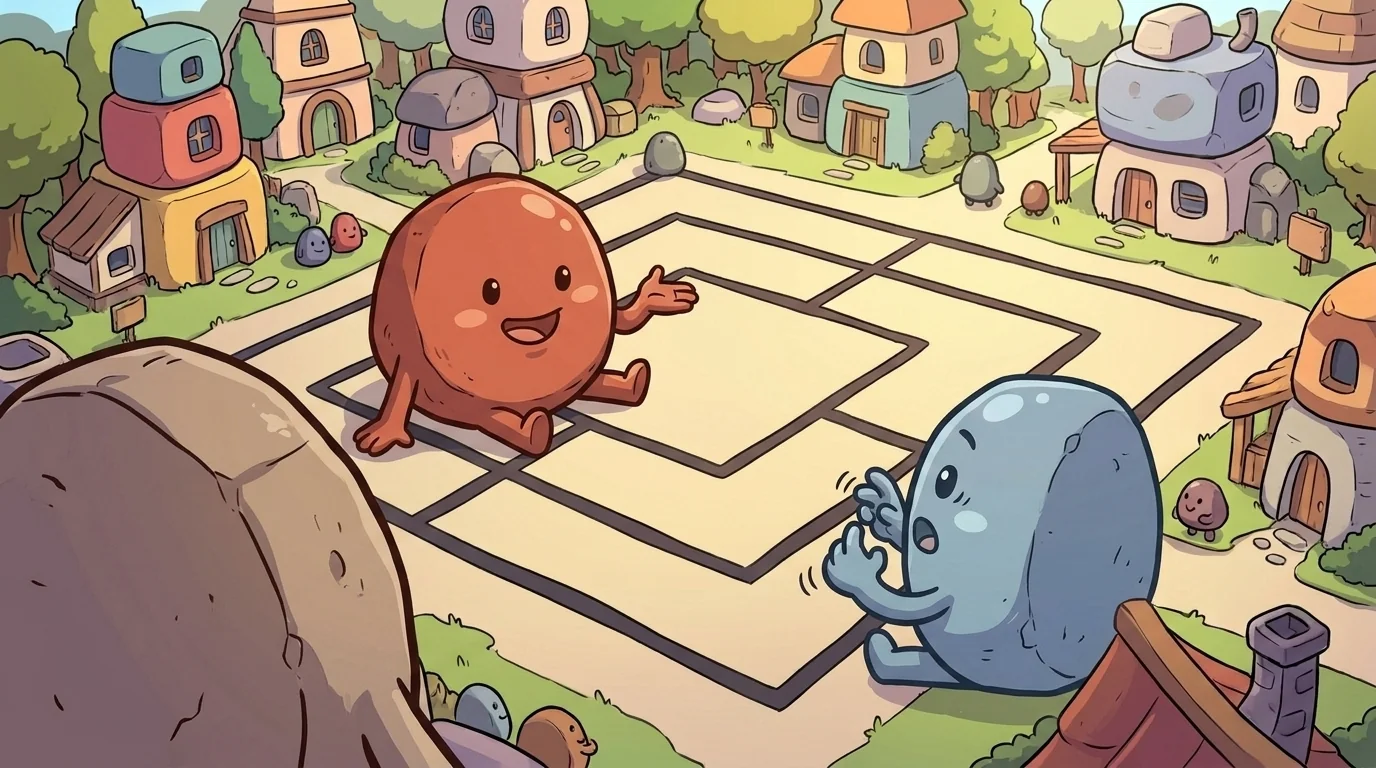
The Elder tested him: two prime points still open, one piece to place, and an opponent one move from taking a prime point too.
"Which prime, and why that one?" the Elder asked.
Sami didn't just grab the nearest. "This one," he said, placing his piece, "because it sits on the two mill-lines where I've already got pieces — so it's a crossroad AND it advances two of my lines at once. The other open prime is strong too, but it connects to lines I've got nothing on yet. Same mobility, less overlap with my plan. When two crossroads are equally free, take the one that also grows what you're already building." He set the stone down. "And I take it now, before she does — a prime point you don't claim is a prime point your opponent claims."
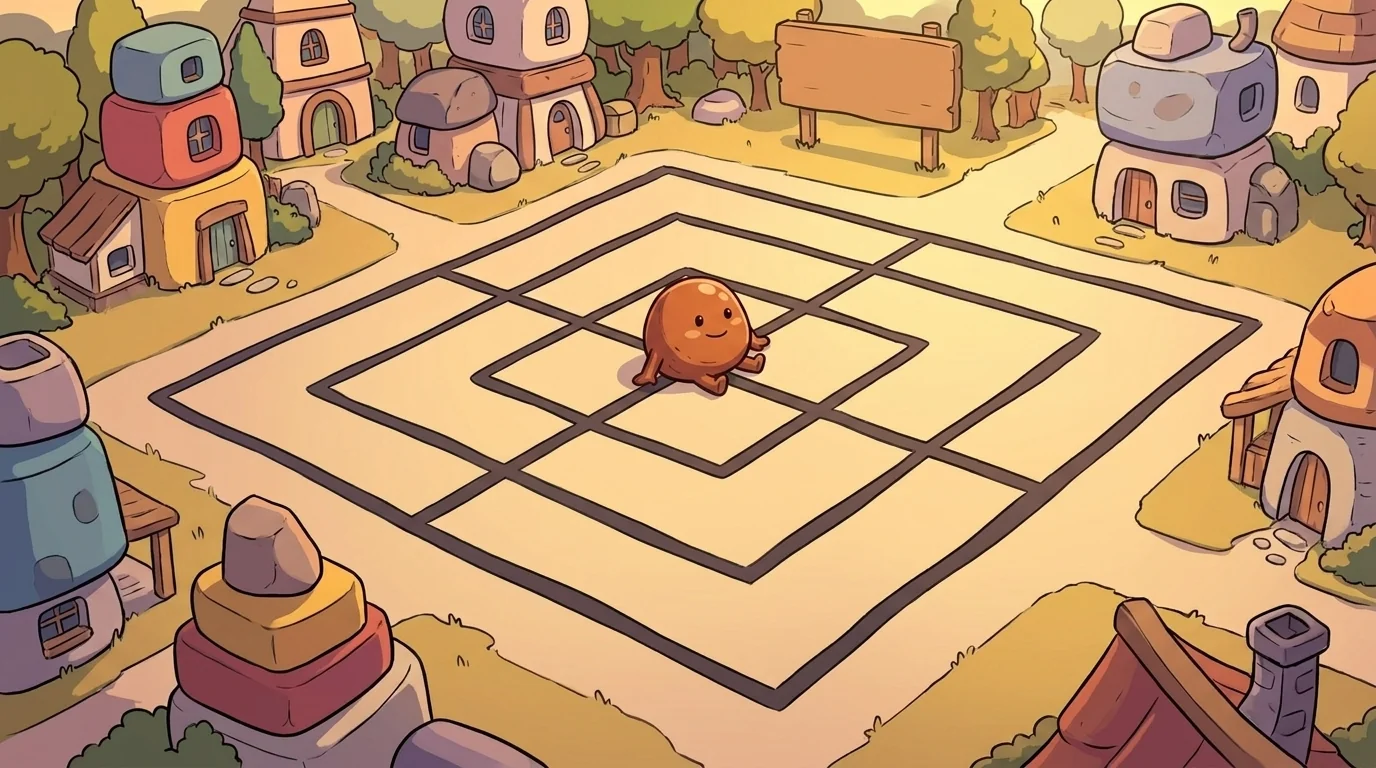
At the end Sami showed a board where he held three of the four prime points and his opponent held none.
"Watch how the game flows through my pieces," he said, running a sequence. "Every threat routes through a crossroad. When she blocks one line, my prime piece just slides the other of its four ways and threatens another. She's plugging holes with two-neighbour pieces while I'm dancing on four-neighbour ones. It doesn't look like a fight anymore — it looks like traffic, and I own every intersection." He tapped a prime point fondly. "Four points. The most-connected spots on the whole board. Take them early, build on them, and the game will keep coming to you, because everything has to pass through the crossroads — and the crossroads are yours."
The MillSong ensemble
Spoke Sami is part of MillSong's distributed-narrative cast. Each character embodies a different curricular primitive; together they teach the full subject.
-

Miller Mila
The mill: lining up three stones on a line
-

Snatch Nadia
Capture-on-mill: removing a piece the moment a mill closes
-

Guard Gwen
The not-in-a-mill rule: a stone inside a mill is safe
-

Block Bodhi
Blocking: dropping onto the empty point of an almost-mill
-

Corner Cato
Corner points: the low-value corners (two mill lines each)
-
Placer Pell
The placement phase: building a mill network with the nine
-

Slide Sile
The movement phase: sliding a stone to an adjacent point
-

Swing Sena
The swinging (running) mill: opening and re-closing to capture again
-

Flyer Faye
The flying phase: hopping anywhere once down to three men
-
Reduce Remy
The endgame: winning by reducing the opponent to two
-
Elder Merel
The mills-puzzle elder (mentor): find-the-mill / which-to-take puzzles