Sower Sefu & Count Kesi & Capture Koro
THE SOW → COUNT → CAPTURE CYCLE — a sow only becomes a capture when someone counts where the last seed lands and what it makes the pit; the three acts are one chain, useless apart
A story read by Sower Sefu & Count Kesi & Capture Koro
Loading audio…
Press play to listen along. The line being read lights up as you go.
Show full transcript
Loading transcript…
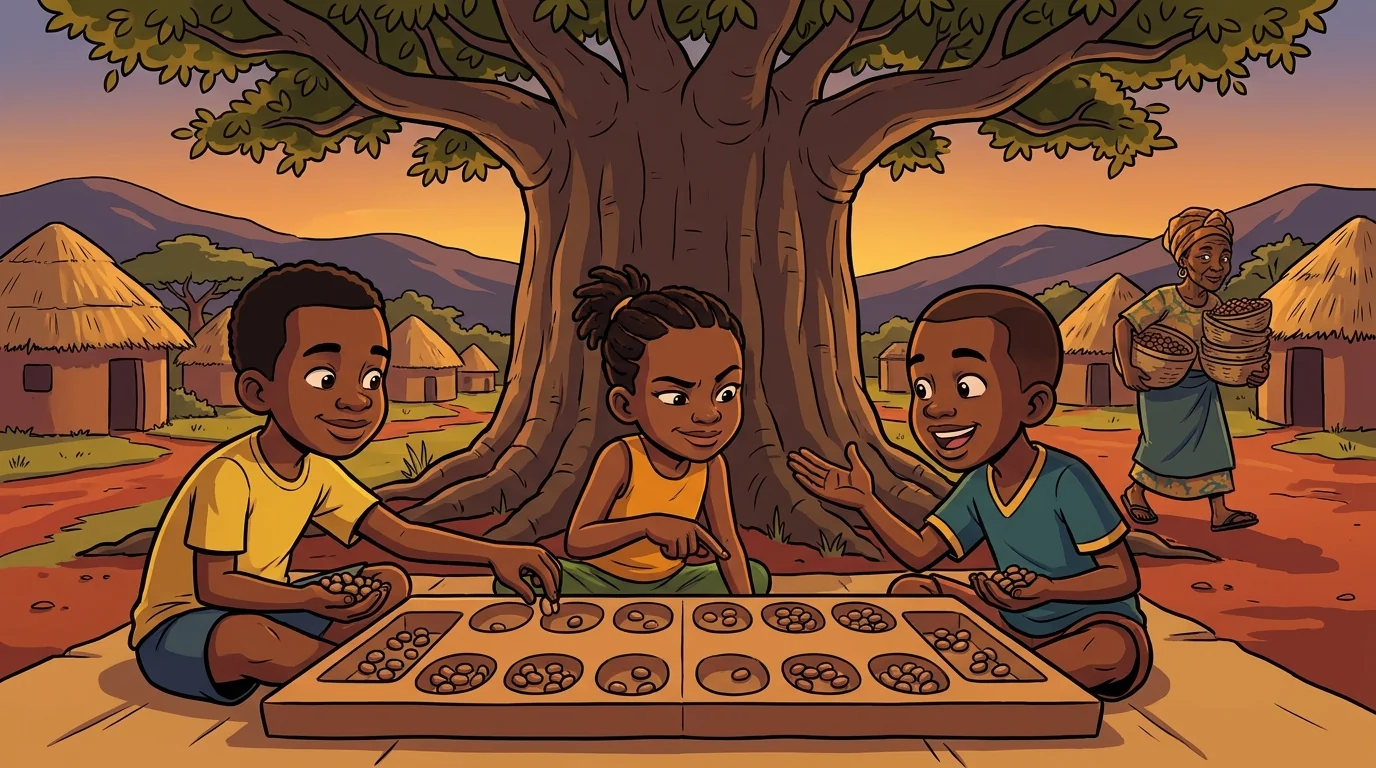
Three friends sat at the great baobab board one evening — Sefu the sower, Kesi the counter, and Koro the capturer — and they were having, as they often did, a friendly argument about which of them mattered most.
"The sow comes first," said Sefu, dropping one seed into each house round the ring, calm and even. "Nothing happens on this board until someone lifts a pit and gives one seed to every house. I am the game's beginning."
"A beginning that goes nowhere without me," said Kesi, whose quick eyes had already read every pit's number. "You can sow all day, Sefu. But you don't know where your last seed lands, or what it makes the pit it lands in, until someone counts. And that's me."
"And a count is just a number in the air," said Koro, "until it turns into seeds in a store. The whole point of your sowing and your counting is the capture at the end of it — the two-or-three that I sweep home. So really, the two of you work for me."
They looked at each other, half-laughing, half-serious, three friends each sure they were the one who mattered. And old Nana, passing with her armful of seeds, heard them, and set the seeds down, and said, "Shall I show you which of you matters most?" — in the particular voice that meant none of them were going to enjoy the answer.
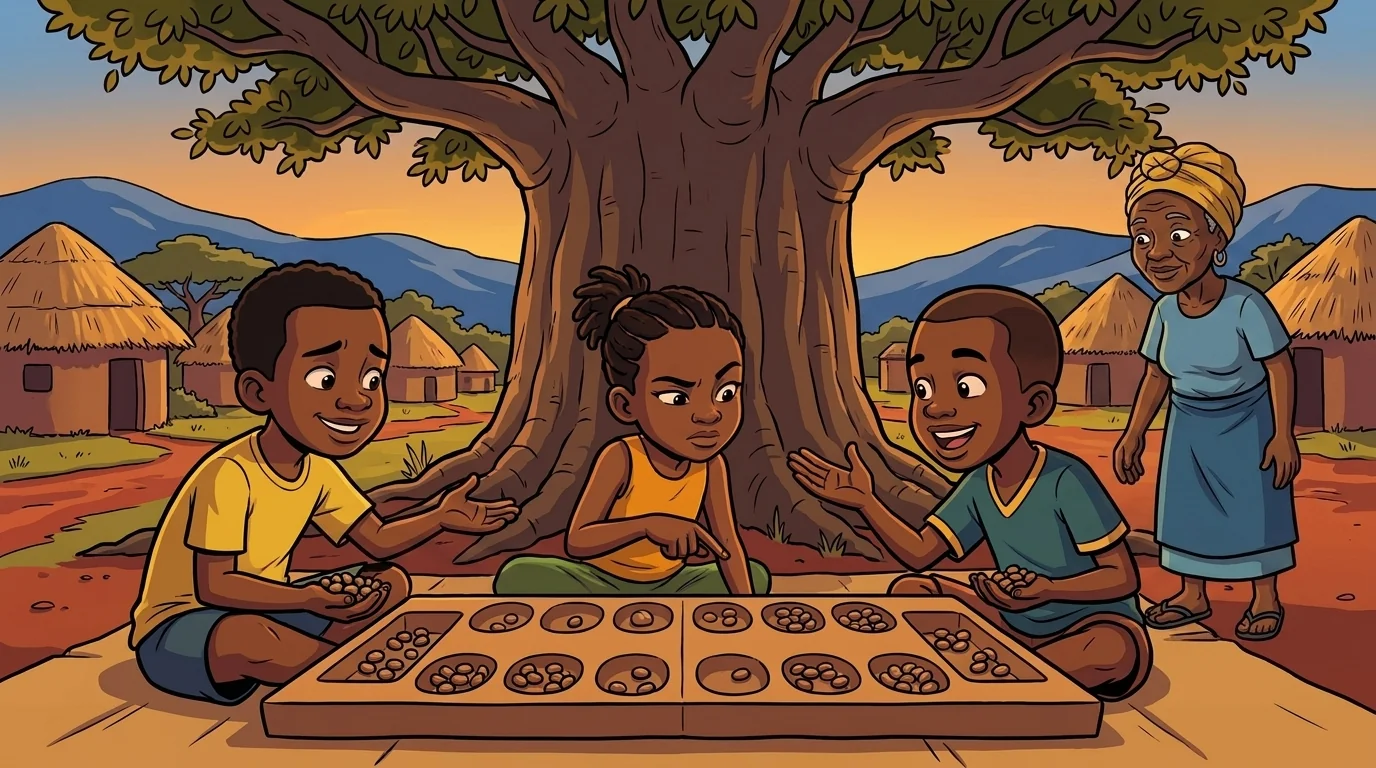
Nana set up a pit on Sefu's side and a tempting enemy pit sitting at one seed, seven houses along.
"Sefu," she said. "Capture that far pit. Just you. No counting, no thinking about the take — you say the sow is the whole game, so sow."
Sefu, a little uncertain, scooped up his pit and sowed it the fair way — one seed to each house, all the way along — because that was his art and he trusted it. But he had not counted how many seeds were in his fist, and he had not worked out where the last one would fall, and so his final seed dropped two houses past the pit he'd needed to reach, landing uselessly in an enemy pit it made four — no capture at all.
"A beautiful sow," Nana said mildly. "Even. Fair. One seed to every house. And it captured exactly nothing, because you did not count." Sefu looked at his lovely, wasted move and had the grace to laugh. "The beginning," he admitted, "is not much of a beginning if it doesn't know where it's going."
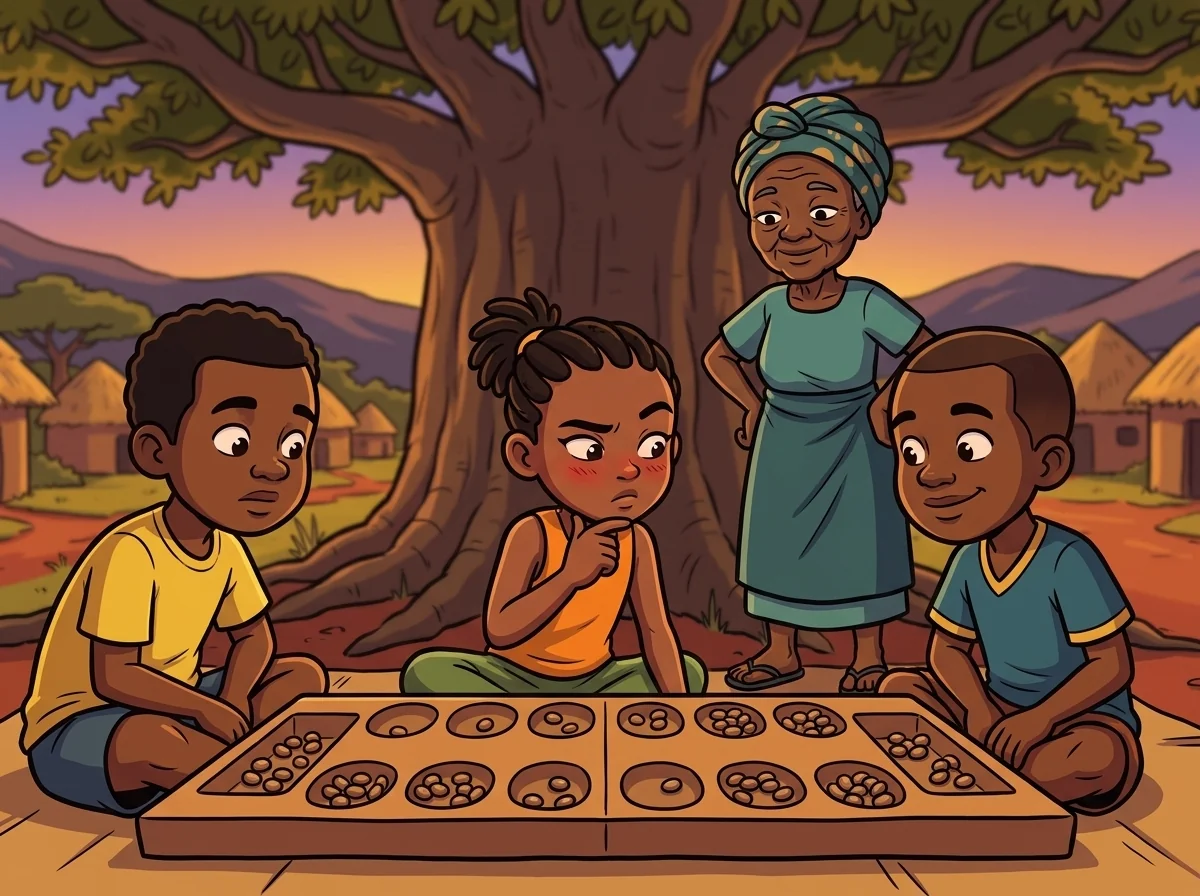
"Kesi," said Nana, resetting the board. "Your turn. You say the count is what matters. So — count."
Kesi's quick eyes swept the board and she rattled off every number true: this pit holds five, that one two, the far one one, and a five-seed sow from here would land its last seed exactly on that far one and make it two — a capture. She saw the whole thing, perfectly, instantly, in her head. And then she sat there. Because seeing a capture and making one are not the same thing, and a count that nobody acts on is just a very accurate way of watching a chance go by.
"Well?" said Nana. "You've counted it beautifully. The capture is right there in your words. Take it."
And Kesi, flushing a little, realised she couldn't — not by counting. She needed a hand to actually sow the five, and a will to actually reach in and reap. "My count is true," she said slowly, "but true is not the same as done. A number that just sits there captures nothing either."
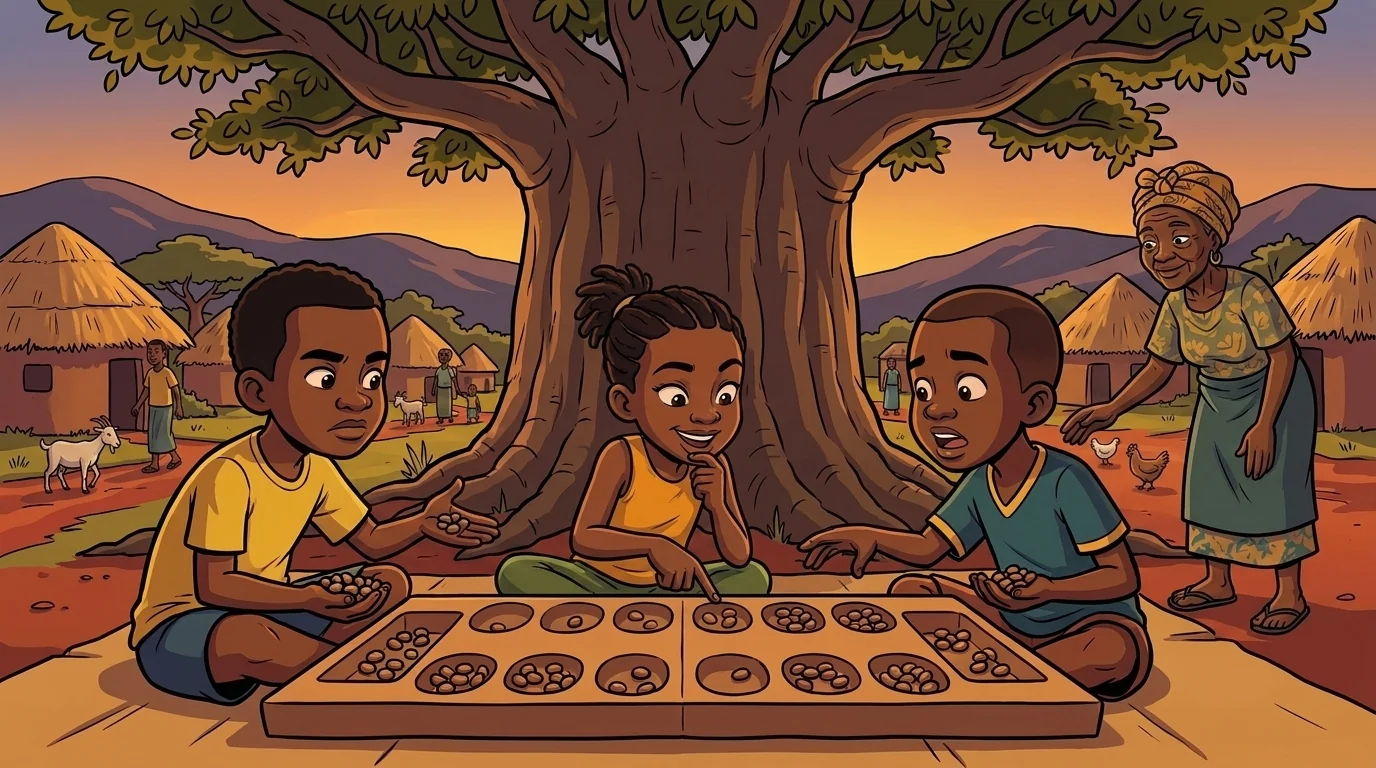
"Koro," said Nana, resetting once more. "You say the capture is the point, and the other two work for you. Very well. Capture — without them."
Koro reached eagerly for the enemy pit sitting at two, ready to sweep it — and Nana caught her hand. "No, no. You don't grab a pit, child, remember? You land on it. Your last seed must make it two or three. So — which pit do you sow, and how many seeds does it hold, and where does the last one fall?" And Koro, who lived for the sweeping-home and had never much cared for the fiddly parts, found she had no idea. She didn't know which pit to lift (that was Sefu's fair sow), and she didn't know where her last seed would land or what it would make the pit (that was Kesi's count). Her beloved capture, without the sow beneath it and the count guiding it, was just a hand hovering greedily over seeds she had no lawful way to take.
That was the moment it happened for all three at once — the click of it. Sefu couldn't capture without counting. Kesi couldn't capture without sowing and reaping. Koro couldn't capture without either. So the three of them, laughing now, did it together: Kesi read the board and named the five-seed pit whose last seed would land true; Sefu lifted that pit and sowed it the fair way, one to each house, straight and even; and as the last seed fell — into the far pit, making it three — Koro swept it home. A capture. A real one. And not one of them had made it alone.
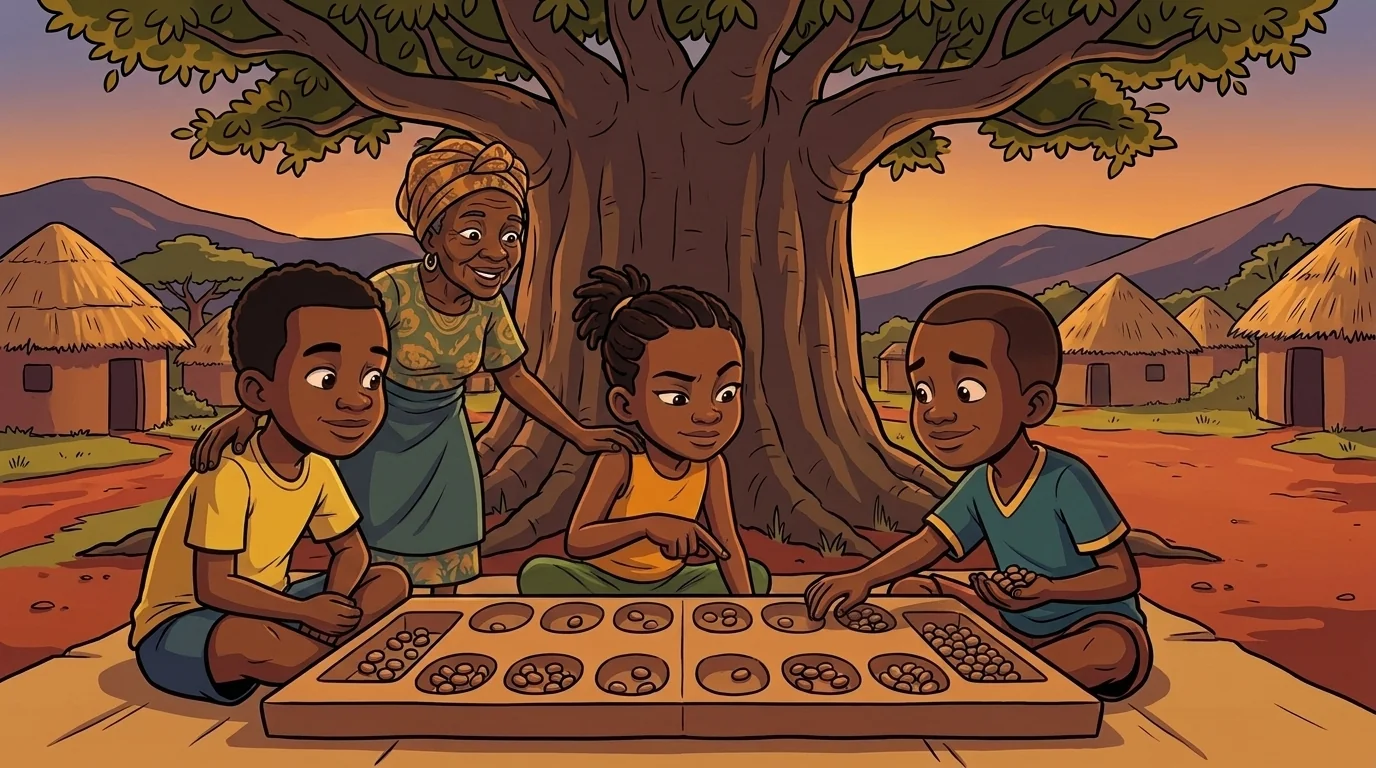
Nana gathered the three of them close as the light went gold under the baobab.
"Now," she said, "which of you matters most?" And this time none of them answered me, because they had all just watched their own single act come to nothing and their three acts together bring a harvest home. "The sow that doesn't count lands blind," Nana said. "The count that doesn't act sees a chance and lets it go. The reach that has neither beneath it is a greedy hand over seeds it can't take. But sow, and count, and reap — the three as one chain — and the seeds come home every time." She smiled at them. "The game does not have a most-important part. It has parts that are nothing alone and everything together. That is not a weakness of the game. It is the whole beauty of it."
The three friends sat quiet a while, a little humbled and a good deal gladder, watching the board where their shared capture still showed in Koro's store. They had come to argue about who mattered most and were leaving having learned they had been asking a silly question — because the answer, it turned out, was all of us, at once, or none of us at all.
And there was a warm, particular happiness in that — the happiness of belonging to something you can't do by yourself, of being one needed link in a chain that only works whole. Sefu ran a last fair sow round the empty board; Kesi counted it true as it went; Koro watched for the two-or-three at the end of it; and the three of them, together, brought one more evening's seeds gently home.
The SeedSong ensemble
Sower Sefu & Count Kesi & Capture Koro is part of SeedSong's distributed-narrative cast. Each character embodies a different curricular primitive; together they teach the full subject.
-

Sower Sefu
Sowing: pick up a pit and drop exactly one seed in each pit counterclockwise
-
Count Kesi
Counting / subitizing: read how many seeds a pit holds at a glance
-

Capture Koro
Capturing: when the last seed makes an enemy pit two or three, sweep it
-
Reap Rafiki
Multi-capture chain: read a run of 2s and 3s backward and reap them all
-

Subitize Sisi
Look-ahead arithmetic: compute the landing pit without sowing it out
-
Lapwing Lulu
Lapping: sow a full loop around the board (skipping the start pit)
-

Store-Keeper Kito
The store (kroo) + win count: bank seeds safely; the store count is the win
-
Starve-Guard Nne
The must-feed rule: when the opponent has no seeds, you must give them some
-

Pitkeeper Pemba
Building a threat: load a pit to reach a target pit exactly
-

Doublesow Dembe
Staging / relay: stage seeds across turns to set up a big sweep
-
Seedling Sanaa
Opening patterns: the first-move sowing plan
-
Endgame Enzi
Endgame count-out: force the last seeds; parity and counting to the win
-

Nana Sowing Elder
The sowing elder (mentor): poses which-sow-captures puzzles; credits the tradition warmly