Lapwing Lulu & Starve-Guard Nne & Store-Keeper Kito
THE STRATEGIC CORE — keep your seeds flowing with big loops (lap), obey the rule that you must feed a starving opponent, and steer the whole game toward more-than-half safely in your store; the three together are how the game is actually won
A story read by Lapwing Lulu & Starve-Guard Nne & Store-Keeper Kito
Loading audio…
Press play to listen along. The line being read lights up as you go.
Show full transcript
Loading transcript…
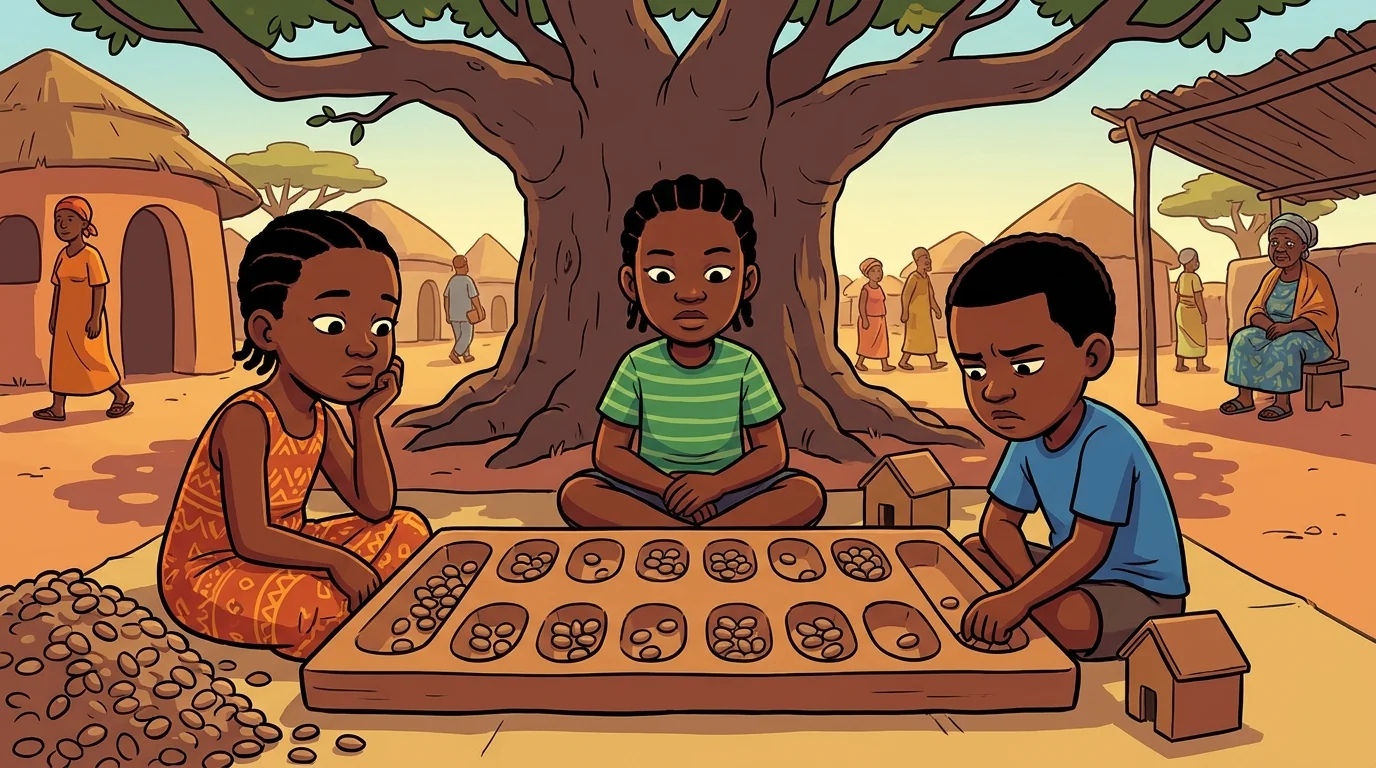
Three of the strongest players at the great baobab board — Lulu the lapper, Nne the keeper of the feeding rule, and Kito the store-keeper — had a quiet, nagging problem in common that none of them liked to admit: each of them, brilliant in their own way, kept losing whole games.
Lulu played the grandest loops anyone had ever seen, sending fistfuls of seeds all the way around the board and home again — glorious to watch. But she played for the joy of the great sow and paid no mind to where the seeds ended up, and so she'd loop the board magnificently all game and lose, because she never banked a thing.
Nne kept the feeding rule more faithfully than anyone, never once starving an opponent, fair to the last seed — and lost, because being fair was all she thought about, and a game is not won by fairness alone; it is won by fairness and a fuller store.
And Kito watched his store like a hawk, banking every seed he could — but he hoarded so cautiously, refusing every big looping sow as "too risky," that his seeds clogged uselessly in his own pits and dried up, and he'd sit there guarding a store that had simply stopped growing.
Three strong players. Three losing streaks. And one evening, tired of losing, they sat down together, and old Nana — who had watched all three lose for years with a patience that was really a kind of waiting — pulled up a stool beside them and said, "Ah. Shall we find out what each of you has been missing? I promise you, you already own it. It's just sitting in one of the others."
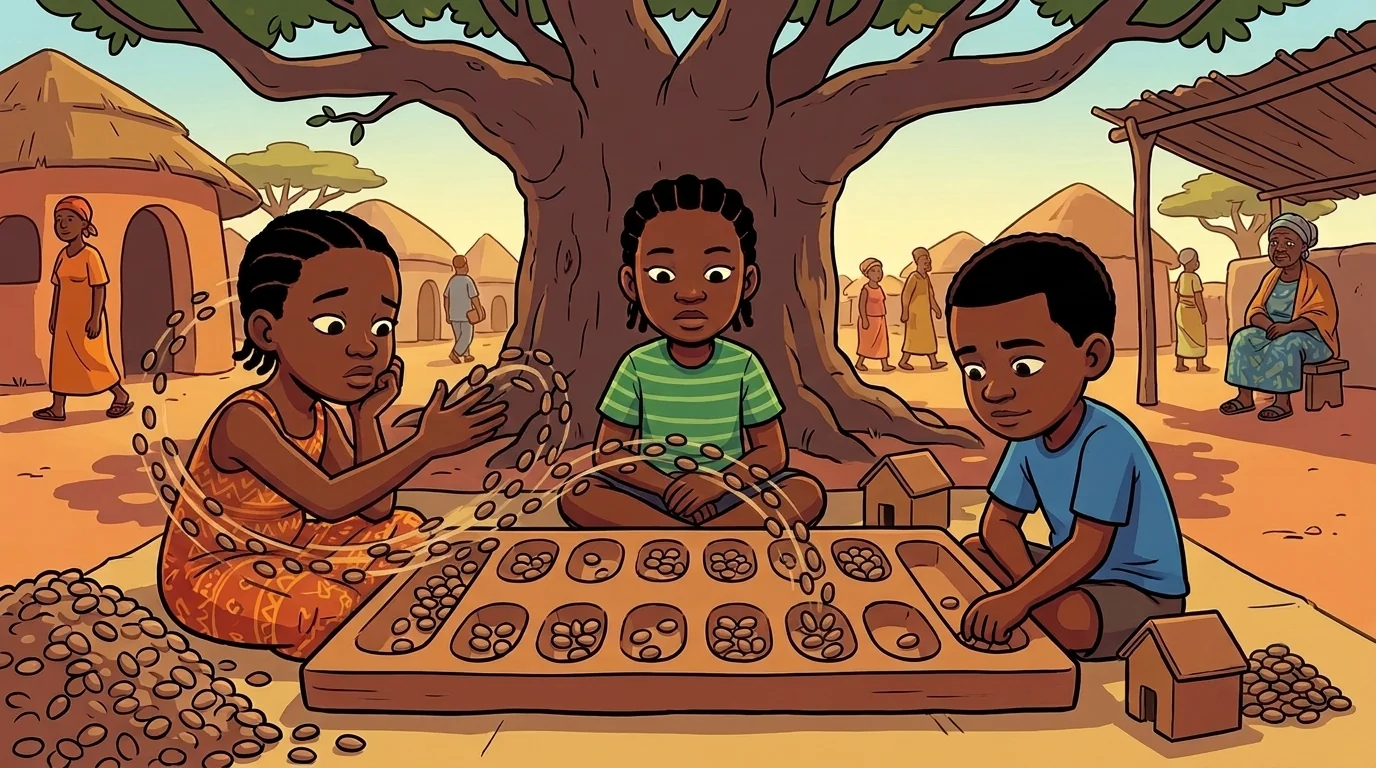
"Lulu," Nana said. "Play me a game your way. All loops, all joy."
And Lulu did — and it was beautiful, her seeds sweeping around the whole board in great singing arcs, the fullest, flowingest board anyone had seen. And she lost, twenty-one seeds to twenty-seven, because in all that magnificent flowing she had banked almost nothing into her store. She sat back, deflated. "I keep the seeds moving," she said, "better than anyone. And it wins me nothing."
"Because moving is not the same as keeping," said Kito quietly, and there was no unkindness in it, only recognition. "Your flow is wonderful, Lulu. It just needs somewhere to go." And Lulu looked at his patient, well-tended store and understood, for the first time, that her beautiful loops had never had a destination.
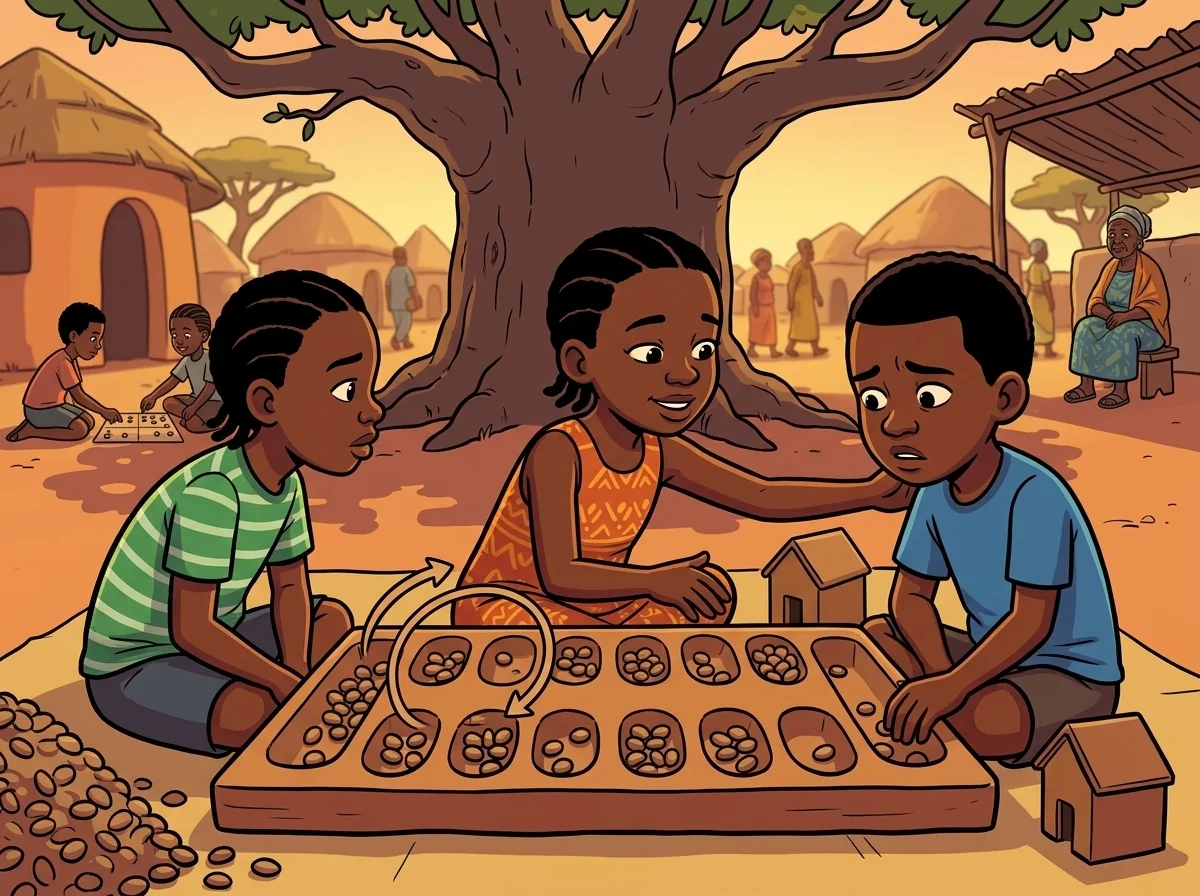
"Kito," said Nana. "Now you. Your way. Guard that store."
And Kito played — cautious, careful, banking every small safe seed, refusing every risk. And his seeds piled up in his own pits with nowhere to flow, growing stale and clogged, until whole stretches of his side sat dead, and his store, so carefully guarded, simply stopped filling because nothing was reaching it anymore. He lost, nineteen to twenty-nine, strangled by his own caution. "I keep the seeds," he said, bewildered. "I keep them better than anyone. And they... stopped coming."
"Because you never let them flow," said Lulu gently, and she said it the way he'd said it to her — kindly, seeing herself in him reversed. "You need the loops, Kito. The seeds have to move to reach your store. All your keeping is guarding a door nobody's walking through." And Kito looked at Lulu's flowing board and saw, for the first time, that a store only fills if the seeds are kept moving toward it.
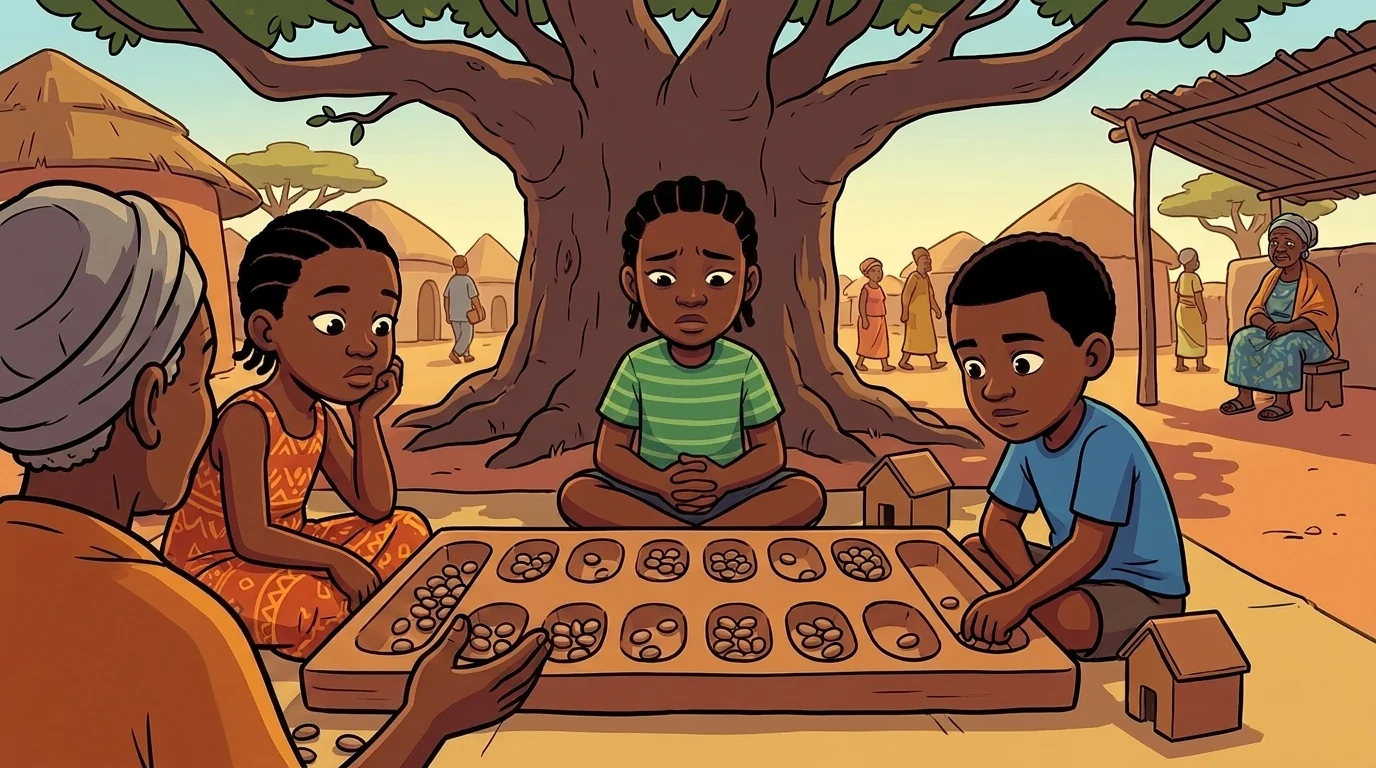
"And Nne," said Nana, more gently still, for this one was the hardest. "Your way."
And Nne played the fairest game imaginable — never starving, always feeding, scrupulously just — and lost, because she thought about nothing but fairness, feeding seeds across to her opponent even when she didn't have to, forgetting entirely to steer any toward her own store or to keep her own flow alive. She had confused keeping the game fair with playing it well, and they are not the same thing. "I follow the rule that matters most," she said, a little stung. "And I still lose."
"The feeding rule matters most," Nana agreed. "It is the soul of the game — never let it go. But it is not the whole game, child. You may be perfectly fair and still keep your flow, and still bank your store. Fairness is the ground you stand on. It is not, by itself, the walking." And here it happened for all three at once — the click — because they suddenly saw the shape of the thing: Lulu had the flow and lacked the store; Kito had the store and lacked the flow; Nne had the fairness and had forgotten both. Each of them held one piece of a single whole, and each had been trying to win with one piece alone. So they played the next game together, one hand guided by three minds: Lulu sent the seeds looping and flowing so they never clogged; Nne watched, always, that the far side never starved, keeping every move lawful and just; and Kito steered the flowing, fair seeds steadily toward his store until it passed twenty-four — and they won, at last, not by any one of their strengths, but by all three held at once.
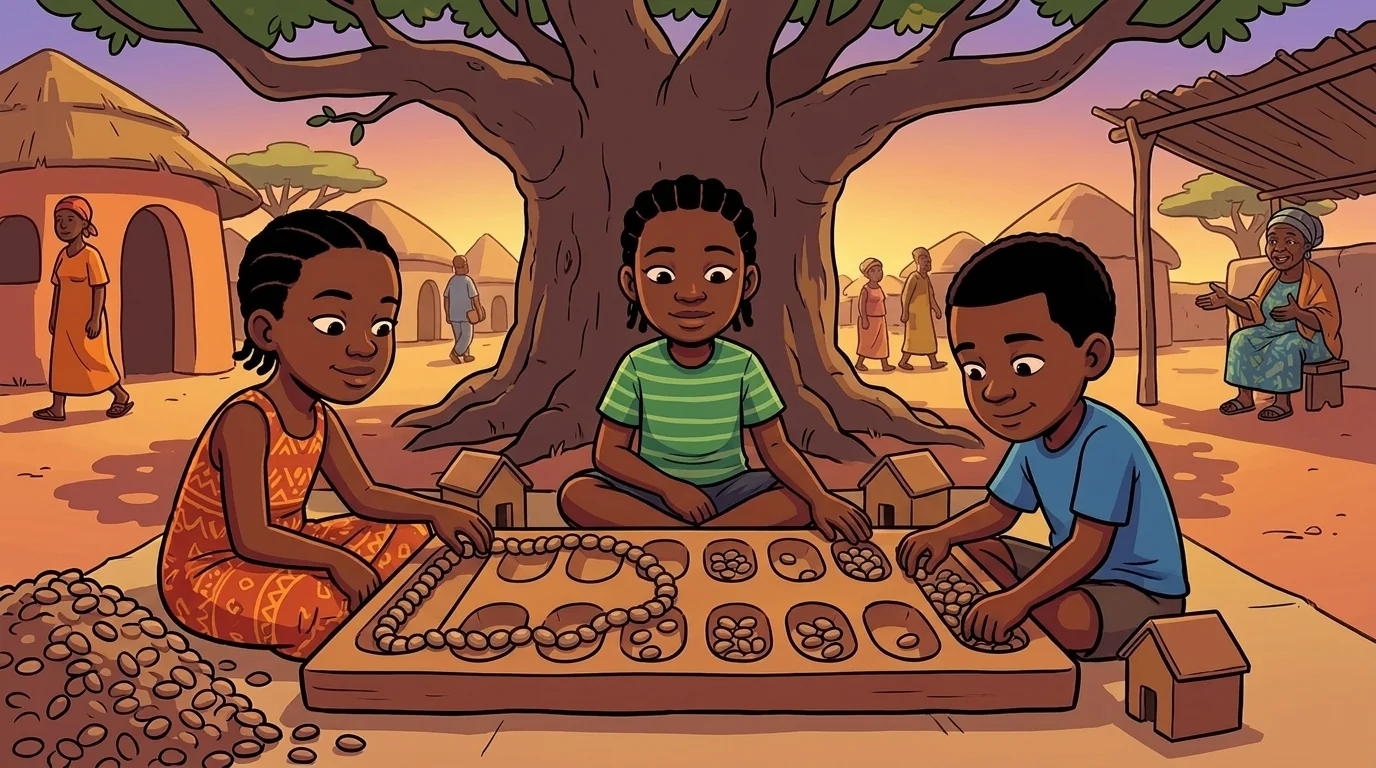
Afterward the three sat with Nana in the last of the light, a little astonished at themselves.
"All this time," Lulu said, "I thought my flow was the whole game."
"And I my store," said Kito.
"And I my fairness," said Nne — and then, because she was Nne, "though I'd keep the fairness first of the three, even so."
"You would be right to," Nana said, smiling. "Keep it first — but keep it among the others, not instead of them. That is the secret the three of you have been circling for years. The game is not won by loving one true thing. It is won by holding three true things together: keep the seeds flowing, keep the game fair, and steer it home to your store. Let go of any one and the other two can't save you. Hold all three, lightly, at once — and the long way around becomes the winning way." She looked at the three of them, each so strong and each so long incomplete, now suddenly whole together. "You were never missing a skill. You were only missing each other."
And there was a deep, settling gladness in that, warmer than any single win — the gladness of three stubborn, separate strengths finally learning to stand together, of discovering that the thing each had been missing had been sitting all along in a friend across the board. Lulu sent one last great loop singing around the ring; Nne made sure it left the far side fed and fair; Kito counted the flowing seeds gently home into his store; and the three of them, at last, went the long way around — together, and winning — under the wide old tree.
The SeedSong ensemble
Lapwing Lulu & Starve-Guard Nne & Store-Keeper Kito is part of SeedSong's distributed-narrative cast. Each character embodies a different curricular primitive; together they teach the full subject.
-

Sower Sefu
Sowing: pick up a pit and drop exactly one seed in each pit counterclockwise
-
Count Kesi
Counting / subitizing: read how many seeds a pit holds at a glance
-

Capture Koro
Capturing: when the last seed makes an enemy pit two or three, sweep it
-
Reap Rafiki
Multi-capture chain: read a run of 2s and 3s backward and reap them all
-

Subitize Sisi
Look-ahead arithmetic: compute the landing pit without sowing it out
-

Lapwing Lulu
Lapping: sow a full loop around the board (skipping the start pit)
-

Store-Keeper Kito
The store (kroo) + win count: bank seeds safely; the store count is the win
-

Starve-Guard Nne
The must-feed rule: when the opponent has no seeds, you must give them some
-

Pitkeeper Pemba
Building a threat: load a pit to reach a target pit exactly
-

Doublesow Dembe
Staging / relay: stage seeds across turns to set up a big sweep
-

Seedling Sanaa
Opening patterns: the first-move sowing plan
-

Endgame Enzi
Endgame count-out: force the last seeds; parity and counting to the win
-

Nana Sowing Elder
The sowing elder (mentor): poses which-sow-captures puzzles; credits the tradition warmly