Dunlin, Reeve, and Curlew
MANAGING SCARCITY — as spellable words run down you play the resource wisely: BRIDGE-LETTERS (reuse a letter to stretch two words from one tile, Curlew) + LONGEST-WORD RECONCILE (win the precious contested cell with the stronger claim, Reeve) + RESOURCE-DEGENERATION (when words are truly gone, connect with plain steps, Dunlin).
A story read by Dunlin, Reeve, and Curlew
Loading audio…
Press play to listen along. The line being read lights up as you go.
Show full transcript
Loading transcript…
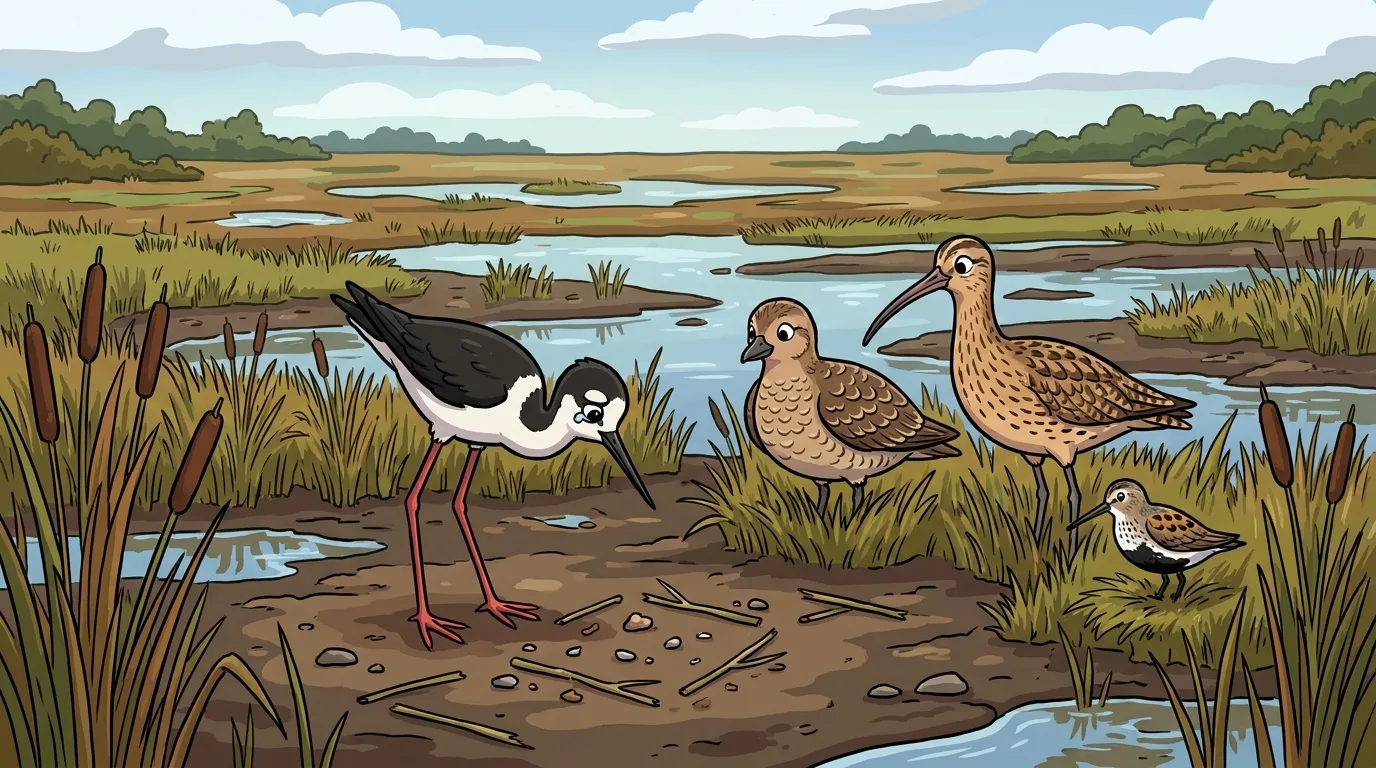
It was late in a long game, and the board was a mess. Every easy word had been spelled and claimed. The leftover letters sat scattered and stubborn, and a young stilt who'd been winning an hour ago was close to tears. "It's over," she whispered. "There's nothing left to spell. I'm going to lose."
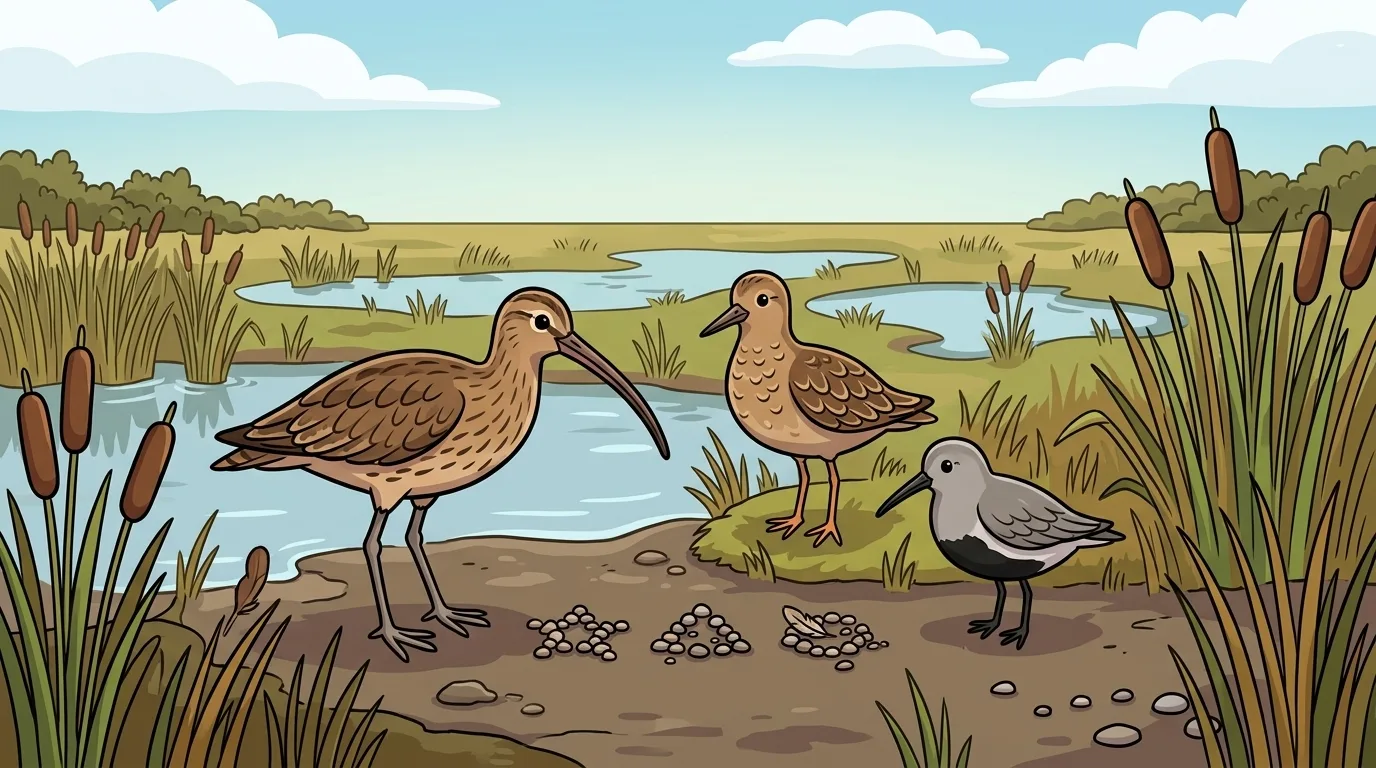
Three birds heard her — Curlew with his great curved beak, Reeve the calm settler, and plain grey Dunlin — and they gathered round, because between the three of them they knew exactly what to do when the good words run dry. It happens in three stages, they told her, and each of them had a stage.
"First, while a few words are left, don't waste a single letter," said Curlew. He showed her the trick that had always been his: reuse. "See this R at the end of star? It can also start a word — rain. One tile, two words. When letters are scarce, you make each one do double duty." He traced it — star… rain… nest — three words squeezed from a corner she'd thought was empty, each sharing a letter with the next. "Scarcity is when reusing matters most," Curlew said. "Stretch every letter as far as it will go."
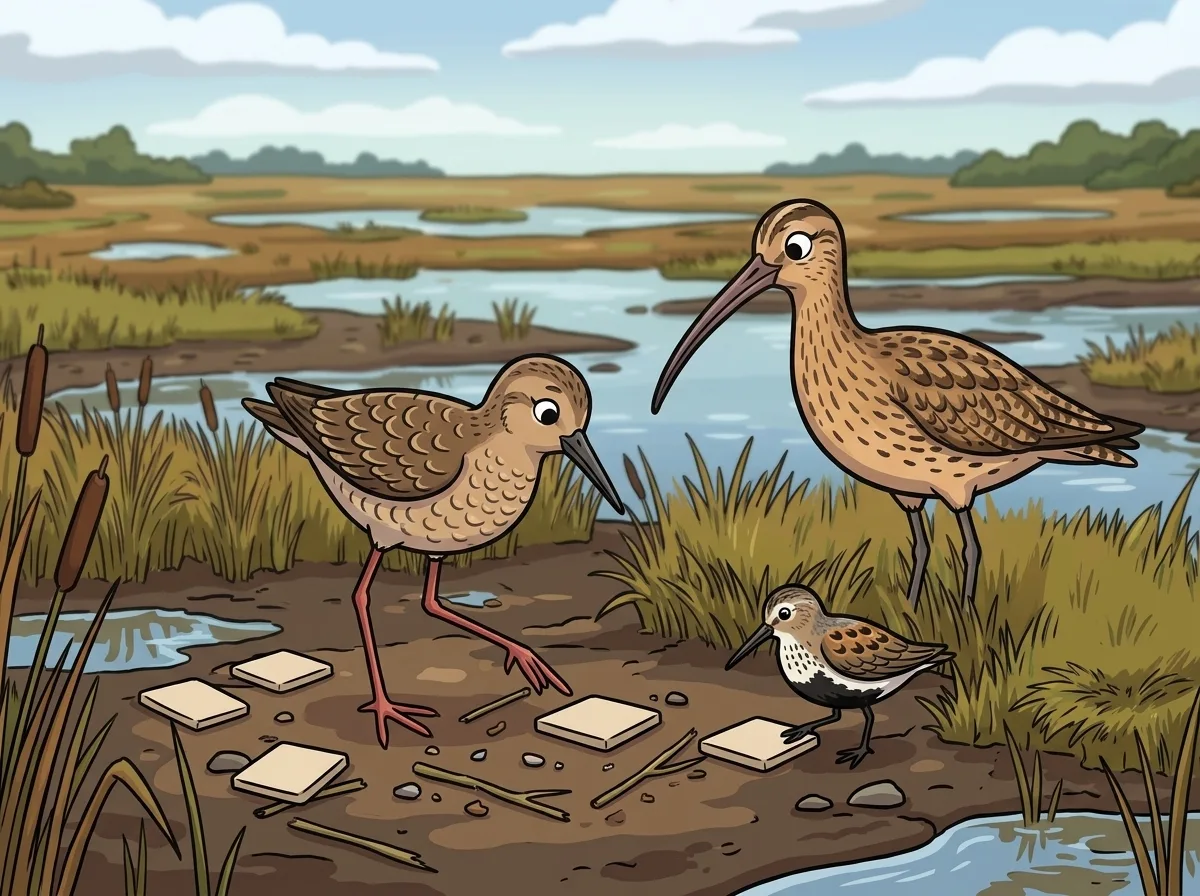
"Second," said Reeve in her even voice, "when only a few good cells are left, birds will clash over them — and a clash over a precious cell can turn ugly." So she reminded the young stilt of the fair rule: when two words want the same square, the longer word wins it. "Don't argue, and don't grab. If you want the contested cell, reach for the longer word — that's the stronger claim, and the rule will hand it to you fairly. When resources are tight, the fair rule keeps the fight from becoming a brawl, and it rewards the bird who spells more."
"And third," said Dunlin gently, "when the words are truly gone — not scarce, but gone — the game is not over. It just gets simpler." He stepped a plain tile beside one she already owned, no word at all, just a bare connection. "Underneath all the spelling is an older, plainer game: connect a tile to a tile, step by step, straight to the shore. You don't need a word for every step. When the rich moves are spent, drop to the simple ones and keep walking."
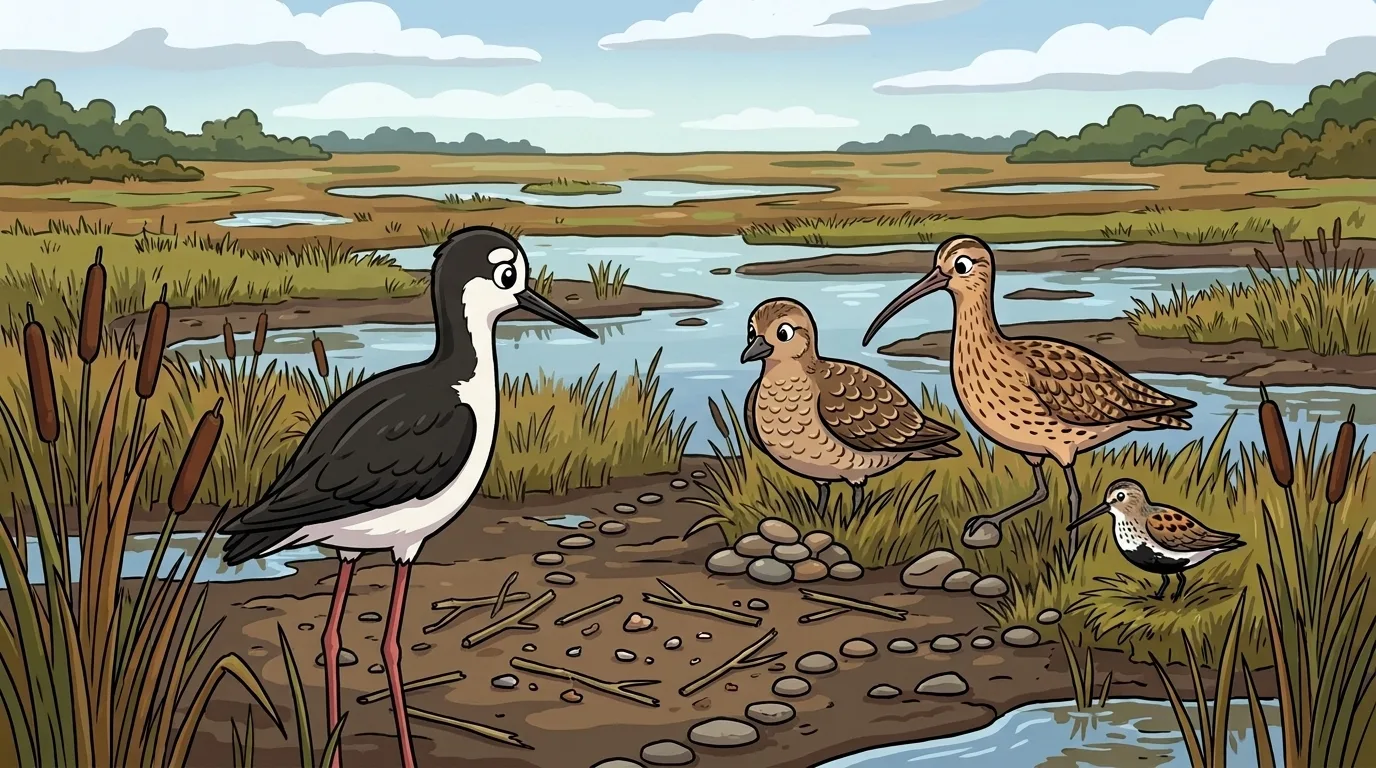
The young stilt watched the three of them work her hopeless corner — Curlew stretching the last words with reused letters, Reeve calmly winning the one contested cell with a longer word, Dunlin bridging the final barren gap with plain, wordless steps — and her bridge, which she'd been sure was dead, crept quietly to the far shore. She won.
"But there were no words left!" she said, astonished.
"There's always a next stage," said Dunlin. "The trick is to know which stage you're in, and play that one. Plenty of words left? Spell boldly. Getting scarce? Reuse every letter and fight fair for the good cells. Truly gone? Go plain and grind it out. Running low isn't the end. It's just a signal to change how you play."
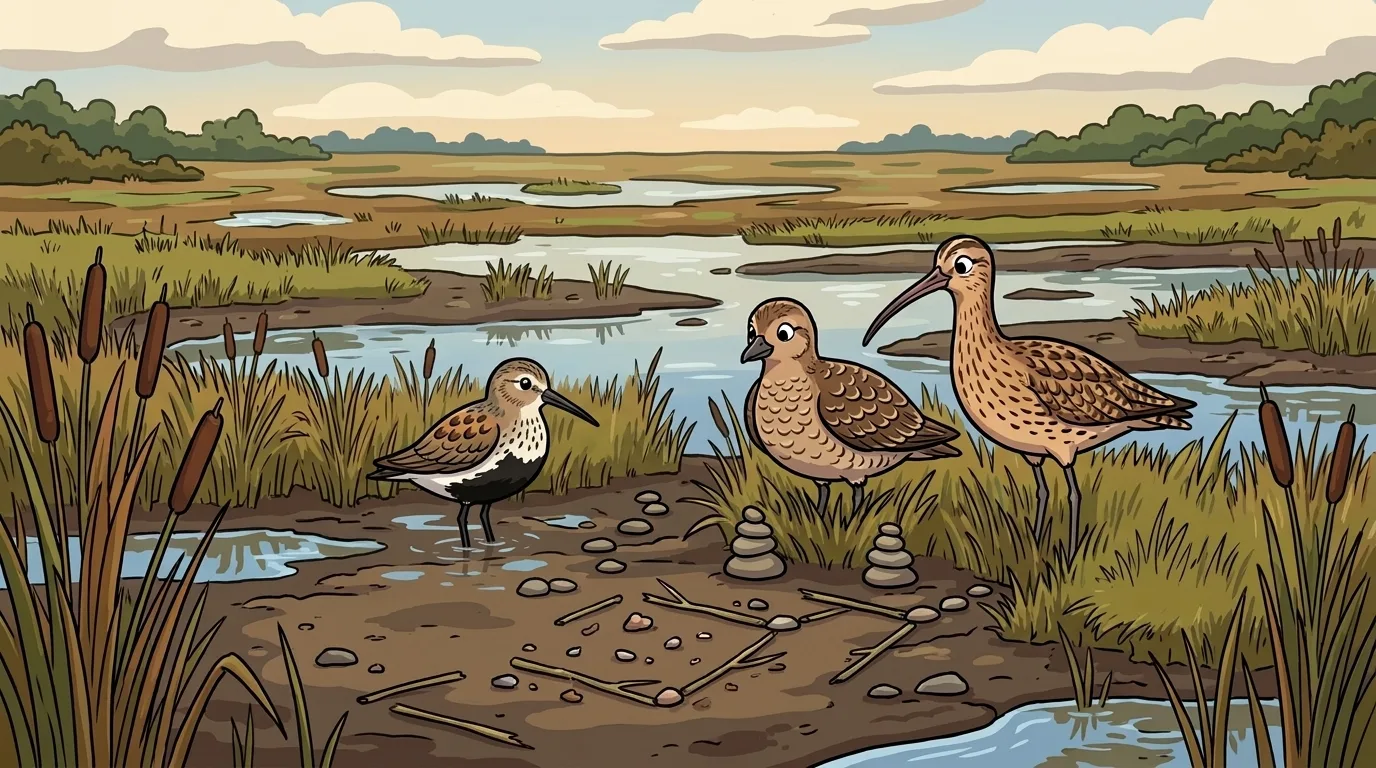
Here is what the three want you to keep. Almost everything worth doing runs on some resource that dwindles — time, energy, good ideas, easy moves — and the panic we feel near the end is usually just the panic of the easy way running out. But there is almost always a next stage with its own smart move: stretch what's left, settle clashes fairly, and when the rich options are gone, simplify and keep going. A plan for the hard part makes the hard part far less frightening.
So when your board fills up and the good words vanish and that over-it-all feeling rises, remember these three. Ask: which stage am I in — scarce, or truly empty? Then reuse, contest fairly, or simplify — and walk it to the shore.
Say it the way the three say it, side by side at the water's edge: stretch it, fight fair for it, and when it's gone, go plain. Reuse letters, let the longest word win the clash, and connect with simple steps to the end.
The spanforge ensemble
Dunlin, Reeve, and Curlew is part of spanforge's distributed-narrative cast. Each character embodies a different curricular primitive; together they teach the full subject.