
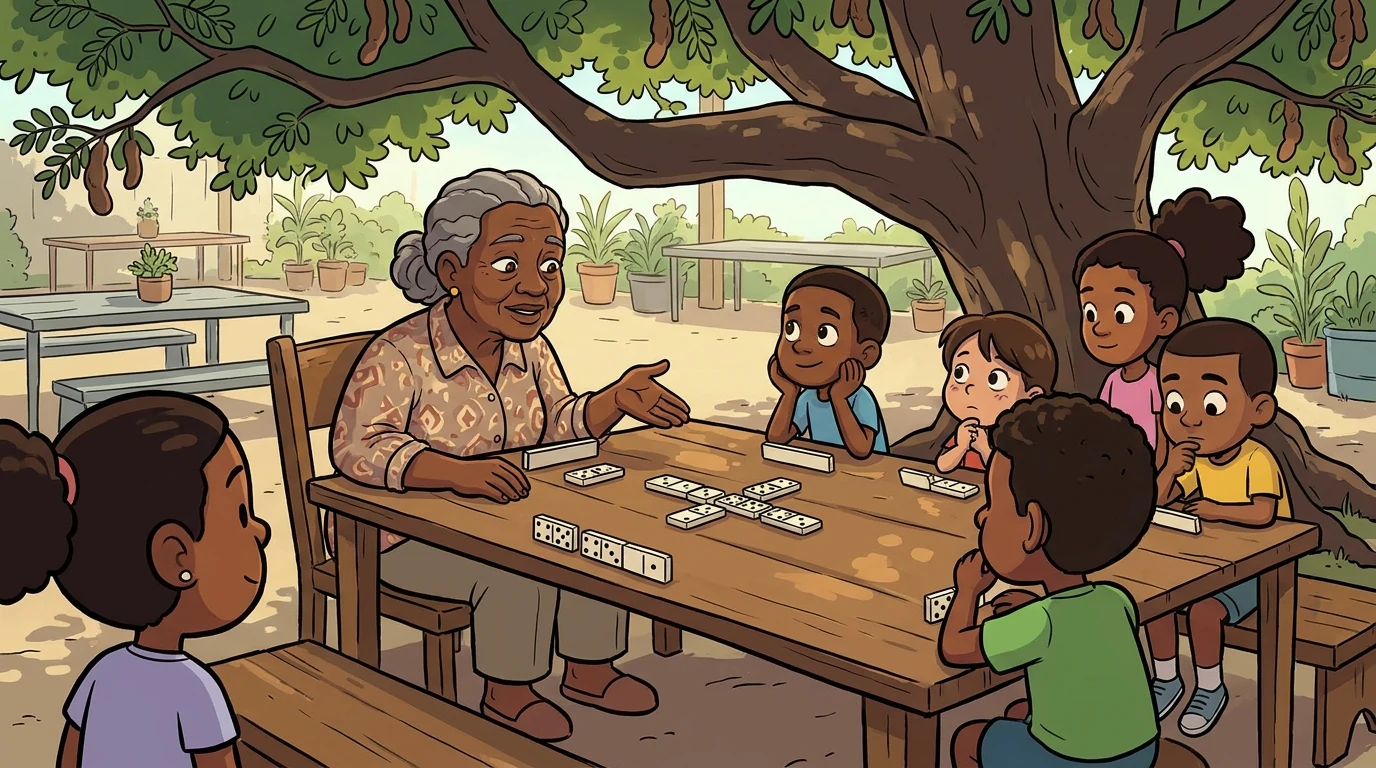
Nana Fives
THE COACHING STANCE — poses the three questions that unlock every dominoes decision ('what totals to a five? where do you play? block or draw?') and asks before answering, so the learner reasons it out (R-CASTDIALOG-ASKS-QUESTIONS)
Chapter 12 — The One Who Asks
At the head of the tamarind table sat Nana Fives, who had taught nearly every player there and had never once, that anyone could remember, simply told them what to do. A child would look up from a tangle of tiles, stuck, and say, “Nana, what do I play?” — and Nana would not answer. She would ask. “What do the ends total right now? Could you make that a five? And if you can’t — where can’t they play?” And the child, made to look, would find the move themselves.
She had three questions she asked more than any others, three questions that between them unlocked almost any moment at the table: What totals to a five? Where do you play? Block or draw? The scorers learned the first from her, the matchers the second, the strategists the third. Nana didn’t embody one tile-rule the way her players did; she embodied the asking — the patient turning of a stuck child back toward the board with a question that let them see. “If I tell you the tile,” she’d say, “you learn the tile. If I ask you the question, you learn the game.”
Nana Fives had not always taught by asking. When she was younger and teaching her first children, she’d done what came naturally: she’d pointed. “Play that one. No — that one. There.” And her students had done exactly as she said, and won while she watched — and then lost the moment she looked away, because they had learned to follow her finger, not to read the board.
The change came when a small girl she’d been coaching burst into tears the first time Nana wasn’t beside her. “You weren’t here to tell me,” the girl wept. And Nana understood, with a pang, that she’d taught the child to need her instead of teaching her to think. So she put her pointing finger away. The next time a child asked “what do I play?”, she bit back the answer and asked a question instead — “what’s open at the ends?” — and waited, uncomfortable, through the long silence, until the child worked it out alone. It was slower. It was so much better. She never went back to pointing.
One evening a boy she’d been teaching for a season sat down against a hard board and, out of habit, opened his mouth to ask her what to do. Then he stopped. And instead of asking Nana, he asked himself her questions, aloud: “What do the ends total? …Nine. Can I make it a five? …If I play here — yes, ten.” He played it, scored, and looked up — not for permission, just to share it.
Nana Fives said nothing at all. She only smiled, because the boy had not needed her; he had carried her questions into his own head and answered them himself. That, she thought, was the finest turn she’d seen all night, and she hadn’t said a word.
Later that same boy was teaching a newcomer, and Nana watched him do the thing she’d spent her life learning to do. The little one asked him, “What do I play?” — and the boy, instead of pointing, asked: “Well — what totals to a five from here? And if nothing does… where can’t your opponent play?” The newcomer frowned, looked, and found it. The boy hadn’t told her the tile. He’d handed her the question.
Nana Fives felt the deep, quiet joy of a teacher watching her way outlive her voice. “You’ve stopped needing me,” she told the boy afterward, and it was the highest praise she had. “You carry the questions now. Soon she will too, and she’ll pass them on, and the table will keep teaching itself long after I’ve gone in for the evening. That was always the whole plan — not to be the one with the answers, but to leave behind the ones who ask.”
That night, after the others had gone, Nana Fives sat alone at the empty table and turned a single five-five tile over in her fingers — the double she was named for, ten pips, both halves counting full.
She thought about the young teacher she’d been, pointing at tiles, breeding children who won under her eye and wilted out of it, and about the weeping girl who’d taught her the lesson that changed everything: that answers given make a follower, and questions asked make a player. She had spent a lifetime learning to hold her tongue, to ask instead of tell, to measure her success not by how much they needed her but by how completely they didn’t. The three questions were her real legacy — what totals to a five, where do you play, block or draw — carried now in a dozen young heads and passed, hand to hand, down the long table. She set the double-five down, its two fives facing up, and felt the settled contentment of someone who had learned that the best teaching leaves the room still humming after the teacher has gone quiet.
The TileTales ensemble
Nana Fives is part of TileTales's distributed-narrative cast. Each character embodies a different curricular primitive; together they teach the full subject.
-

Match Mateo
Matching ends: you may only add a tile whose end equals a number already open
-
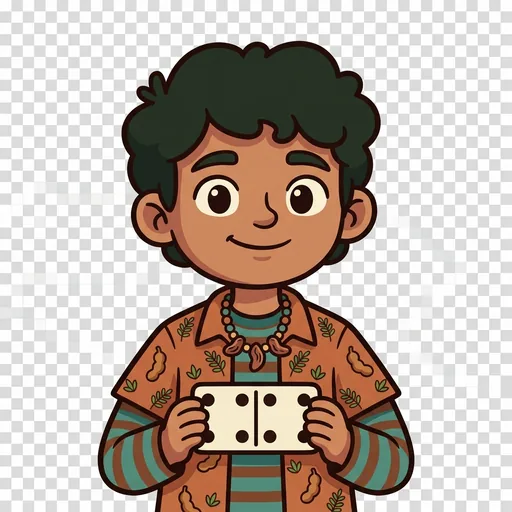
Double Dev
Doubles and the spinner: a double is played crossways and opens new arms
-
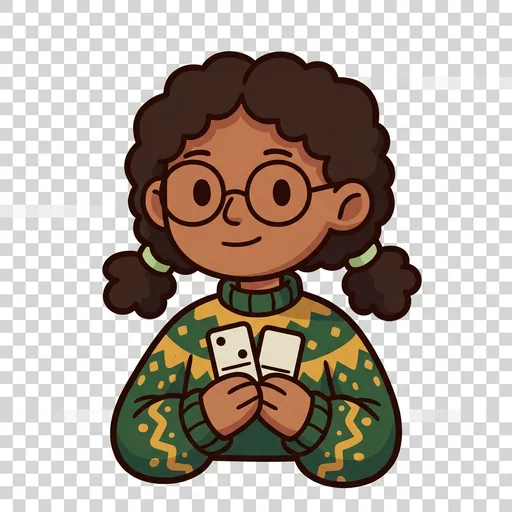
Block Bianca
Blocking: steering the open ends so the opponent has no legal play
-

Draw Dilan
The boneyard: when you can't match, you draw a tile or pass
-

Count Bello
Pip-counting and subitizing: reading a tile's value at a glance
-
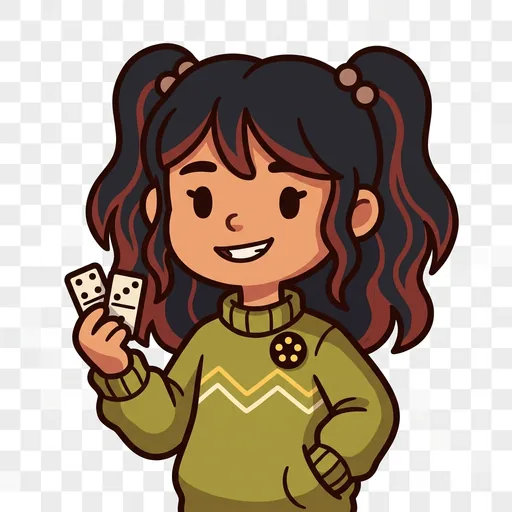
Fiver Odalys
All-fives scoring: land the open-ends total on a multiple of five
-
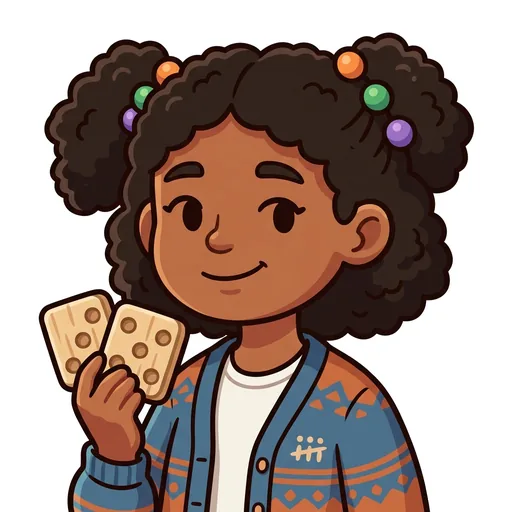
Threes Thandi
Multiples of three: scoring on multiples of 3 (and on both 3 and 5)
-
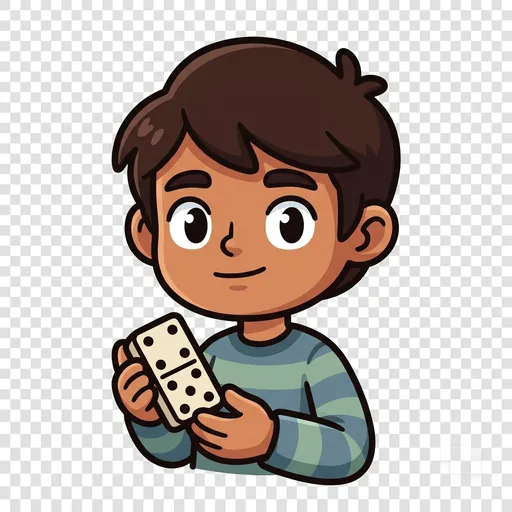
Shed Sunil
Shedding to win: be first to play every tile and call 'domino!'
-
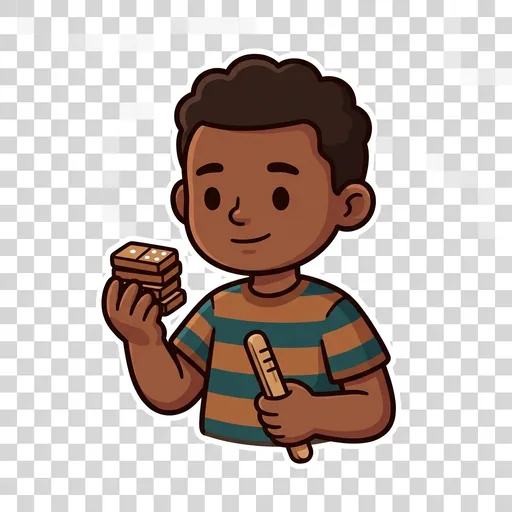
Tally Tunde
End-of-round counting-out: tally the pips left in hands, rounded to the nearest 5
-
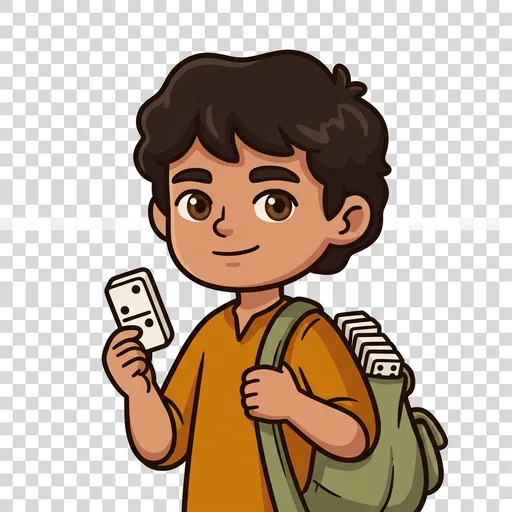
Train Tomás
Mexican train: grow a personal train off the central hub
-
Chicken Cheo
Chickenfoot branching: a double must sprout three branches before play continues