
Block Bianca
BLOCKING — steering the open ends toward numbers your opponent can't match so they're forced to draw or pass; the block is a defensive plan, not an attack
Chapter 6 — The One Who Closes the Doors
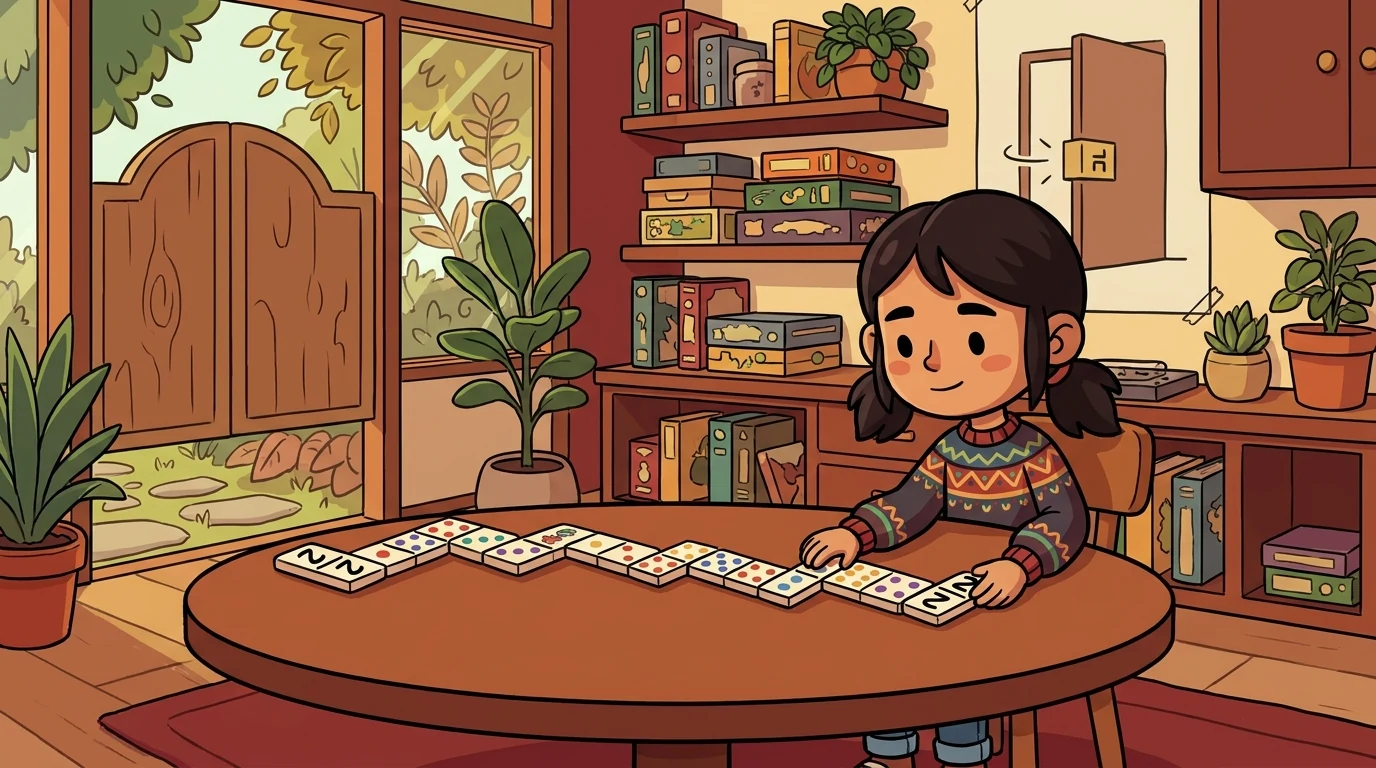
At the tamarind table there was a girl named Bianca who won games without ever playing a flashy tile. While others chased big scores, Bianca watched the ends — and, more than that, she watched which numbers had already left the table. She kept a quiet count in her head: how many sixes had been played, how many blanks were left, which numbers were running low. And when the moment came, she would steer both open ends of the line toward numbers her opponent simply couldn’t match — and just like that, they were forced to draw, or to pass.
That was blocking, and Bianca was its master. She didn’t attack anyone; she closed doors. If she noticed that almost every two had already been laid down, she’d work the ends until both of them showed a two — and her opponent, holding no twos, could do nothing but knock the table and pass. “I don’t beat people,” Bianca would say, studying the line. “I close the doors, one by one, until the only door left is one they can’t walk through.”
Bianca hadn’t started out a blocker. As a younger girl she’d played straight ahead, only ever thinking about her own next move, never about what her opponent could or couldn’t do. She’d be winning on points and then lose because the other player always, somehow, had a tile to play, while she ran out of options first. She was leaving all the doors wide open.
The change came the day she started counting what was gone. She noticed the fives had nearly all been played, and she thought — for the first time — not “what can I play?” but “what can they play?” She steered an end to a five, and her opponent, out of fives, had to draw. It felt like a light switching on. The game wasn’t only about her own tiles; it was about the shape of what everyone had left. Once she started watching which numbers had drained away, she could see the doors — and she could choose which ones to close.
Nana Fives set her the test she loved best: a near-endgame, few tiles left, and a chance to shut the line down entirely.
“Close it,” said Nana.
Bianca counted the table in her head. Every blank but one had been played; her opponent, she was almost sure, held no blanks. She worked the ends carefully — matching, steering — until both open ends showed a blank. Her opponent looked at their hand, looked at the boneyard (empty), and knocked the table: pass. The line was blocked; no one could add a tile; the round ended, and Bianca, holding fewer pips, won it.
Nana Fives smiled her rare smile. “Every child here plays their own hand,” she said. “You play everyone’s hand — you watch what’s been spent and you close the ends around what’s left. Blocking isn’t cruelty; it’s arithmetic and attention. You beat no one. You simply leave the line with no door open but the one they haven’t got the key to.”
A hot-tempered boy named Kofi thought blocking was mean and refused to learn it — until he kept losing to it. “You just trapped me!” he complained. “It’s not fair.”
“It’s not a trap and it’s not unfair,” Bianca said. “It’s noticing. Look — how many sixes have been played today?” Kofi counted the table: nearly all of them. “So if I make both ends a six, and you’ve got no sixes, what happens?” “…I have to pass,” Kofi admitted. “Right. I didn’t do anything to you. I just paid attention to what was already gone and steered the ends there. You can do it too — start counting what’s left, not just what you’re holding.” Kofi tried it the next round, made both ends a number he’d watched drain away, and blocked Bianca right back — grinning, not gloating. “Good block,” she told him, and meant it. “Good game,” he said, and meant it too.
That evening Bianca sat alone and replayed an old endgame, whispering the count of spent numbers — “sixes gone… one blank left…” — and steering the ends closed, just to feel the doors swing shut.
She thought about the younger girl who’d only ever watched her own hand and lost to opponents who always had one more tile, and about the quiet click in her mind the day she’d started counting what was gone instead of only what she held. She had come to love blocking for what it really was — not a way to hurt anyone, but a puzzle of attention, a matter of noticing which doors were already half-shut and gently closing the rest. Across the table always sat someone she liked; she never crowed when she blocked them, only counted, and steered, and said “good game.” Winning by closing doors, she’d decided, was the kindest kind of clever — sharp, fair, and never once a wound. She squared the tiles away, still half-counting the numbers in her head, and felt the calm pride of someone who had learned to see the whole table, not just her own hand.
The TileTales ensemble
Block Bianca is part of TileTales's distributed-narrative cast. Each character embodies a different curricular primitive; together they teach the full subject.
-

Match Mateo
Matching ends: you may only add a tile whose end equals a number already open
-

Double Dev
Doubles and the spinner: a double is played crossways and opens new arms
-

Draw Dilan
The boneyard: when you can't match, you draw a tile or pass
-

Count Bello
Pip-counting and subitizing: reading a tile's value at a glance
-

Fiver Odalys
All-fives scoring: land the open-ends total on a multiple of five
-
Threes Thandi
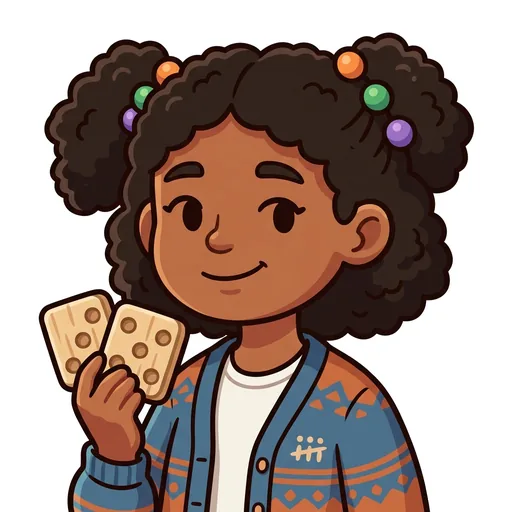
Multiples of three: scoring on multiples of 3 (and on both 3 and 5)
-

Shed Sunil
Shedding to win: be first to play every tile and call 'domino!'
-

Tally Tunde
End-of-round counting-out: tally the pips left in hands, rounded to the nearest 5
-

Train Tomás
Mexican train: grow a personal train off the central hub
-
Chicken Cheo
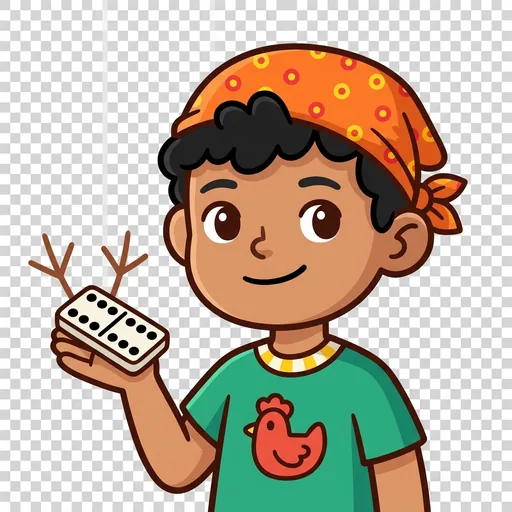
Chickenfoot branching: a double must sprout three branches before play continues