Caboose, Snugg and Gate
THE FINISH — the endgame is where every idea combines: CABOOSE makes sure the slowest last peg still has a route home (leave no peg behind), SNUGG lands the arriving pegs back-slot-first so the doorway never jams (home-fill order), and GATE holds the one junction a rival needs so nobody sneaks past at the wire (the block). A big lead means nothing until all ten are in — and finishing takes all three together: carry the straggler, pack the house from the back, and shut the last door.
A story read by Caboose, Snugg and Gate
Loading audio…
Press play to listen along. The line being read lights up as you go.
Show full transcript
Loading transcript…
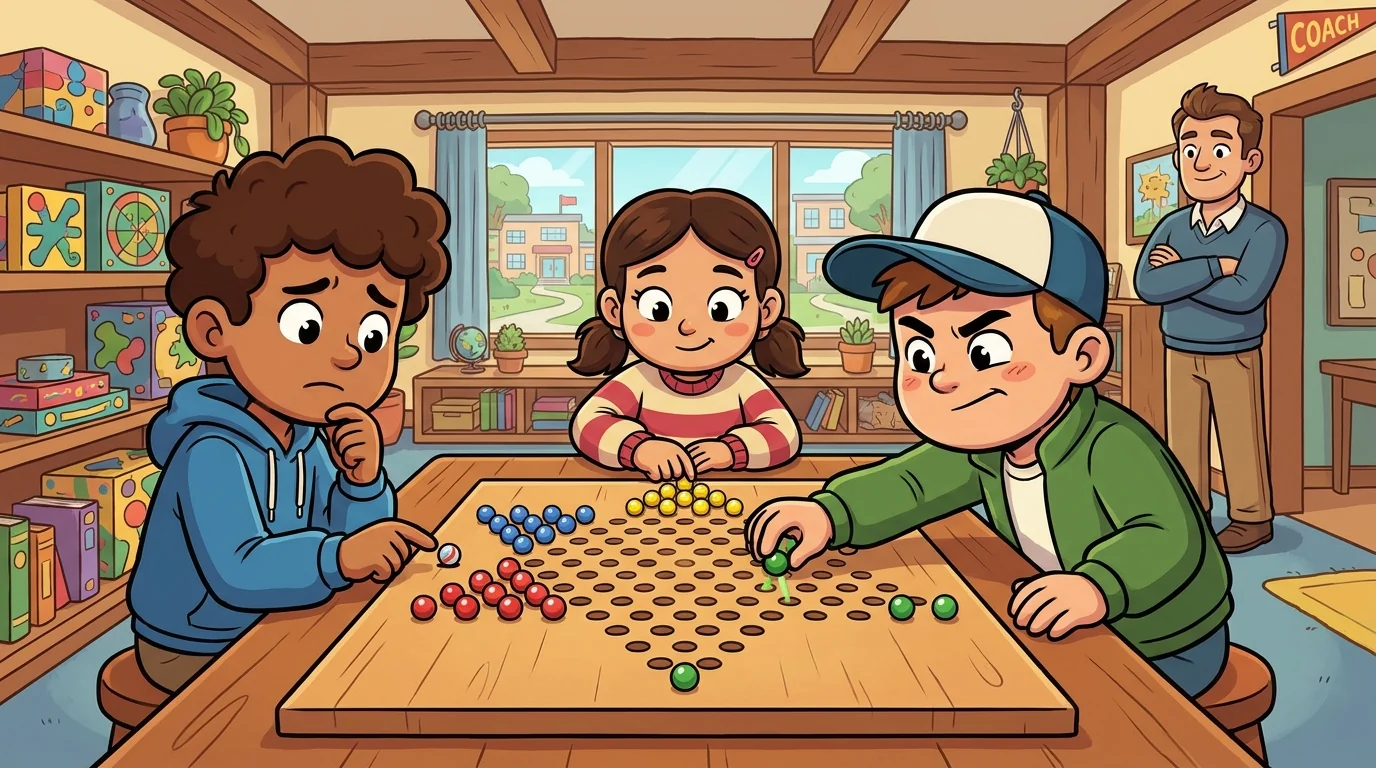
Cairn, the pathfinding coach, set up a board where one team was clearly winning — a big, comfortable lead — and told Caboose, Snugg and Gate: "Finish it." They almost didn't. A lead, it turns out, is the easiest thing in the world to lose at the very end, and the three of them each knew a different way it could go wrong — which was exactly why Cairn had put them together.
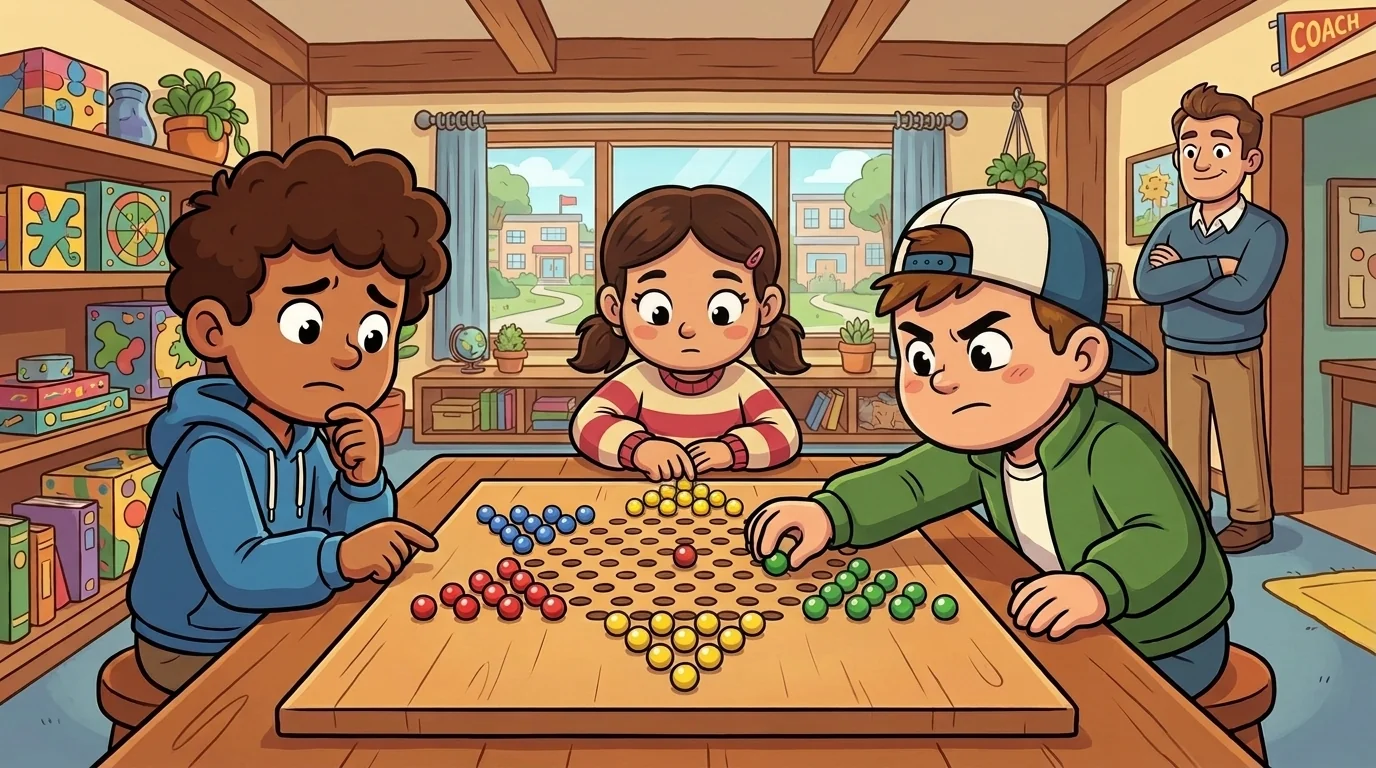
The trouble started the way it always does: too much confidence. Most of the pegs were streaming home, and it felt over, and for a moment all three relaxed — and that's when the endgame quietly turned dangerous. One peg had fallen far behind, alone. The home point was filling up fast and carelessly. And across the board a rival was lining up one last desperate chain to steal the finish. Any one of those three problems could sink a "sure" win. Caboose felt the old sick memory of losing by a single stranded peg; Snugg remembered walling her own marbles out; Gate saw the rival's route forming and felt the itch to stand in a doorway.
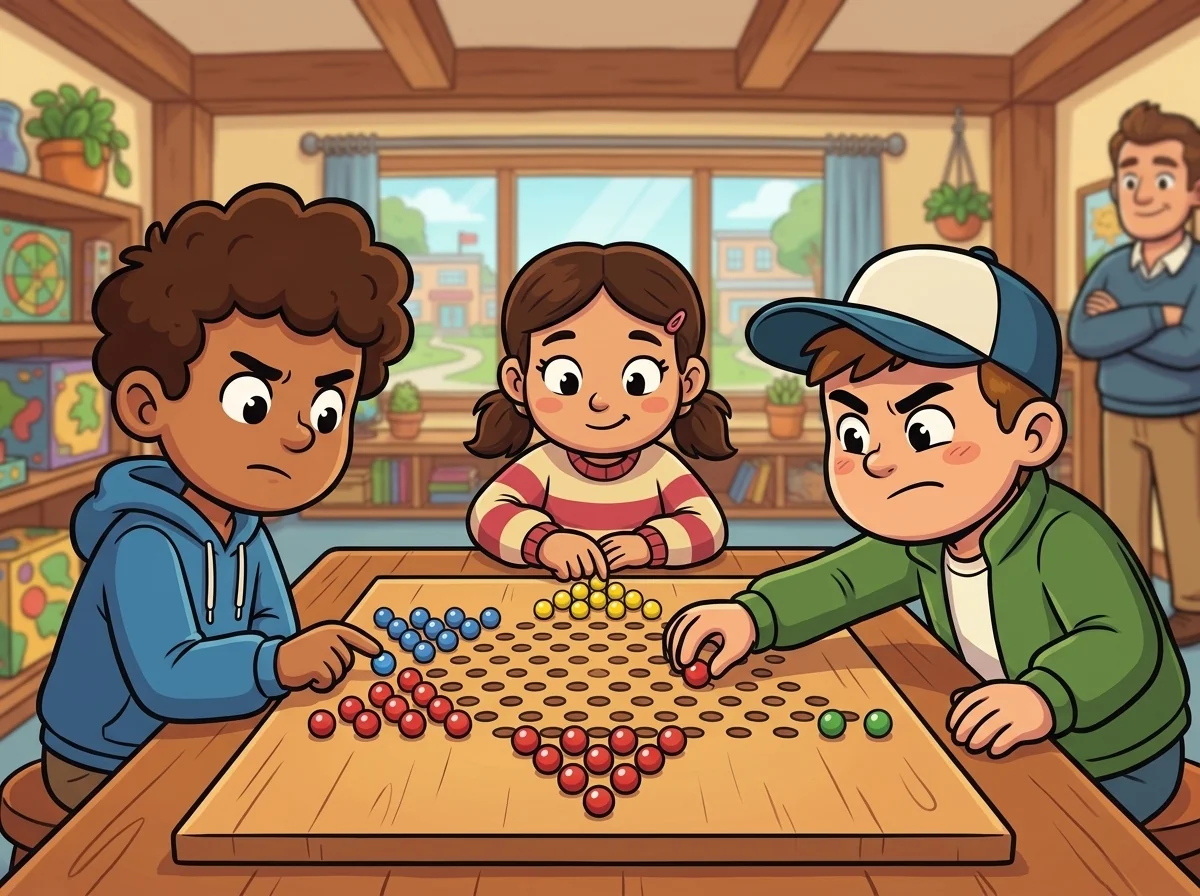
Caboose spoke first. "Before anyone celebrates — where's our last peg?" They found it, dawdling at the back with almost nothing left to hop over. "If we send everyone else home first, this one strands and we lose by one. Bring it up now, with the pack, while it still has ladders." So they carried the straggler forward instead of leaving it for last — and it stopped being a disaster-in-waiting. Then Snugg stopped a marble halfway into the home point. "Not the front slot," she warned. "If we jam the doorway, the last pegs can't get in even after all this. Back slots first." She reached past the easy entrance and packed the deepest slots, working forward, keeping the door open for the ones still arriving — including Caboose's rescued straggler.
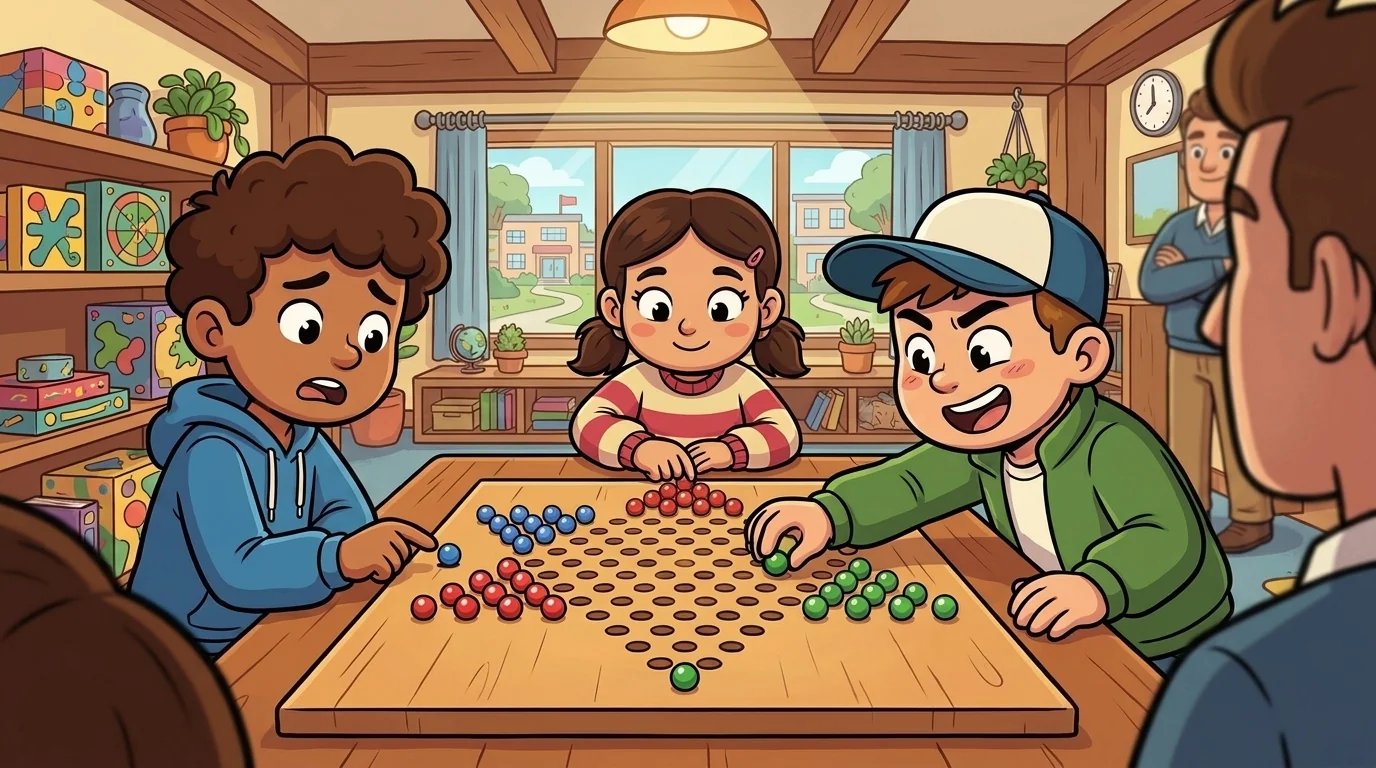
That left the rival's last-second chain. Gate had already found the one empty square it needed. "Their whole steal lands here," Gate said, sliding a peg quietly into the junction. "No capture, no drama — I just close the door their leap was leaning on." The rival reached for the grand finishing chain, found the landing square full, and had nothing. Meanwhile the winning team's pegs kept flowing in: straggler carried up (Caboose), house packed from the back so every arrival fit (Snugg), the one dangerous door held shut (Gate). Peg after peg clicked home, all the way down to the slow last one — which still had a lane in, because nobody had abandoned it and nobody had walled it out — and it landed, and that made ten. The "sure win" was, finally, actually won.
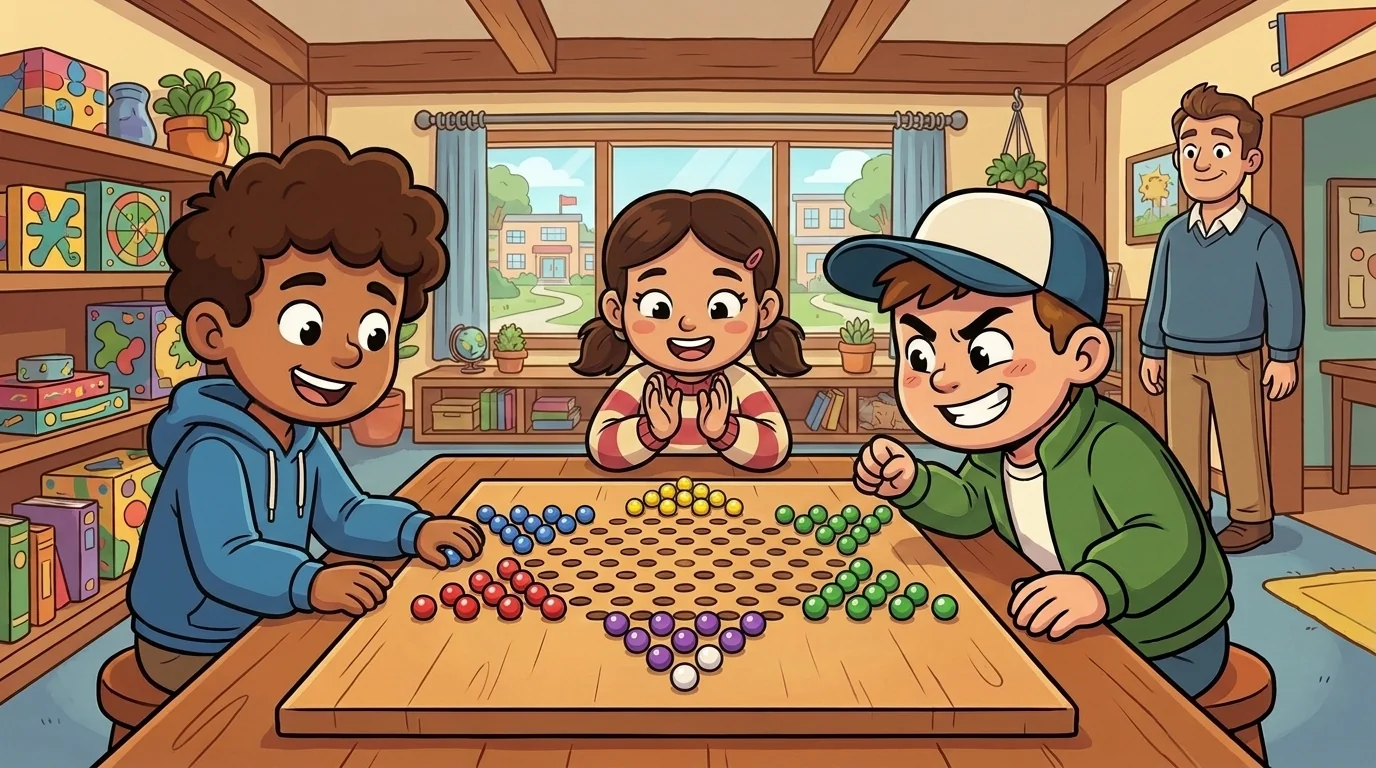
Cairn asked them what had almost gone wrong, and all three answered at once, then laughed. "I nearly stranded the last peg," said Caboose. "I nearly jammed my own doorway," said Snugg. "And they nearly stole it at the wire," said Gate, "if I hadn't held the junction." Cairn nodded. "A lead is not a win. The finish is its own skill, and it takes all of you — carry the slowest peg, fill the home from the back, and hold the last door. Miss any one, and 'basically won' becomes 'lost.'" The three of them looked at the full home point — all ten in, every one — with the particular satisfaction of something actually finished, not just nearly. "Say it when you think you've almost won," Cairn told them, "because that's exactly when games are lost." And together they did: Bring up the last peg, fill the home point from the back, and hold the one junction they need — that's how you actually finish: everyone home.
The LeapTale ensemble
Caboose, Snugg and Gate is part of LeapTale's distributed-narrative cast. Each character embodies a different curricular primitive; together they teach the full subject.
-
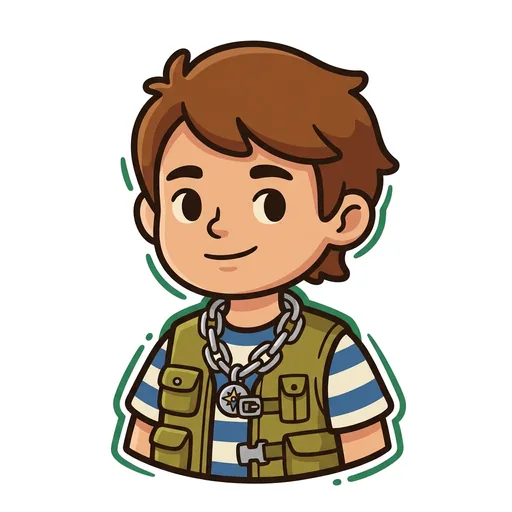
Bounder
The Ladder-Chainer — links several hops into ONE long move, always finding the longest efficient multi-hop route across the star (jump-chain / laddering)
-
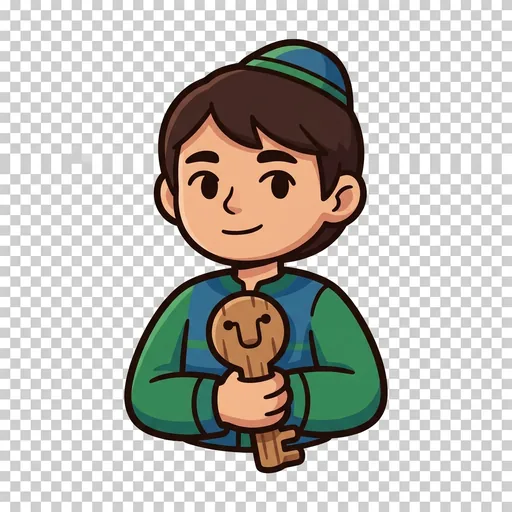
Gate
The Junction-Holder — parks a peg on a key crossing so a rival's chain breaks; the one defensive idea in a game with no captures (blocking)
-
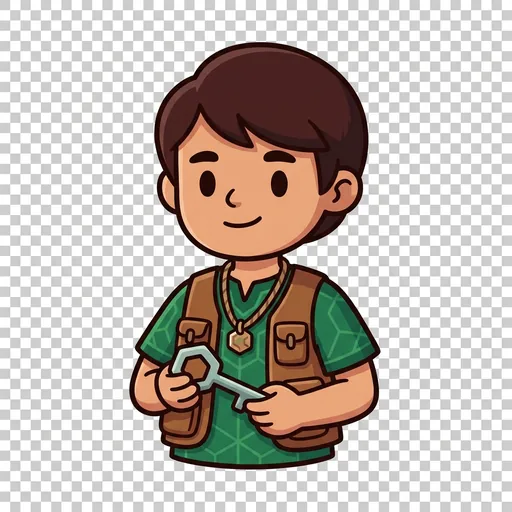
Kern
The Centre-Keeper — occupies the central hexagon where the most jump-lines cross, keeping the most options open (centre control)
-
Overleap
The Long-Jumper — reaches the gapped, longer hop the ordinary jump can't, clearing distance in a single leap (the long / gapped jump)
-
Sidra
The Lane-Opener — plays the classic sideways-developing first moves that open the fastest lanes out of the home point (the opening)
-

Caboose
The Straggler-Minder — never strands the last peg, because you only win when ALL ten reach home and the last one is hardest (leave no peg behind)
-
Pacer
The Race-Counter — counts who reaches home first and spends every single move advancing, never idling (tempo / parity)
-
Snugg
The Back-Filler — tucks pegs into the BACK of the target point first so incoming pegs are never blocked by ones already home (home-fill order)
-
Trellis
The Bridge-Layer — places a peg NOW to enable a long chain LATER, setting up the ladder several turns ahead (deferred planning)
-

Coattail
The Line-Rider — hops over ANYONE's pegs, yours or the opponent's, riding a rival's line as free stepping-stones (the shared ladder / opportunism)