Bounder, Trellis and Pacer
SETUP → CHAIN → TEMPO — the three ideas are one motion: TRELLIS plants the rungs (bridge-laying / deferred planning), BOUNDER chains the hops into one long leap across those rungs (the jump-chain), and PACER makes sure every turn spent building or leaping actually gains ground (tempo / the race). Alone each is a trick; together they are HOW a race is won — build the ladder before you need it, ride it in one bound, and never waste a turn doing it.
A story read by Bounder, Trellis and Pacer
Loading audio…
Press play to listen along. The line being read lights up as you go.
Show full transcript
Loading transcript…
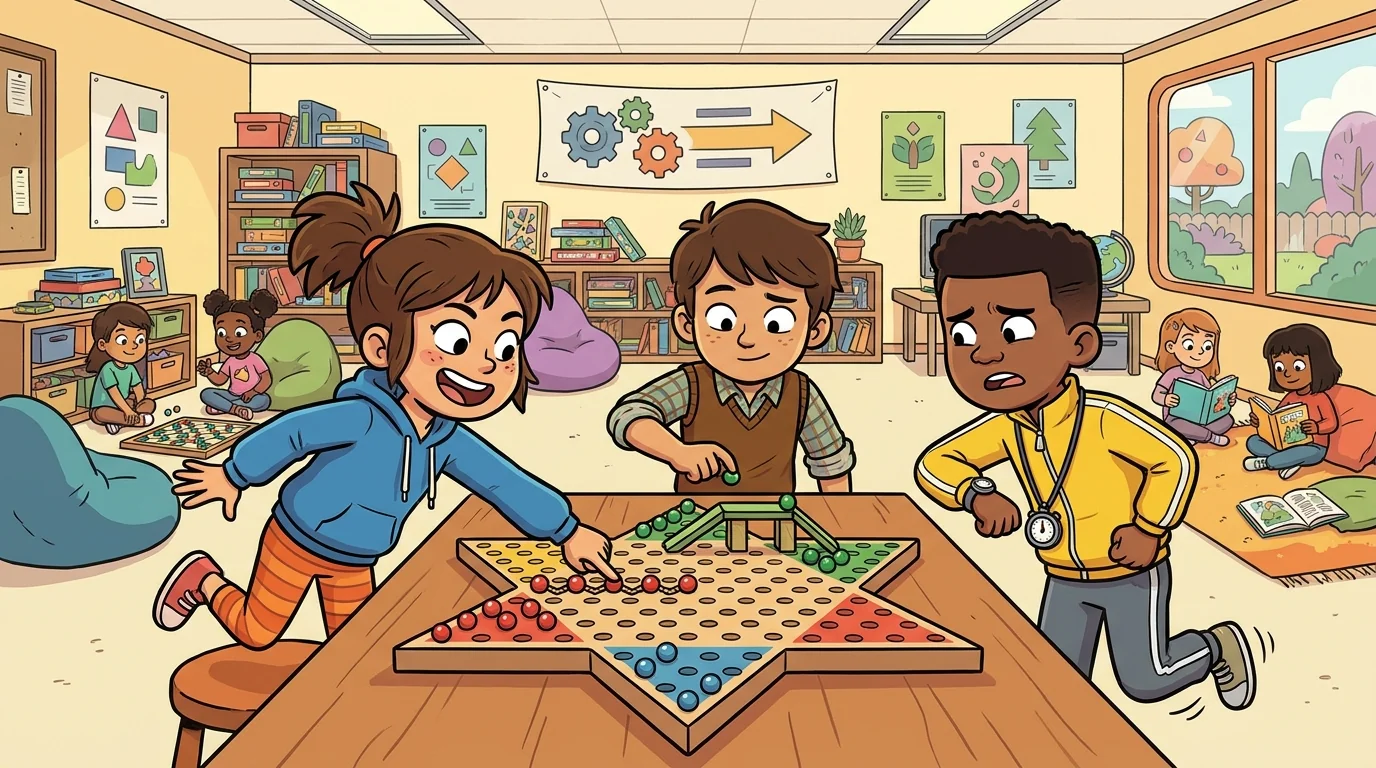
For a while, Bounder, Trellis and Pacer each secretly thought they were the one who really won games. Bounder was proud of the great bounding chains. Trellis was proud of the quiet clever bridges. Pacer was proud of never wasting a turn. So when Cairn, the pathfinding coach, set the three of them at one board and said "play as a team, one plan," they mostly got in each other's way — Bounder wanting to leap now, Trellis wanting to build first, Pacer fretting that both were burning turns.
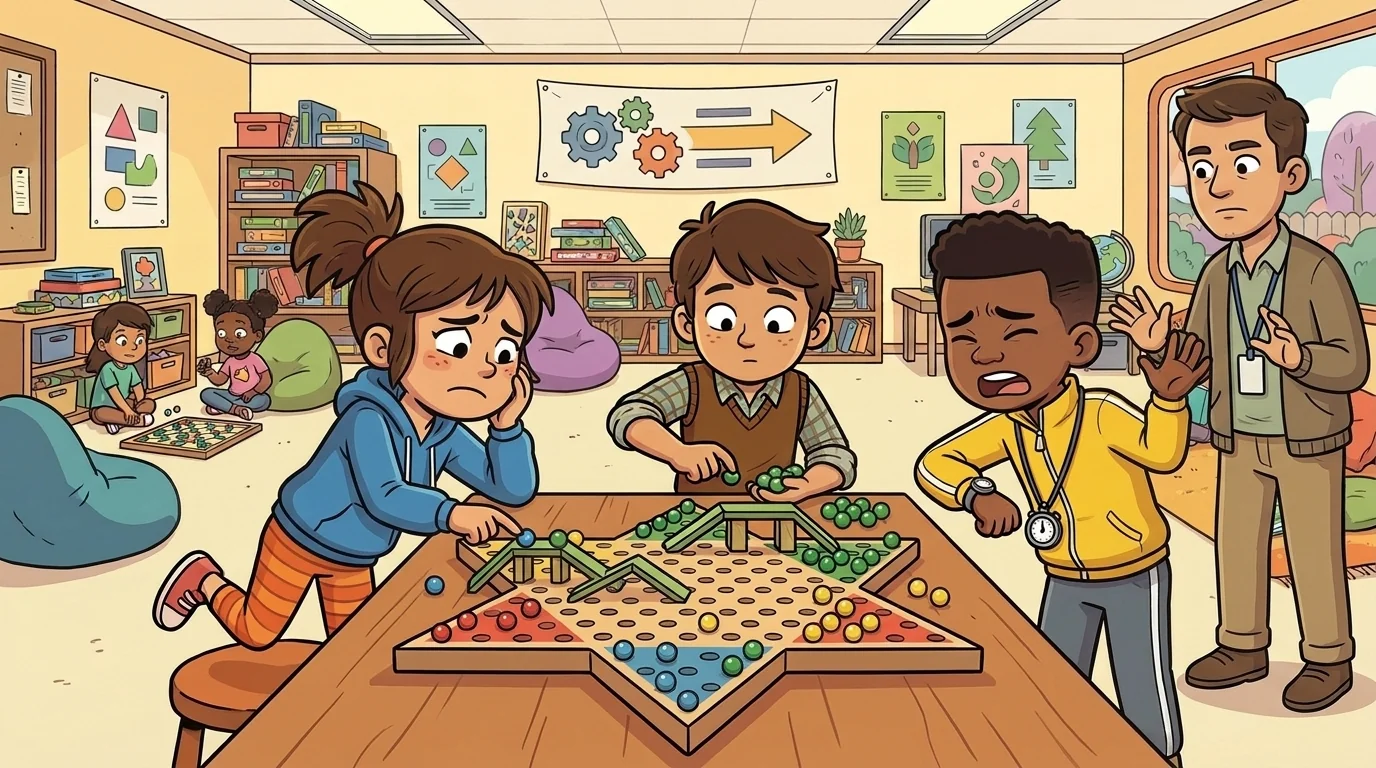
The game went badly at first, and it stung all three. Bounder tried to chain a ladder that wasn't built yet and his marble stranded halfway. Trellis kept planting rungs but never rode them, so nothing moved forward and Pacer groaned that they were losing the race standing still. Each of them felt, privately, that the others were the problem — if they'd just do it my way. Cairn watched the muddle and finally said, "Stop competing to be the important one. Look at what you did in the wrong order."
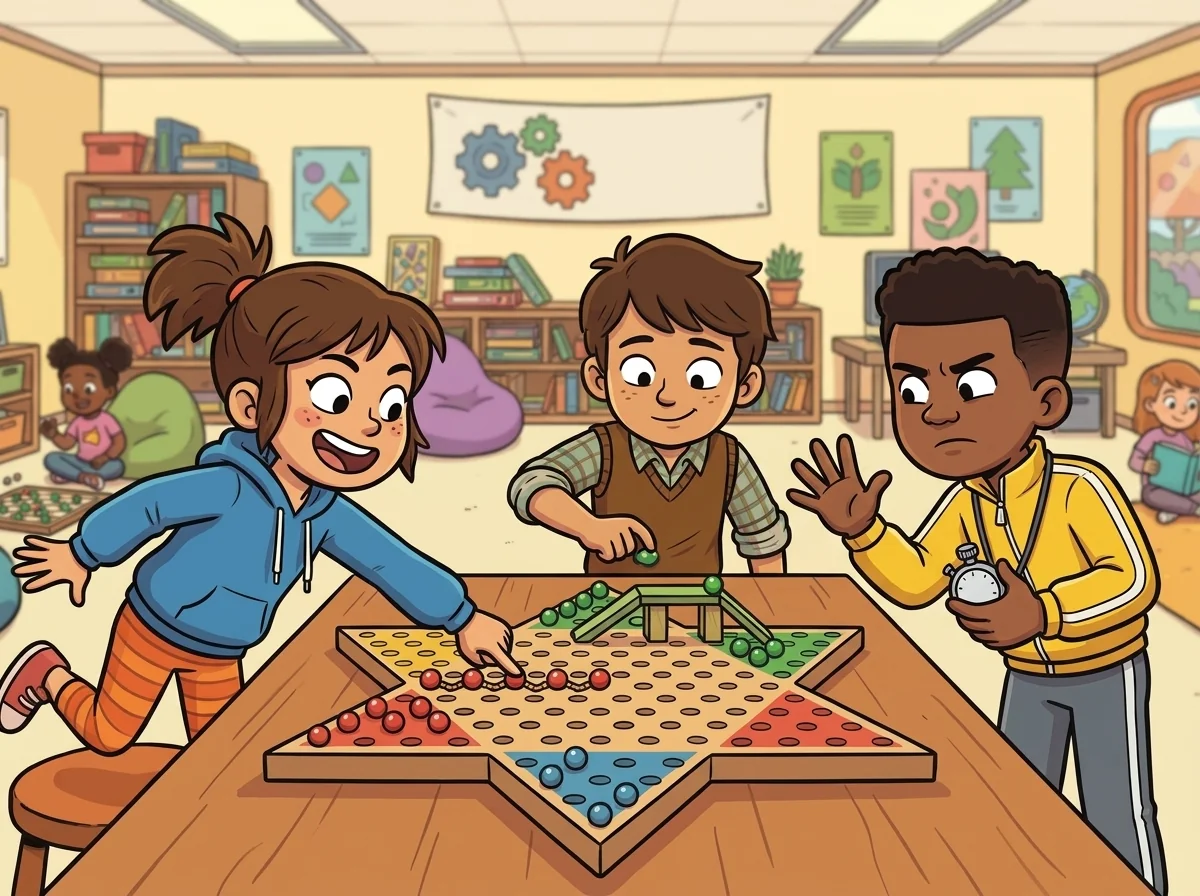
Cairn walked them through it slowly. "Trellis — plant the rungs. Not for now. For three turns from now." Trellis placed two quiet marbles in empty gaps, gaining nothing, and for once Bounder didn't complain that it looked useless. "Now Bounder — is there a ladder yet?" Bounder traced it: the rungs Trellis had planted, plus a rival's cluster to borrow, made a chain reaching almost home. "There is now," Bounder breathed, and rode it — hop-hop-hop-hop — one long leap across the whole star, landing where a single hop could never have reached. And Pacer, watching, checked the count: "That move gained us six steps in one turn. That's tempo." The three of them looked at the board, and at each other, and the argument quietly died.
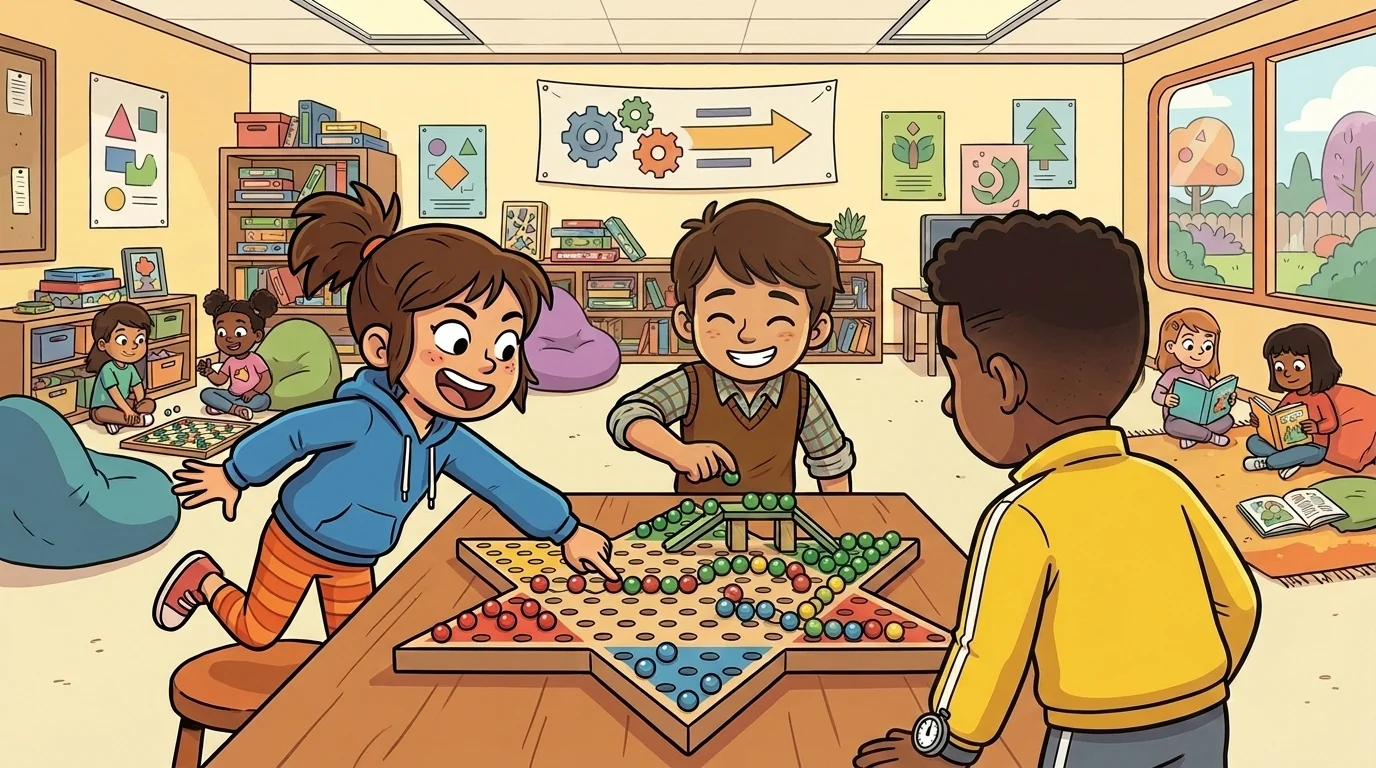
They played the rest as one motion. Trellis laid rungs a few turns ahead — bridges to nowhere, until they weren't. Bounder chained across them the moment they were ready, borrowing everyone's pegs as stepping-stones. And Pacer kept the whole thing honest, asking before every move does this gain a step? — skipping the pretty fidgets, spending each turn on either building or leaping, never idling. A rung planted (nothing yet). A rung planted (still nothing). Then a chain that ate half the board (everything). Their pegs streamed home in long bounds while their rivals shuffled one space at a time, and none of the three could say anymore whose move had "won" it, because it was plainly all three, in order. Bounder even laughed: "Your boring rungs are the best part of my leaps." Trellis, who had waited her whole life for someone to say that, glowed.
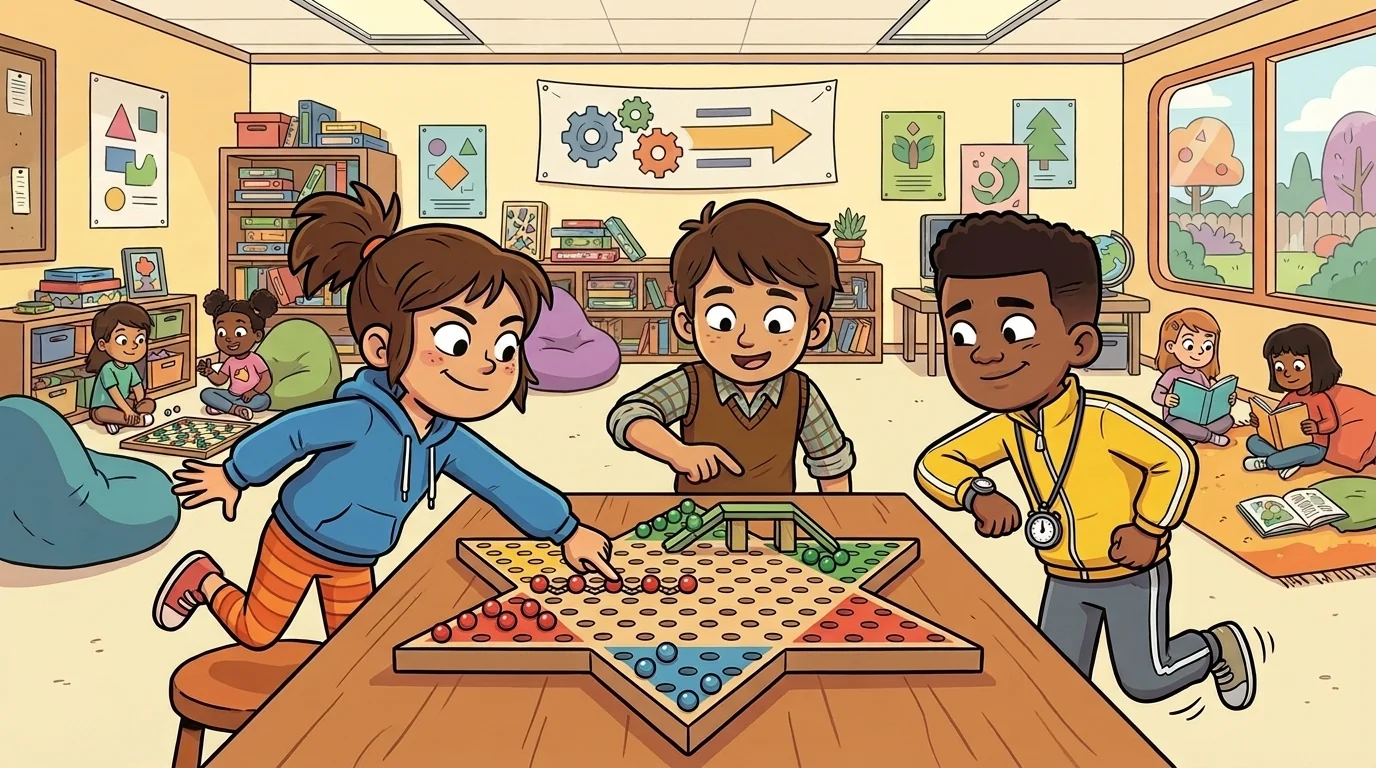
Afterward Cairn asked them what they'd learned, and it was Pacer who put it together. "We each had a piece," Pacer said. "Trellis builds the ladder. Bounder rides it. I make sure we never waste the turns doing it. Apart, they're just tricks. Together, they're the whole race." Bounder nodded — he'd learned that his big leaps were only possible on bridges someone laid first — and Trellis nodded — she'd learned her quiet rungs meant nothing until someone bounded across them — and Pacer had learned that even a perfect build-and-leap loses if you fritter turns in between. The old "I'm the important one" had turned into something much better: we're a sequence, and the sequence is the point. "Say it together," Cairn said, "so you remember the order." And the three of them did: Trellis lays the rungs, Bounder rides the whole ladder, Pacer makes every turn gain a step — build it, leap it, keep the tempo, and the race is yours.
The LeapTale ensemble
Bounder, Trellis and Pacer is part of LeapTale's distributed-narrative cast. Each character embodies a different curricular primitive; together they teach the full subject.
-

Bounder
The Ladder-Chainer — links several hops into ONE long move, always finding the longest efficient multi-hop route across the star (jump-chain / laddering)
-

Gate
The Junction-Holder — parks a peg on a key crossing so a rival's chain breaks; the one defensive idea in a game with no captures (blocking)
-

Kern
The Centre-Keeper — occupies the central hexagon where the most jump-lines cross, keeping the most options open (centre control)
-

Overleap
The Long-Jumper — reaches the gapped, longer hop the ordinary jump can't, clearing distance in a single leap (the long / gapped jump)
-

Sidra
The Lane-Opener — plays the classic sideways-developing first moves that open the fastest lanes out of the home point (the opening)
-

Caboose
The Straggler-Minder — never strands the last peg, because you only win when ALL ten reach home and the last one is hardest (leave no peg behind)
-

Pacer
The Race-Counter — counts who reaches home first and spends every single move advancing, never idling (tempo / parity)
-

Snugg
The Back-Filler — tucks pegs into the BACK of the target point first so incoming pegs are never blocked by ones already home (home-fill order)
-

Trellis
The Bridge-Layer — places a peg NOW to enable a long chain LATER, setting up the ladder several turns ahead (deferred planning)
-

Coattail
The Line-Rider — hops over ANYONE's pegs, yours or the opponent's, riding a rival's line as free stepping-stones (the shared ladder / opportunism)